Telescope Aperture and Focal Ratio Relationship Explained
Mastering the interplay between objective size and focal mathematics is essential for optimizing optical performance. Proper balance ensures maximum resolution across various viewing scenarios.

Aperture dictates light collection while focal ratio governs speed, balancing field brightness and magnification potential for precise astronomical observation.
Ready to compare models? Start with our Best Telescope: Top Backyard Picks for Astronomy.
Practical Quick-Reference Table
| Scenario / Metric | Recommended Target | Why It Matters |
|---|---|---|
| Fast System (f/4 - f/5) | Wide-Field Nebulae | Shorter exposures and wider sky coverage. |
| Slow System (f/10 - f/15) | Planetary Detail | Higher native focal length and easier high magnification. |
| Large Aperture (200mm+) | Faint Galaxies | Gathers more photons to resolve dim deep-sky objects. |
| Small Aperture (<80mm) | Wide Star Clusters | Portability and wide true field of view. |
| High Magnification | Double Stars | Resolves tight pairs when seeing conditions permit. |
| Wide Exit Pupil (3-5mm) | Dark-Adapted Visual | Matches human eye dilation for comfortable viewing. |
Defining Telescope Aperture and Light-Gathering Power

Aperture diameter remains the single most critical specification of any optical instrument. It dictates total light-gathering capacity and theoretical resolution limits for faint deep-sky targets.
Larger objective lenses or primary mirrors intercept more photons, rendering dimmer stellar clusters visible. You can review top options in our best telescope for viewing planets and galaxies guide before buying.
Resolution scales linearly with aperture size, allowing observers to split tight double stars. Atmospheric seeing conditions, however, often cap maximum usable magnification regardless of diameter.
Selecting proper aperture requires balancing optical throughput against physical weight, tube length, and mounting requirements. Heavy systems demand robust equatorial or alt-azimuth platforms for stable tracking.
- Measure primary optics strictly edge-to-edge.
- Calculate light grasp relative to human eyes.
- Account for central obstruction in reflectors.
- Prioritize clear aperture over outer housing.
Physical Constraints of Large Apertures
Massive glass blanks require thick substrates to prevent sagging under their own weight during tracking arcs. This structural mass increases thermal stabilization times significantly.
Active cooling fans and ventilated rear cells help mitigate thermal gradients inside sealed optical tubes. Proper acclimation prevents boundary layer turbulence from degrading image sharpness.
- Allow 45 minutes for thermal equilibrium.
- Use low-vibration cooling fans carefully.
Understanding Focal Length and Focal Ratio Mechanics
Focal length represents the distance light travels from the primary optic to the focal plane. This measurement heavily influences our best portable telescope for viewing planets and galaxies picks for travel.
The focal ratio, commonly designated as the f-number, is calculated by dividing focal length by aperture. This dimensionless metric categorizes optical systems into fast or slow configurations.
Fast systems feature low f-numbers, typically under f/5, providing wide fields of view and bright images. Slow systems exceed f/10, offering narrower fields ideal for planetary study.
Understanding this mathematical ratio helps astronomers select appropriate eyepieces and camera sensors. Mismatched components can introduce vignetting or under-sampling artifacts during digital capture sessions.
- Divide focal length by aperture diameter.
- Classify f/4 systems as fast wide-field units.
- Classify f/12 systems as slow planetary scopes.
- Verify back-focus distance for accessories.
Calculating Magnification Profiles
Magnification equals telescope focal length divided by eyepiece focal length. Changing eyepieces alters image scale without modifying the fundamental optical speed of the primary lens.
Exceeding maximum useful magnification—typically twice the aperture in millimeters—results in empty, blurred magnification. Detail degrades rapidly when pushing optical limits past sensible physical thresholds.
- Divide scope focal length by eyepiece length.
- Limit maximum power to 50x per inch.
Video Walkthrough: Telescope Focal Ratio Explained
The Mathematical Relationship Between Aperture and Focal Ratio
The physical interplay between aperture and focal length creates the governing f-number. You can evaluate core differences directly using our focal length vs aperture comparison for better clarity.
A four-inch aperture paired with a four-hundred-millimeter focal length yields an f/4 system. Scaling the focal length to twelve hundred millimeters transforms the optical profile into f/12.
Surface brightness of extended deep-sky objects depends entirely on the focal ratio. Faster optical systems concentrate captured photons onto a smaller sensor area, brightening nebulosity.
Point sources like stars maintain constant surface brightness regardless of focal ratio, limited only by aperture size. Comprehending this distinction prevents common miscalculations in astrophotography setups.
- Keep aperture constant while varying focal length.
- Calculate image scale using pixel dimensions.
- Evaluate photon concentration across focal planes.
- Match sensor pixel size to optical resolution.
System Scaling and Geometric Tolerances
Optical prescription changes alter mechanical tube length and structural balance points. Engineers must reinforce mounting rings to handle shifting center-of-gravity vectors during tracking.
Tighter focal ratios demand extreme precision in optical alignment and mechanical collimation. Minute tilts cause severe off-axis aberrations across wide sensor formats or large eyepieces.
- Verify mechanical balance after adding accessories.
- Maintain strict alignment tolerances for fast systems.
Field of View and Magnification Interactions
Field of view depends heavily on telescope focal length and eyepiece diameter. You can test various eyepiece combinations instantly with our magnification calculator tool.
Planetary observers utilize long focal ratios to achieve high magnification directly at the focal plane. This reduces reliance on high-power barlow lenses that can introduce chromatic artifacts.
Wide-field instruments excel at capturing sprawling emission nebulae and large open clusters. Conversely, narrow systems isolate planetary nebulae and globular clusters against dark backgrounds.
Calculating true field requires dividing the apparent field of view by operational magnification. This metric ensures complete celestial targets fit comfortably within the frame boundaries.
- Divide eyepiece field stop by focal length.
- Use wide-field eyepieces for extended nebulas.
- Select high magnification for close planetary details.
- Account for vignetting in restrictive drawtubes.
Eyepiece Design and Field Flatteners
Complex eyepiece designs utilize multiple lens elements to correct edge distortion in fast optical systems. Premium glass types minimize chromatic fringing across high-contrast stellar boundaries.
Field flatteners correct inherent curvature at the focal plane, ensuring pinpoint stars across flat imaging sensors. Matching correct back-focus spacing remains critical for optimal edge sharpness.
- Install field flatteners for flat sensor formats.
- Verify exact back-focus spacing down to millimeters.
Optical Aberrations and Fast Versus Slow Systems
Fast optical systems inherently suffer from pronounced coma and spherical aberration off-axis. These optical defects distort stellar points into tiny comets near the image perimeter.
Slow optical systems naturally minimize off-axis aberrations due to gentler curve radii on primary mirrors. They require less complex corrective glass elements to deliver sharp views.
Refracting telescopes require extra-low dispersion glass to control chromatic aberration, especially at fast focal ratios. Secondary spectrum dispersion smears focus points across different color wavelengths.
Implementing corrective lenses like coma correctors restores flat, pinpoint stars across wide photographic fields. Proper spacing between corrective optics and sensors dictates final image quality.
- Identify coma blur in fast Newtonian reflectors.
- Utilize ED glass to suppress chromatic fringing.
- Install coma correctors for deep-sky imaging.
- Inspect edge-of-field performance during testing.
Managing Spherical and Astigmatic Errors
Spherical aberration occurs when light rays striking mirror edges focus at different points than central rays. Parabolic primary mirrors successfully eliminate this specific optical flaw.
Astigmatism causes vertical and horizontal focal planes to separate, smearing point sources into crosses. Mechanical pinching from overly tight mirror clips frequently causes astigmatic artifacts.
- Ensure mirror clips retain slight lateral play.
- Inspect optical surfaces for asymmetrical figuring errors.
Practical Applications for Visual Observation and Imaging
Visual observers prioritize light grasp and comfortable exit pupils over ultra-fast focal ratios. An exit pupil between two and three millimeters matches optimal human eye dilation.
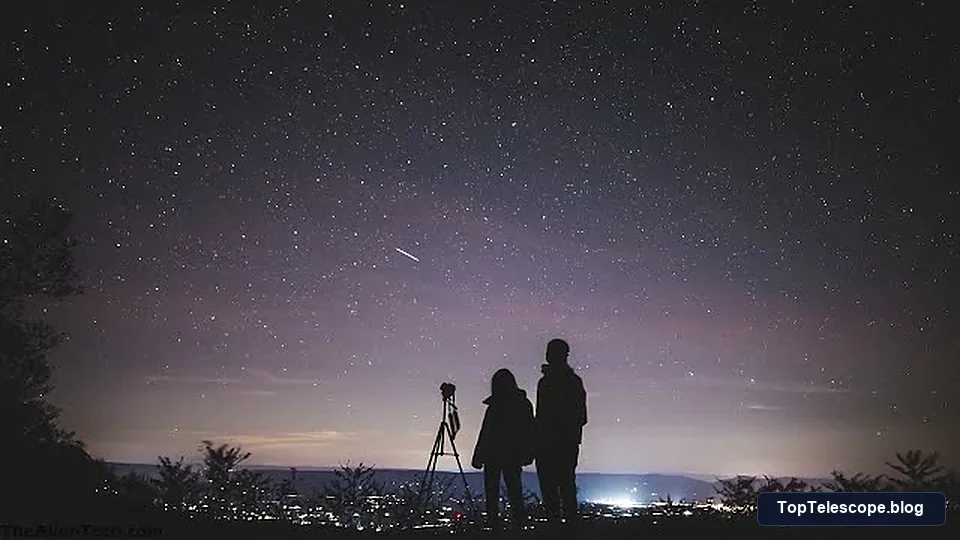
Astrophotographers favor fast systems to reduce total exposure times required for faint deep-sky targets. Shorter exposures minimize tracking error accumulation during long imaging sessions.
Planetary imaging demands long focal lengths achieved through Barlow amplification or dedicated Maksutov-Cassegrain designs. High image scale resolves delicate cloud belts on gas giant planets.
Balancing equipment weight against mount payload capacity ensures stable tracking during windy outdoor conditions. Rigid mounting platforms prevent micro-vibrations from ruining high-resolution photographic captures.
- Match exit pupil size to dark-adapted eyes.
- Deploy fast optics for wide-field nebula tracking.
- Use Barlow lenses for high-resolution planetary work.
- Keep total payload under mount weight limits.
Sensor Matching and Pixel Sampling
Digital sensor pixel size must align with telescope resolving power to avoid under-sampling. Undersampled images display blocky, pixelated stars lacking fine structural detail.
Oversampling spreads starlight across too many pixels, reducing image contrast without revealing extra detail. Calculating optimal focal ratio ensures ideal sampling for specific camera sensors.
- Calculate arcseconds per pixel ratios carefully.
- Match camera sensor geometry to optical resolution.
Maintenance, Collimation, and Mechanical Tolerances
Routine collimation ensures optical axes align precisely to maintain maximum sharpness across fields. Fast optical systems require frequent alignment checks due to aggressive mechanical stress.
Transporting telescopes introduces vibrations that shift primary and secondary mirror positions out of alignment. Using laser collimators or Cheshire eyepieces restores optical integrity quickly.
Keep optical surfaces clean by using professional blower bulbs and optical microfiber cloths sparingly. Excessive cleaning risks scratching delicate anti-reflective coatings on exposed glass elements.
Inspect mechanical focusers for backlash and slippage during temperature drops. Lubricating gear tracks with specialized low-temperature grease prevents binding in freezing outdoor environments.
- Perform collimation checks before every observing session.
- Store optical tubes with dust caps securely attached.
- Use blower bulbs to remove loose surface dust.
- Check focuser tension adjustments during cold weather.
Environmental Protection and Storage
Prevent internal dew accumulation by storing optical tubes in temperature-stable environments with desiccant packs. Humidity promotes mold growth and degrades delicate lens coatings over time.
Secure dust covers tightly to protect exposed corrector plates and primary mirrors from airborne pollutants. Proper storage extends operational lifespans of precision astronomical hardware.
- Place silica gel packs inside storage cases.
- Acclimate equipment slowly to prevent internal condensation.
Frequently Asked Questions
What is the primary difference between aperture and focal ratio?
Aperture measures the physical diameter of the primary lens or mirror, which directly dictates your telescope's total light collection and theoretical resolution limits.
The focal ratio is a calculated metric derived by dividing focal length by aperture, determining overall system speed and image brightness for astrophotography.
Why do fast focal ratios matter for astrophotography?
Fast systems feature low f-numbers that concentrate captured photons onto a smaller sensor area, which significantly reduces required exposure times for faint deep-sky nebulae.
Shorter exposures also minimize tracking errors, mechanical drift, and atmospheric turbulence degradation during lengthy nighttime imaging sessions.
Does a larger aperture always provide better views?
Larger apertures gather more light and resolve finer details, but they are heavily limited by local atmospheric seeing conditions and thermal stability. If atmospheric turbulence is severe, high magnification through a massive aperture will only display blurred, unstable images.
How do I calculate the focal ratio of my telescope?
You calculate the focal ratio by dividing the focal length of your primary optic by its aperture diameter, using identical units of measurement. For example, a twelve-hundred-millimeter focal length divided by a two-hundred-millimeter aperture yields an f/6 optical system.
Why do fast telescopes suffer from optical aberrations?
Fast optical designs require steep curves on primary mirrors or lenses, which naturally induce off-axis aberrations like coma and chromatic dispersion. These geometric distortions stretch pinpoint stars into comet-like shapes near the perimeter of wide fields.