Eyepiece Eye Relief Explained for Glasses Wearers
Correct eye relief ensures full field visibility for observers wearing corrective lenses. Discover how to select the right optical specs.

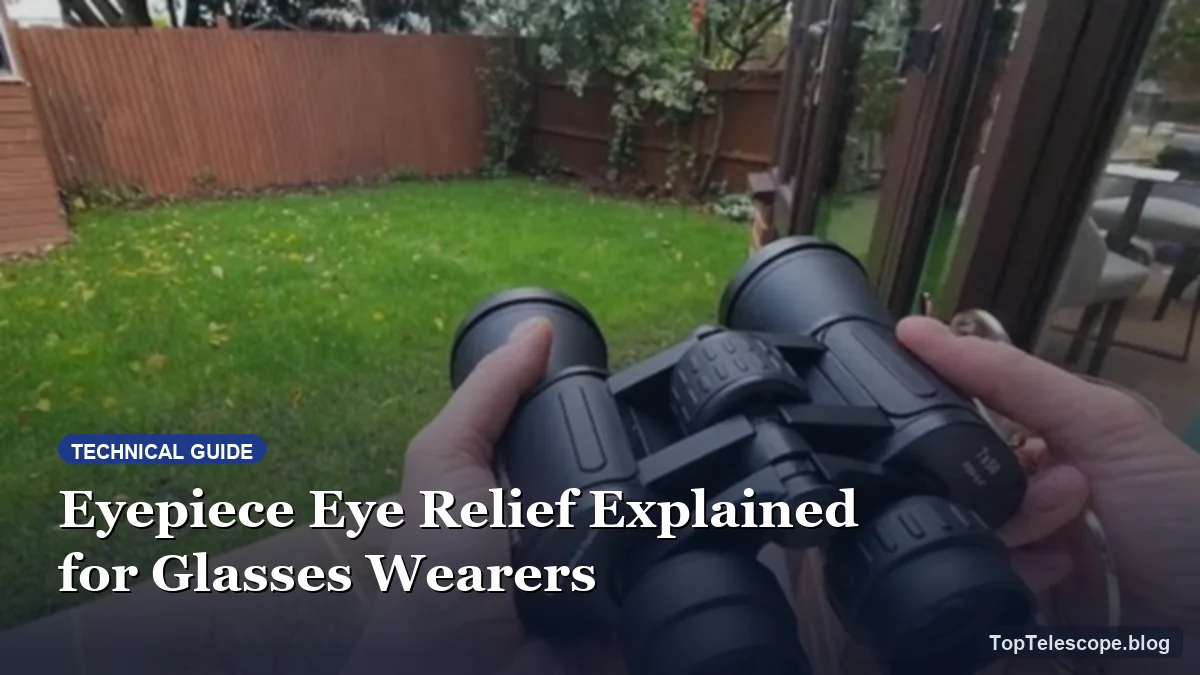
Observers wearing eyeglasses require at least 15mm to 20mm of eye relief. Shorter distances prevent you from seeing the entire field of view.
Ready to compare models? Start with our Best Telescope: Top Backyard Picks for Astronomy.
Practical Quick-Reference Table
| Scenario / Metric | Recommended Target | Why It Matters |
|---|---|---|
| Standard Eyeglasses | 16mm to 20mm minimum | Accounts for frame thickness and lens distance. |
| No Corrective Lenses | 10mm to 12mm adequate | Closer positioning works without facial obstructions. |
| High Astigmatism Lenses | 18mm to 22mm preferred | Thicker prescription glass demands extra clearance. |
| Wide-Angle Eyepieces | 18mm minimum spacing | Preserves edge-to-edge clarity with glasses on. |
| Planetary Plossls | 6mm to 10mm length | Requires removing glasses or folding rubber eyecups. |
| Rubber Eyecups | Foldable or adjustable | Protects glasses from scratching metal housing. |
Understanding Optical Eye Relief Fundamentals
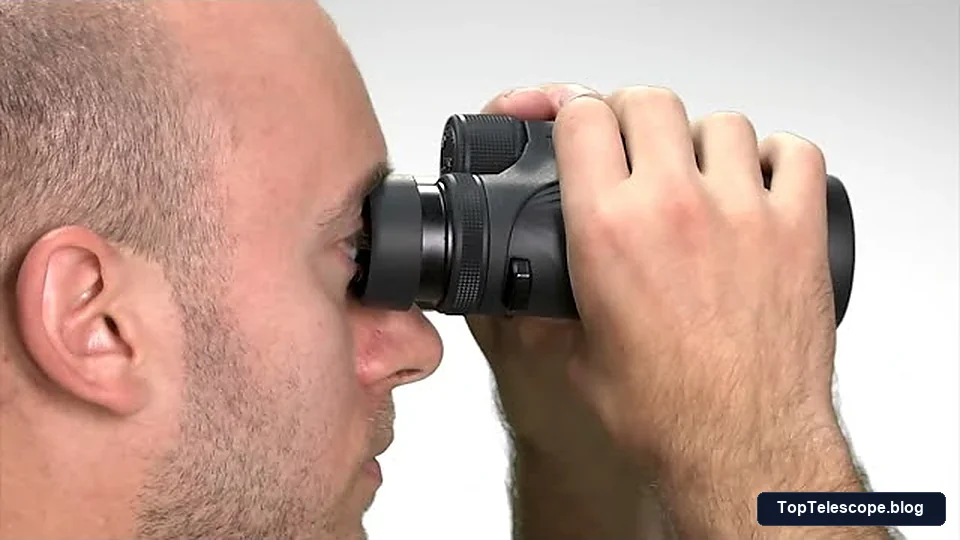
Eye relief represents the precise distance from the outer ocular lens surface to your eye pupil where you see the full image circle.
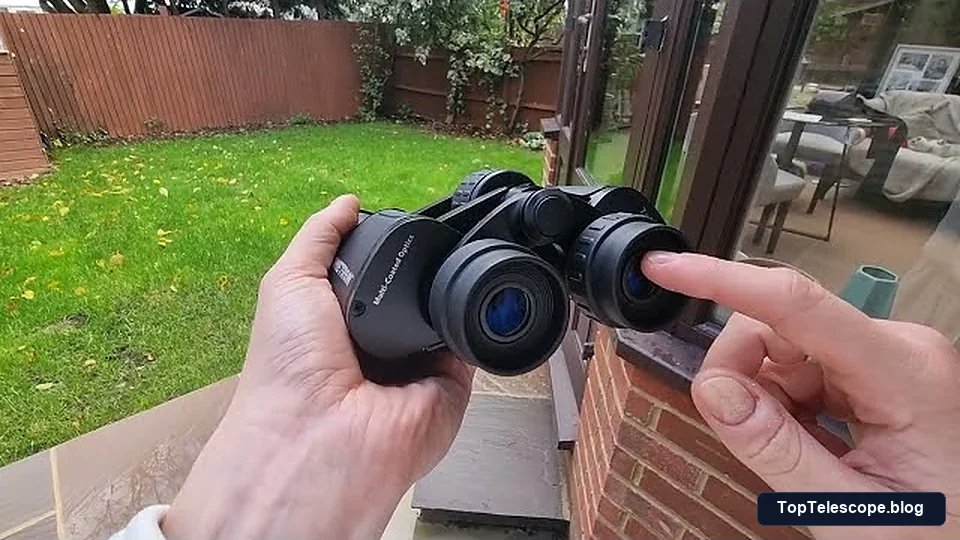
When astronomers wear corrective spectacles, the physical glass creates a barrier. This barrier prevents your eyes from getting close enough to short clearance eyepieces.
Standard designs often feature tight specifications that suit bare eyes perfectly. Unfortunately, these traditional configurations force spectacle wearers to sacrifice peripheral field visibility completely.
Manufacturers design specialized long-focus oculars to solve this challenge. Checking our best eyepiece for solar viewing guide prevents frustrating blackouts and maintains comfortable viewing posture.
- Eye relief is measured in millimeters from glass to pupil.
- Short relief causes vignetting for corrective lens wearers.
- Longer specifications accommodate thick frames safely.
- Always verify manufacturer specifications before purchasing optics.
Defining Exit Pupil Alignment
The exit pupil must coincide directly with your natural eye pupil. Misalignment introduces annoying blackouts and severe edge distortion across the entire viewing field.
Eyeglass frames physically displace your eyes further backward than normal. Compensating for this offset requires generous optical specifications and precise mechanical positioning.
- Exit pupil convergence ensures maximum image brightness.
- Spectacle offset shifts the optimal focal plane.
How Corrective Lenses Alter Viewing Geometry
Eyeglass lenses introduce physical thickness that alters your facial geometry against the telescope. Your spectacles push your eyes away from the focal plane.
Nearsighted and farsighted prescriptions change how light enters your optical system. Because your glasses correct the vision, the telescope must project its image beyond the glass.
Failing to account for this physical separation results in severe vignetting. You will notice the field of view shrinking into a darkened central tunnel.
Astigmatism corrections often involve thicker glass elements that exacerbate spacing problems. Choosing high-relief eyepieces compensates for these bulky frame dimensions.
- Prescription glass adds physical distance to the eye position.
- Inadequate clearance causes tunnel vision effects.
- Astigmatism lenses demand extra millimeter tolerance.
- Facial bone structure influences final eyepiece positioning.
Managing Frame Interference Risks
Metal and plastic frames can easily scratch delicate glass elements. Selecting options from our best eyepiece for jupiter list prevents damage to your valuable optical coatings.
Soft rubber eyecups provide a protective cushion against hard spectacle frames. Folding or rolling down these guards helps achieve optimal viewing distance.
- Inspect frames for sharp metallic edges.
- Use rubber guards to prevent scratching.
Video Walkthrough: What Is Eye Relief On Binoculars? And Why It Matters...
Measuring Physical Clearance and Exit Pupil Placement
Determining exact eye relief requires precise measurements using specialized gear. Using our telescope magnification calculator helps astronomers calculate where the exit pupil forms outside the ocular lens assembly.
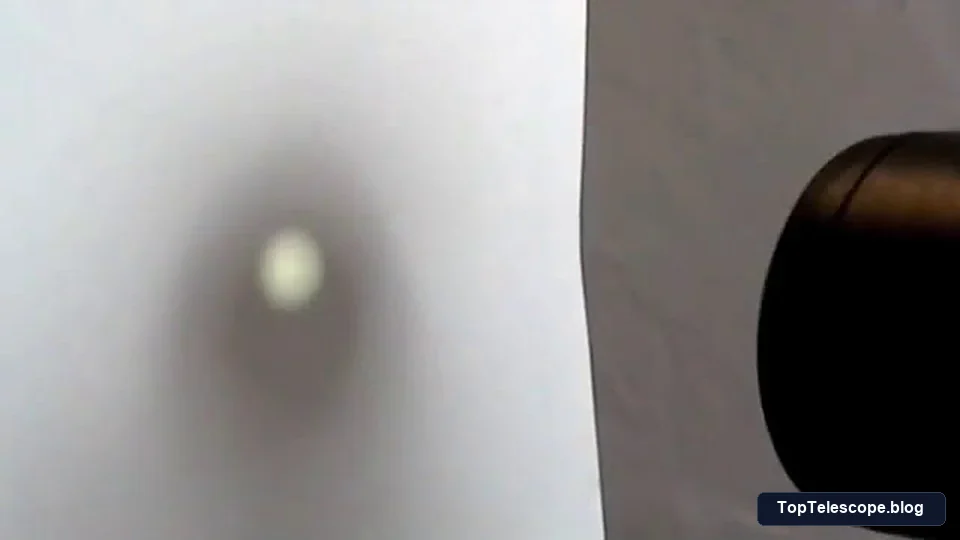
You can test clearance manually by holding a small white card behind the eyepiece. Focus the projected sunlight onto the card and measure the brightest point.
Compare this measured distance against the thickness of your spectacles plus safety margins. Adding two extra millimeters guarantees your frames will not touch glass.
Accurate measurement prevents purchasing equipment that forces you to remove your glasses. Preserving your prescription clarity makes stargazing sessions much more comfortable.
- Measure from the metal housing rim, not recessed glass.
- Include spectacle lens thickness in your clearance math.
- Add safety margins to prevent scratching.
- Test physical fit before extended nighttime observing.
Calculating Working Tolerances
Calculate your total required clearance by adding frame depth to eye relief. This combined measurement dictates your minimum acceptable specification.
Always consult technical datasheets provided by reputable optical equipment manufacturers. Real-world testing confirms whether theoretical numbers match your actual physical dimensions.
- Add 4mm to 5mm for standard frames.
- Verify numbers against manufacturer technical drawings.
Eyepiece Optical Designs Favoring Glasses Wearers
Modern optical designs utilize complex multi-element configurations to extend eye relief. Advanced glass types like lanthanum elements achieve long spacing without sacrificing magnification.
When upgrading your kit, review our best eyepiece for planetary viewing recommendations to find models with generous spacing. Standard designs often create tiny viewing spaces that frustrate wearers.
Wide-field oculars often incorporate built-in Barlow lenses to push the exit pupil outward. These engineered solutions provide comfortable viewing across expansive night skies.
Exploring specialized series guarantees you can enjoy panoramic views without removing spectacles. Investing in long-relief optics transforms your entire astronomy experience.
- Plossl eyepieces offer short relief at focal lengths.
- Erfle and modern wide-field designs improve spacing.
- Lanthanum glass corrects optical aberrations effectively.
- Long focal lengths generally provide better clearance.
Evaluating Multi-Element Oculars
Complex lens groups manage internal reflections while maintaining generous physical spacing. High-end manufacturers prioritize ergonomic comfort alongside sharp optical performance.
Inspect internal lens coatings to ensure maximum light transmission efficiency. Quality anti-reflective layers prevent ghost images during bright planetary observations.
- Check element counts in technical documentation.
- Prioritize multi-coated glass for contrast.
Adjusting Rubber Eyecups and Mechanical Mounting
Mechanical eyecups play a vital role in positioning your eyes correctly. Adjustable twist-up mechanisms allow fine-tuning for observers who wear corrective lenses.
Rolling down rubber shields prevents your spectacle frames from bottoming out prematurely. This simple adjustment restores the intended eye relief distance.
Some specialized eyepieces feature winged rubber guards that block stray ambient light. Eyeglass wearers must position these wings carefully to avoid facial pressure points.
Secure mounting in the focuser drawtube prevents unwanted wobbling during observations. Maintaining rigid alignment protects your optical train from harmful mechanical stress.
- Twist-up eyecups offer infinite height adjustment options.
- Fold rubber shields down for spectacle clearance.
- Avoid excessive pressure against glass surfaces.
- Ensure focuser thumbscrews tighten securely.
Securing Focusers for Heavy Oculars
Long eye relief eyepieces often feature heavy multi-element glass configurations. Balanced focuser tension prevents sagging and maintains precise optical alignment.
Compression ring focusers protect eyepiece barrels from ugly set-screw gouges. Utilize these modern mechanisms for secure equipment mounting reliably.
- Use brass compression rings whenever possible.
- Balance heavy loads across the mount.
Video Walkthrough: What is Eye Relief?
Maintaining Clean Optics With Eyeglass Contact
Frequent contact between eyeglasses and eyepiece glass transfers skin oils rapidly. Establishing a strict cleaning routine preserves your investment in fine optics.
Use professional micro-fiber cloths and specialized optical cleaning solutions to remove residue. Avoid household paper products that can scratch delicate lens surfaces.
Inspect ocular lenses regularly under bright light to check for smudges. Clean optics guarantee maximum contrast and prevent annoying light scatter.
Proper storage inside protective caps prevents dust accumulation between stargazing sessions. Good maintenance habits ensure your equipment performs at its highest technical level.
- Clean lenses only with approved optical fluids.
- Never touch glass surfaces with bare fingers.
- Store eyepieces in sealed protective cases.
- Check for dust before every observation session.
Establishing Storage Protocols
Keep desiccants inside your eyepiece storage case to prevent moisture damage. Humidity control protects internal lens cement and prevents fungal growth.
Secure dust caps tightly before transporting your telescope gear to dark sites. Proper protection safeguards your equipment against accidental impact damage.
- Use silica gel packs in storage cases.
- Attach dust caps immediately after use.
Frequently Asked Questions
What is the minimum eye relief needed for glasses wearers?
Observers wearing corrective spectacles generally require at least 15mm to 20mm of eye relief to see the entire image circle without experiencing frustrating vignetting or restrictive tunnel vision effects.
This generous physical spacing successfully compensates for the added thickness of your frames while completely preventing accidental glass scratching during extended nighttime astronomy observing sessions.
Can I remove my glasses to use short eye relief eyepieces?
You can safely remove your spectacles if you have mild nearsightedness or farsightedness by simply adjusting the telescope focuser wheel to compensate.
However, amateur astronomers with severe astigmatism must always keep their corrective lenses on during viewing sessions to maintain sharp optical focus across the entire stellar field without visual distortion.
How do rubber eyecups affect eye relief for glasses?
Rubber eyecups often block your glasses from reaching the correct focal distance unless you fold, roll, or twist them downward before viewing objects.
Properly adjusting or removing these protective rubber shields fully restores the proper clearance distance required for comfortable full field astronomical observations without frame interference.
Why do wide-angle eyepieces sometimes require more eye relief?
Wide-angle optical designs bend light through complex internal element groups that naturally push the exit pupil further away from the rear glass surface.
This sophisticated engineering approach gives spectacle wearers the necessary physical space for comfortable panoramic stargazing across massive celestial fields of view without edge degradation.
What causes vignetting when observing with glasses?
Vignetting occurs when your eyeglasses keep your eyes too far away from the rear ocular lens, cutting off the outer edges of the light cone.
Using specialized telescope optics featuring extended eye relief solves this frustrating technical problem completely by restoring full peripheral visibility during night sessions.