Exit Pupil Calculation Formula for Astronomy
Accurate exit pupil calculations optimize visual astronomy performance. Matching optics to your dark-adapted eye ensures maximum light transmission.

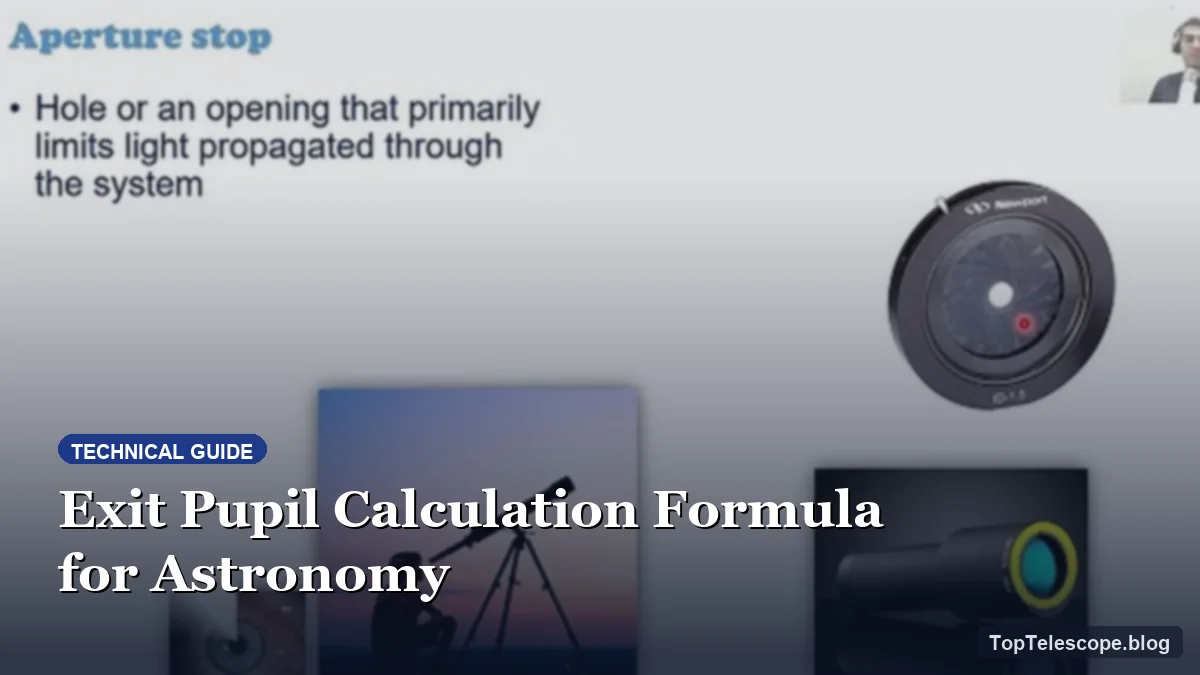
Divide your telescope objective diameter by the magnification to find the exit pupil. A seven millimeter exit pupil matches fully dark-adapted human eyes for maximum brightness.
Ready to compare models? Start with our Best Telescope: Top Backyard Picks for Astronomy.
Practical Quick-Reference Table
| Scenario / Metric | Recommended Target | Why It Matters |
|---|---|---|
| Dark-Sky Wide-Field | 6.0mm to 7.0mm | Maximizes light grasp for faint nebulae. |
| Lunar and Planetary | 1.0mm to 2.0mm | Balances resolution against eye floaters. |
| High-Resolution Double Stars | 0.5mm to 1.0mm | Extracts maximum detail at high power. |
| Light-Polluted Skies | 2.0mm to 4.0mm | Darkens sky background for better contrast. |
| Daytime Terrestrial Viewing | 2.0mm to 3.0mm | Matches daytime constricted human pupil. |
| Eyepiece Focal Calculation | F_scope / F_eyepiece | Determines precise magnification scaling factor. |
Fundamentals of Telescope Exit Pupil Optics
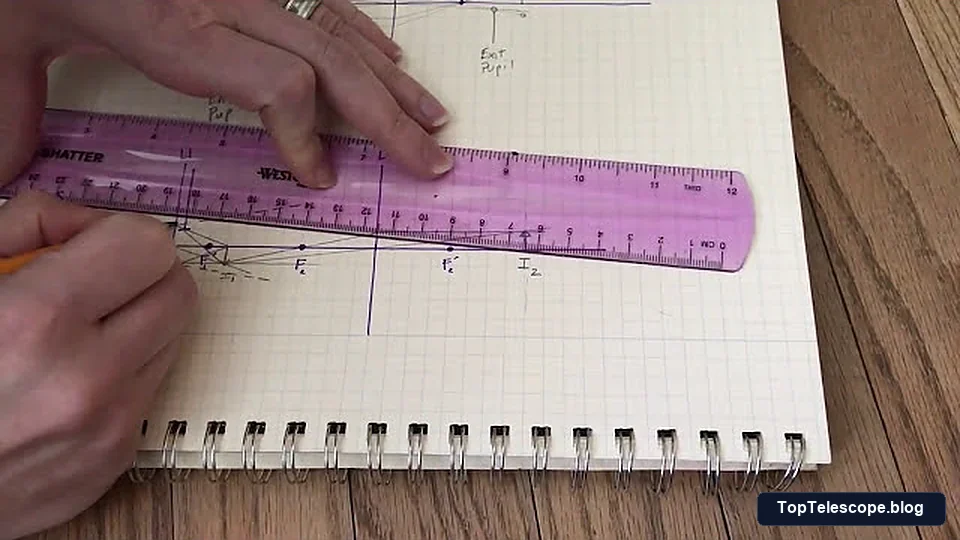
The exit pupil represents the concentrated image of your telescope objective formed by the eyepiece. Precision optical design dictates that all gathered light converges through this single point.
When you position your eye directly at this aerial image plane, your retina receives the entire light cone. Beginners can avoid mismatched exit pupils by choosing the right equipment from our best astronomy telescope for beginners guide.
Understanding this optical bottleneck prevents common viewing errors during deep-sky observations. Advanced telescope configurations require careful balancing of aperture and focal lengths to succeed.
- Light rays exit the eyepiece converging sharply.
- The exit pupil floats just outside the glass.
- Aperture and magnification control physical diameter.
- Proper eye relief ensures comfortable pupil alignment.
Optical Ray Path Mechanics
Objective lenses collect incoming starlight and focus it toward the primary focal plane. Eyepiece lens elements then re-collimated these rays into a manageable exit beam.
The diameter of this emerging light cylinder depends entirely on system magnification ratios. Internal field stops further define the boundaries of the observable field.
- Primary focus concentrates incoming wave fronts.
- Field stops bound the peripheral viewing angle.
Mathematical Derivation of the Exit Pupil Equation
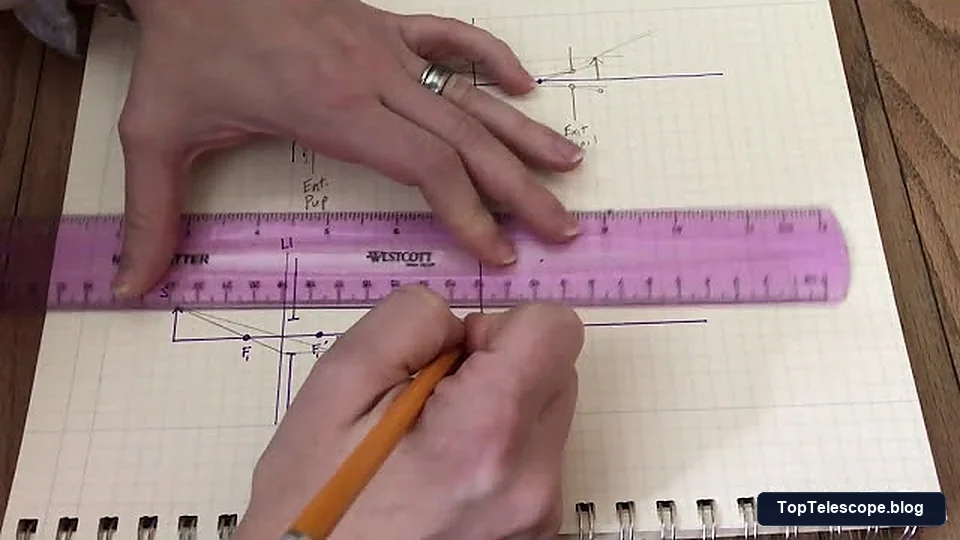
The standard formula divides telescope aperture diameter by total system magnification. Mathematical precision ensures you predict performance before evaluating any best budget telescope for astronomy under dark skies.
Alternatively, divide the focal length of the telescope by the eyepiece focal length. Both calculation methods yield identical exit pupil dimensions for any optical train.
Using metric units prevents conversion errors during complex calculations. Always verify measurements using millimeters to maintain consistency across different telescope accessories and eyepieces.
- Formula A: Aperture divided by magnification.
- Formula B: Telescope focal length divided by eyepiece.
- Always convert inches to millimeters accurately.
- Keep a scientific calculator handy during sessions.
Step-by-Step Calculation Protocol
Measure your primary mirror or lens clear aperture in millimeters. Determine magnification by dividing telescope focal length by the chosen eyepiece focal length.
Divide the aperture value by your calculated magnification result. The resulting number represents your exact exit pupil diameter in millimeters.
- Record exact focal specifications.
- Execute division steps sequentially.
Video Walkthrough: Aperture stop, exit pupil, entrance pupil
Human Eye Adaptation and Optimal Pupil Matching
Human eye pupils dilate differently depending on age and ambient lighting conditions. Dark adaptation allows human pupils to expand between five and seven millimeters typically.
Matching your telescope exit pupil to your eye dilation prevents wasted light. Light spilling over the iris provides zero benefit, especially when using a compact best travel telescope for astronomy.
Younger observers utilize larger exit pupils more effectively than older astronomers. Biological aging naturally reduces maximum human eye pupil dilation over many decades.
- Dark-adapted pupils range from five to seven millimeters.
- Daytime pupils constrict down to two millimeters.
- Wasted light falls outside the eye lens.
- Age dictates maximum usable exit pupil size.
Physiological Limitations in Stargazing
Stargazers must allow twenty to thirty minutes for complete night vision adaptation. Bright white light instantly resets human rhodopsin levels and constricts pupils.
Position your eye pupil precisely within the optical exit cylinder. Off-axis viewing introduces severe vignetting and chromatic aberration during high-power sessions.
- Preserve night vision using red filters.
- Center your eye over the exit point.
Calculating Exit Pupil for Wide-Field Deep-Sky Scopes
Wide-field astronomy requires large exit pupils to capture faint extended objects. Nebulae and galaxies demand maximum photon collection across wide visual fields of view.
Low-power, long-focal-length eyepieces pair well with fast Newtonian and refractor scopes. A six-millimeter exit pupil delivers maximum image brightness for extended deep-sky celestial targets.
Light pollution alters how large your exit pupil should ideally be. Sky glow brightening forces astronomers to use smaller exit pupils to preserve contrast.
- Target faint nebulae with large exit pupils.
- Pair fast scopes with wide-field eyepieces.
- Light pollution requires smaller exit pupils.
- Maintain contrast against illuminated backgrounds.
Deep-Sky Eyepiece Selection Matrix
Calculate required eyepiece focal length using desired exit pupil targets. Aperture-to-pupil ratios guide your selection of two-inch ultra-wide eyepieces for large telescopes.
Inspect edge-of-field illumination metrics across your chosen optical train. Coma correctors help maintain sharp exit pupils in fast Newtonian reflector designs.
- Select two-inch formats for wide views.
- Check field illumination consistency.
Managing High-Magnification Planetary Exit Pupils
Planetary observation requires smaller exit pupils to increase useful magnification. Lunar details and planets demand high power despite dropping overall image brightness levels.
Target an exit pupil between one and two millimeters for planets. High magnification shrinks the exit pupil while resolving fine atmospheric cloud bands.
Going below one millimeter introduces diffraction limits and image softening. Optical diffraction limits usable magnification based strictly on metrics from our magnification calculator tool.
- Planets require exit pupils under two millimeters.
- Small exit pupils darken sky backgrounds nicely.
- Avoid dropping below half a millimeter.
- Diffraction softens images at extreme magnifications.
High-Power Resolution Constraints
Airy disks expand as exit pupils shrink below optimal physical thresholds. Resolving double stars requires balancing high magnification against atmospheric seeing stability conditions.
Track thermal equilibrium inside your optical tube assembly carefully. Internal air currents distort exit pupil formation during high-magnification planetary viewing sessions.
- Monitor thermal stabilization times.
- Assess local seeing before pushing power.
Optical Limitations and Vignetting Factors
Mechanical obstructions inside the focuser drawtube can restrict exit pupil geometry. Vignetting occurs when internal baffling cuts off marginal light rays prematurely.
Diagonal mirrors in refractors and Cassegrains must match light cone sizes. Undersized diagonal mirrors truncate the exit pupil and degrade peripheral field illumination.
Eyepiece internal lens groupings also influence final exit pupil clarity. Complex multi-element designs can occasionally vignette extreme field angles in fast telescopes.
- Focuser drawtubes can cause mechanical vignetting.
- Secondary mirrors must be correctly sized.
- Undersized optics truncate the exit pupil.
- Field stops limit maximum unvignetted rays.
Diagnosing Optical Vignetting
Shine a flashlight backward through your telescope without an eyepiece. Inspect the exit pupil projected onto a piece of translucent paper held outside.
Look for clipped circles or darkened edges in the projected beam. Mechanical obstructions require immediate adjustment or replacement of restrictive internal baffles.
- Project exit beam onto white paper.
- Check for clipping or edge darkening.
Practical Measurement and Verification Techniques
Astronomers can measure physical exit pupils using specialized magnifying reticles. Plossl eyepieces coupled with measuring loupes reveal exact millimeter dimensions easily.
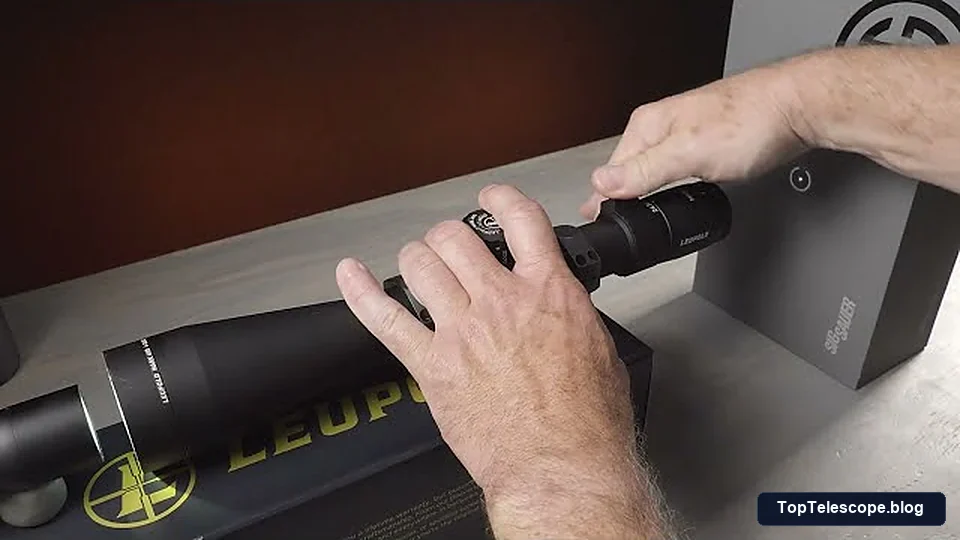
A simple clear ruler held at the eye point offers quick estimation. Direct visual inspection confirms whether calculations match real-world optical performance metrics.
Digital cameras mounted at the exit pupil quantify light distribution accurately. Laboratory test equipment verifies optical throughput and vignetting percentages across the focal plane.
- Use measuring loupes with etched reticles.
- Transparent rulers offer quick estimations.
- Camera sensors record exit pupil intensity.
- Verify calculations against physical measurements.
Field Verification Protocols
Point your telescope at a bright daytime surface or twilight sky. Back away slightly until you see the bright floating disk of light.
Compare observed disk size against your initial mathematical calculations. Consistency checks ensure your optical train operates at peak theoretical efficiency.
- Use twilight skies for safe alignment.
- Measure projected disk diameter directly.
Frequently Asked Questions
What is the ideal exit pupil for general astronomy?
A two to three millimeter exit pupil offers a versatile balance of image brightness and sky contrast. This range suits most deep-sky objects and moderate lunar viewing conditions effectively.
Why does my exit pupil matter during stargazing?
Matching your exit pupil to your dark-adapted eye ensures you capture all available gathered light. Mismatched exits result in wasted photons or compromised image resolution.
How do I calculate exit pupil without a calculator?
Divide telescope aperture millimeters by the total magnification of your current eyepiece setup. For example, a two-hundred millimeter scope at one-hundred power yields a two millimeter exit pupil.
Can an exit pupil be too large for my eyes?
Exit pupils exceeding seven millimeters spill excess light outside your fully dilated eye pupil. This wasted light drops image contrast and degrades faint deep-sky visibility.
Does poor seeing affect exit pupil calculations?
Atmospheric seeing turbulence does not alter mathematical exit pupil size calculations directly. However, poor seeing forces you to use smaller exit pupils to maintain usable image sharpness.