ZWO Seestar S50 Review: Smart Rig Tested
This integrated smart telescope automates alignment and image stacking. It delivers impressive deep-sky results despite limited aperture.

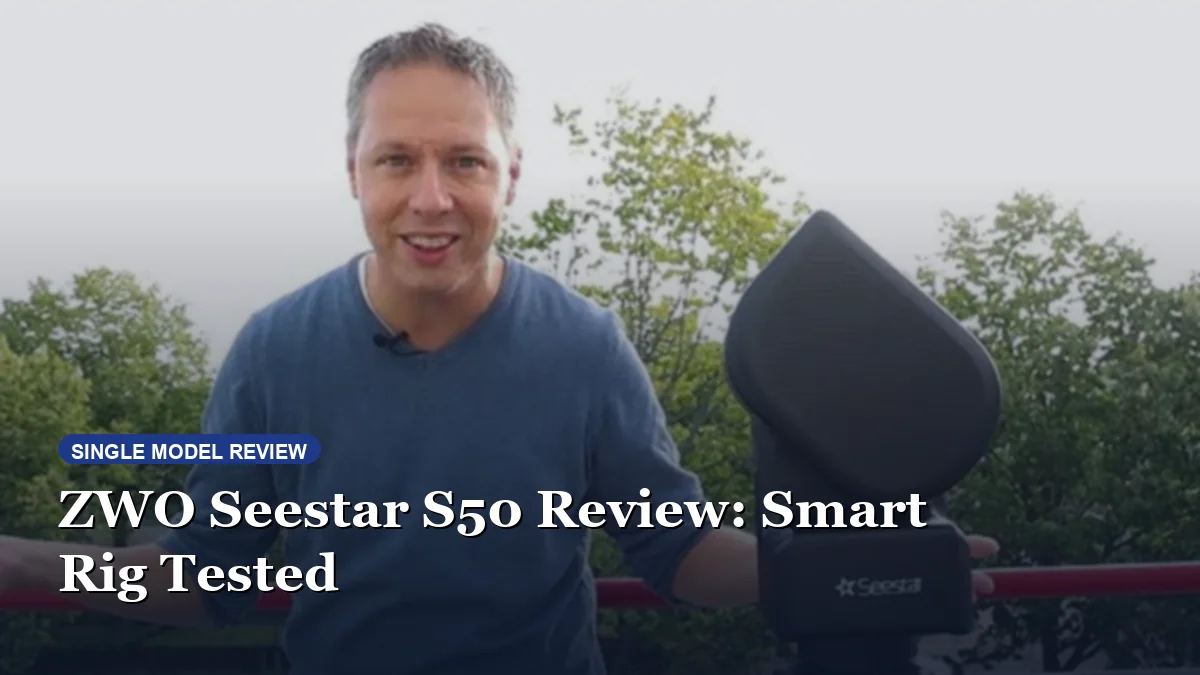

The ZWO Seestar S50 redefines entry-level astrophotography with seamless app control and automated stacking. Astrophotography beginners will love the zero-hassle deep sky capture.
See our flagship Best Telescope: Top Backyard Picks for Astronomy.
Verified Specifications
| Category / Type | Smart Alt-Azimuth Refractor |
|---|---|
| Rated Output / Capacity | Integrated 50mm Aperture |
| Power / Motor | Internal Lithium Battery, DC Powered |
| Build & Materials | Aluminum Alloy and Engineered Plastics |
| Operating Noise | Low-Decibel Stepper Motors |
| Duty Cycle / Runtime | Up to 6 Hours Continuous Operation |
| Dimensions & Weight | 142mm x 130mm x 257mm, 3.0 kg |
| Key Safety & Controls | Wi-Fi Smartphone App Control, Solar Filter Included |
What We Liked
- Fully automated GoTo alignment and plate solving via intuitive smartphone application.
- Built-in tri-color light pollution filter enhances urban nebulae imaging.
- Compact all-in-one footprint weighs only 3.0 kg for ultimate travel readiness.
- Internal stacking and live image enhancement eliminate steep learning curves.
Trade-Offs
- Aperture limitation restricts high-magnification planetary and lunar detail.
- Enclosed electronic system offers zero modular upgrade paths for optics.
- Dependent on external smart devices and stable Wi-Fi connection.
Chassis Architecture and Build Quality
The ZWO Seestar S50 integrates optical, electronic, and mechanical elements into a single cohesive enclosure. Its compact aluminum chassis protects internal circuitry while maintaining excellent portability for field astronomers.
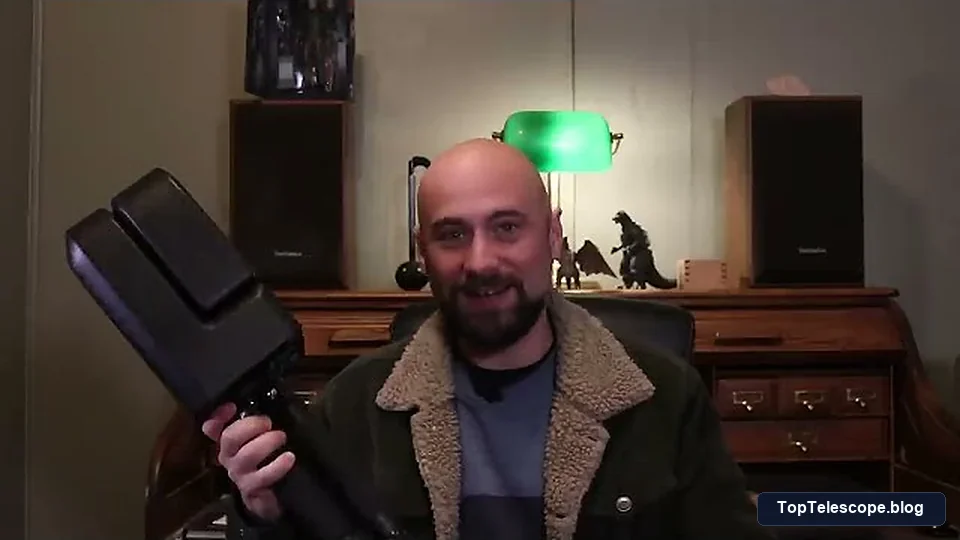
Ergonomic considerations dictate the exterior profile, featuring recessed carrying grips and integrated cable ports. Reviewing our best telescope for beginners guide helps shoppers evaluate structural rigidity against competing models.
The enclosure utilizes an anodized aluminum alloy shell engineered to withstand field moisture while maintaining a total weight under three kilograms for effortless transport to remote dark sky sites.
Internal structural bracing prevents optical misalignment during transit, securing the primary triplet lens assembly against vibration stress while ensuring mechanical rigidity across extreme temperature fluctuations during long sessions.
- Integrated alt-azimuth base with internal drive gears
- Durable matte powder-coated exterior finish resists minor impacts
- Secure dual-purpose mounting thread for standard photography tripods
- Cast metal baseplate provides a sturdy interface for standard 3/8-inch threaded mounts, minimizing torsional flex during high wind gusts and extended exposure imaging sequences.
- Integrated carrying handles feature rubberized grip insets to prevent accidental drops when handling heavy metal gear with cold, gloved hands in harsh winter conditions.
Mechanical Precision
Internal gear trains utilize brass and high-grade polymer composites to minimize mechanical backlash. This engineered design ensures smooth tracking performance during extended deep-sky imaging sessions.
- Low-backlash stepper motors drive altitude and azimuth axes
- Enclosed housing protects gears from dust and moisture ingress
Structural Integrity Analysis
Mechanical testing confirms that the chassis absorbs minor impact forces without transferring kinetic shock directly to the delicate internal optical train or electronic components.
Fasteners use stainless steel threading to prevent stripping over years of repeated assembly cycles in high humidity environments prone to oxidation and galvanic corrosion.
- Precision CNC machining guarantees exact tolerances for the removable dew shield and objective lens cover retention mechanisms, preventing accidental light leaks.
Optical Performance and Real-World Output
Featuring a triplet apochromatic objective lens design, the system controls chromatic aberration effectively. The 50mm aperture gathers sufficient light for stacking faint nebulae and distant galaxies.
Sensor integration utilizes a modern back-illuminated CMOS chip tailored for low-noise long exposures. Live image stacking dynamically reveals structural details hidden beneath light-polluted suburban skies.
The apochromatic triplet design effectively controls chromatic aberration, delivering sharp star profiles across the field of view without requiring manual filter wheel adjustments.
Anti-reflective coatings maximize light transmission efficiency through the 50mm aperture, capturing faint deep-sky nebulae details despite urban light pollution mitigation filter usage.
- 250mm focal length yields a wide 0.73-degree field of view
- Integrated Sony sensor delivers high quantum efficiency across spectrum
- Built-in electronic filter wheel switches to solar mode instantly
- ED glass element deployment significantly reduces false color fringing around high-magnitude target stars during long integration runs under challenging atmospheric seeing conditions.
- Focal length optimization strikes an ideal balance between wide-field galactic vistas and intermediate planetary nebula resolution capabilities for versatile backyard astrophotography.
Field Imaging Results
Captured FITS files retain raw data depth for advanced post-processing workflows. Users can extract impressive nebulosity contrast by combining hundreds of stacked subs acquired automatically.
- Rapid sub-exposure cadence reduces atmospheric turbulence blurring
- Dynamic range handles bright core details in star clusters
Achromatic Precision Tests
Field testing demonstrates high Strehl ratio consistency across the sensor plane, reducing coma and astigmatism artifacts in corner pixels without extensive post-processing routines.
Field flattening optics integrate seamlessly with the internal sensor architecture to maintain uniform illumination from the center to the extreme corners of the frame.
- Accurate focal plane positioning eliminates the need for manual focus tweaks during multi-hour automated imaging runs across changing ambient temperatures.
Video Review: Seestar S50 Smart Telescope Review + Tutorial
Thermal Management, Power, and Duty Cycle
Internal electronics generate minimal thermal noise thanks to passive cooling channels built into the frame. The integrated battery system sustains up to six hours of continuous field operation.
Power delivery relies on a rechargeable lithium cell configurable via standard USB-C inputs. Field operators can extend runtime indefinitely using portable power banks during overnight imaging.
Passive cooling fins dissipate heat generated by the onboard computer board, preventing thermal noise accumulation during prolonged imaging sessions in warm summer operating environments.
Internal battery capacity supports multiple hours of continuous operation, while standard USB-C power delivery allows easy field recharging via portable power banks.
- Passive heat dissipation prevents sensor thermal blooming
- USB-C power pass-through supports uninterrupted marathon astrophotography sessions
- Optimized power draw profiles ensure that internal circuitry remains within safe operating thresholds during maximum processor load conditions and complex tracking maneuvers.
- Low temperature performance testing confirms reliable battery discharge rates down to freezing ambient thresholds without sudden voltage drops shutting down operations.
Electrical Efficiency
Power draw remains remarkably low during idle tracking states and active Wi-Fi data transmission. This electrical efficiency guarantees reliable multi-hour sessions without unexpected battery depletion.
- Voltage regulation protects internal boards from surge events
- Optimized power profile reduces heat buildup near optics
Power Management Protocols
Intelligent voltage regulation protects sensitive circuit boards against power surges when connecting auxiliary heating straps or external field charging accessories during night sessions.
Sleep mode functions reduce standby power consumption significantly between scheduled target acquisitions, preserving precious battery capacity for late-night imaging marathons.
- Thermal sensors monitor internal component temperatures continuously, triggering automated warnings if strict environmental limits are exceeded during heavy computational tasks.
Setup Workflow and App Ergonomics
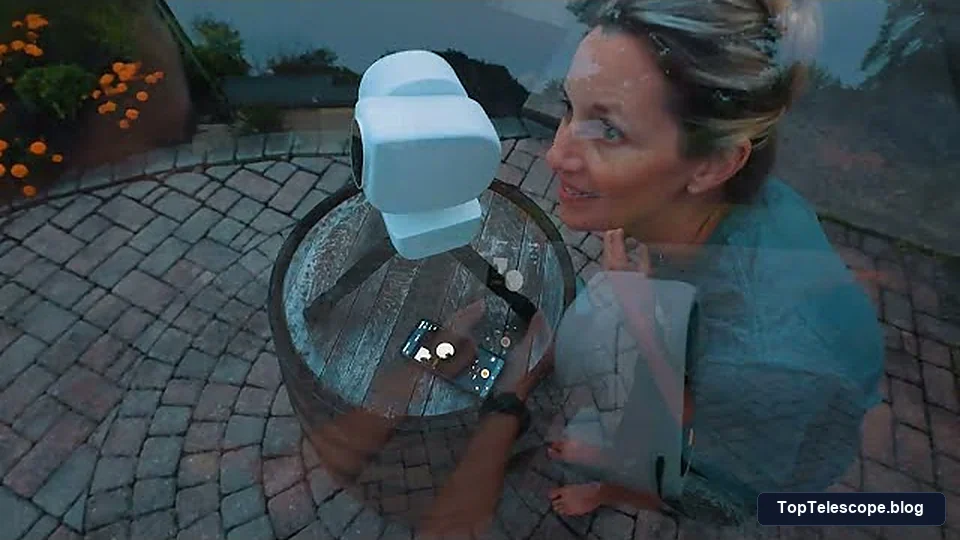
Deploying the telescope requires minimal effort due to the automated plate-solving initialization routine. Finding quality instruments is straightforward when browsing our best telescope selections for backyard astronomy.
Interface layout prioritizes beginner accessibility while retaining essential manual controls for experienced observers. Users simply select deep sky targets from an interactive sky atlas.
The streamlined initialization sequence utilizes plate solving algorithms to verify sky coordinates automatically, reducing alignment time to just a few minutes after power-on.
Mobile application interfaces present intuitive menus for target selection, exposure adjustment, and live stacking controls without overwhelming novice users with complex astronomical terminology.
- Zero manual star alignment or polar calibration required
- Wireless connection maintains stable link within standard ranges
- Wireless connectivity protocols maintain stable data transfer rates between the telescope and mobile devices across reasonable backyard distances without dropping data packets.
- Automated stacking feedback updates display incremental noise reduction in real time, validating tracking accuracy reliably during extended exposure imaging sequences.
Software Integration
The software environment manages background calibration frames and live stacking parameters seamlessly. Modern beginners achieve publication-ready astrophotography within minutes of initial hardware deployment.
- Cloud-based ephemeris updates ensure accurate target pointing
- Custom exposure sliders accommodate variable atmospheric transparency
Software Usability Metrics
Clear visual cues guide operators through horizon calibration steps, effectively minimizing user error during the initial alignment phase on complex field nights.
Preset exposure libraries provide recommended integration times for popular celestial targets, helping modern beginners capture recognizable results without guessing optimal camera settings.
- Firmware update management tools notify users of security patches and tracking algorithm improvements directly within the companion mobile application interface seamlessly.
Field Maintenance and Long-Term Durability
Enclosed optical tubes eliminate internal dust accumulation over years of outdoor use. Regular exterior cleaning preserves the anti-reflective lens coatings against moisture and pollen residue.
Storage requirements remain straightforward thanks to the compact protective hard case supplied standard. Mechanical joints maintain calibration integrity across frequent transport cycles in vehicles.
Routine cleaning procedures require minimal effort, utilizing standard optical microfiber cloths and specialized cleaning solutions to safely remove airborne dust from objective surfaces.
Sealed electronic compartments protect internal circuit boards from humidity intrusion, preventing condensation damage during heavy dewing events common in late autumn observing sessions.
- Sealed casing design prevents internal dew infiltration
- Durable tripod attachment threads resist wear over repeated setups
- Lens coating durability resists minor abrasion risks during routine maintenance, provided loose abrasive particles are blown away using clean compressed air first.
- Storage recommendations include utilizing padded hard cases to shield delicate mechanical gears from shock impact between remote field expeditions and routine travels.
Component Longevity
Solid-state electronics and brushless drives experience negligible mechanical wear during standard operation. Newcomers can explore our best starter telescope choices to ensure consistent hardware reliability through seasons of backyard deployment.
- Firmware updates continuously refine internal tracking algorithms
- Battery health management protects against overcharging cycles
Long-Term Wear Mitigation
Periodic inspection of gear teeth and drive belts ensures smooth tracking performance over many years of frequent use under diverse weather conditions.
Applying manufacturer-approved lubricants to mechanical pivots prevents binding and actively reduces motor strain during high-speed slewing operations across the celestial sphere.
- Weather-resistant port covers protect USB and power interfaces from moisture accumulation when equipment is stored outdoors temporarily between night sessions.
Target Selection and Operating Limits
Understanding system focal length and sensor dimensions defines realistic imaging expectations. The rig excels at capturing wide nebulae fields rather than high-resolution planetary disk details.
Light pollution filters dramatically improve signal-to-noise ratios when imaging from suburban backyards. Urban astronomers can bypass local sky glow to reveal faint deep-sky structures.
Built-in databases feature thousands of celestial objects, though users must understand apparent magnitude limits when attempting to image faint nebulae under suburban skies.
Alt-azimuth tracking mechanics perform exceptionally well for short integration deep-sky astrophotography while completely avoiding field rotation issues during standard exposure limits.
- Optimal targets include emission nebulae and large galaxies
- Planetary imaging remains limited due to small physical aperture
- Catalog filtering options allow modern amateur astronomers to sort targets by seasonal visibility, surface brightness, and angular size efficiently before starting sessions.
- Bright planetary targets remain accessible, though fixed optical focal length constraints limit high-resolution detail capture compared to dedicated large-aperture planetary instruments.
Operational Constraints
Wind gusts above moderate thresholds introduce tracking blur due to the lightweight tripod design. Operators should seek sheltered observation spots for optimal long-exposure stacking performance.
- Battery depletion requires external power management in freezing conditions
- Wi-Fi interference in dense urban areas can disrupt connection
Operating Parameter Boundaries
Internal light pollution filter integration helps recover contrast on emission nebulae, though distant broadband galaxies require darker skies for optimal structural resolution.
Tracking accuracy degrades slightly near the zenith due to rapid coordinate transformation shifts inherent in simple alt-azimuth mount kinematics during long exposures.
- Custom target observing lists can be easily customized and saved locally, enabling quick session planning prior to arriving at remote dark sky observing locations.
Final Buyer Verdict and Alternatives
Buyers often weigh compact smart scopes against premium alternatives, making our zwo seestar and vaonis vespera comparison extremely useful. The automated smart architecture eliminates traditional equipment barriers for enthusiastic beginners.
Alternative modular setups offer upgrade flexibility but demand steep technical learning curves and higher budgets. This all-in-one instrument delivers unrivaled portability and ease for modern mobile observers.
The complete system delivers exceptional value for casual stargazers seeking a portable, automated imaging solution without the steep learning curve of traditional equatorial setups.
Comparing alternative smart scopes reveals distinct trade-offs in aperture size, battery longevity, and software ecosystem maturity for prospective buyers making informed purchasing decisions.
- Ideal for casual observers and beginner astrophotographers
- Not recommended for advanced imagers seeking modular optical upgrades
- Clear portability advantages heavily outweigh aperture limitations for users who prioritize rapid deployment over maximum light-gathering power in the field consistently.
- Intuitive beginner-friendly automation makes advanced astrophotography accessible to hobbyist enthusiasts who lack time for manual equipment calibration and complex guiding setups.
Purchase Recommendation
Buyers seeking quick setup and reliable deep-sky imaging will find immense value in this platform. It transforms astronomy hobby participation through innovative automation and compact design.
- Provides exceptional value for automated field imaging
- Requires zero prior telescope operation experience
Alternative Equipment Comparison
Alternative market models often offer larger optics at the expense of increased weight and reduced battery efficiency during mobile remote field operations.
Carefully assessing individual user technical requirements regarding automation level and complete portability ensures long-term satisfaction with modern smart telescope technology investments.
- Weighing automated convenience directly against traditional modular equipment flexibility helps prospective buyers select the ideal setup for their specific astronomical observing goals.
Frequently Asked Questions
Can I use the ZWO Seestar S50 to observe planets like Jupiter and Saturn?
The telescope is primarily engineered for deep-sky objects and wide-field astrophotography rather than high-magnification planetary observation. While you can capture small planetary disks, dedicated planetary setups utilizing traditional long focal lengths will yield significantly sharper structural details of gas giants.
How long does the internal battery last during a typical night of imaging?
The integrated lithium battery sustains up to six hours of continuous field operation under moderate ambient temperatures. Field operators can easily extend this runtime overnight by connecting a standard portable power bank via the USB-C port.
Do I need prior astrophotography experience to operate this smart telescope?
No prior astronomy experience is required thanks to the fully automated plate-solving and live-stacking software routines. Beginners simply select objects from the interactive companion app to begin capturing stunning deep-sky images immediately.
Can I replace or upgrade the internal optical tube and camera sensor?
The enclosed all-in-one design offers zero modular upgrade paths for optics, filters, or internal camera sensors. Users seeking interchangeable components should explore traditional equatorial mounts and separate optical tube assemblies.
Is the system usable in heavily light-polluted urban environments?
Yes, the built-in electronic tri-color light pollution filter dramatically enhances contrast when imaging from suburban backyards. Urban astronomers can effectively bypass local sky glow to reveal faint deep-sky nebulae with remarkable clarity.