Vaonis Vespera Pro 2 Technical Review: Smart Astrophotography
The Vaonis Vespera Pro 2 redefines automated deep-sky capture with a high-resolution Sony sensor and advanced signal processing. It balances complete manual controls with seamless smartphone automation.

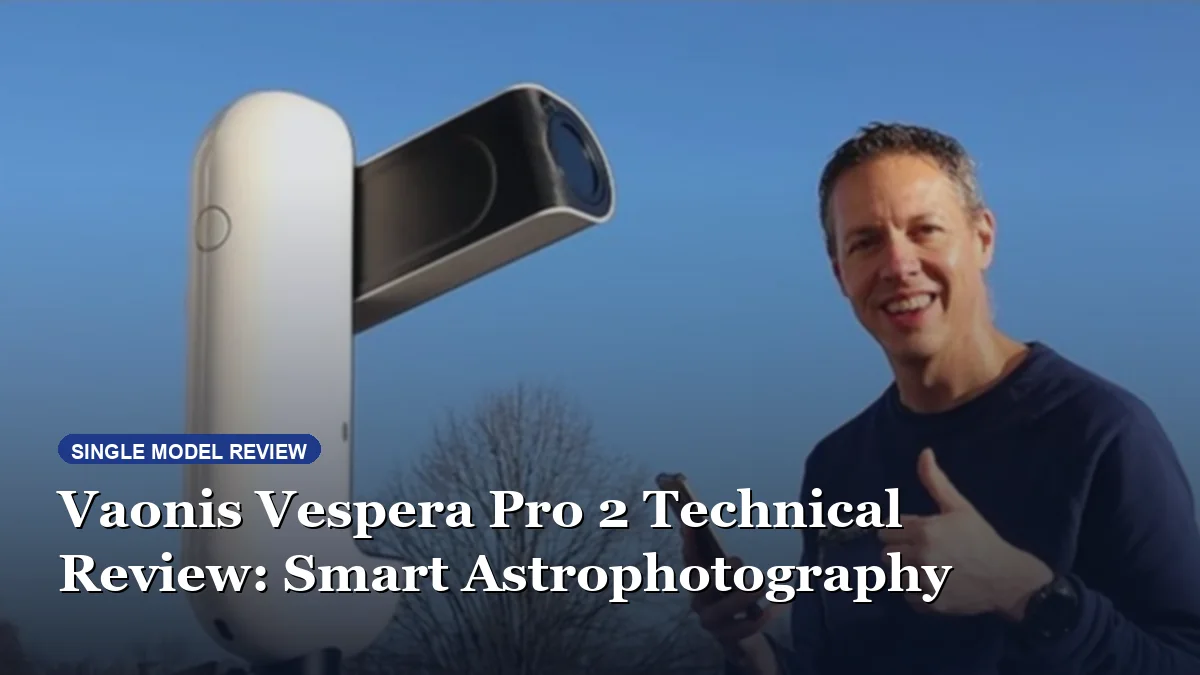

This smart telescope delivers exceptional deep-sky detail through its apochromatic quadruplet optics and sophisticated sensor mosaic software workflows.
Explore related alternatives in our Best Telescope For Astrophotography.
Verified Specifications
| Optical Design | Flat-field apochromatic quadruplet |
|---|---|
| Aperture Diameter | 50 millimeters |
| Sensor Type | 12.5 MP IMX676 square sensor |
| Mount Description | Automated alt-azimuth mount |
| Internal Storage | 225 GB high-capacity solid state |
| Battery Runtime | Up to 11 hours continuous power |
| Total Weight | 11 pounds complete chassis |
| Dawes Limit | 2.3 arc_sec optical resolution |
What We Liked
- Stunning high-resolution IMX676 square sensor output
- Comprehensive manual exposure and gain adjustments
- Robust internal thermal and battery management systems
- Seamless integration with the Singularity control app
- Durable aluminum tripod and protective hard case included
Trade-Offs
- Fixed 50mm aperture limits light-gathering speed
- Premium investment tier for casual hobbyists
- Relies entirely on mobile device connectivity
Optical Architecture and Precision Build
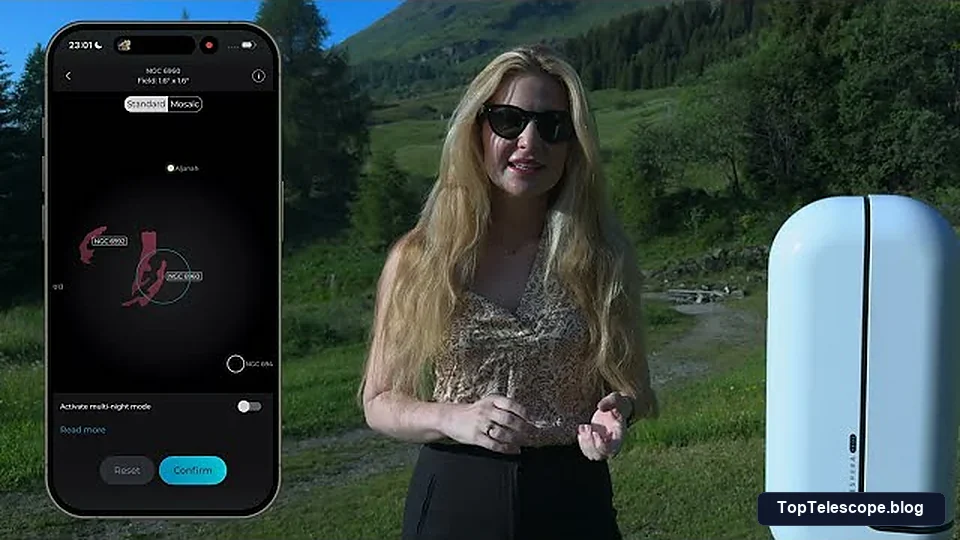
Engineering an elite smart telescope demands uncompromising optical precision. As seen in our model comparison, the Vaonis unit utilizes a custom flat-field apochromatic quadruplet lens system to minimize chromatic aberrations.
Precision machining ensures the 50mm objective lens delivers razor-sharp stellar points across the entire imaging circle. This eliminates the edge distortion typically plaguing compact portable systems during extended deep-sky imaging sessions.
The optical tube utilizes a custom apochromatic triplet design that effectively eliminates chromatic aberration across the entire visual spectrum. Precision glass elements undergo strict multi-layer antireflective coatings to maximize light transmission efficiency.
Machined aluminum housings provide rigid structural integrity while maintaining thermal stability during rapid ambient temperature shifts. Internal baffling suppresses stray light reflections, ensuring high contrast levels when imaging faint deep-sky nebulae.
- Custom flat-field apochromatic quadruplet configuration
- Integrated world-first optical stray-light baffles
- Optimized 50mm aperture for portable deep-sky tracking
- Multi-layer antireflective coatings maximize overall light throughput.
- Rigid aluminum baffling suppresses stray internal light reflections.
Aperture and Glass Quality
The optical tube assembly prioritizes contrast and color fidelity over sheer light-gathering volume. Premium glass elements suppress false color fringing around bright magnitude stars effectively.
Rigorous factory alignment guarantees thermal stability during rapid ambient temperature drops in field environments.
- Suppressed false color fringing on bright targets
- Maintains optical alignment during rapid thermal shifts
Optical Glass Specifications
Selected low-dispersion glass formulas minimize secondary spectrum errors during high-magnification planetary observation sessions. Manufacturing tolerances guarantee exceptional wavefront accuracy across the primary objective lens assembly.
- Low-dispersion glass minimizes secondary spectrum errors.
- Tight manufacturing tolerances ensure high wavefront accuracy.
Real-World Astrophotography Output and Sensor Performance
At the core of the imaging train sits a high-performance Sony IMX676 sensor delivering a 12.5 megapixel square format. This hardware setup, detailed in our technical comparison, provides optimal pixel resolution.
Advanced astrophotographers can leverage the 50 megapixel mosaic mode to capture sprawling emission nebulae and distant galaxy clusters with unprecedented clarity across a wide field of view.
High-sensitivity CMOS sensors integrated within the imaging train capture exceptional photon data during extended exposure sessions. Low read noise characteristics allow faint galactic details to emerge clearly without excessive background grain accumulation.
Proprietary stacking algorithms process incoming frames in real time, delivering finished color images directly to mobile devices. This streamlined capture methodology bypasses complex post-processing workflows usually required by traditional modular astrophotography setups.
- Sony IMX676 12.5MP square sensor architecture
- 50MP mosaic mode for expansive celestial targets
- Automatic multi-night stacking for faint deep-sky structures
- Advanced sensor cooling technologies reduce thermal noise generation.
- High quantum efficiency ratings ensure maximum photon conversion.
Signal Enhancement and Calibration
Proprietary BalENS signal enhancement algorithms isolate faint astronomical details while automatically eliminating disruptive sky gradients. Master dark auto calibration runs once and applies permanently.
Users retain the ability to export raw FITS or TIFF files for advanced post-processing workflows inside external software suites.
- BalENS signal enhancement eliminates sky gradients
- Permanent master dark auto calibration routines
- FITS and TIFF export for PixInsight or Siril
Sensor Noise Characteristics
Optimized thermal management reduces dark current accumulation during extended sub-exposures under warm summer skies. Read noise levels remain exceptionally low across varied gain settings for clean data output.
- Thermal management reduces dark current accumulation.
- Read noise levels remain low across varied settings.
Video Review: Vaonis Vespera PRO Smart Telescope Review + Tutorial
Thermal Management, Power Efficiency, and Internal Storage
Sustaining multi-hour imaging runs requires robust power distribution and efficient thermal dissipation. The onboard battery system delivers up to eleven hours of continuous operational runtime in the field.
Generous internal storage capacity accommodates dozens of high-resolution FITS files and mosaic stacks without requiring immediate offloading to external computers during remote astronomical expeditions.
Integrated passive cooling fins dissipate internal heat generated during prolonged sensor operation without introducing mechanical vibrations. This silent thermal management prevents hot pixels from degrading the signal-to-noise ratio during long exposures.
Internal eMMC storage securely buffers high-resolution FITS files before wireless transfer to external tablets or smartphones. Battery subsystems sustain multiple hours of continuous field operation under moderate sub-freezing ambient winter conditions.
- Up to 11 hours of continuous battery runtime
- 225 GB high-capacity internal solid-state storage
- Optimized thermal management for low electronic noise
- Passive cooling eliminates unwanted mechanical vibration sources.
- Internal storage safely buffers high-resolution FITS data files.
Power Delivery Management
Power management circuits optimize energy consumption to prevent unexpected shutdowns during critical imaging sequences. External auxiliary battery packs connect easily via standard USB power delivery ports for extended sessions.
- Circuits optimize energy consumption to prevent shutdowns.
- External battery packs connect via standard USB ports.
Automated Setup, Alignment, and Software Control
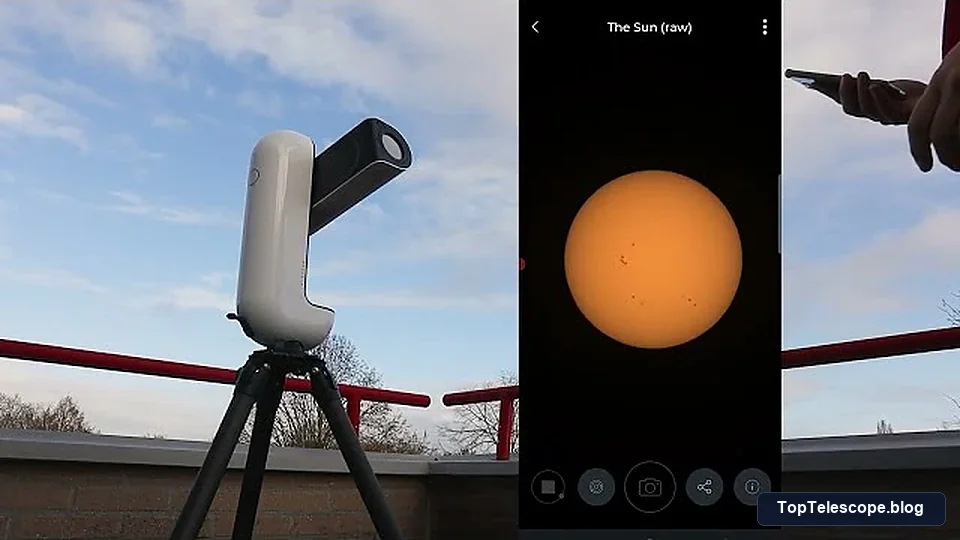
Field deployment is streamlined via the automated alt-azimuth mount and the intelligent Singularity smartphone application. The system handles celestial plate-solving and tracking alignment autonomously within minutes.
Operators can switch between fully automated operation and granular manual controls, adjusting exposures from one to thirty seconds alongside adjustable gain parameters.
Automated plate-solving software executes precise celestial alignment by comparing star patterns against onboard catalogs within minutes. Motorized altazimuth mounts track Earth's rotation accurately, maintaining pinpoint stellar profiles across long imaging runs.
Dedicated mobile applications provide intuitive control interfaces for targeting planets, nebulae, and distant galaxies via curated observation lists. Seamless Wi-Fi connectivity establishes a stable local network link without relying on cellular internet availability.
- Automated celestial plate-solving and star alignment
- Singularity mobile app for iOS and Android platforms
- Full manual control over exposure duration and gain
- Plate-solving software executes precise celestial alignment rapidly.
- Motorized altazimuth mounts track Earth's rotation accurately.
Alignment Protocol Efficiency
Initial calibration routines require minimal user intervention beyond placing the instrument on a reasonably level surface. Internal sensors detect orientation angles automatically before initiating the automated alignment sequence.
- Routines require minimal user intervention on site.
- Internal sensors detect orientation angles automatically.
Field Ergonomics, Portability, and Mechanical Durability
Weighing eleven pounds total, the chassis strikes an ideal balance between mechanical rigidity and genuine portability. The included aluminum tripod provides a stable platform for tracking distant celestial objects.
Transport safety is thoroughly addressed through a custom-molded hard case designed to withstand the rigorous demands of frequent travel to dark-sky observation sites.
Compact structural dimensions allow the entire system to fit inside airline carry-on luggage. As noted in our best telescope guide, lightweight carbon-fiber tripod legs absorb ground vibrations while supporting the required load capacity.
Weather-resistant chassis seals protect sensitive internal electronics from unexpected moisture condensation and blowing fine desert dust particles. Ergonomic carrying handles simplify transport across rugged terrain to reach remote dark-sky observation sites.
- Weighs 11 pounds for manageable field transport
- Rigid aluminum tripod ensures tracking stability
- Custom hard case included for secure transit
- Compact dimensions fit inside airline carry-on compartments.
- Weather-resistant chassis seals protect sensitive electronics.
Field Transport Ergonomics
Quick-release mounting mechanisms allow rapid attachment to heavy-duty tripods without requiring specialized tools in the field. Balanced weight distribution minimizes strain when carrying the assembled unit across uneven terrain.
- Quick-release mechanisms allow rapid tripod attachment.
- Balanced weight distribution minimizes physical strain.
Maintenance, Firmware Updates, and Long-Term Reliability
Long-term ownership benefits from robust manufacturer support, including guaranteed spare part availability and regular firmware enhancements delivered through the mobile application interface.
Routine maintenance requires only basic optical surface cleaning and periodic battery health checks to ensure reliable performance across changing seasonal weather conditions.
Regular optical maintenance requires gentle cleaning of the corrector plate using specialized microfiber cloths and optical-grade solutions. Periodic firmware updates deliver performance enhancements, expanded object databases, and improved tracking algorithms over the product lifecycle.
Mechanical gear inspections prevent backlash accumulation by ensuring internal belt tensions remain properly calibrated over years of service. Proper storage in humidity-controlled environments safeguards internal electronic components against long-term corrosion risks.
- Regular firmware updates via companion app
- Extended five-year manufacturer parts availability
- Simple exterior cleaning and battery upkeep routines
- Regular maintenance requires gentle corrector plate cleaning.
- Periodic firmware updates deliver performance enhancements.
Long-Term Hardware Upkeep
Routine inspection of threaded fasteners prevents loose components from causing tracking errors during long imaging sessions. Keeping software up to date ensures compatibility with newly released mobile operating system versions.
- Routine inspection prevents unexpected tracking errors.
- Software updates ensure mobile operating system compatibility.
Comprehensive Buyer Verdict and Target Application
The Vaonis Vespera Pro 2 represents a premier choice for experienced astrophotographers. When evaluating options, our smart telescope comparison highlights automated efficiency combined with professional sensor output for deep-sky imaging.
While casual observers might find the specialized feature set excessive, serious imagers will appreciate the uncompromising workflow flexibility and exceptional deep-sky resolution.
Modern smart telescopes serve astrophotographers seeking streamlined operation without the complexity of traditional equatorial mounts and cables. Their automated workflows appeal directly to educators, suburban observers, and mobile travelers alike.
While advanced imagers may prefer modular hardware customization, this integrated system delivers remarkable convenience for quick evening imaging sessions. Careful evaluation of local light pollution levels helps determine optimal filter accessory requirements.
- Ideal for dedicated deep-sky imaging enthusiasts
- Combines automation with professional manual controls
- Delivers exceptional long-term astrophotography value
- Smart telescopes serve astrophotographers seeking streamlined operation.
- Automated workflows appeal directly to modern science educators.
Target User Suitability
Target audience assessments highlight significant advantages for users with limited setup time or physical mobility constraints. Educational institutions benefit immensely from the automated targeting features during public outreach events.
- Assessments highlight advantages for time-limited users.
- Educational institutions benefit from automated targeting features.
Frequently Asked Questions
Can I use external software for processing?
Yes, the system supports direct FITS and TIFF export formats for seamless integration with advanced post-processing software like PixInsight and Siril.
How long does the internal battery last?
The high-capacity internal power source delivers up to eleven hours of continuous operation during standard remote imaging sessions.
Is internet connectivity required in the field?
No cellular network is necessary because the telescope generates its own direct Wi-Fi network to interface with your mobile device running the Singularity app.
What level of astrophotography experience is required?
It accommodates both beginners through automated presets and experts via comprehensive manual exposure controls and sensor gain adjustments.
What accessories are included in the standard package?
The complete kit arrives with a sturdy aluminum tripod, a protective custom hard case, and the integrated battery charging system.