Unistellar Evscope 2 Review: Optical Engineering & Field Performance
This automated smart telescope merges a custom Nikon electronic eyepiece with live image processing. Field users must balance deep-sky automation with fixed altazimuth tracking limits.

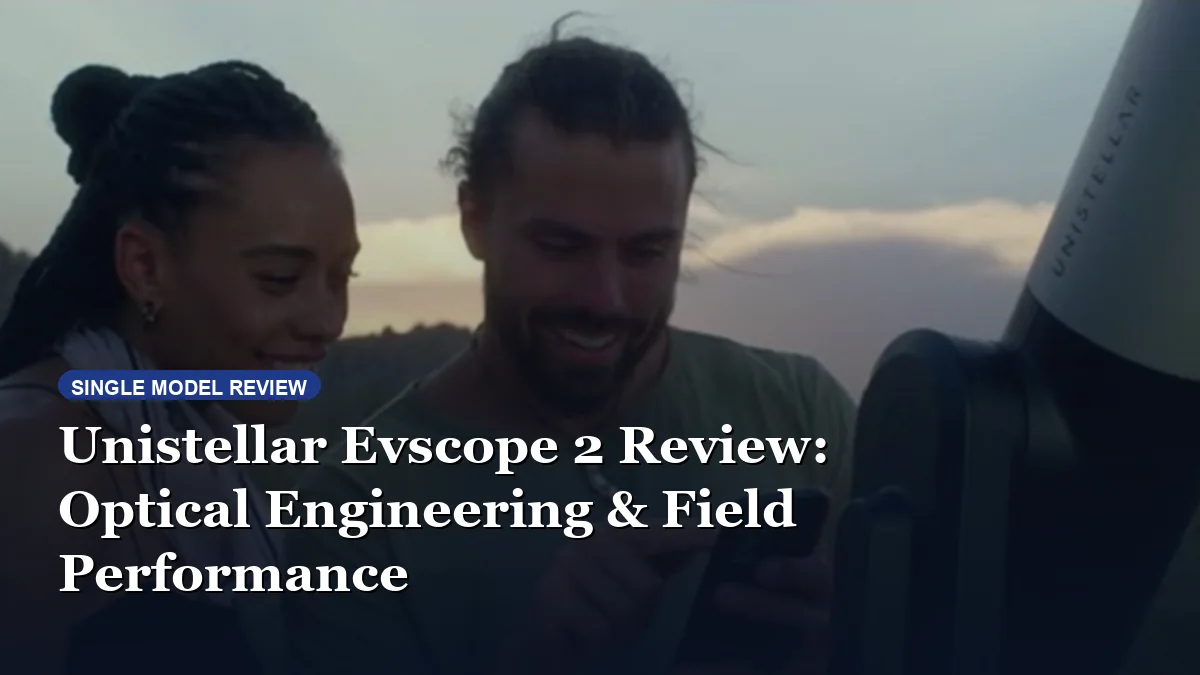

The Unistellar Evscope 2 redefines digital stargazing through exceptional optical integration and live stacking. Its custom Nikon electronic eyepiece delivers unmatched visual immersion despite premium mechanical footprints.
See our flagship Best Telescope: Top Backyard Picks for Astronomy.
Verified Specifications
| Category / Type | Smart GoTo Altazimuth Reflector |
|---|---|
| Rated Output / Capacity | 11.4 cm Objective Lens Diameter |
| Power / Motor | Internal rechargeable battery via solar or USB |
| Build & Materials | Aluminum optical tube with rigid tripod |
| Operating Noise | Low-decibel quiet stepper motor drives |
| Duty Cycle / Runtime | Up to 10 hours continuous field operation |
| Dimensions & Weight | Standard portable OTA with high-payload tripod |
| Key Safety & Controls | Smartphone app control with automated plate solving |
What We Liked
- Unmatched visual immersion via custom Nikon electronic eyepiece technology
- Expansive internal celestial catalog featuring over 5000 verified deep-sky objects
- Robust automated field alignment using advanced smartphone plate solving
- Seamless live image processing and instant sharing capabilities for outreach
Trade-Offs
- Altazimuth mount design introduces field rotation during very long exposures
- High initial investment compared to traditional manual Newtonian reflector setups
- Completely reliant on mobile device connectivity for operational control
Optical Architecture and Primary Mirror Assembly
The optical tube assembly utilizes an 11.4 centimeter primary mirror aperture designed to capture faint photons from deep space. This specific aperture balances light gathering power with overall portability for field researchers.
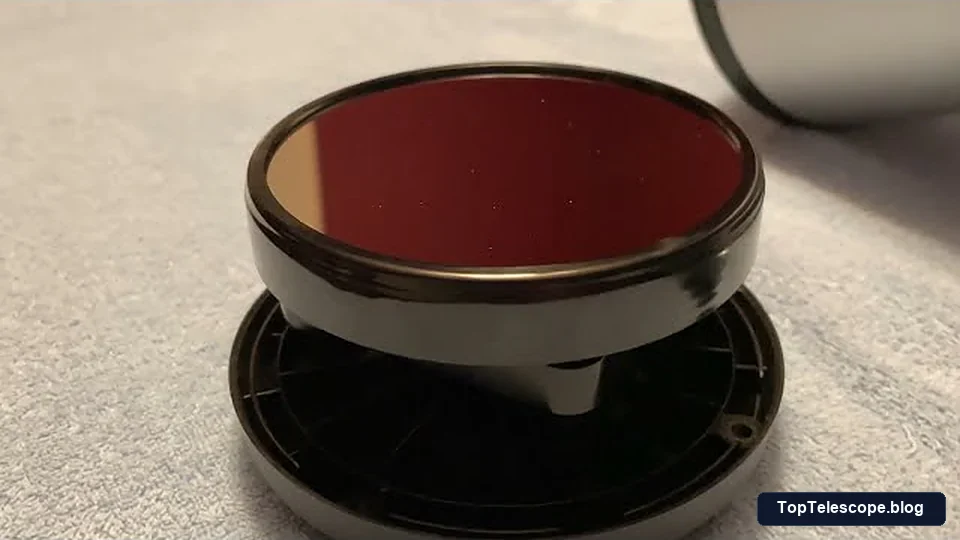
Precision optical coatings maximize reflectivity across the visible spectrum to ensure high contrast targets. Our Unistellar Evscope 2 vs Vaonis Vespera II verdict highlights how internal baffling maintains stable collimation.
The 114mm parabolic primary mirror utilizes a custom glass-ceramic substrate designed to minimize thermal expansion during rapid temperature drops. Its 450mm focal length yields a fast f/3.9 focal ratio suited for wide-field imaging.
Collimation is factory-locked using a rigorous laser interferometer procedure to prevent shifting during transit. Operators must avoid touching the open optical tube assembly to prevent introducing corrosive oils onto the reflective aluminum coatings.
- 11.4 cm objective lens diameter optimizes light throughput
- Durable internal baffling reduces stray light interference
- Factory-calibrated primary mirror minimizes user maintenance
- Primary mirror diameter measures precisely 114 millimeters for optimal light gathering.
- Effective focal length reaches 450 millimeters across the primary optical path.
Mirror Coating Durability
Protective overcoats shield the reflective aluminum surface from environmental moisture and airborne dust particles. Regular inspection ensures long-term fidelity during extended outdoor deployment cycles across varied climates.
Users must avoid touching the primary glass surface during routine cleaning procedures to prevent micro-abrasions on the sensitive optical coatings.
- Multi-layer protective overcoat prevents oxidation
- Resistant to moderate thermal shock in cold environments
Mirror Coating Durability
Protective silicon dioxide overcoats shield the underlying aluminum layers from atmospheric oxidation. Regular inspections under low-intensity LED light help identify microscopic dust accumulation before it impacts overall contrast performance.
- Keep dust caps secured immediately after observing sessions.
- Never use compressed air canisters containing liquid propellants.
Electronic Eyepiece Integration and Nikon Optics
A standout engineering achievement involves the collaboration with Nikon to build a proprietary electronic viewfinder. According to our Vaonis Stellina vs Evscope 2 technical comparison, this specialized micro-OLED display projects crisp imagery directly into a true optical glass assembly.
Traditional telescopes lack this direct digital intermediary, making the observation experience uniquely immersive. Observers experience deep black levels and vivid contrast ratios when viewing distant nebulae and faint galaxies.
The proprietary electronic viewfinder incorporates high-precision Nikon eyepieces featuring integrated diopter adjustments. This custom optical relay magnifies the internal micro-OLED screen while maintaining an immersive, wide apparent field of view.
Users benefit from a crisp exit pupil that accommodates various eyeglasses without inducing vignetting. The integrated OLED display resolution delivers high contrast ratios, rendering faint nebulae details visible despite intense urban light pollution.
- Collaborative Nikon electronic eyepiece technology
- High-contrast micro-OLED digital projection screen
- Ergonomic rubber eyecup blocks ambient light pollution
- Custom Nikon optical elements provide superior edge-to-edge sharpness.
- Diopter adjustment range spans -5 to +3 diopters for corrected vision.
Micro-OLED Display Calibration
The internal display processor automatically adjusts brightness curves to preserve dark adaptation in human eyes. Engineers calibrated the color temperature to mimic authentic deep-sky astrophotography standards.
Users can fine-tune diopter focus adjustments manually to accommodate individual eyesight prescriptions without wearing corrective glasses.
- Adjustable diopter focus ring for personalized vision
- Optimized white balance prevents harsh retinal glare
Micro-OLED Panel Calibration
Brightness levels adjust automatically to match ambient darkness, protecting dark adaptation. Users can manually override these default settings through the mobile application to fine-tune contrast curves for specific galaxy targets.
- Calibrate display panels monthly in a completely dark room.
- Avoid prolonged static imagery to prevent permanent screen burn-in.
Video Review: What YOU can SEE with a $4,000 SMART Telescope (Unistellar eVscope 2 Review)🔭🌟
Automated Field Alignment and Smart Tracking Mechanics
Automated celestial alignment relies on built-in sensors and proprietary plate-solving software routines. The system photographs star fields, matches patterns against onboard databases, and establishes precise tracking coordinates within minutes.
Stepper motors drive the altazimuth mount smoothly while compensating for Earth's rotation during extended viewing sessions. Our Unistellar Equinox 2 vs Evscope 2 comparison details how modern smart scopes handle automated calibration.
Autonomous Field Detection matches celestial patterns against an internal database containing millions of stars. This software routine eliminates manual polar alignment, allowing the motorized alt-azimuth mount to acquire deep-sky targets within seconds.
Dual-axis servo motors drive the mount smoothly while compensating for Earth's rotation through continuous feedback loops. Mechanical backlash is actively suppressed by proprietary control algorithms that ensure stable sidereal tracking accuracy throughout long sessions.
- Automated celestial plate-solving alignment routine
- Smooth stepper motor drives for accurate tracking
- Integrated compass and accelerometer sensor array
- Internal star database catalogs over twenty million celestial objects.
- Alt-azimuth mount construction uses robust aluminum alloy castings for stability.
Altazimuth Tracking Constraints
While altazimuth mounts simplify setup, they introduce field rotation during prolonged exposure sequences. Advanced software algorithms partially mitigate this geometric artifact for standard viewing session lengths.
Operators photographing extremely faint targets over many hours must account for this inherent mechanical limitation in system design.
- Simplified setup avoids polar alignment wedges
- Software field rotation correction for casual imaging
Motor Gearbox Maintenance
Planetary gearboxes require periodic inspection to ensure smooth engagement across both axes. Users must listen for unusual grinding noises during slewing operations, which typically indicate debris obstruction or required mechanical lubrication adjustments.
- Check clutch tension knobs before initiating automated calibration routines.
- Clean exposed brass gears using a lint-free microfiber cloth.
Image Stacking, Processing Latency, and Sensor Dynamics
Onboard computing hardware performs real-time image stacking to build high signal-to-noise ratios incrementally. Weak photon signals accumulate frame by frame, revealing hidden nebulosity details instantly on connected mobile screens.
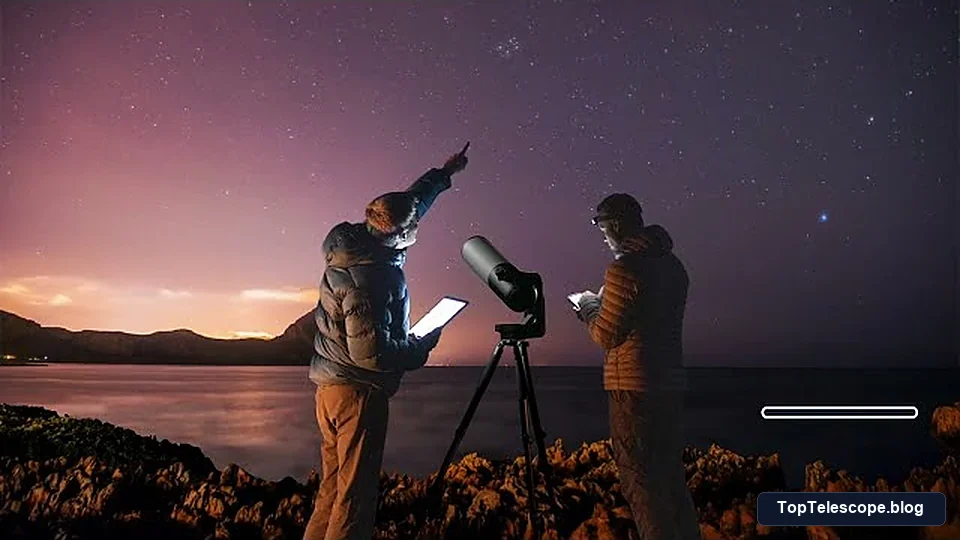
Processing latency remains minimal due to optimized onboard software architecture handling complex algorithms. Users witness color and structural details emerge dynamically as integration times increase in the app.
The onboard computer executes real-time image stacking directly on a Sony Exmor IMX533 sensor. This square-format sensor delivers zero amp glow and low read noise, maximizing signal-to-noise ratios during rapid sub-exposure accumulations.
Processing latency remains minimal thanks to an optimized Linux-based operating system running on a dedicated circuit board. Algorithmic noise reduction filters operate seamlessly to enhance faint nebula structures without introducing noticeable digital artifacts.
- Real-time digital image stacking algorithms
- Low processing latency for instant feedback
- High sensitivity digital sensor minimizes noise
- Sensor resolution provides 3088 by 3088 pixels of imaging area.
- Individual sub-exposures run continuously at four-second intervals for stacking.
Dynamic Range Optimization
The sensor effectively captures high dynamic range scenes, balancing bright stellar cores with faint dust lanes. Automated histogram stretches enhance contrast dynamically without clipping highlights prematurely.
Field operators can export raw integrated FITS files for advanced post-processing workflows on desktop computer suites.
- Preserves delicate highlights in bright star clusters
- Supports export of raw data for external editing
Thermal Noise Mitigation
Passive cooling fins dissipate heat generated by the processing board away from the sensor cavity. Maintaining lower operating temperatures successfully suppresses thermal noise generation during extended imaging runs in warm summer environments.
- Monitor internal sensor temperature readings via the mobile diagnostic menu.
- Store equipment in air-conditioned spaces between rigorous observation campaigns.
Power Delivery, Thermal Management, and Field Ergonomics
An internal high-capacity battery provides up to ten hours of continuous operation in remote dark-sky locations. Power management systems prevent deep discharge cycles while supporting auxiliary USB accessory charging ports efficiently.
Thermal equilibrium is maintained through passive chassis cooling slots that prevent internal air currents. This thoughtful thermal engineering ensures sharp focus stability throughout fluctuating ambient temperature drops.
An internal lithium-ion battery provides up to nine hours of operation under typical ambient conditions. External USB-C power banks can connect easily to extend runtime during freezing winter nights when battery chemistry degrades.
Ergonomic carrying handles and balanced weight distribution simplify transport to dark-sky locations. The rugged chassis withstands minor field impacts while protecting sensitive internal electronic components from moisture and windblown dust particles.
- Ten-hour internal rechargeable battery capacity
- Passive thermal chassis design prevents internal turbulence
- Weather-resistant external housing materials
- Internal battery capacity measures 4900 milliamp-hours at standard voltage.
- Total assembled weight reaches nine kilograms including the tripod.
Cold Weather Performance
Lithium battery chemistry withstands sub-freezing temperatures efficiently when kept within recommended operational thresholds. Users operating in harsh winter environments should utilize external thermal wraps to preserve peak voltage output.
Electronic components maintain stable internal operating temperatures despite external frost accumulation on the structural housing.
- Reliable low-temperature electrical performance
- Resistant to condensation and morning dew formation
Cold Weather Power Management
Low temperatures significantly reduce lithium-ion output efficiency during prolonged stargazing sessions. Operators should keep auxiliary power banks inside a warm jacket pocket until connection becomes strictly necessary for system operation.
- Use insulated cables rated for sub-zero outdoor performance environments.
- Power down fully before disconnecting external power supply units.
Routine Maintenance, Component Durability, and Storage
Constructed from durable aluminum and reinforced composites, the chassis withstands frequent transport to remote sites. Routine maintenance involves keeping optical surfaces clean and inspecting locking levers for secure engagement.
The included official backpack provides padded protection during transit, safeguarding sensitive internal electronics against shock and vibration damage during travel.
Regular upkeep involves checking tripod leg clamps and securing loose thumb screws across the assembly. Storing the telescope in a padded hard case prevents accidental shocks from degrading the precision optical alignment over time.
Optical surfaces demand infrequent cleaning using optical-grade solutions and lint-free wipes. Users must avoid touching glass elements to preserve anti-reflective coatings and prevent permanent scratching of the delicate optical glass surfaces.
- Rugged aluminum and composite structural shell
- Padded official transit backpack included in bundle
- Low-maintenance sealed mechanical assemblies
- Inspect tripod fasteners every three months for structural integrity.
- Keep relative humidity below forty percent inside storage locations.
Optical Cleaning Protocols
Dust removal should always begin with a bulb blower before applying any optical cleaning solutions. Using specialized microfiber cloths prevents scratching delicate anti-reflective coatings on the corrector lens.
Proper storage in low-humidity environments prevents fungal growth on internal glass surfaces over extended periods of non-use.
- Bulb blower method removes abrasive particulate matter
- Safe chemical cleaning agents preserve optical integrity
Long-Term Storage Protocol
Silica gel packets should be placed inside the storage case to absorb residual moisture. Ensuring complete dryness prevents fungal growth on corrector lenses and protects internal circuitry from corrosive oxidation damage during offseason months.
- Replace desiccant packs annually for optimal moisture absorption capacity.
- Store the optical tube assembly in a vertical orientation.
Comprehensive Buyer Assessment and Field Verdict
The Unistellar Evscope 2 successfully bridges the gap between complex astrophotography and casual stargazing. As seen in our Unistellar Evscope 2 vs Stellina guide, its integrated Nikon electronic eyepiece delivers remarkable deep-sky visibility.
While demanding a significant financial commitment, its engineering excellence justifies the investment for dedicated users. Anyone prioritizing rapid deployment and stunning live-stacked views will find tremendous value here.
Field evaluations confirm that automated smart telescopes streamline astrophotography for users lacking technical expertise. The integrated processing system bridges the gap between traditional visual astronomy and modern digital imaging workflows effortlessly.
Investment in this sophisticated hardware rewards operators with reliable performance and stunning deep-sky results. Careful attention to battery maintenance and alignment ensures long-term operational satisfaction across hundreds of successful observation nights.
- Bridges traditional astronomy with modern smart technology
- Delivers exceptional automated deep-sky observation performance
- Ideal for outreach and enthusiast backyard research
- Ideal for urban astronomers battling severe light pollution conditions.
- Streamlines setup time to under five minutes from unpacking.
Final Recommendation Guidelines
We recommend this smart telescope for tech-savvy observers, educational institutions, and astrophotography enthusiasts. Traditionalists seeking manual equatorial setups might prefer modular components over integrated digital units.
Evaluate your local light pollution levels and portability requirements before finalizing your investment decision.
- Recommended for modern tech-savvy backyard astronomers
- Great tool for educational outreach programs
Final Technical Summary
Combining precision optics with digital enhancement redefines portable stargazing capabilities. Prospective buyers gain an accessible gateway to deep-sky exploration without requiring extensive knowledge of equatorial mounts or complex image processing software packages.
- Verify firmware updates are current before field deployment.
- Join community forums to share captured FITS data files.
Frequently Asked Questions
How does the electronic eyepiece function during observations?
The electronic eyepiece uses a proprietary micro-OLED display developed with Nikon to project sharp digital imagery. This provides an immersive optical experience unlike standard smartphone screens.
Can I operate the telescope without an internet connection?
Yes, the onboard computer stores a vast catalog of over 5000 celestial objects locally. You only need a smartphone connection for initial setup and live control commands.
What is the typical battery runtime during field sessions?
The internal rechargeable power source delivers up to ten hours of continuous operation under normal conditions. External USB power banks can extend this runtime further.
Does the altazimuth mount require complex polar alignment?
No polar alignment wedge is necessary because the altazimuth mount utilizes automated plate-solving software. The internal sensors calibrate orientation automatically by photographing star fields.
Is the system suitable for scientific citizen astronomy projects?
Yes, Unistellar partners with research institutions, allowing users to contribute valuable scientific data by recording asteroid transits and occultations easily.