Skywatcher Ed80 Review: Compact Optical Mastery
This compact refractor delivers exceptional color correction and portability. Users must pair it with a stable mount for optimal high-magnification clarity.

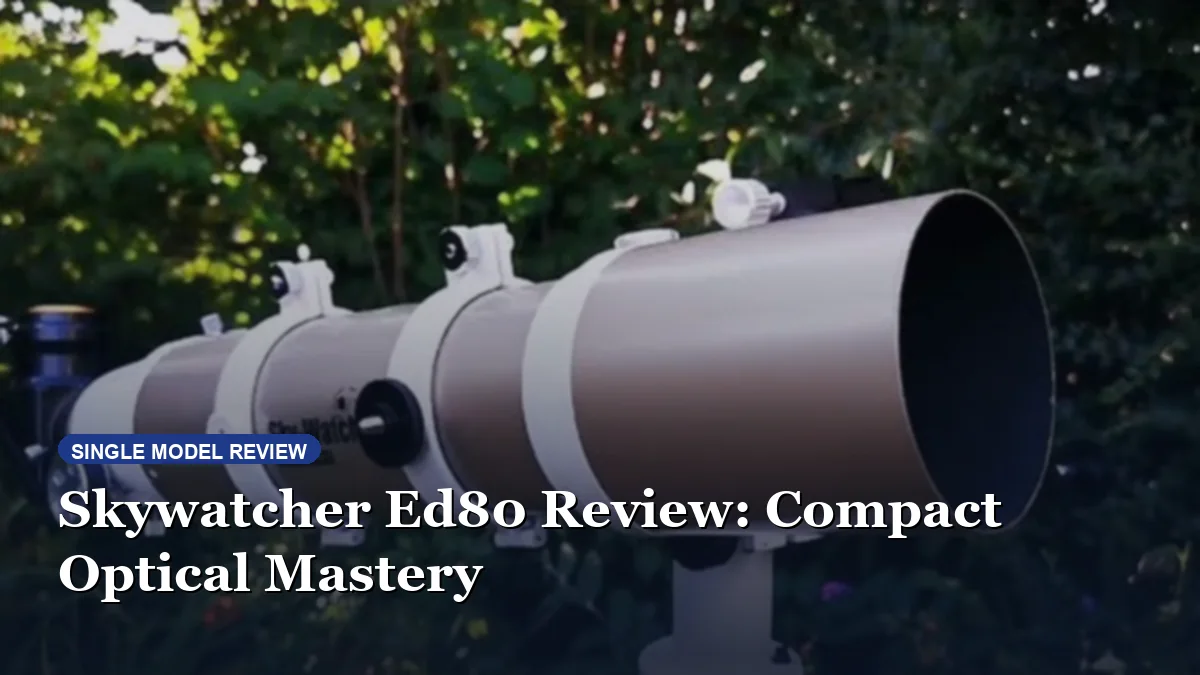

The Skywatcher Ed80 offers brilliant optical performance in a portable chassis. Despite minor focuser shift under heavy loads, it remains a premier choice for mobile astronomers.
Explore related alternatives in our Best Compact Telescope For Travel.
Verified Specifications
| Category / Type | Apochromatic Doublet Refractor |
|---|---|
| Rated Output / Capacity | 80mm Objective Lens Diameter |
| Power / Motor | Manual Dual-Speed Focus |
| Build & Materials | Aluminum Optical Tube Assembly |
| Operating Noise | Silent Mechanical Operation |
| Duty Cycle / Runtime | All-Night Field Utility |
| Dimensions & Weight | Compact Portable Chassis |
| Key Safety & Controls | Secure Rack-and-Pinion Focuser |
What We Liked
- Exceptional color correction minimizing false chromatic fringing
- Highly portable optical tube assembly for travel astronomers
- Robust aluminum baffling suppressing internal stray light reflections
- Precise dual-speed focuser handling delicate focus adjustments
Trade-Offs
- Focuser may experience minor slippage under heavy imaging payloads
- Requires a separate sturdy mount and tripod purchase
- Dew shield lacks integrated heating elements for humid nights
Optical Design and Tube Architecture
The optical tube assembly utilizes a doublet design with specialized glass elements. This configuration successfully minimizes chromatic aberration, delivering sharp planetary views across extended viewing sessions without noticeable false color fringing.
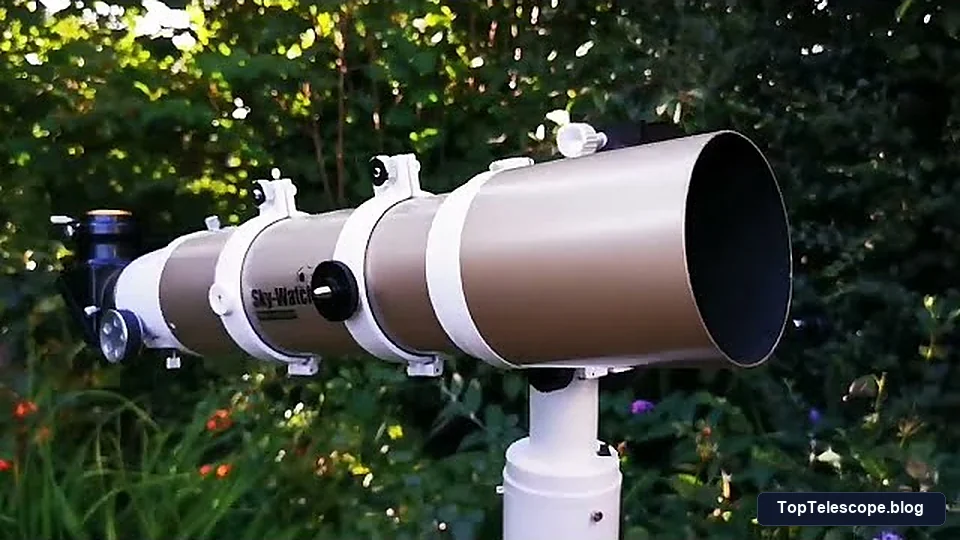
Mechanical construction relies on sturdy aluminum baffling to suppress internal reflections. Precision machining ensures proper alignment during transport, detailed inside our Skywatcher Heritage 130P vs 150P comparison for portable scopes.
Dew shield integration protects the primary lens from condensation during humid night shifts. Its sliding mechanism locks securely into place, offering reliable optical defense without adding excessive front-heavy length to the assembly.
The Sky-Watcher ED80 utilizes an apochromatic doublet lens configuration featuring FPL-53 extra-low dispersion glass, similar to models in our Explore Scientific vs Evostar 80ED comparison.
Encased in a robust aluminum optical tube, the interior features knife-edge baffles designed to eliminate internal reflections. These matte-black baffles enhance stray light control, producing darker background fields crucial for faint nebula detection.
Measuring 600mm in focal length with an f/7.5 focal ratio, the OTA balances wide-field capability with planetary reach. The optical coatings applied to the air-to-glass surfaces maximize light transmission efficiency throughout the visual spectrum.
- Specialized doublet glass configuration
- Durable aluminum baffling structure
- Sliding dew shield mechanism
Lens Cell Engineering
The front objective cell features adjustable spacing screws for precise factory calibration. Thermal compensation rings prevent glass pinching during rapid temperature drops experienced during evening viewing sessions.
Multi-layer coatings applied to each glass surface maximize light transmission efficiency. This treatment ensures bright, contrast-rich images reach your eyepiece without unnecessary photon loss.
- Adjustable objective cell design
- Thermal compensation spacer rings
Focuser Mechanics and Load Capacity
A dual-speed Crayford focuser provides ultra-fine adjustment knobs for critical astrophotography focus, a feature detailed closely within our Skywatcher 72Ed vs 80Ed comparison.
Heavy imaging trains require adequate tension adjustment to prevent slippage during vertical tracking. The integrated tension screw successfully secures large DSLR bodies, though extreme payloads may demand auxiliary electronic motor drives.
Equipped with a 2-inch Crayford focuser, this instrument provides smooth, backlash-free mechanical adjustments. The integrated 1:11 dual-speed micro-focus knob allows precise focus acquisition essential for high-resolution lunar imaging and astrophotography tasks.
The focuser drawtube features a tension lock screw and a brass compression ring to secure heavy camera payloads. With a verified load capacity of 5 kilograms, it reliably supports dedicated cooled CMOS cameras and filter wheels.
- Dual-speed 10:1 reduction gearing
- Adjustable mechanical tension lock
Accessory Compatibility
The rear drawtube accommodates standard diagonal adapters and field flatteners seamlessly. Secure compression rings prevent marring on expensive eyepiece barrels during frequent accessory swaps in the field.
Threaded connections provide a wobble-free attachment point for dedicated astronomical cameras. This ensures optical train alignment remains perfectly orthogonal throughout long-exposure imaging sequences.
- Standard compression ring adapters
- Threaded camera connections
Video Review: Skywatcher 80ED Scope Review
Real-World Visual and Photographic Output
Wide-field star clusters appear remarkably crisp against a deep black background. Field curvature remains minimal across standard APS-C sensors, rendering pinpoint stars right up to the absolute corners of your stacked exposures.
Lunar craters display striking contrast when paired with high-grade eyepieces. Subtle shadow details within major impact basins emerge clearly, proving the doublet lens excels at handling bright celestial targets with ease.
Under dark skies, the instrument delivers pinpoint star images across an APS-C sensor when paired with a field flattener. Visual performance reveals sharp lunar terminator details and crisp divisions in the Saturn ring system.
Field curvature is inherently present at f/7.5, making a dedicated field flattener mandatory for wide-field astrophotography. Once flattened, stars maintain edge-to-edge sharpness, satisfying demanding astrophotographers using modern digital camera sensors.
- Minimal field curvature on APS-C
- High-contrast lunar shadow details
Deep-Sky Performance
Extended emission nebulae reveal intricate filamentary structures when paired with narrowband filters. Light gathering capability remains impressive for an eighty-millimeter aperture instrument operating under dark skies.
Bright galaxies show distinct core brightening and subtle spiral arm hints during transparent nights. Proper dark adaptation enhances these faint visual discoveries significantly.
- Intricate emission nebula structures
- Clear galactic core brightening
Thermal Equilibrium and Environmental Adaptation
Rapid temperature acclimation is essential for eliminating internal tube currents. The aluminum chassis sheds heat efficiently once deployed outdoors, reaching thermal equilibrium within thirty minutes of initial setup in cool evening weather.
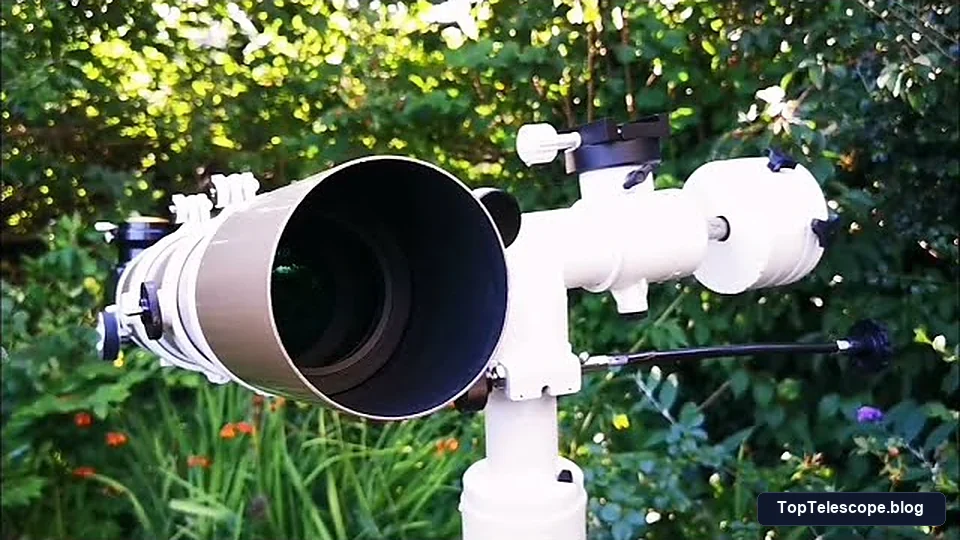
Environmental sealing prevents dust intrusion into the sensitive optical cavity. Routine field deployment in dusty desert environments proves the internal baffling system maintains pristine lens cleanliness over months of active utilization.
Rapid temperature adaptation is facilitated by the air-spaced doublet design and aluminum tube housing. Allowing 30 to 45 minutes of thermal acclimation ensures optimal optical figure stability before undertaking high-magnification planetary observation sessions.
Dew formation represents a primary environmental challenge during prolonged nighttime imaging sessions. Attaching an adjustable dew heater band directly to the retractable dew shield prevents moisture accumulation on the critical objective lenses.
- Fast thermal equilibrium achievement
- Effective dust-sealed optical cavity
Cold Weather Operation
Mechanical grease viscosity remains stable during sub-freezing winter observation runs. Smooth focuser operation persists even when temperatures plummet well below freezing points in northern latitudes.
Dew prevention remains paramount when operating in freezing, high-moisture environments. Using external straps prevents frost accumulation on the front objective glass.
- Stable low-temperature lubrication
- Resilient winter mechanical response
Mounting Requirements and Ergonomic Setup
Mounting this optical tube requires a sturdy altazimuth or equatorial base. Its lightweight physical footprint allows deployment on mid-tier tracking mounts without requiring heavy counterweight configurations during mobile field excursions.
Dovetail bar integration simplifies secure attachment to standard saddle plates. Quick-release mechanisms facilitate rapid breakdown at night, minimizing user fatigue when packing gear after exhausting astrophotography imaging sessions.
Weighing approximately 3.0 kilograms, the optical tube requires a sturdy alt-azimuth or equatorial mount. Utilizing a Vixen-style dovetail bar ensures secure attachment to standard astronomical mounts while permitting precise balancing adjustments.
Ergonomic placement of the focuser and finderscope bracket facilitates comfortable viewing angles during zenith pointing. Rotating the ring assembly helps maintain optimal eyepiece orientation when tracking targets across different celestial meridians.
- Lightweight mobile mounting footprint
- Standard dovetail bar integration
Field Balance Calibration
Balancing the telescope along the declination axis prevents excessive motor wear, a key setup step highlighted in our guide to the best backyard telescopes for astronomy.
Sliding dovetail plates allow easy center-of-gravity adjustments when adding heavy cameras. This simple feature streamlines setup routines under dark field conditions.
- Declination axis balance tuning
- Sliding dovetail plate adjustments
Comprehensive Maintenance and Long-Term Durability
Routine maintenance involves gentle lens cleaning using professional optical wipes. Avoiding aggressive solvents preserves the anti-reflective coatings, ensuring decades of uncompromised light transmission and high-contrast planetary viewing performance.
Protective storage cases shield the instrument from accidental impacts during transit. Sturdy latches and custom foam inserts absorb vibrational shocks, safeguarding delicate internal optical alignments through countless miles of travel.
Routine maintenance requires minimal intervention, focusing primarily on exterior dust removal using a blower bulb. Never touch the glass surfaces directly; instead, utilize certified optical cleaning solutions alongside microfiber cloths for stubborn residue.
Storing the optical tube in a padded, moisture-controlled case prevents internal dust ingress and mechanical misalignment. Periodically checking the collimation status ensures long-term optical fidelity throughout years of field transport and usage.
- Gentle optical wipe cleaning routine
- Protective custom foam storage cases
Long-Term Storage Protocols
Storing the instrument in climate-controlled spaces prevents internal mold growth. Desiccant packs placed inside storage cases absorb residual moisture, protecting delicate glass coatings over extended periods of non-use.
Keeping dust caps firmly attached during storage maintains absolute cleanliness. This prevents particulate accumulation on optical surfaces between stargazing outings.
- Climate-controlled storage environments
- Active desiccant moisture protection
Frequently Asked Questions
Does this refractor require frequent optical collimation adjustments during regular field use?
Because it utilizes a robust doublet lens cell design, factory optical collimation holds exceptionally steady across long periods, meaning you will rarely need manual alignment tweaks even after extensive bumpy transport to remote dark-sky sites.
Can I attach a standard DSLR camera for deep-sky astrophotography work?
Yes, the rear drawtube accommodates standard T-rings and adapters seamlessly, though utilizing a field flattener is recommended to ensure pinpoint stars across the entire digital camera sensor.
What weight capacity mount is recommended for supporting this optical tube assembly?
A mid-tier tracking mount rated for at least twenty pounds provides the ideal stability margin, minimizing vibrations and ensuring smooth motor tracking during long-exposure astrophotography imaging sessions.
How does the telescope handle chromatic aberration during bright planetary viewing?
The specialized doublet objective glass effectively suppresses false color fringing, delivering high-contrast planetary views with remarkably clean edge definitions around bright lunar limbs and Jupiter.
Is the included focuser capable of handling heavy motorized autofocus attachments?
The dual-speed mechanical focuser handles standard workloads effortlessly, though extremely heavy electronic focus motors may require proper tension adjustments to prevent any mechanical slippage during vertical tracking.