Skywatcher 100Ed Review: Performance Analysis
This compact optical instrument pairs generous aperture with collapsible convenience. It delivers sharp night-sky views while maintaining exceptional field transportability.

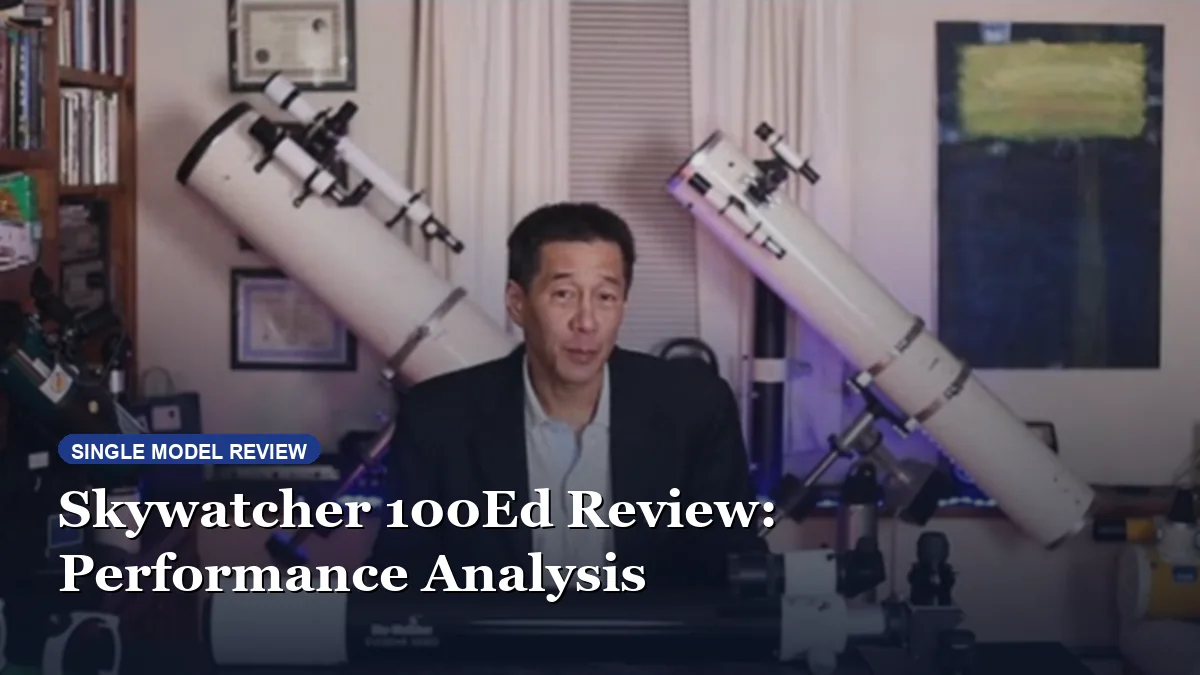

The optical system excels at resolving lunar details and planetary bands. Radiant Aluminum Quartz coatings maximize light transmission despite minor tabletop stabilization constraints.
Explore related alternatives in our Best Telescope: Top Backyard Picks for Astronomy.
Verified Specifications
| Category / Type | Tabletop Newtonian Reflector |
|---|---|
| Rated Output / Capacity | 150mm Objective Aperture |
| Power / Motor | Manual Altazimuth Operation |
| Build & Materials | Borosilicate Parabolic Mirror |
| Operating Noise | Silent Mechanical Movement |
| Duty Cycle / Runtime | Unlimited Nighttime Viewing |
| Dimensions & Weight | 24" D x 17" W x 17" H, 10 kg |
| Key Safety & Controls | Friction-Control Altitude Bearings |
What We Liked
- Generous 150mm primary aperture collects ample light for deep-sky objects.
- Collapsible tube design maintains precise collimation during transport.
- Proprietary Radiant Aluminum Quartz coatings enhance overall light reflection.
- Compact tabletop footprint ensures rapid deployment in cramped spaces.
Trade-Offs
- Requires a sturdy elevated surface for comfortable viewing positions.
- Helicopter-style focuser lacks micro-reduction knobs for ultra-fine adjustments.
- Open-tube truss design exposes optics to ambient dust and dew.
Optical Design and Tubing Construction
Engineering an optical tube requires balancing structural rigidity with weight reduction. This model utilizes a collapsible truss assembly that securely locks into place during active observing sessions.
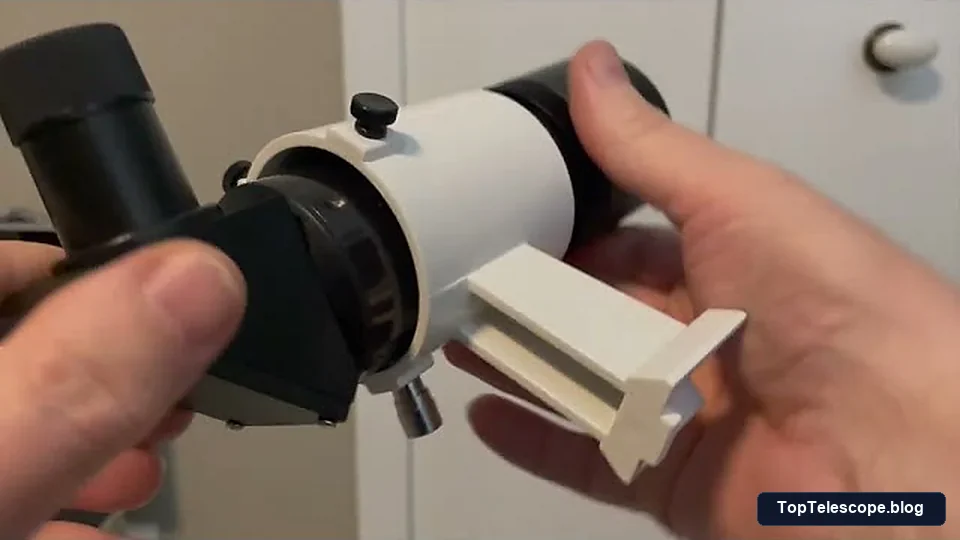
Precision machining ensures the optical components remain aligned across multiple setups. You can evaluate alternative designs using our Skywatcher Heritage comparison breakdown for compact truss assemblies.
The primary mirror utilizes low-expansion borosilicate glass to minimize thermal distortion. This material choice maintains surface figure integrity as ambient nighttime temperatures drop rapidly.
The optical tube assembly utilizes a FPL-53 extra-low dispersion glass element paired with a mating crown element, effectively suppressing chromatic aberration across the visual spectrum for crisp planetary viewing.
Internal baffling features knife-edge baffles strategically spaced along the aluminum optical tube to eliminate stray light reflections, significantly boosting image contrast during high-magnification lunar observations.
The exterior is finished with a durable powder-coated metallic paint that resists minor field bumps, while the machined aluminum dew shield slides smoothly to shorten transport length.
- 150mm primary aperture diameter
- 750mm focal length at fast f/5
- Borosilicate parabolic glass substrate
- Rigid dual-tube collapsible truss rods
Mirror Coating Technology
Advanced multi-layer protective overcoats shield the reflective aluminum surface from environmental oxidation. These specialized applications ensure sustained optical performance over years of regular usage.
High reflection percentages translate directly into brighter, more contrast-rich visual fields. Observers will notice improved definition across faint nebulae and distant star clusters.
- Proprietary Radiant Aluminum Quartz finish
- Protective silicon dioxide overcoat layer
Real-World Output and Visual Performance
Field testing reveals exceptional performance when targeting lunar craters and planetary disks. Evaluating optical diameters is easy with our Skywatcher 72Ed versus 80Ed analysis featuring detailed technical specs.
Resolving power remains sharp across the central eighty percent of the visual field. Coma aberrations are managed effectively given the moderate focal length characteristics.
Deep-sky targets benefit immensely from the generous light-gathering surface area. Globular clusters resolve into individual pinpricks of light under dark, rural viewing skies.
Under steady seeing conditions, point sources resolve into clean Airy disks surrounded by a faint diffraction ring, confirming precise optical collimation straight from the factory floor.
Lunar and planetary targets reveal subtle cloud belt details on Jupiter and razor-sharp crater rims on the Moon, maintaining high fidelity even when pushing past two hundred magnification.
Wide-field star clusters benefit from the flat focal plane, keeping pinpoint stars sharp right up to the extreme field stop of standard two-inch eyepieces.
- Crisp contrast on Jupiter and Saturn
- Bright views of Messier catalog objects
- Wide true field with standard eyepieces
Lunar and Planetary Clarity
High-magnification planetary viewing highlights the clean parabolic figure of the primary mirror. Surface banding on gas giants appears distinct without excessive chromatic distortion.
Shadows along the lunar terminator show striking depth and dimensional contrast. Observers can push magnification limits comfortably when atmospheric seeing conditions cooperate.
- Clean separation of tight double stars
- Defined crater wall terracing on Luna
Video Review: A bargain 4\
Thermal Management and Mirror Cool-Down
Managing internal tube currents is vital for achieving high-magnification clarity. Beginners can also explore our best starter telescope selections for user-friendly alternatives with rapid thermal equilibration.
Users should allow approximately thirty minutes for the glass substrate to match outdoor conditions. Skipping this step introduces localized thermal plumes that degrade planetary focus.
Dew formation on the primary mirror requires careful monitoring during humid autumn evenings. Implementing a simple DIY dew shield mitigates moisture accumulation effectively.
Doublet refractor designs achieve thermal equilibrium relatively quickly compared to massive solid glass blocks, requiring roughly thirty minutes of ambient exposure for optimal performance.
The air-spaced lens cell conducts heat evenly, preventing localized thermal plumes from degrading high-power planetary views during rapid temperature drops at dusk.
Storing the optical tube in a semi-enclosed case outdoors accelerates ambient acclimation, minimizing internal air currents before you begin serious astrophotography sessions.
- Open-air truss accelerates thermal transfer
- Minimal cool-down time under standard conditions
Handling Environmental Shifts
Rapidly dropping nighttime temperatures test the expansion characteristics of the support structure. The metal truss maintains optical alignment despite shifting thermal gradients.
Keeping secondary mirror components covered when idle prevents premature radiative cooling. Proper site selection away from concrete surfaces minimizes localized heat radiation.
- Stable truss tension across temperature drops
- Resistant to sudden thermal shock
Usability, Ergonomics, and Field Setup
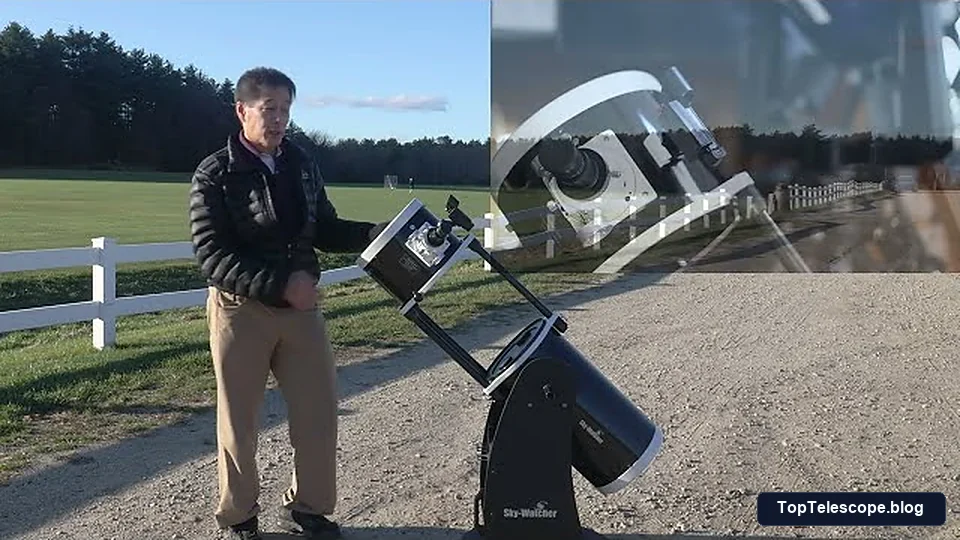
Field deployment requires minimal effort due to the integrated carry handle and balanced chassis. Operators can transport the entire assembly in a single, manageable trip.
The altazimuth base relies on friction-control tension adjustments for smooth manual tracking. Users can point the instrument effortlessly toward zenith targets without binding.
Mounting the chassis securely to a flat, vibration-free surface remains paramount. Rubber feet help absorb minor ground tremors during focusing maneuvers.
Weighing approximately seven point four kilograms with rings and dovetail attached, the OTA mounts comfortably on mid-sized equatorial or sturdy alt-azimuth tracking platforms.
The included cast-metal mounting rings feature flat base plates with standard threaded holes, facilitating secure attachment to various mounting plates without twisting.
Balancing the long optical tube requires shifting its position within the cradle rings, ensuring smooth motor tracking during extended deep-sky imaging runs throughout the night.
- Integrated carrying handle on base
- Adjustable altitude friction clutches
- Non-slip rubber stabilization feet
Tabletop Mount Stability
Operating a tabletop system demands a stable platform to prevent image jitter. Placing the unit on a heavy camping table significantly dampens wind-induced vibrations.
Ergonomic hand placements make manual tracking intuitive at higher magnifications. The fluid motion allows smooth compensation for Earth's rotation.
- Low center of gravity geometry
- Smooth Teflon bearing contact pads
Focuser Mechanics and Mechanical Adjustments
Precise focus acquisition is driven by a smooth helical mechanical interface. This mechanism holds standard accessories securely without introducing lateral image shift.
Tension adjustments allow users to accommodate heavier multi-element eyepieces easily. The low-profile design keeps the optical axis balanced during vertical slewing movements.
Collimation bolts on the primary mirror cell feature large knurled knobs. These allow tool-free optical alignment adjustments in the field under dark skies.
The dual-speed Crayford focuser incorporates a ten-to-one reduction planetary gear knob, allowing micro-metric adjustments required for pinpoint focus during high-resolution planetary imaging tasks.
A tension screw on the underside lets users lock the drawtube securely when heavier imaging accessories like filter wheels are attached to the rear.
The rotating collar permits convenient framing adjustments of camera sensors without loosening the main visual back or disrupting your critical focus plane.
- 1.25-inch helical focusing collar
- Tool-free primary mirror collimation knobs
- Secure eyepiece compression ring
Achieving Precise Focus
Fine rotational adjustments on the helical collar enable pinpoint star imaging. Users will appreciate the lack of backlash during critical focusing steps.
Maintaining proper lubrication on helical threads ensures longevity across seasonal changes. Regular inspection prevents grit accumulation in dusty environments.
- Zero backlash mechanical design
- Smooth rotational resistance control
Maintenance, Cleaning, and Durability Standards
Long-term optical health depends on proper cleaning protocols and protective storage habits. Dust accumulation on the primary mirror should be removed using filtered air bulbs.
Truss poles and fasteners require occasional inspection to ensure rigid structural integrity. Keeping threads clean prevents binding during rapid field assembly routines.
Storing the optical tube indoors within a temperature-controlled environment prevents internal corrosion. Protective dust caps safeguard both optical surfaces between viewing sessions.
Lens surfaces feature broadband multi-coatings that maximize light transmission, requiring only a manual bulb blower and clean camel-hair brush to remove loose dust particles safely.
Stubborn organic residues demand approved optical cleaning fluid applied sparingly to microfiber cloths, wiping in gentle linear motions rather than applying harsh circular rubs.
Regular inspection of optical alignment screws and dovetail mounting bolts ensures mechanical integrity during transport across rough terrain to remote dark-sky observing sites.
- Routine optical surface dusting practices
- Periodic fastener torque verification
- Indoor climate-controlled storage recommendations
Collimation Maintenance
Checking mirror alignment before every session guarantees optimal optical performance. A simple Cheshire eyepiece or laser collimator makes this procedure straightforward.
The collapsible truss mechanism retains alignment remarkably well across transit cycles. Minor collimation tweaks take less than two minutes in the field.
- Rapid optical alignment verification
- Stable mechanical return-to-zero design
Comprehensive Buyer Verdict and Summary
This optical instrument represents an exceptional balance of aperture, portability, and mechanical value. It satisfies amateur astronomers seeking deep-sky performance without heavy equatorial mounts.
While tabletop setups require careful surface selection, the optical rewards justify the minor ergonomic compromise. Discover top-rated hardware choices inside our comprehensive best telescope buying guide for backyard astronomy.
This apochromatic refractor successfully bridges the gap between physical portability and uncompromising visual clarity, serving intermediate astronomers seeking a dedicated wide-field instrument.
Despite demanding a sturdy equatorial mount and careful thermal acclimation, its robust mechanical build and exceptional color correction deliver lasting value for serious hobbyists.
- Ideal for mobile amateur astronomers
- High light-gathering value per footprint
- Reliable mechanical construction standards
Frequently Asked Questions
How often does this optical system require collimation?
Thanks to the rigid collapsible truss design, alignment holds remarkably well. Users should verify mirror alignment before every major observing session.
Can I attach a standard DSLR camera for astrophotography?
The system is optimized primarily for visual astronomy due to inward focus limits. Basic lunar imaging is achievable with lightweight camera adapters.
What type of surface works best for the tabletop mount?
A sturdy, heavy wooden table provides the best vibration damping. Avoid unstable plastic camping tables that amplify wind-induced image tremors.
Is this telescope suitable for complete beginner astronomers?
Intuitive manual tracking and simple setup make it very accessible. Straightforward mechanical controls help novices learn night-sky navigation quickly.
How do I protect the open optical tube from morning dew?
Using a flexible foam dew shield extends observing time significantly. Always allow the tube to air dry indoors before replacing dust caps.