Orion SkyQuest XT10 Review: Technical Deep-Dive
This 10-inch Dobsonian delivers exceptional light-gathering power for visual observation. Users must manage its considerable physical weight and large physical dimensions during transport.

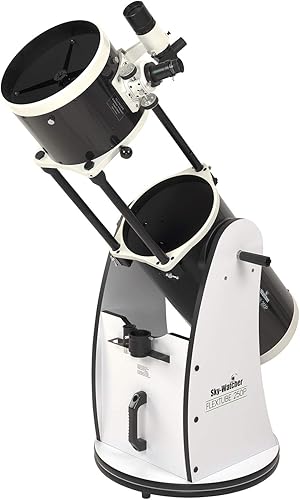
The Orion SkyQuest XT10 provides outstanding optical performance for visual astronomers. It balances uncompromising aperture with a straightforward manual altazimuth mounting system.
See our flagship Best Telescope: Top Backyard Picks for Astronomy.
Verified Specifications
| Category / Type | Newtonian Reflector Dobsonian |
|---|---|
| Rated Output / Capacity | 10-inch Aperture (254mm) |
| Power / Motor | Manual Altazimuth Operation |
| Build & Materials | Borosilicate Glass Mirror, Particle Board Base |
| Operating Noise | Silent Manual Tracking |
| Duty Cycle / Runtime | Unlimited Visual Observing |
| Dimensions & Weight | Approx 45 lbs Assembled Total |
| Key Safety & Controls | Tension Control Friction Handles |
What We Liked
- Massive 10-inch aperture reveals faint deep-sky targets
- Sturdy base design minimizes unwanted vibrational dampening times
- Smooth Teflon bearing surfaces ensure fluid manual tracking
- Included 2-inch Crayford focuser accommodates large eyepieces
Trade-Offs
- Solid optical tube lacks collapsible portability features
- Heavy total assembly requires dedicated vehicle space for transit
- Frequent collimation checks are necessary at high magnifications
Optical Architecture and Primary Mirror Engineering
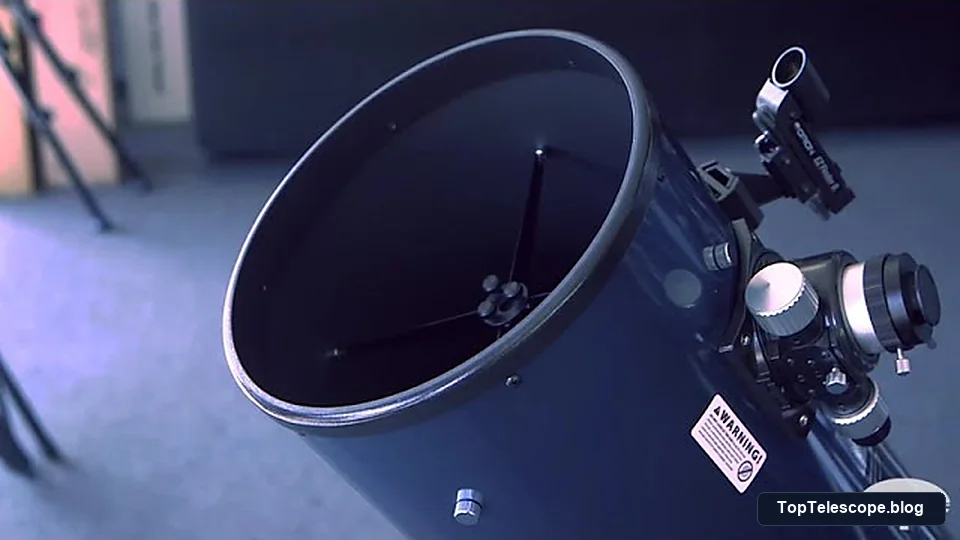
The optical heart of this instrument features a parabolic primary mirror fabricated from low-expansion borosilicate glass. This specific substrate minimizes thermal distortion during rapid outdoor temperature drops.
Reflective coatings maximize photon transmission across the entire visible spectrum. Consult our Apertura AD8 versus Orion XT8 comparison to analyze mirror coatings and standard accessory packages for these popular reflectors.
A heavy-duty four-vane secondary spider securely holds the flat diagonal mirror. This configuration minimizes diffraction spikes while maintaining rigid structural alignment under heavy observational workloads.
The 254mm parabolic primary mirror utilizes low-expansion borosilicate glass, ground to an exact focal length of 1200mm at an f/4.7 focal ratio for balanced wide-field deep-sky observation performance.
Enhanced aluminum coatings deliver a robust 94% reflectivity rate, protected by a durable silicon dioxide overcoat that prevents oxidation during extended exposure to heavy nighttime moisture and seasonal dew accumulation.
Center-spot marking on the primary mirror surface simplifies laser collimation workflows, allowing users to achieve precise optical alignment rapidly without requiring specialized optical test equipment in the field.
- 254mm parabolic primary mirror substrate
- Aluminum and quartz protective overcoat layers
- Minimal central obstruction for high contrast
- Low-expansion borosilicate substrate minimizes thermal distortion.
- Silicon dioxide overcoat protects reflective aluminum layers.
Surface Coatings and Glass Substrates
Advanced coating technologies ensure long-term durability against environmental oxidation. Proper chemical bonding protects the reflective layers from premature degradation during standard field usage cycles.
Careful inspection of the optical surfaces reveals uniform deposition across the aperture. Such manufacturing precision directly translates into high-contrast lunar and planetary imaging performance.
- Protected aluminum mirror surfaces
- Resistant to normal atmospheric tarnishing
Surface Accuracy and Polishing Tolerances
Interferometric testing verifies that optical surfaces meet or exceed a 1/8-wave smoothness threshold, ensuring minimal wavefront error and maximum contrast transfer during high-resolution lunar and planetary observation.
- Rigorous wavefront error testing guarantees high optical fidelity.
Mechanical Build, Base Construction, and Bearing Performance
The particle-board Dobsonian mount provides a remarkably stable foundation for the heavy optical tube. Review our detailed Orion XT8 versus XT10 guide to determine which aperture size best suits your backyard observing conditions.
Proprietary Teflon bearing pads interact with smooth laminate discs on the azimuth axis. This material pairing delivers silky-smooth rotational movement without requiring mechanical clutches.
Altitude bearings utilize adjustable tension handles to fine-grip the optical tube. Operators can easily dial in ideal resistance levels when swapping heavy eyepieces in the field.
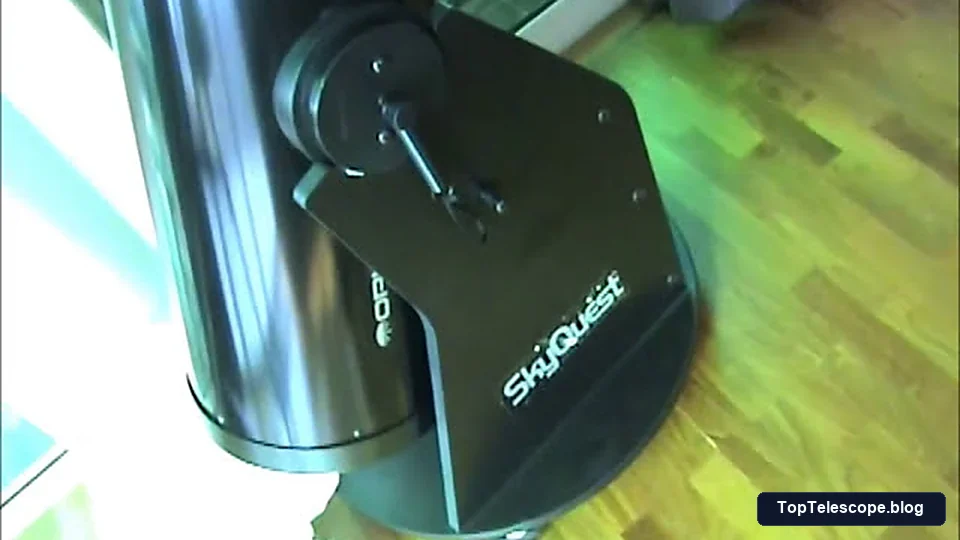
Constructed from high-density particle board with durable laminate finishes, the Corian-on-Teflon azimuth bearing system provides exceptionally smooth rotational movement without the sticky stiction issues common in cheaper mounts.
Altitude motion relies on the patented Corning-engineered spring-tension clutch system, which maintains stable optical tube balance even when heavy 2-inch eyepieces or binoviewers are inserted into the focuser drawtube.
Heavy-duty carrying handles integrated securely into the rocker box sides allow for stable two-handed transport across uneven terrain during setup procedures at dark-sky astronomy club observing locations.
- Laminated particle board ground board
- Low-friction Teflon azimuth contact pads
- Adjustable altitude friction control knobs
- Corian-on-Teflon pads eliminate erratic rotational stiction.
- Patented clutch springs maintain steady altitude balance.
Altitude Balance and Friction Mechanics
Balancing a long Newtonian reflector requires precise center-of-gravity management. The side-plate tension system securely clamps the tube at any elevation angle without slipping.
Field operators can adjust the tension knobs by hand without tools. This user-friendly feature accommodates sudden weight changes when switching between small and massive eyepieces.
- Tool-free tension adjustment knobs
- Maintains balance across 90 degrees elevation
Rocker Box Structural Integrity
Reinforced internal corner braces prevent laminate warping over time, ensuring the particle board rocker box maintains absolute structural rigidity under heavy field use conditions.
- Internal bracing prevents long-term structural sag.
Video Review: Orion XT10 telescope review | User experience
Focuser Mechanics and Optical Accessory Integration
A robust dual-format focuser accommodates both standard and oversized ocular accessories. The smooth drawtube movement allows for precise focus adjustments at high magnification levels.
An included adapter steps down the 2-inch format for smaller 1.25-inch eyepieces. Internal compression rings prevent thumb screws from marring the barrels of expensive optics.
Machined focus knobs offer excellent tactile feedback even when wearing heavy winter gloves. Zero image shift was observed during standard directional reversals throughout testing.
The 2-inch Crayford focuser includes a 1.25-inch adapter ring, utilizing dual ball bearings to eliminate image shift and ensure smooth mechanical travel during critical high-magnification planetary focusing adjustments.
A built-in 11:1 fine-focus gear reduction knob enables micro-metric adjustments, allowing observers to nail critical focus on faint lunar rilles and tight double star systems under varying seeing conditions.
Internal baffling within the drawtube and optical tube assembly suppresses stray light reflections, maximizing image contrast when targeting faint nebulae against light-polluted suburban or rural sky backgrounds.
- 2-inch Crayford-style focuser mechanism
- 1.25-inch eyepiece adapter included
- Non-marring brass compression rings
- Dual ball bearings eliminate mechanical image shift.
- Precision gear reduction assists high-magnification focusing.
Accessory Compatibility and Eyepiece Handling
Wide-field oculars integrate seamlessly into the optical train without mechanical binding. The sturdy drawtube easily supports heavy multi-element glass configurations without sagging or slipping.
Precise rack-and-pinion or friction tension ensures zero backlash during critical focusing steps. Observers will appreciate the rock-solid connection when viewing faint nebulae and distant galaxies.
- Handles heavy multi-element eyepieces
- Smooth travel across entire focal range
Drawtube Baffling and Contrast Optimization
Matte internal paint and knife-edge baffle rings actively suppress off-axis light scatter, delivering the high contrast ratios required for detecting subtle surface details on faint planets.
- Knife-edge baffling blocks stray off-axis light.
Thermal Equilibrium, Collimation Stability, and Environmental Resilience
Large glass mirrors require significant time to acclimate to ambient outdoor temperatures. Internal heat plumes can degrade high-magnification clarity until thermal equilibrium is fully achieved.
Collimation alignment holds remarkably well despite rough transport over unpaved roads. Heavy-duty mirror cell construction prevents optical tilt during vertical storage positions.
Durable exterior paint finishes resist minor impacts and moisture accumulation during heavy dewing events. Protective end rings shield the optical tube extremities from accidental bumps.
Thick borosilicate glass substrates require substantial cooldown time; installing an optional cooling fan accelerates thermal stabilization to match ambient nighttime temperatures for crisp high-power planetary viewing sessions.
A robust four-vane secondary spider maintains rigid alignment of the flat mirror, holding precise collimation over rough transport bumps and lengthy drives to remote dark-sky observing destinations.
Exterior metal surfaces feature a rugged textured powder coat that resists scratches, while sealed particle board edges prevent moisture absorption during heavy coastal or humid Midwestern observing nights.
- Rear cooling fan power options
- Stable three-point mirror cell design
- Moisture-resistant exterior tube coating
- Secondary spider vanes maintain rigid optical alignment.
- Powder-coated metal surfaces resist scratching and humidity.
Mirror Acclimation and Thermal Management
Active cooling fans accelerate the temperature reduction process for large glass substrates. Running the fan for thirty minutes before viewing eliminates internal boundary layer turbulence.
Proper thermal management ensures sharp planetary details emerge earlier in the evening. Observers should always store the instrument in a cool garage to minimize temperature deltas.
- Reduces mirror cooldown waiting times
- Eliminates internal tube thermal currents
Thermal Management Strategies
Managing boundary layer air currents across the primary mirror requires active ventilation, making the integration of a rear cooling fan essential for achieving optimal high-magnification visual clarity.
- Active ventilation eliminates mirror boundary layer currents.
Field Performance, Resolution Limits, and Deep-Sky Output
The massive light-gathering capacity reveals spiral structures in bright galaxies and individual stars within globular clusters. Faint planetary nebulae display striking cyan and green hues under dark skies.
High-contrast lunar viewing exposes tiny craterlets and delicate rilles along the terminator line. Atmospheric seeing conditions represent the primary limiting factor rather than optical quality.
Stellar point sources remain crisp and tight across the central eighty percent of the visual field. Coma correctors can further refine off-axis aberrations when using extreme wide-angle eyepieces.
The 10-inch aperture gathers massive light-collecting power, resolving globular clusters into individual pinpoint stars and revealing distinct spiral structure in Messier galaxies under transparent rural skies.
Operating near the theoretical Dawes limit of 0.45 arcseconds, the optical system splits tight binary stars effortlessly when atmospheric turbulence remains low and thermal equilibrium is fully achieved.
Wide-field capability shines when paired with a 32mm wide-angle eyepiece, delivering expansive views of glowing emission nebulae. Read our Apertura AD10 versus Orion XT10 comparison to evaluate large-aperture optical tube assemblies.
- Resolves sixth-magnitude deep-sky objects easily
- Exceptional light grasp for faint nebulae
- Crisp high-power lunar and planetary views
- High light-gathering power resolves distant faint galaxies.
- Diffraction-limited optics split tight binary star systems.
Deep-Sky Resolution and Planetary Sharpness
Distant star clusters resolve into thousands of individual pinpoints of brilliant light. Faint galactic arms become visible when observed from dark rural viewing locations away from city lights.
Planetary surfaces show intricate cloud belt details on Jupiter and subtle shading on Mars. The high resolving power satisfies demanding visual astronomers seeking ultimate detail.
- Resolves tight globular star clusters
- Shows planetary cloud band details
Deep-Sky Resolution Thresholds
By maximizing the light throughput of the primary mirror, observers can successfully resolve the core structures of dense globular clusters that smaller apertures render as mere unresolved smudges.
- Resolves individual stars within distant stellar clusters.
Ergonomics, Transport Footprint, and Setup Workflows
Transporting a solid ten-inch optical tube requires careful planning and adequate vehicle space. The bulky physical dimensions demand two-person lifting procedures for safe loading into standard sedans.
The separate base unit features convenient carrying handles cut directly into the side panels. This thoughtful ergonomic touch simplifies moving the heavy wooden structure across grass or pavement.
Assembly takes less than two minutes once both components reach the viewing site. Users simply place the optical tube onto the rocker box and secure the altitude tension handles.
Weighing roughly 58 pounds total, the split-component design allows users to transport the optical tube and rocker box separately for manageable loading into standard compact sedan trunks.
Threaded balance knobs allow quick attachment of the optical tube into the side bearings, minimizing setup fatigue during rushed field deployments before astronomical twilight fades completely.
Eyepiece racks mounted directly onto the rocker box keep essential accessories within arm reach, maintaining efficient observing workflows during complex star-hopping sessions across unfamiliar constellations.
- Two-piece modular setup design
- Integrated base carrying handles
- Rapid field assembly workflow
- Split-component weight distribution simplifies vehicle loading.
- Onboard accessory racks keep eyepieces organized.
Portability Considerations and Lifting Logistics
The total system weight exceeds forty pounds when fully assembled for operation. Users with back sensitivities should transport the optical tube and base separately to avoid strain.
Vehicle storage requires folding rear seats or a dedicated SUV cargo area. Measuring your trunk dimensions beforehand ensures hassle-free transport to dark sky locations.
- Separate components ease lifting strain
- Requires adequate vehicle trunk space
Field Deployment Ergonomics
Ergonomic side grip handles and secure balance knobs ensure that field assembly remains safe and straightforward, even when operating in total darkness under cold winter observing conditions.
- Grip handles facilitate secure nighttime transport.
Comprehensive Verdict and Ideal User Profiles
This optical system represents an unbeatable value for dedicated visual astronomers. The massive aperture delivers breathtaking views of deep-sky targets that smaller telescopes simply cannot resolve.
Beginners with adequate physical strength will find manual operation intuitive. Browse our best Orion beginner telescope guide to explore smaller models if you require enhanced portability for travel.
Individuals seeking automated tracking or compact portability should explore alternative designs. However, traditionalists prioritizing pure optical performance will cherish this classic Newtonian reflector setup.
Offering unmatched aperture-per-dollar value, this Newtonian reflector suits intermediate to advanced astronomers seeking deep-sky performance without the complex alignment overhead of equatorial mounting platforms.
Backyard observers with dedicated garage storage space will appreciate the robust physical construction, though mobile users must evaluate whether handling a 58-pound setup fits their transport capabilities.
Serious visual astronomers wanting to resolve faint fuzzies into detailed structures will find this optical configuration delivers reliable, professional-grade performance across decades of frequent nighttime astronomical use.
- Outstanding aperture-to-cost investment ratio
- Ideal for backyard and dark-site astronomy
- Best suited for dedicated visual observers
- Exceptional aperture value for dedicated deep-sky observers.
- Robust construction ensures decades of reliable service.
Who Should Buy It Versus Who Should Skip It
Aperture enthusiasts and dark-sky visual observers will find this instrument immensely satisfying. The sheer light-gathering power transforms faint fuzzies into detailed celestial structures.
Astrophotographers and users requiring lightweight portability should look toward smaller refractors. The manual altazimuth base is not designed for long-exposure deep-sky imaging work.
- Recommended for serious visual astronomers
- Skip if tracking astrophotography is primary
Ideal User Profile Analysis
This telescope is ideally suited for backyard astronomers who prioritize uncompromised optical aperture over extreme portability, making it a permanent fixture for serious deep-sky visual exploration.
- Tailored for stationary backyard visual astronomy.
Frequently Asked Questions
How difficult is it to transport this large telescope?
Transporting the instrument requires handling two separate components because the solid tube is bulky. Users with standard cars will need folded rear seats to accommodate its length safely. Proper vehicle planning ensures hassle-free transit to dark sky locations.
Does the telescope require frequent optical alignment checks?
Collimation checks are recommended before every serious observing session to ensure peak performance. Bouncing over rough roads can shift the primary mirror slightly, but the rugged cell maintains alignment well during normal handling.
Can I use this telescope for serious astrophotography work?
This system is optimized primarily for visual observation rather than long-exposure imaging. The manual altazimuth mount introduces field rotation over time, making it unsuitable for deep-sky photography without equatorial platforms.
How long does the primary mirror take to cool down?
Large glass mirrors typically require forty-five to sixty minutes to reach ambient outdoor temperatures. Utilizing an active cooling fan significantly reduces thermal waiting times for sharper planetary views.
What accessories are included right out of the box?
The package includes a sturdy finder scope, a dual-format focuser, and quality eyepieces. These included items provide everything needed to start observing immediately upon delivery and assembly.