Nexstar 8 Review: Definitive Optical and GoTo Analysis
The Celestron NexStar 8SE pairs a large 8-inch aperture with automated GoTo tracking. It delivers exceptional planetary views despite minor tripod stability trade-offs.



This classic orange-tube telescope balances deep-sky light gathering with portability. Its computerized database makes locating celestial targets seamless for enthusiastic observers.
See our flagship Best Telescope: Top Backyard Picks for Astronomy.
Verified Specifications
| Category / Type | Schmidt-Cassegrain Computerized Telescope |
|---|---|
| Rated Output / Capacity | 203mm Objective Lens Diameter |
| Power / Motor | 8 AA Batteries or 12V DC Adapter |
| Build & Materials | Aluminum Optical Tube with Steel Tripod |
| Operating Noise | Low-Decibel Internal Servo Motors |
| Duty Cycle / Runtime | Variable based on external power source |
| Dimensions & Weight | 43.2 cm Optical Tube Length |
| Key Safety & Controls | NexStar+ Flash Upgradeable Hand Control |
What We Liked
- Large 8-inch light-gathering aperture
- Fully automated GoTo tracking system
- Intuitive SkyAlign alignment technology
- Compact Schmidt-Cassegrain optical tube
Trade-Offs
- Single fork arm mount can vibrate
- High power draw drains AA batteries fast
- Heavy base requires careful transport
Optical Architecture and Tube Engineering
The 8-inch aperture collects significantly more light than smaller beginner telescopes. This large light-gathering surface reveals faint nebulae, distant galaxies, and intricate planetary cloud structures with impressive clarity.
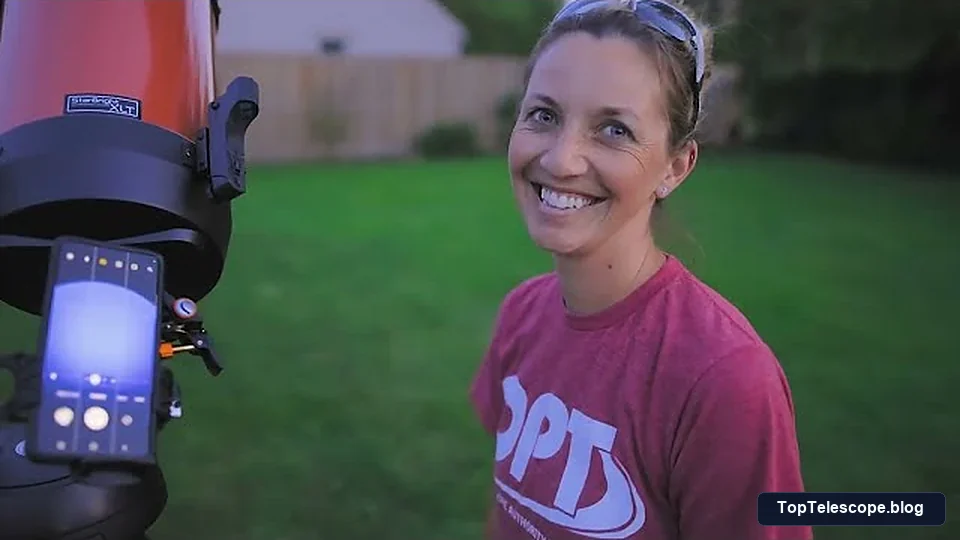
Its Schmidt-Cassegrain design folds the optical path inside a compact tube. Reviewing our CPC 800 vs NexStar 8SE comparison highlights how this folded optical configuration maximizes portability.
- 203mm primary mirror diameter
- 2032mm focal length at f/10
- StarBright XLT optical coatings
Schmidt-Cassegrain Design Mechanics
Corrective glass plates at the front minimize spherical aberration efficiently. This precision engineering guarantees sharp, high-contrast imagery across the entire field of view during high-magnification sessions.
Internal baffling suppresses stray light reflections, boosting contrast for faint deep-sky targets. Such optical discipline is crucial when viewing planetary details against dark background skies.
- Corrector plate glass construction
- Internal light baffling tubes
Optical Architecture and Tube Engineering
The Schmidt-Cassegrain optical design features an 8-inch aperture with a 2032mm focal length, delivering a slow f/10 focal ratio suited for high-magnification planetary observation and lunar detail tracking.
Aluminum tube construction houses the primary mirror and corrects spherical aberration using a Schmidt corrector plate coated with StarXcel optical coatings to maximize light transmission across the visible spectrum.
Computerized GoTo Mount and Tracking Precision
The motorized Alt-Az mount drives automated slewing across the night sky. Once aligned, internal servo motors quietly track celestial objects as they drift due to Earth rotation.
The included NexStar+ hand controller accesses forty thousand targets. Reviewing details in our Celestron NexStar 6SE vs 8SE technical comparison helps users understand automated tracking capabilities.
- Computerized single fork arm
- NexStar+ flash memory hand control
- 40,000+ object database
Alignment Protocols and SkyAlign
Celestron’s proprietary SkyAlign technology simplifies the initial setup procedure entirely. Observers simply center any three bright celestial objects in the eyepiece without needing to identify them first.
Internal microprocessors compute your geographic coordinates and time automatically from the inputs. This eliminates tedious polar alignment routines for quick backyard viewing sessions.
- Three-star alignment method
- Automatic position calculation
Computerized GoTo Mount and Tracking Precision
The Alt-Azimuth mount relies on internal brass gears and a DC servo motor system controlled by the NexStar hand controller, which contains a database of over 40,000 celestial objects.
Utilizing SkyAlign technology, users center three bright alignment stars without knowing their names, allowing the internal computer to calculate exact geographic coordinates and time offsets for precise tracking.
Video Review: Search filters
Real-World Visual Output and Deep-Sky Metrics
Planetary performance highlights atmospheric bands on Jupiter and Saturn’s rings vividly. High-contrast optics resolve subtle color variations and polar caps on Mars during favorable opposition windows.
Deep-sky capability extends to resolving individual stars within globular clusters. Faintest galaxies appear as delicate smudges, rewarding dark-sky observers willing to venture beyond urban light pollution zones.
- Resolves globular cluster cores
- Captures planetary cloud belts
- Moderate urban light sensitivity
Real-World Visual Output and Deep-Sky Metrics
Under dark skies, the 8-inch light grasp resolves globular clusters like M13 into distinct individual stars while maintaining high contrast across lunar maria and Jovian cloud belts.
Limiting magnitude reaches approximately 14th magnitude under optimal conditions, enabling direct observation of faint nebulae and distant galaxies when combined with quality eyepieces and dark adaptation.
Mechanical Efficiency, Power, and Operational Noise
Internal servo motors operate with minimal acoustic disruption during standard slew movements. The quiet gear train prevents disturbing neighbors during late-night astronomical observation sessions in quiet residential areas.
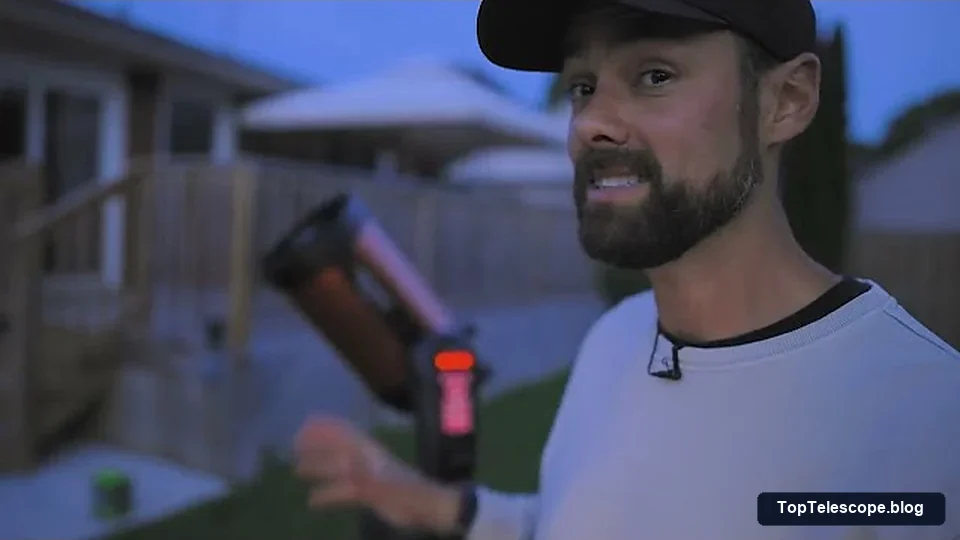
Power efficiency depends heavily on your chosen external power source. Standard internal batteries deplete quickly under heavy motor loads, making supplemental power tanks essential for long sessions.
- Low-noise servo motor drives
- Variable slew speed controls
Battery Draw and External Power Needs
Drawing power from eight AA cells offers basic operational mobility. However, cold weather drastically reduces battery life, necessitating a reliable 12V DC power adapter or rechargeable power tank.
Voltage drops can cause erratic GoTo alignment behavior and motor stalls. Maintaining a steady electrical current ensures consistent tracking accuracy throughout extended astrophotography or visual marathons.
- 8 AA battery compartment
- 12V external power port
Mechanical Efficiency, Power, and Operational Noise
Operating on an external 12V power supply or eight AA batteries, the internal drive motors draw minimal current during sidereal tracking while emitting a moderate hum during rapid slew maneuvers.
Clutch mechanisms allow manual repositioning without losing alignment data, though securing the tension locks properly prevents slippage during long photographic exposures or breezy outdoor viewing sessions.
Physical Ergonomics, Weight Distribution, and Setup
The optical tube weighs roughly twelve pounds, making attachment straightforward for single users. Readers can explore our NexStar 4SE vs 5SE optical duel to evaluate smaller fork-arm mounting designs.
Steel tripod legs provide a rigid foundation to minimize unwanted vibrations. Spreader trays lock the legs securely while holding essential eyepieces and accessories within arm reach.
- 12 lb optical tube assembly
- Heavy-duty steel tripod legs
- Quick-release dovetail mounting
Physical Ergonomics, Weight Distribution, and Setup
The optical tube assembly weighs roughly 12 pounds, making it manageable for single-handed lifting onto the fork arm base, which anchors securely to a sturdy steel tripod.
Carrying handles integrated into the fork mount and adjustable tripod legs simplify transport from storage to field sites, ensuring stable leveling on uneven outdoor terrain and grass surfaces.
Routine Maintenance, Alignment, and Optical Care
Collimation stability remains remarkably robust thanks to the fixed primary mirror design. Users rarely need to adjust factory mirror alignment unless the telescope suffers severe physical impacts.
Lens cleaning requires specialized optical solutions and microfiber cloths to protect coatings. Keeping dust caps securely in place prevents debris accumulation on the delicate corrector plate surface.
- Stable factory collimation setup
- StarBright XLT coating care
- Dust cap protection protocols
Routine Maintenance, Alignment, and Optical Care
Periodic collimation of the secondary mirror ensures sharp optical performance, requiring small adjustments to the front Phillips screws using an Allen wrench during stable seeing conditions.
Dust removal on the corrector plate requires a bulb blower and optical microfiber cloth, avoiding aggressive chemical cleaners that can strip anti-reflective coatings from the glass surface.
Final Buyer Verdict and Target Audience Match
This computerized telescope suits intermediate hobbyists seeking serious optical aperture. Consult our concise 8SE vs Evolution 8 verdict to compare mounting systems and built-in lithium battery performance.
Buyers must accept the inherent bulk of an eight-inch mirror assembly. Despite transport weight trade-offs, the optical performance and GoTo automation deliver immense astronomical value.
- Ideal for intermediate astronomers
- Excellent balance of aperture and size
- Requires stable power accessories
Final Buyer Verdict and Target Audience Match
Intermediate astronomers seeking a balanced instrument for visual astronomy and occasional planetary imaging will find this system offers exceptional aperture-to-portability ratios for backyard stargazing sessions.
While advanced astrophotographers may require equatorial wedges, this configuration satisfies users needing rapid setup times and a robust database of objects for educational outreach or personal exploration.
Frequently Asked Questions
Can this telescope handle deep-sky astrophotography?
While primarily designed for visual astronomy, it supports basic lunar and planetary imaging with a T-adapter. Long-exposure deep-sky imaging requires adding an equatorial wedge or separate equatorial mount.
How long do the AA batteries typically last?
Internal batteries usually last a few hours depending on ambient temperature and slewing frequency. Using an external rechargeable power tank is strongly recommended for extended viewing sessions.
Is it difficult for beginners to operate?
The automated GoTo system and SkyAlign technology make setup surprisingly straightforward for motivated beginners. However, understanding basic celestial coordinate systems enhances the overall user experience.
Does the telescope require frequent mirror alignment?
Schmidt-Cassegrain optics hold their collimation remarkably well compared to Newtonian reflectors. You will rarely need adjustments unless the instrument experiences severe mechanical shocks during transit.
Can I upgrade the eyepiece selection later?
The standard 25mm eyepiece provides a solid starting point for wide-field viewing. You can easily add higher-magnification eyepieces or specialized filters using the standard 1.25-inch visual back.