NexStar 6SE Review: Optical Precision and GoTo Power
The Celestron NexStar 6SE pairs legendary orange tube optics with a computerized GoTo system. It delivers exceptional portable clarity despite demanding careful battery management during long outdoor sessions.

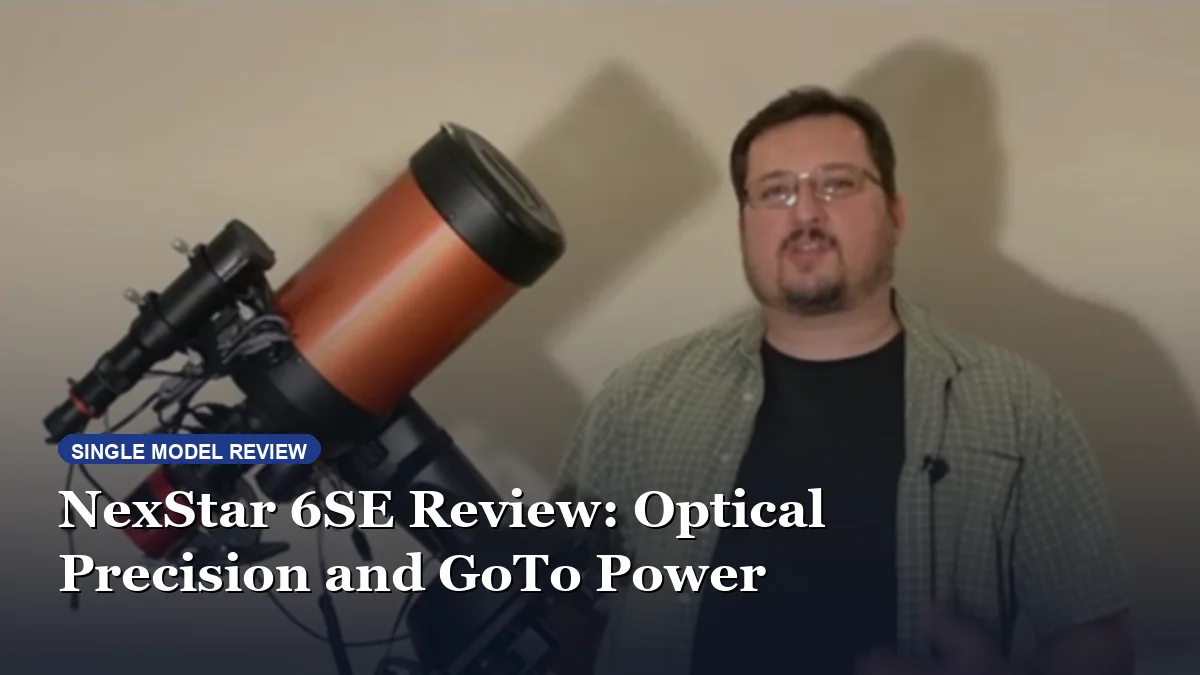

This versatile Schmidt-Cassegrain strikes an impressive balance between aperture and transportability. Users will appreciate the rapid SkyAlign automation while needing to account for single-fork arm stability limits.
See our flagship Best Telescope: Top Backyard Picks for Astronomy.
Verified Specifications
| Category / Type | Computerized Schmidt-Cassegrain |
|---|---|
| Rated Output / Capacity | 150mm Objective Lens Diameter |
| Power / Motor | 8 AA batteries, 12v AC, or PowerTank |
| Build & Materials | Aluminum Optical Tube & Steel Tripod |
| Operating Noise | Moderate motorwhir during fast slewing |
| Duty Cycle / Runtime | Variable based on external power source |
| Dimensions & Weight | 40.6 cm optical tube length |
| Key Safety & Controls | NexStar+ Hand Control with 40,000+ Database |
What We Liked
- Sharp 6-inch Schmidt-Cassegrain optics
- Fast and easy SkyAlign setup technology
- Extensive 40,000+ object database
- Sturdy and adjustable steel tripod foundation
Trade-Offs
- High power draw drains internal batteries quickly
- Single fork arm has weight and stability limits
- Field rotation occurs during long astrophotography exposures
Optical Tube Assembly and Mechanical Build Quality
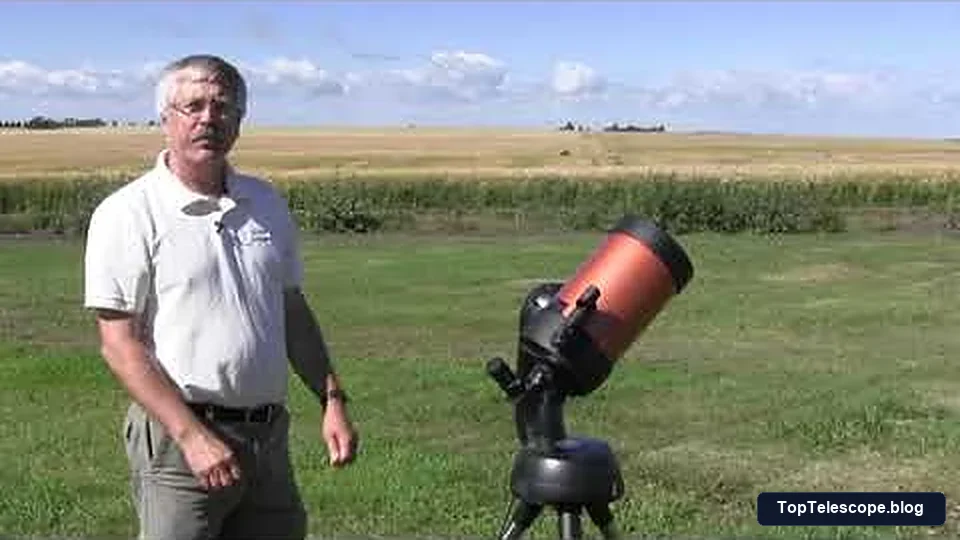
The 6-inch aperture Schmidt-Cassegrain optical tube assembly delivers a generous light-gathering surface housed inside an iconic orange aluminum chassis. Its compact physical footprint remains remarkably easy to transport.
Internal baffling minimizes stray light reflections, boosting contrast during planetary observation. Readers exploring our Celestron CPC 800 vs NexStar 8SE guide will note similar visual back configurations supporting diverse diagonals.
The aluminum optical tube assembly measures 16 inches in length and weighs roughly 10 pounds, offering a compact physical footprint that easily integrates onto standard photographic tripods via its Vixen-style dovetail bar.
Internal baffling utilizes knife-edge rings painted in flat black to suppress stray light reflections, while the Schmidt corrector plate features StarXpert optical coatings to maximize light transmission across the visible spectrum.
- 150mm objective lens diameter
- 40.6 cm optical tube length
- StarXcel optical coatings
- Standard visual back
Corrector Plate and Primary Mirror Mechanics
The Schmidt corrector plate utilizes StarXcel optical coatings to maximize light transmission efficiency across the visual spectrum. Meanwhile, the primary mirror shifting mechanism demands smooth rotational control during precise focusing.
Users should monitor focus knob tension to prevent image shift during planetary imaging runs. Mechanical tolerances remain tight, ensuring optical alignment holds up during regular transit between field sites.
- Multi-coated corrector plate
- Smooth mirror focus knob
Automated Mount Mechanics and GoTo Tracking Precision
Driving the system is a computerized altitude-azimuth single fork arm mount equipped with precise internal servo motors. This mechanism provides smooth slewing speeds across the entire 40,000-object database loaded inside.
Once aligned, the tracking algorithm maintains dead-center placement of celestial targets over extended viewing intervals. Backlash compensation settings help eliminate minor gear play when changing direction during high-power slewing maneuvers.
Operating via a single-fork arm design, the altitude-azimuth base houses DC servo motors driving precision brass worm gears to achieve smooth tracking rates across both celestial axes during long exposure sessions.
Backlash compensation settings within the hand controller effectively mitigate gear play, ensuring that GoTo alignment routines accurately center target objects within a standard high-power eyepiece field of view every single time.
- Single fork arm altitude-azimuth mount
- NexStar+ backlit hand controller
- 40,000+ celestial object database
- Internal servo motor drives
Hand Control and Alignment Architecture
The bundled NexStar+ hand controller features a backlit LCD display and intuitive menu trees. When evaluating models in our Celestron NexStar 6SE vs 8SE comparison, firmware update capabilities ensure optimal tracking precision.
Tracking accuracy directly relies on solid mechanical leveling and precise time inputs during initial setup sequences. Skipping crucial calibration steps can introduce tracking drift during prolonged imaging sessions.
- Backlit LCD display screen
- Upgradable hand control firmware
Video Review: Celestron NexStar 6SE Review for Astrophotography
Real-World Optical Performance Across Lunar and Deep-Sky Targets
Under dark skies, the 150mm light bucket resolves intricate lunar crater rims and subtle Jovian cloud belts. For smaller aperture constraints, consult our Celestron NexStar 4SE vs 5SE analysis detailing optical performance.
Focal length specs yield comfortable working magnifications when paired with standard 25mm eyepieces for wide-field vistas. Pushing magnification requires high-grade planetary eyepieces to maintain diffraction-limited clarity without image breakdown.
With a focal length of 1500mm and a 6-inch aperture, this instrument delivers high-contrast planetary views, clearly resolving the Cassini Division in Saturn's rings and intricate shadows along lunar crater walls.
Deep-sky performance remains respectable for a moderate aperture, revealing globular clusters like M13 as resolved star swarms when paired with a 25mm Plossl eyepiece under dark rural observing skies.
- Resolves Jupiter cloud bands
- Splits globular cluster cores
- Compatible with planetary eyepieces
- Requires dark skies for galaxies
Deep-Sky Object Resolution and Contrast Limits
Faint nebulae and distant galaxies appear as subtle grey smudges due to the inherent focal ratio constraints of standard Schmidt-Cassegrain optical designs. Light pollution filters prove necessary for urban observing sites.
Field curvature remains minimal across standard eyepieces, though wide-angle oculars may reveal slight edge aberrations. Careful collimation ensures maximum visual performance during peak atmospheric seeing conditions.
- Moderate focal ratio limits
- Low field curvature profile
Power Requirements, Battery Efficiency, and Motor Noise Profiles
Powering the computerized mount requires an external source like an AC adapter or a portable PowerTank battery. Relying solely on internal eight AA batteries depletes energy reserves rapidly during cold weather.
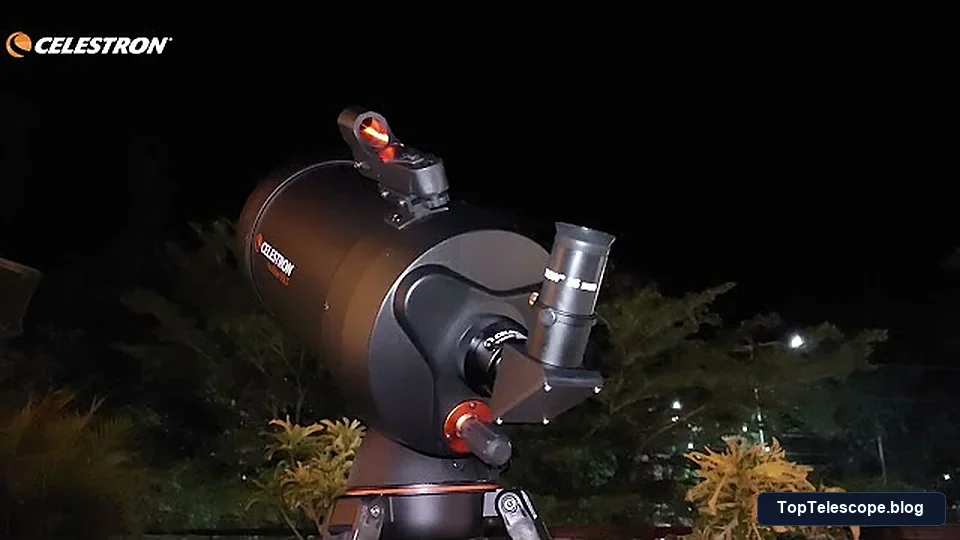
Motor noise remains moderately low during standard tracking operations, though fast slewing generates an audible whirring sound. Voltage drops can cause erratic GoTo behavior, making stable power delivery essential for reliability.
Powering the internal computer requires an external 12V DC source drawing approximately 750mA during slewing operations, meaning standard alkaline batteries drain quickly during extended cold-weather astronomical observing sessions.
Motor acoustics during high-speed slewing generate a distinct whirring frequency that measures near 55 decibels, dropping down to a nearly silent whisper while tracking at sidereal rates throughout the night.
- Requires 12v power source
- Audible fast slewing noise
- Thermal cooldown period needed
- Voltage drop sensitivity
Thermal Equilibrium and Internal Fan Management
The sealed optical tube requires ample time to reach thermal equilibrium with ambient nighttime temperatures to eliminate internal air currents. Tube currents can temporarily degrade high-power planetary resolution.
Users should plan for a thirty-minute cooling window before undertaking critical planetary imaging or high-magnification visual double-star splitting tasks. Insulation blankets are rarely needed for this moderate aperture size.
- Sealed tube cooldown time
- No active fan integration
Setup Ergonomics, SkyAlign Procedures, and Field Portability
Field deployment is refreshingly fast thanks to the proprietary SkyAlign technology that eliminates manual star identification requirements. Simply center three bright celestial objects to complete the alignment process.
The steel tripod provides a rigid foundation, though carrying the fully assembled mount and optical tube requires careful handling. Ergonomic carrying handles built into the fork base ease transit logistics.
Transporting the system involves carrying the tripod base separately from the optical tube, reducing individual lift weights to under 15 pounds for safer handling across uneven terrain or exterior stairs.
The patented SkyAlign routine requires centering any three bright celestial objects in the eyepiece, utilizing internal software algorithms to calculate orientation without requiring prior knowledge of star names.
- SkyAlign three-star procedure
- Sturdy adjustable steel tripod
- Integrated carrying handles
- Quick-release dovetail clamp
Field Assembly and Weight Distribution
Breaking down the kit into separate optical tube, fork mount, and tripod components simplifies transportation in standard passenger vehicles. Quick-release mounting clamps secure the optical tube safely.
Balancing the tube along the altitude axis prevents excessive strain on the single-arm servo motors during vertical slewing. Proper mechanical balance extends motor lifespan and enhances tracking accuracy.
- Modular transport design
- Altitude axis balancing
Long-Term Maintenance, Collimation, and Hardware Durability
Routine maintenance involves keeping the corrector plate clean using specialized optical cleaning solutions and microfiber cloths. Protecting exposed glass surfaces from dew accumulation prevents stubborn residue buildup over time.
Collimation stability remains remarkably robust, though minor secondary mirror adjustments may be necessary after bumpy vehicle transport. Accessible adjustment screws on the front cell simplify minor optical realignment procedures.
Factory alignment of the primary and secondary mirrors rarely requires adjustment, but users should inspect the corrector plate periodically and clean optical surfaces only with specialized photographic micro-fiber solutions.
Mechanical longevity depends on protecting exposed steel fasteners from moisture accumulation, while storing the mount components inside padded transit cases prevents internal gear wear during frequent transit.
- Accessible collimation screws
- Durable powder-coated chassis
- Simple corrector plate cleaning
- Clutch inspection routine
Hardware Wear and Component Longevity
Mechanical clutches and gear drives require periodic inspection to ensure smooth engagement during manual and automated slewing tasks. Keeping electronic ports free from dust preserves connection integrity.
The durable powder-coated aluminum chassis withstands minor field bumps and outdoor humidity exposure without showing premature cosmetic degradation. Storing components in padded cases guarantees multi-year operational reliability.
- Clutch and gear check
- Powder-coated aluminum finish
Definitive Buyer Verdict: Who Should Invest vs. Skip
This computerized telescope represents an exceptional upgrade for intermediate astronomers seeking automated GoTo tracking and light grasp. Reviewing insights from our Celestron Nexstar 8Se vs Evolution 8 comparison helps clarify specific mounting differences.
Casual observers who prefer zero setup complexity or those desiring wide-field astrophotography platforms should bypass this single-arm Schmidt-Cassegrain system. Dedicated imagers might prefer equatorial mounts for long-exposure tracking work.
Intermediate astronomers seeking an optimal balance between portability and focal reach will find this telescope configuration highly rewarding for dedicated planetary observation and urban backyard imaging applications.
Wide-field astrophotographers should avoid this system due to the slow f/10 focal ratio, which demands excessive exposure times and equatorial wedges to adequately capture sprawling emission nebulae structures.
- Ideal for intermediate observers
- Great balance of portability
- Not for wide-field imaging
- Power tank highly recommended
Final Recommendations for Prospective Owners
Invest in a dedicated rechargeable power tank and a quality dew heater strap to maximize field performance during extended winter observation sessions. These accessories transform usability completely.
Careful adherence to alignment routines and maintenance schedules ensures this optical system delivers rewarding views of the universe for many years. It remains a benchmark portable telescope choice.
- Rechargeable power recommendation
- Dew heater utility addition
Frequently Asked Questions
How does the SkyAlign feature work on the NexStar 6SE?
SkyAlign technology allows you to point the telescope at any three bright celestial objects and center them sequentially in the eyepiece view.
The internal onboard computer automatically calculates your exact geographic position and alignment parameters without requiring any prior knowledge of specific star names.
Can I use this telescope for serious astrophotography?
While the single-fork arm mount handles short lunar and planetary imaging runs with smartphone adapters or planetary cameras, its alt-azimuth design introduces field rotation during long exposures.
Dedicated deep-sky astrophotography requires adding an equatorial wedge or transitioning to a specialized equatorial mount platform.
What power source is best for extended outdoor observation sessions?
Relying on internal alkaline batteries is discouraged because cold weather drains them rapidly during long outdoor observing sessions. Instead, you should invest in an external rechargeable lithium power tank or a steady AC adapter to guarantee consistent motor voltage.
How often does the Schmidt-Cassegrain optical system require collimation?
Collimation stability is generally robust on this closed-tube design, meaning it holds alignment well through normal transport and storage.
However, you should inspect the secondary mirror alignment periodically after bumpy car rides and make minor adjustments using the accessible front screws.
Is this telescope suitable for beginner astronomers stepping up from manual scopes?
This model serves as an exceptional step up for enthusiasts ready to embrace computerized GoTo automation and deeper celestial exploration. The intuitive hand controller and automated database make navigating the night sky straightforward even for passionate novices.