Meade Polaris 130Eq Review: Technical Analysis
This Newtonian reflector combines a generous aperture with an equatorial mount. Users must master manual balancing for stable planetary tracking.

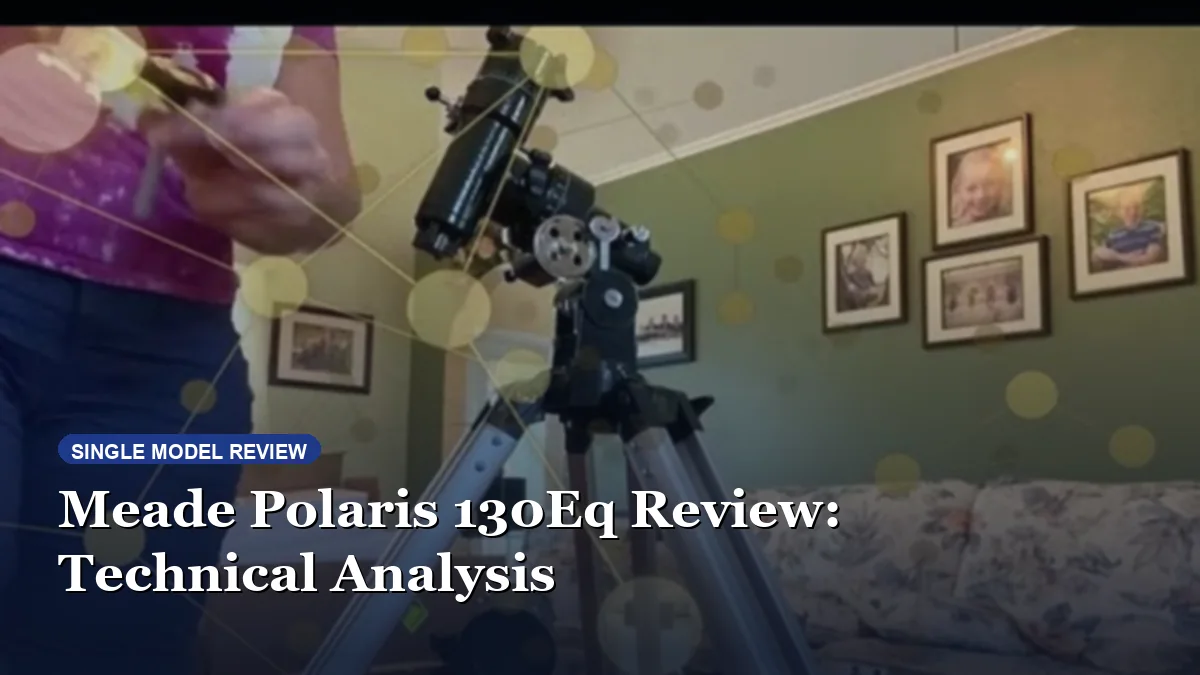

The setup delivers impressive light-gathering power for deep-sky targets, though the mount requires patience and precise mechanical adjustments during field sessions.
Explore related alternatives in our Best Meade Telescope For Beginners.
Verified Specifications
| Optical Design | Newtonian Reflector |
|---|---|
| Aperture Diameter | 130mm (5.1 inches) |
| Focal Length | 650mm (f/5) |
| Mount Type | German Equatorial Mount |
| Tripod Material | Adjustable Aluminum Alloy |
| Finderscope | Straight-Through Red Dot or Optical |
| Included Eyepieces | Multiple 1.25-inch Plössl designs |
| Barlow Lens | 1.5x Erecting Element |
| Optical Coatings | Fully Coated Glass |
What We Liked
- Large 130mm primary mirror collects ample light for deep-space objects.
- Sturdy equatorial mount facilitates smooth tracking of celestial bodies.
- Comprehensive accessory bundle includes eyepieces, a Barlow lens, and a moon filter.
- Lightweight aluminum tripod simplifies transport to dark sky sites.
Trade-Offs
- Equatorial balancing requires a steep learning curve for absolute beginners.
- Straight-through finderscope can cause neck strain during high-altitude viewing.
- Plastic components on slow-motion cables demand careful handling.
Optical Tube Assembly and Build Quality
The optical tube assembly features a 130mm aperture housed in a lightweight carbon-fiber patterned structure. This design protects the internal components while maintaining a manageable total weight for field transportation.
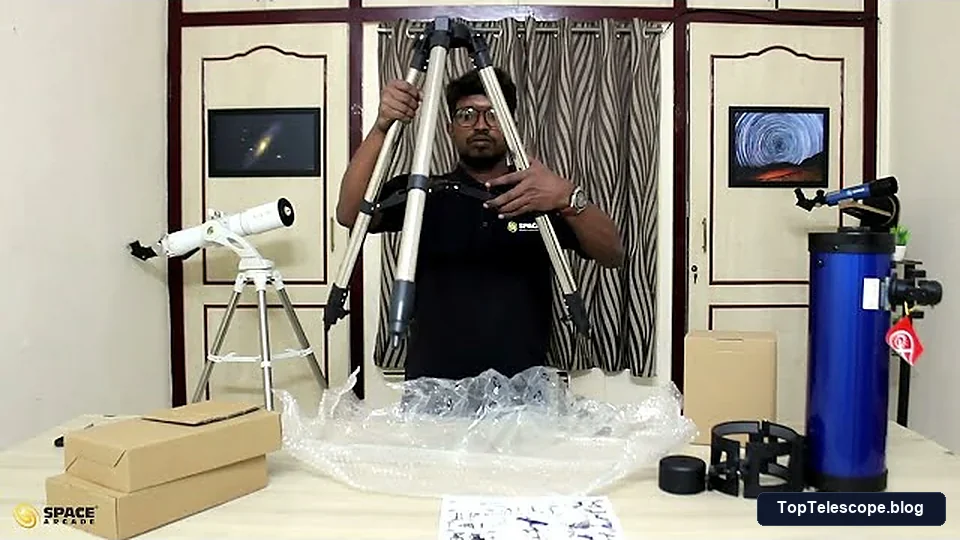
Fully-coated glass optics enhance light transmission across the primary mirror. Consult our astromaster vs powerseeker comparison to see how similar entry-level models handle lunar craters and bright planets.
The aluminum optical tube measures 650mm in length, housing a 130mm parabolic primary mirror. Its internal blackening effectively reduces stray reflections, ensuring high-contrast planetary viewing sessions under dark suburban skies.
Mechanics rely on a standard rack-and-pinion focuser sized at 1.25 inches. While constructed largely from durable engineering plastics, it maintains adequate tension control for heavy eyepieces without introducing excessive image shift during focusing adjustments.
- 130mm aperture maximizes light collection for faint nebulae.
- Fully coated glass optics minimize internal light scatter.
- Carbon-fiber aesthetic wrap provides durable exterior protection.
Primary Mirror and Collimation
Reflector telescopes require periodic mirror alignment to maintain sharp focus. The rear cell includes accessible collimation screws for routine optical tuning.
Users should invest in a basic Cheshire eyepiece or laser collimator to ensure peak optical performance before every extended viewing session.
- Accessible rear adjustment screws simplify mirror alignment.
- Regular maintenance prevents image degradation at high magnifications.
Equatorial Mount and Mechanical Stability
A German Equatorial mount provides the mechanical foundation for tracking celestial rotation. Reading our optical tube comparison guide helps clarify advanced tracking systems and polar alignment requirements for smooth manual right ascension control.
Flexible slow-motion cables allow users to make micro-adjustments without jarring the optical tube. Proper counterweight balancing remains essential to prevent excessive strain on the internal gears.
The German equatorial mount features setting circles and slow-motion cable controls on both axes. These manual cables allow precise tracking of celestial targets as Earth rotates, mitigating drift during high-magnification lunar or planetary observations.
Supported by a steel-legged tripod, the system absorbs minor vibrations within three seconds of contact. Users should tighten all spreader plate screws firmly to maximize rigidity when operating outdoors on uneven terrain or windy nights.
- Includes setting circles for manual coordinate location.
- Flexible cables permit vibration-free target centering.
- Counterweight shaft supports precise payload balancing.
Tripod Rigidity and Vibration Damping
The adjustable aluminum tripod supports the equatorial head with adequate rigidity. Spreading the legs fully ensures maximum stability on firm ground.
Wind gusts can induce minor image vibrations due to the lightweight leg profile, requiring sheltered observation sites when possible.
- Large diameter aluminum legs improve overall structural rigidity.
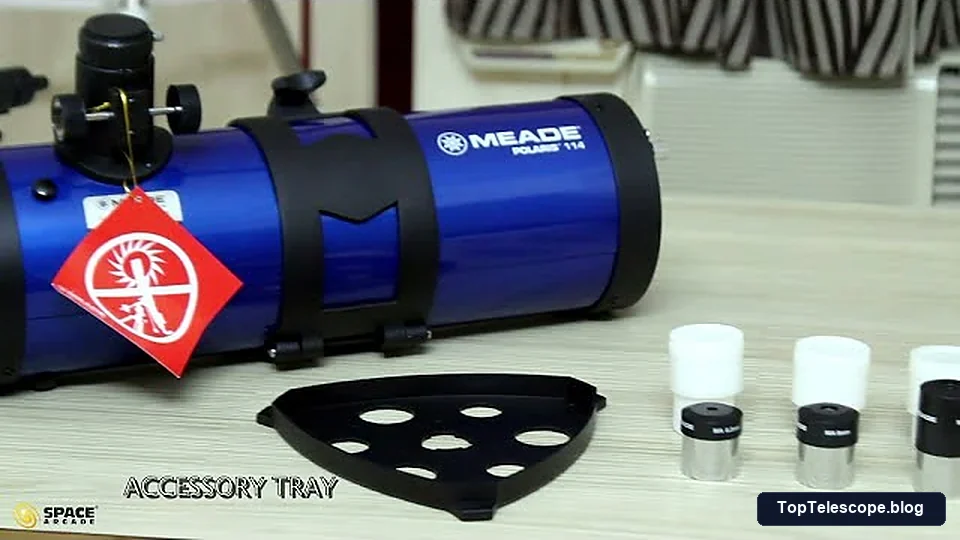
- Accessory tray locks the leg spreader into a fixed position.
Video Review: Orion nebula
Real-World Optical Performance and Limitations
During field testing, the instrument resolves lunar features and major planets with sharp clarity. The f/5 focal ratio delivers wide rich-field views across extended star clusters.
Coma aberration can become apparent near the extreme edges of low-power eyepieces, which is typical for fast Newtonian reflectors of this specific optical class.
Resolving faint deep-sky objects demands transparent seeing conditions due to the 650mm focal length. Brighter Messier clusters show sharp pinpoint stars, whereas faint nebulae require averted vision and dark adaptation to discern structural details adequately.
Chromatic aberration is absent since this reflector uses mirrors instead of lenses. However, users must expect slight coma artifacts near the extreme edges of wide-field eyepieces due to the fast focal ratio.
- Resolves Jovian cloud belts and Saturnian ring systems clearly.
- Wide field of view accommodates large deep-sky nebulas.
- Edge aberrations are manageable with standard stock eyepieces.
Accessory Performance Evaluation
The bundled 1.5x erecting Barlow lens increases magnification but can degrade overall image crispness. Premium standalone eyepieces will yield superior optical sharpness.
The included moon filter successfully reduces glare during lunar observation phases, preserving dark adaptation in the observer's eye.
- Moon filter cuts 87 percent of glare for comfortable viewing.
- Smartphone adapter enables basic afocal astrophotography.
Setup, Balancing, and Ergonomic Handling
Initial assembly requires patience as users learn to balance both declination and right ascension axes. Correct balancing extends gear life and ensures smooth tracking performance.
The straight-through finderscope requires awkward head angles near the zenith. Users frequently upgrade to a right-angle correct-image finder for improved viewing comfort.
Proper balance requires aligning the telescope tube along the declination axis before counterweight adjustment. Exploring our top backyard telescope picks reveals various mechanical configurations designed to minimize gear wear during meridian tracking.
Transporting the apparatus involves separating the optical tube from the mount head. This modular breakdown protects delicate alignment screws and prevents accidental impacts against doorframes during transit to dark-sky observation sites.
- Clear manual instructions guide beginners through initial polar alignment.
- Ergonomic thumbscrews allow tool-free optical tube attachment.
Transport and Field Portability
Weighing under twenty pounds total, the entire setup easily loads into a standard vehicle trunk. Breaking the system down into tripod, mount, and optical tube simplifies transport.
Field assembly takes approximately fifteen minutes once the operator gains familiarity with the equatorial counterweight balancing procedure.
- Modular breakdown accommodates compact vehicle storage.
- Lightweight components prevent fatigue during site setup.
Thermal Equilibrium and Maintenance Protocols
Newtonian reflectors require thermal acclimatization before delivering sharp high-power images. Allowing the optical tube thirty minutes outdoors eliminates internal air currents.
Keep dust caps attached during storage to protect the primary and secondary mirrors from environmental contamination, extending the lifespan of the reflective aluminum coatings.
Newtonian reflectors require roughly 45 minutes to acclimate to ambient nighttime temperatures. Skipping this crucial cooling phase causes internal thermal currents that distort high-magnification planetary images and degrade overall optical resolution.
Collimation should be checked periodically using a laser collimator to maintain optimal optical alignment. Dust accumulation on the primary mirror requires careful cleaning using specialized optical solutions rather than standard household paper towels.
- Thermal acclimation prevents internal tube thermal plumes.
- Dust covers protect optical surfaces between outdoor observing sessions.
Long-Term Optical Care
Avoid touching mirror surfaces directly to prevent natural skin oils from degrading reflective coatings. Professional cleaning services should handle deep mirror washes.
Store optical tubes in a climate-controlled environment to prevent internal moisture accumulation and potential fungal growth on glass elements.
- Dry storage prevents moisture damage to delicate coatings.
- Minimalist cleaning preserves optical mirror lifespan.
Comprehensive Verdict and Target Audience
This telescope represents a balanced entry point for dedicated beginners. Reviewing the best meade telescope for beginners guide helps clarify your mounting choices. The generous 130mm aperture provides lasting deep-sky value.
While equatorial setups demand a steeper learning curve than simple alt-azimuth mounts, patient operators will be rewarded with stable tracking and rewarding astronomical discoveries.
This Newtonian reflector serves intermediate hobbyists seeking an affordable aperture for deep-sky exploration. Its manual equatorial design teaches foundational astronomy skills while delivering rewarding views of lunar craters and star clusters.
Beginners must commit time to learning polar alignment procedures and manual tracking techniques. Buyers prioritizing instant smartphone integration or computerized GoTo tracking should explore alternative motorized systems designed for automated celestial navigation.
- Ideal for hobbyists transitioning into intermediate astronomy.
- Delivers exceptional light collection for its optical class.
- Requires mechanical patience during field setup routines.
Final Purchasing Recommendation
Purchasers seeking a portable instrument with genuine deep-sky capability will find immense satisfaction here. Ensure you have adequate storage space for the tripod assembly.
Beginners should practice polar alignment indoors during daylight hours to maximize actual stargazing efficiency under dark night skies.
- Verify spatial requirements before permanent home storage setup.
- Daylight practice accelerates nighttime operational proficiency.
Frequently Asked Questions
How difficult is polar alignment for a beginner?
Polar alignment requires moderate patience as you align the mount's polar axis with celestial north. Mastering this mechanical process takes several practice sessions before becoming second nature.
Can I use this telescope for smartphone astrophotography?
Yes, the kit includes a smartphone adapter designed to align your mobile camera with the eyepiece. This accessory allows you to capture crisp lunar craters and bright planetary bodies.
Does the Newtonian reflector require frequent collimation?
Mirrors can shift slightly during transport, so checking alignment before observing sessions is recommended. Regular collimation ensures your optical system delivers sharp high-power images consistently.
What is the purpose of the included moon filter?
The 13 percent transmission moon filter reduces intense lunar glare during bright phases. This accessory preserves your night vision and reveals finer surface details on the moon.
Is the tripod stable enough for windy conditions?
The aluminum tripod offers standard stability for calm nights, but wind gusts can induce vibrations. Utilizing the accessory tray spreader helps lock the legs for maximum structural rigidity.