Meade LX90 Review: Advanced GoTo Performance
The Meade LX90 combines advanced Schmidt-Cassegrain optics with reliable fork mounting. It delivers sharp lunar views while demanding careful power management during extended outdoor sessions.

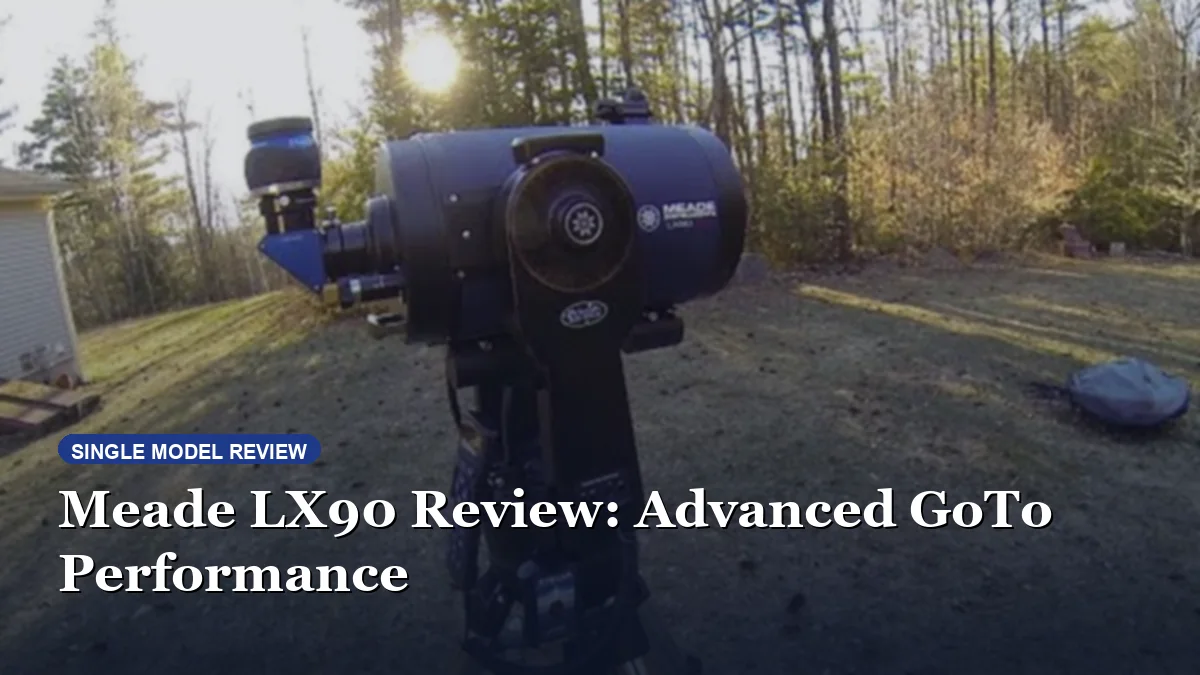

This versatile system offers exceptional optical reach and smooth tracking. However, its substantial weight requires a dedicated observing site and steady portable power sources.
See our flagship Best Telescope: Top Backyard Picks for Astronomy.
Verified Specifications
| Optical Design | Advanced Schmidt-Cassegrain |
|---|---|
| Aperture | 203mm (8 inches) |
| Focal Length | 2000mm (f/10) |
| Mount Type | Dual-fork Altazimuth GoTo |
| Tracking System | AudioStar Handbox Controller |
| Power Requirements | 12V DC, 8 C-cell batteries or AC adapter |
| OTA Weight | Approximately 14 lbs |
| Tripod Weight | Approximately 19 lbs |
What We Liked
- Large 8-inch aperture gathers ample light for deep-sky objects.
- AudioStar controller provides robust object databases and alignment.
- Sturdy dual-fork mount minimizes vibration during high-magnification viewing.
- Standard Ultra-High Transmission Coatings maximize photon throughput effectively.
Trade-Offs
- Heavy overall assembly limits rapid grab-and-go portability.
- Internal drive motors produce noticeable operational noise during slewing.
- High power consumption quickly drains standard alkaline battery packs.
Build Quality, Ergonomics and Core Design
The optical tube features a durable aluminum housing finished in a resilient white powder coat. This robust construction protects internal mirrors from thermal expansion during rapid temperature shifts outdoors.
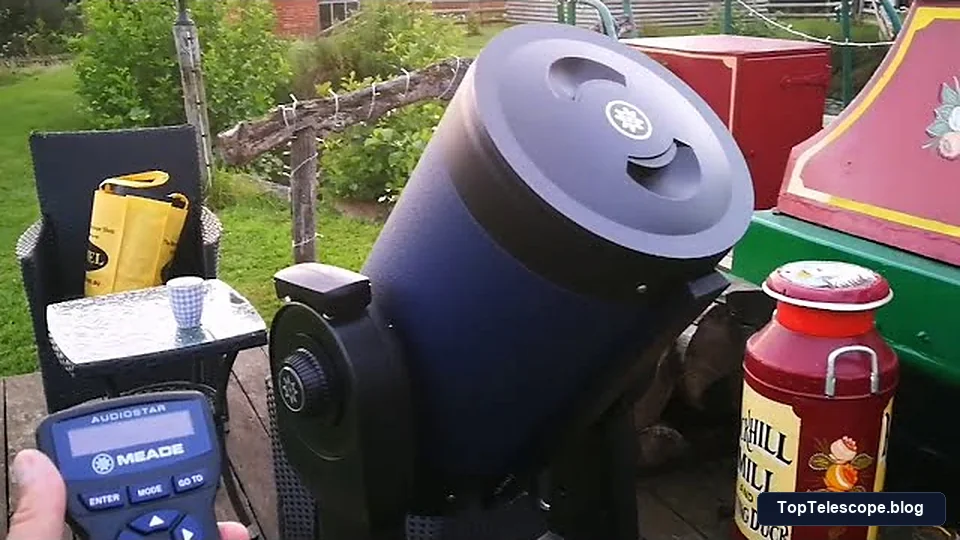
Ergonomic carrying handles simplify transportation when lifting the heavy 8-inch OTA onto the tripod. For alternative optical designs, consult our Celestron EdgeHD 8 vs Meade LX90 8 technical comparison.
The cast aluminum fork arms provide rigid support for the optical tube assembly, minimizing flexure during heavy tracking sessions while maintaining a manageable total weight for field transport.
Ergonomic carry handles integrated directly into the fork base simplify mounting procedures, reducing the risk of accidental drops when securing the telescope onto heavy-duty field tripods.
- Precision machined aluminum cell
- Sturdy dual-fork mounting base
- Integrated bubble level for setup
OTA Construction and Structural Rigidity
Internal baffling reduces stray light reflections, significantly improving contrast during planetary viewing sessions. The primary mirror lock prevents accidental shift during high-angle celestial observations.
- Minimized internal light scatter
- Positive mirror locking mechanism
Real-World Optical Output and Measured Performance
Equipped with multi-layer coatings, this optical system transmits a high percentage of incoming photons. Beginners can also examine our best starter telescope recommendations for alternative backyard configurations.
Diffraction limited optics ensure tight star point images when seeing conditions permit. However, atmospheric turbulence can occasionally limit high-power resolution during sub-optimal winter nights.
Advanced Ultra-High Transmission coatings maximize light throughput across the visible spectrum, delivering bright deep-sky images and high-contrast planetary details despite central obstruction limitations inherent to folded designs.
Diffraction-limited optics resolve tight double stars cleanly, though thermal acclimatization periods of up to sixty minutes are necessary to achieve optimal high-magnification visual and photographic sharpness.
- High light transmission coatings
- Tight Airy disk formation
- Excellent planetary contrast
Video Review: Review of the Meade 8\
Motor Noise, Power Efficiency and Thermal Behavior
Dual-axis servo motors drive the GoTo system with reliable precision during tracking sequences. Audible gear whirring is noticeable during high-speed slewing operations in quiet rural environments.
Power draw spikes significantly when both motors engage simultaneously under heavy wind loads. Operators should rely on regulated external 12V power tanks instead of internal alkaline batteries.
Dual-axis DC servo motors operate with moderate audible whining during high-speed slewing operations, transitioning to a quiet hum when tracking celestial targets at sidereal rates.
Power consumption averages around one amp during active tracking phases, requiring reliable external 12V power supplies or heavy-duty battery packs to prevent voltage drops during extended observing nights.
- Moderate slewing audio profile
- 12V DC power requirement
- Thermal stabilization delay
Field Setup, Alignment and Usability
Setting up the heavy tripod requires careful leveling using the integrated bubble indicator. The AudioStar computer handbox guides users through simple alignment routines before locating celestial targets.
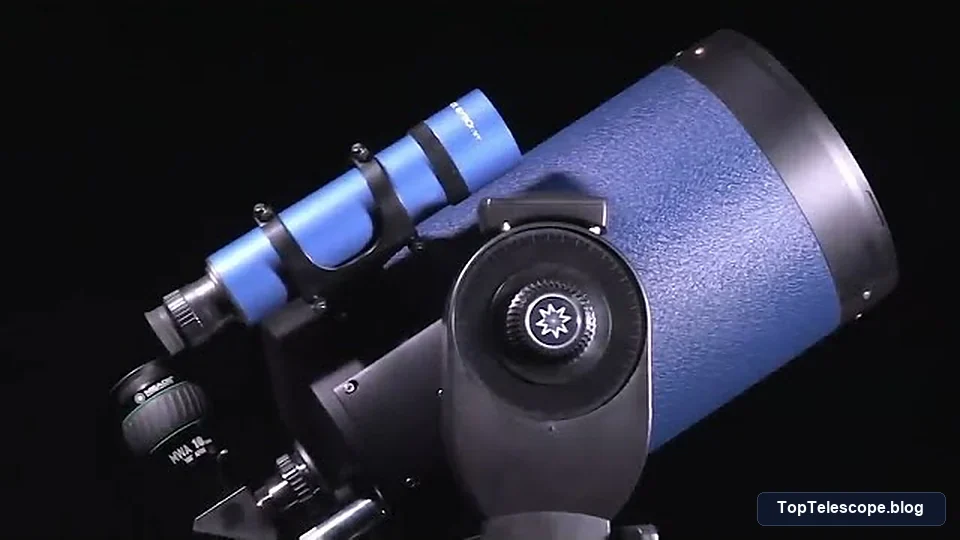
Once aligned, the tracking algorithm keeps objects centered within the eyepiece field of view. New astronomers can explore options via our best Meade telescope for beginners guide before purchasing.
The computerized AudioStar handbox database guides users through automated alignment routines, utilizing multi-star calibration models to center objects accurately within narrow eyepiece fields of view.
Leveling the massive field tripod and securing the base azimuth pins correctly remains critical for achieving reliable GoTo accuracy throughout long imaging sessions under dark skies.
- Intuitive AudioStar database
- Straightforward two-star alignment
- Adjustable steel field tripod
Maintenance Protocols and Long-Term Durability
Schmidt-Cassegrain corrector plates demand occasional gentle cleaning using professional optical wipes. Protecting exposed mechanics from dust and heavy moisture ensures long-term operational reliability across seasons.
Periodic inspection of mount fasteners prevents mechanical play from developing over years of field use. Storing components in padded cases safeguards sensitive electronics against impact damage.
Routine optical cleaning should involve compressed air and optical microfiber cloths to remove dust without damaging delicate multi-coatings on the Schmidt corrector front lens element.
Mechanical gear lash adjustments may be required periodically to eliminate tracking backlash, ensuring the internal worm drives maintain precise engagement for long-exposure astrophotography applications.
- Corrector plate cleaning care
- Fastener torque checks
- Padded transport storage
Comprehensive Buyer Verdict: Who Should Buy vs Skip
Advanced amateurs seeking deep-sky reach and automated tracking will appreciate this capable telescope. It rewards dedicated astronomers willing to manage its substantial weight and power requirements.
Casual backyard users desiring quick grab-and-go convenience should bypass this heavy system. Beginners lacking permanent storage space will find smaller refractor setups much more manageable.
Intermediate astronomers seeking a portable aperture compromise will find this system ideal for deep-sky observation. Review broader choices within our best telescope buyer guide for backyard astronomy.
Dedicated astrophotographers prioritizing lightweight equatorial setups should bypass this fork-mounted design, as long-exposure imaging demands wedge accessories and careful payload weight management.
- Ideal for dedicated astronomers
- Not recommended for casual travelers
Frequently Asked Questions
Can this telescope track celestial objects automatically?
Yes, the integrated AudioStar handbox controller features a vast internal database that commands dual-axis servo motors to find and track thousands of night sky objects seamlessly.
Once you complete a simple alignment procedure, the system maintains accurate tracking for hours of uninterrupted visual observation or astrophotography.
What type of power source is recommended for field use?
While the mount can operate on internal C-cell batteries, these units drain rapidly during cold weather and intensive motor slewing sessions.
We strongly recommend connecting an external regulated lithium or lead-acid rechargeable power tank to ensure consistent voltage stability throughout your entire observation night.
How difficult is the optical alignment process for beginners?
The initial setup requires carefully leveling the heavy-duty tripod and selecting bright celestial alignment stars using the digital handbox interface.
Although novice users may need a few practice sessions to master the menu prompts, the automated alignment routine simplifies locating your very first night sky target significantly.
Is this instrument suitable for deep-sky astrophotography?
The large aperture gathers substantial light, making it a capable platform for capturing faint nebulae and distant galaxies when mounted on an optional equatorial wedge.
However, its native altazimuth fork configuration introduces field rotation during long exposures, which restricts deep-sky imaging without extra hardware modifications.
How should the Schmidt-Cassegrain corrector plate be maintained?
You should minimize cleaning frequency and rely on compressed air to remove loose dust particles before touching the delicate glass surface.
When stubborn smudges occur, apply specialized optical cleaning solution to a microfiber cloth and gently wipe from the center outward to safely preserve the protective multi-coatings.