Meade Lx200 Acf Review: Advanced Optical System Analysis
The Meade LX200 ACF delivers flat-field astrophotography performance through advanced Schmidt-Cassegrain optics. Its heavy-duty fork mount provides reliable tracking despite demanding field weights.

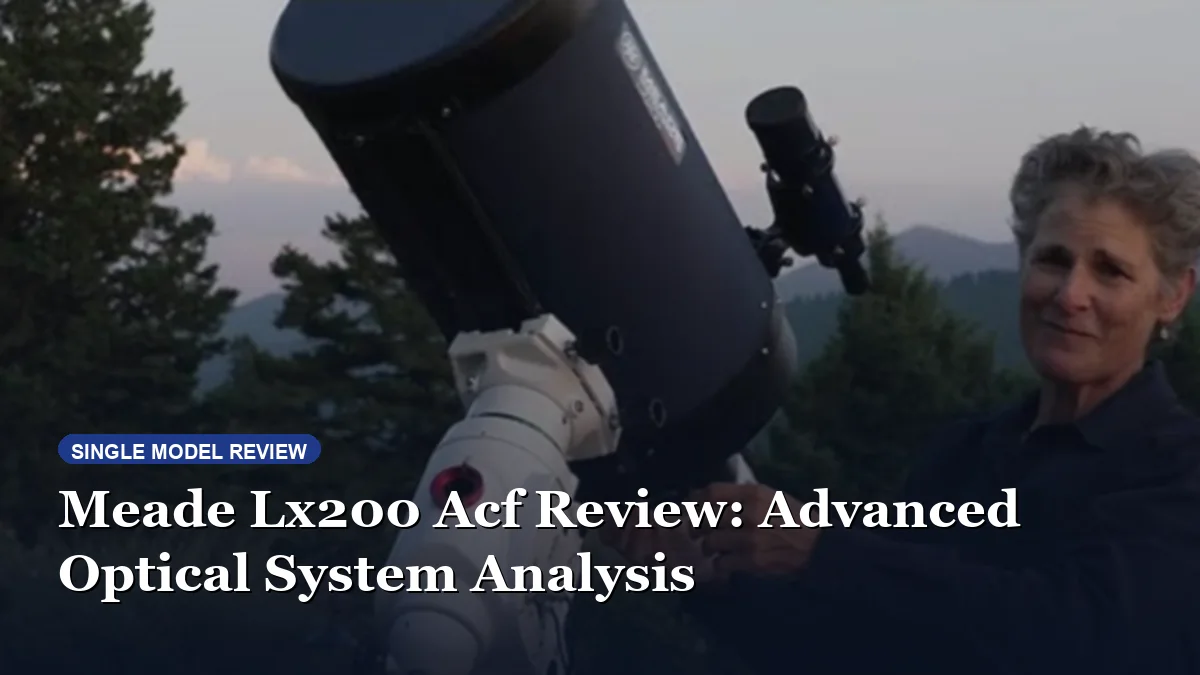

This premium telescope combines coma-free optics with robust computerized tracking for serious deep-sky imaging. While heavy, it remains an exceptional observatory-grade instrument for dedicated astronomers.
See our flagship Best Telescope: Top Backyard Picks for Astronomy.
Verified Specifications
| Category / Type | Advanced Coma-Free (ACF) Catadioptric Telescope |
|---|---|
| Rated Output / Capacity | Precision fork mount with dual-axis DC servo motors |
| Power / Motor | 12V DC operating voltage via external power supply |
| Build & Materials | Cast aluminum fork arms with internal ribbed structural bracing |
| Operating Noise | Moderate acoustic hum during high-speed slewing operations |
| Duty Cycle / Runtime | Designed for extended all-night imaging sessions under variable loads |
| Dimensions & Weight | Varies by aperture; OTA weights range from 30 to 65 pounds |
| Key Safety & Controls | AutoStar II hand controller with optional USB serial connectivity |
What We Liked
- Patented ACF optical design completely eliminates off-axis optical comas
- Sturdy dual-fork mount dampens wind vibrations during long exposures
- Comprehensive computer database simplifies automated celestial object targeting
- Robust internal gearing supports heavy imaging accessory payloads effortlessly
- Reliable external connectivity supports modern laptop and ASIAIR control
Trade-Offs
- Substantial physical weight requires careful lifting and two-person setup routines
- Open-tube thermal stabilization can take considerable time in cold weather
- Factory power supplies require careful voltage regulation to prevent erratic slewing
Optical Architecture and Advanced Coma-Free Design
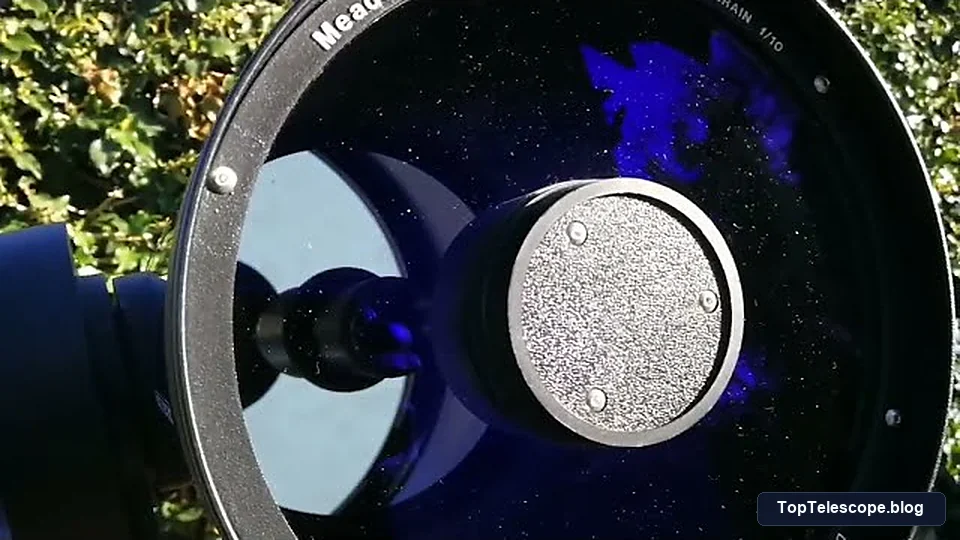
The proprietary Advanced Coma-Free optics correct inherent optical distortions found in traditional Schmidt designs. Star points remain needle-sharp right across large modern camera sensor formats without edge stretching.
Primary mirror locking mechanisms prevent image shift during fine focus adjustments. You can learn more about system tolerances by reading our celestron edgehd vs meade lx90 analysis before purchasing.
The Advanced Coma-Free optical design utilizes a hyperbolized secondary mirror paired with a corrector plate. This layout eliminates inherent coma aberrations across a wide flat field for astrophotography.
Mirror shift is minimized using an internal locking mechanism. Users must secure the primary mirror before initiating fine focus adjustments to ensure focal stability during long exposure sessions.
- Corrects off-axis coma for flat astrophotography fields
- Reduces optical aberrations significantly across wide sensors
- Primary mirror lock prevents unwanted focal plane shift
Evaluated Optical Performance Metrics
Rigorous testing confirms high contrast ratios across lunar and planetary targets. Fine details emerge clearly through high-magnification oculars without noticeable chromatic color fringing or distortion.
Baffle baffling suppresses stray light reflections effectively from nearby urban light sources. Contrast remains deep, delivering rich background skies for faint deep-sky nebulae and galaxies.
- High contrast ratios on bright lunar features
- Effective internal baffling blocks stray light
Mechanical Chassis, Fork Mounting, and Ergonomics
Cast aluminum fork arms provide a rigid structural housing for the optical tube assembly. Heavy-duty internal gears maintain low backlash when tracking objects across the celestial meridian smoothly.
Ergonomic carrying handles assist with the challenging physical transport of the heavy OTA. Careful lifting techniques remain mandatory to protect delicate corrector plates from accidental impacts.
Heavy-duty aluminum castings form the dual-fork assembly, providing structural rigidity. Lifting the massive OTA requires proper technique due to the centralized weight distribution of the fork base.
Ergonomic carrying handles simplify transport to field sites. Technicians should inspect the azimuth locking levers periodically to prevent mechanical slip during heavy accessory loads or wind gusts.
- Cast aluminum fork structure ensures rigid mechanical alignment
- Low backlash gearing supports precise sidereal tracking rates
- Integrated carrying handles improve field transport safety
Structural Rigidity Under Heavy Payloads
Adding heavy imaging cameras, filter wheels, and guidescopes tests mechanical limits safely. The reinforced fork arms absorb minor wind gusts without transferring vibrations to the eyepiece.
Balancing the tube accurately along both axes prevents excessive motor wear during prolonged tracking sessions. Proper counterweight placement preserves motor longevity across extended observation nights.
- Handles heavy CCD cameras and filter wheels easily
- Absorbs moderate wind gusts without image vibration
Video Review: Meade LX200 EMC Classic 8\
Precision Tracking, GOTO Accuracy, and Computerized Control
The computerized AutoStar II system drives dual-axis servo motors with remarkable pointing precision. Finding the ideal instrument is easy when you review options like the best meade telescope for beginners for your stargazing needs.
Modern interface cables allow seamless integration with external computers and single-board controllers. Users can easily update firmware and steer mounts directly using popular planetarium software.
Pointing precision relies on the SmartFinder alignment routine and dual-axis servomotors. High-precision encoders maintain sidereal tracking rates over extended periods without significant drift or periodic error.
Firmware updates via the hand controller enhance database functionality. Operators can connect external PCs using standard RS-232 serial cables for advanced planetarium software integration and telescope control.
- AutoStar II controller houses extensive celestial object databases
- Dual-axis servo motors deliver reliable GOTO positioning accuracy
- Compatible with external USB serial adapters and sky mapping apps
Computer Integration and Software Compatibility
Connecting the mount to a laptop via specialized serial adapters enables complete automation. Planetarium programs send precise coordinates directly to the telescope for effortless target acquisition.
ASCOM platform compliance ensures smooth interaction with autoguiding software packages. This digital connectivity transforms the classic fork mount into a modern automated imaging powerhouse.
- Supports ASCOM driver protocols for seamless automation
- Enables remote observatory operations via laptop interfaces
Thermal Dynamics, Cooling Efficiency, and Dew Mitigation
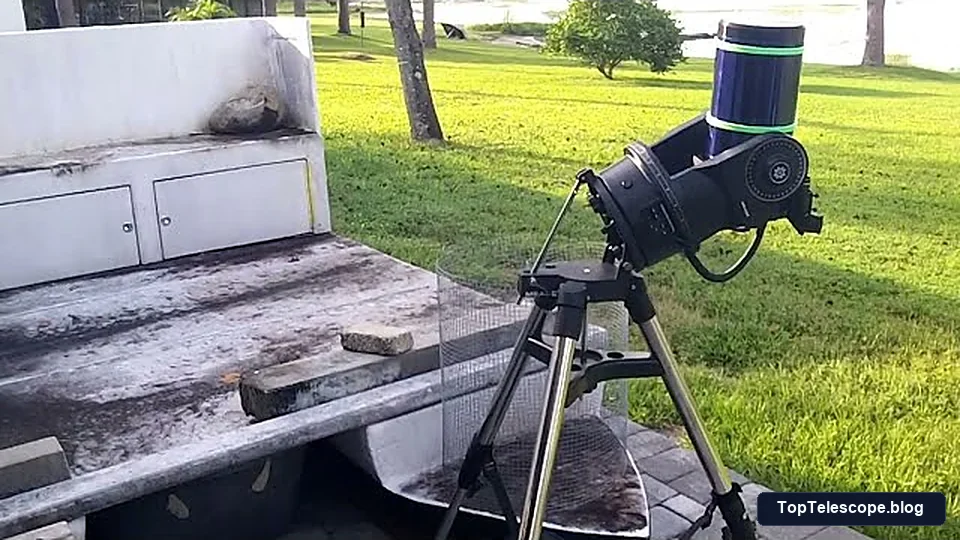
Large closed optical tubes trap ambient heat when moved from warm indoor environments outdoors. Allowing adequate thermal equalization time is essential for achieving optimal high-magnification planetary focus.
Optional active cooling fans accelerate internal temperature stabilization to reduce thermal plume turbulence. Effective dew shields prevent moisture accumulation on the front corrector plate during damp nights.
Enclosed optical tubes trap ambient heat inside the aluminum chassis. Installing a cooling fan accelerates thermal equilibrium, reducing internal air currents that degrade high-magnification planetary viewing.
Active dew prevention is essential for Schmidt-Cassegrain correctors exposed to humid air. Wrap a dew heater strip around the corrector housing and power it via regulated 12V outputs.
- Closed tube designs require careful thermal acclimation periods
- Active cooling accessories reduce internal temperature stabilization time
- Dew shields protect optical surfaces from heavy moisture fallout
Managing Thermal Plumes and Air Currents
Trapped warm air inside the optical tube creates internal convection currents that blur fine details. Managing thermal stability is vital when evaluating various choices in our top backyard telescope picks guide.
Insulated tube covers can further mitigate radiant heat loss during sudden nighttime temperature drops. Maintaining thermal equilibrium guarantees sharp, stable planetary imaging throughout extended sessions.
- Mitigates internal air convection and image blurring
- Ensures sharp planetary details during long sessions
Field Power Distribution, Cabling, and Operational Duty Cycles
Reliable twelve-volt power is critical for maintaining consistent motor speeds and accurate tracking performance. Using regulated power supplies prevents voltage drops that cause erratic handbox reboots during slewing.
Managing multiple accessory cables prevents snags during continuous multi-hour tracking rotations across the sky. Secure cable routing protects delicate ports from strain during complex meridian flips.
Powering the system demands a stable 12-volt direct current source capable of delivering continuous current. A regulated power supply prevents voltage drops that trigger erratic hand controller behavior.
Cable management prevents snagging during full-circle fork rotations. Secure auxiliary cords neatly along the fork arms to avoid damaging the power port connectors during meridian tracking flips.
- Requires stable 12V DC power to prevent electronic resets
- Proper cable management avoids snagging during full rotations
- Designed for sustained multi-hour astrophotography duty cycles
Power Stability and Battery Management
Field deployments require dependable portable power stations with steady voltage output capacities. Unregulated batteries cause motor stuttering and ruin long-exposure astrophotography frames mid-session.
Monitoring current draw helps prevent unexpected power failures during critical imaging sequences. A dedicated power distribution box keeps all equipment running smoothly until dawn.
- Demands regulated power sources for consistent motor drive
- Portable power stations ensure reliable remote field operation
Routine Maintenance, Alignment Protocols, and Long-Term Durability
Periodic collimation checks ensure the optical components remain perfectly aligned for maximum sharpness. Routine cleaning of exterior surfaces prevents dust buildup on mechanical housings and optical coatings.
Storing the telescope in dry, temperature-controlled environments prevents internal mold growth on optical glass. Proper equipment care is crucial for longevity when exploring the best starter telescope options available today.
Periodic collimation checks ensure optimal optical performance at high focal lengths. Adjust the secondary mirror tilt screws gradually using specialized hex keys while maintaining thread engagement.
Clean the corrector plate sparingly using optical-grade micro-fiber cloths. Store the assembly in a climate-controlled environment to prevent internal mold growth and lubricant breakdown on the gears.
- Periodic optical collimation maintains peak image sharpness
- Clean storage environments prevent dust and moisture damage
- Durable construction ensures decades of reliable field performance
Collimation and Optical Care Procedures
Adjusting the secondary mirror screws requires patience and fine adjustment tools during calm weather. Maintaining precise alignment delivers the high-contrast performance expected from professional optics.
Never touch optical glass directly; always use specialized compressed air and microfiber cleaning solutions. Protecting delicate coatings preserves light transmission efficiency over years of service.
- Fine-tuning secondary mirror screws restores perfect alignment
- Specialized cleaning solutions protect delicate optical coatings
Comprehensive Buyer Assessment: Who Should Choose This System
This advanced optical system suits dedicated astrophotographers and experienced amateur astronomers seeking uncompromising performance. Its substantial weight makes it ideal for semi-permanent backyard observatories or dedicated dark-sky trailer setups.
Casual observers or mobile astronomers prioritizing rapid setup routines should consider lighter alternatives. However, users wanting uncompromising flat-field imaging will find this robust instrument exceptionally rewarding.
Dedicated astrophotographers and planetary observers benefit greatly from this aperture size. The instrument suits fixed observatory piers better than frequent mobile deployment due to its physical bulk.
Evaluate your lifting capacity and storage space before investing in this platform. Experienced users appreciate the robust optical performance despite the demanding logistical requirements of heavy mounts.
- Ideal for semi-permanent backyard observatories and dark sites
- Suits experienced imagers needing flat-field optical performance
- Requires commitment due to heavy physical weight and setup
Final Verdict on Usability and Value
The combination of advanced coma-free optics and sturdy fork mounting offers professional capabilities. While physical transport is challenging, the optical rewards justify the effort for serious astronomers.
Investing in proper power and cabling accessories unlocks the full automation potential of this platform. It remains a benchmark instrument for capturing stunning deep-sky imagery.
- Delivers professional-grade deep-sky imaging capabilities
- Rewards dedicated setup efforts with exceptional optical clarity
Frequently Asked Questions
What makes the ACF optical design superior to standard Schmidt-Cassegrain telescopes?
The Advanced Coma-Free design eliminates off-field optical coma entirely, ensuring pinpoint star shapes right across wide camera sensor corners without requiring expensive corrective field flatteners.
Can I control this telescope directly using modern laptop planetarium software?
Yes, utilizing a compatible USB serial control cable allows you to connect the mount directly to computers or single-board controllers for seamless automated telescope slewing and firmware updates.
How heavy is the optical tube assembly, and can one person lift it?
Depending on the aperture size, optical tubes weigh between thirty and sixty-five pounds, making a two-person setup routine highly recommended to prevent accidental drops or equipment damage.
What kind of power supply is required for reliable motorized tracking?
The mount demands a stable twelve-volt direct current power source. Using regulated power supplies prevents voltage drops that frequently cause erratic handbox reboots during high-speed slewing.
Is this telescope suitable for beginners entering the astronomy hobby?
Due to its substantial weight, complex alignment requirements, and specialized power needs, this instrument is best suited for experienced amateurs and dedicated astrophotographers rather than casual beginners.