Heritage 130P Review: Portable Parabolic Newtonian Performance
This collapsible tabletop Newtonian pairs impressive aperture with compact transportability. Radiant Aluminum Quartz coatings boost light transmission significantly for rewarding field sessions.

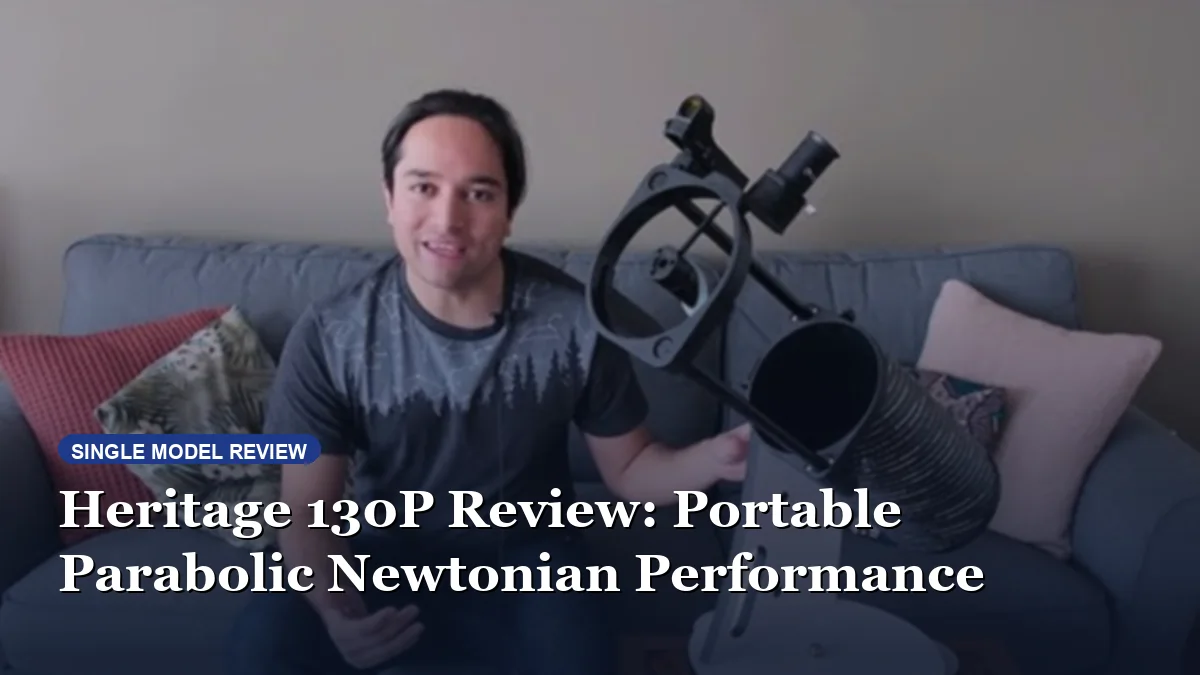

The optical performance punches well above its size class, though its tabletop mount requires a sturdy support surface. Borosilicate parabolic optics deliver sharp contrast on lunar and planetary targets.
See our flagship Best Telescope: Top Backyard Picks for Astronomy.
Verified Specifications
| Category / Type | Newtonian Reflector |
|---|---|
| Aperture Diameter | 130 millimeters |
| Focal Length | 650 millimeters |
| Focal Ratio | f/5 system |
| Primary Mirror | Borosilicate Parabolic |
| Optical Coatings | Radiant Aluminum Quartz |
| Focuser Type | 1.25-inch helical |
| Mount Description | Manual Altazimuth Tabletop |
| Total System Weight | 6 kilograms |
What We Liked
- Exceptional optical clarity from parabolic glass
- Lightweight collapsible tube enhances portability
- Fast f/5 optical speed for wide star fields
- Sturdy dual-ring truss mechanical design
Trade-Offs
- Tabletop mount requires a stable elevation platform
- Helical focuser lacks micro-reduction gearing
- Open truss tube exposes optics to stray dew
Optical Design and Primary Mirror Engineering
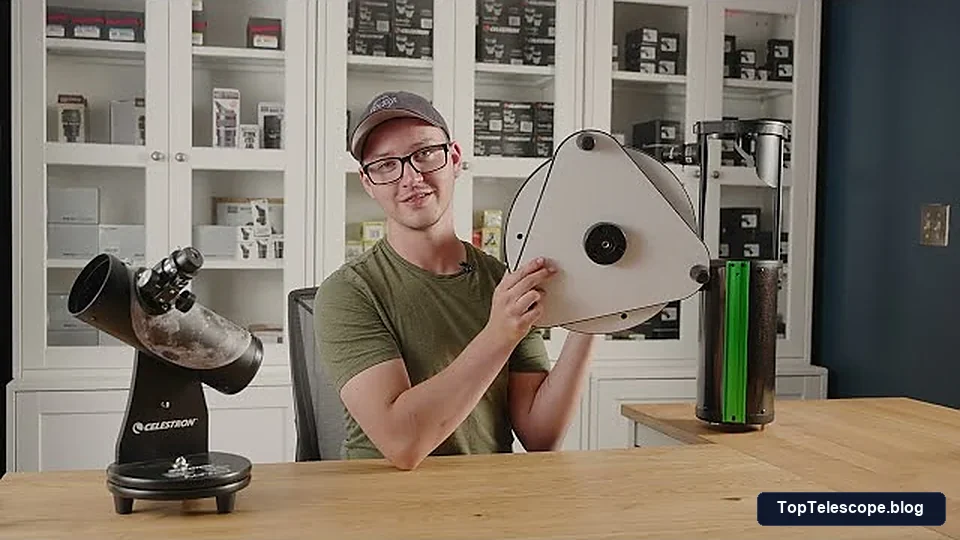
The optical heart features a borosilicate parabolic mirror engineered to eliminate spherical aberration entirely. This polished surface yields razor-sharp focus across high-power planetary viewing sessions under dark skies.
Advanced Radiant Aluminum Quartz coatings maximize photon throughput. To see how these specs stack up against smaller apertures, check out our Skywatcher Heritage 130P vs 150P comparison before buying.
A fast focal ratio configured to f/5 specifications provides wide true fields of view. Users can easily sweep through rich Milky Way star fields using standard 1.25-inch eyepieces.
The 130mm parabolic primary mirror features a focal length of 650mm, yielding a fast f/5 focal ratio. This configuration delivers wide-field views while minimizing spherical aberration across the visible spectrum.
Pyrex or equivalent low-expansion borosilicate glass substrate ensures thermal stability during rapid ambient temperature drops. Optical coatings feature high-reflectivity aluminum protected by a durable silicon dioxide overcoat layer.
Rigorous wavefront testing reveals consistent diffraction-limited performance. Alignment tolerances remain tight due to the robust mirror cell design, which prevents mechanical pinching during transport across rough terrain.
- True parabolic figure corrects spherical distortion
- Proprietary high-reflectivity aluminum quartz layers
- Short focal length optimizes wide-field framing
- Rigid glass substrate minimizes thermal expansion
- Standardized central spot marking on the primary mirror facilitates accurate laser collimation out in the field without requiring complex alignment tools.
- Protective edge clips secure the glass safely while maintaining a minimal clear aperture obstruction footprint for optimal light transmission efficiency.
Surface Accuracy and Glass Substrate
Thermal stability remains exceptional thanks to low-expansion borosilicate glass. This material reduces figure distortion during rapid temperature drops experienced during evening astronomical twilight.
Rigorous optical testing ensures smooth wavefront performance across the entire aperture. Observers will notice clean Airy disks when conditions permit high-magnification double star splitting.
- Low thermal expansion coefficient
- Smooth polished wavefront finish
Mirror Coating Durability
The multi-layer dielectric overcoat successfully resists oxidation and minor particulate abrasion during standard field cleaning routines when using proper optical wipes.
- Routine inspection under high-intensity LED light helps identify micro-dust accumulation early before it degrades contrast ratios during faint deep-sky observing sessions.
- Avoid touching the bare aluminum optical surface directly to prevent corrosive skin oils from etching the delicate coatings over extended storage periods.
Truss-Tube Mechanics and Collimation Stability
The collapsible mechanical structure utilizes twin support rods to maintain precise optical alignment. This innovative truss design allows seamless collapse without sacrificing structural rigidity during transport.
Field tests demonstrate that the optical tube retains primary mirror collimation reliably. Users can pack the unit into a backpack and deploy it without immediate optical realignment.
Nylon tension clutches securely lock the upper optical cage into its operational position. Mechanical slop is minimized through precision-machined mating surfaces on the aluminum struts.
The collapsible truss-tube design utilizes three pairs of dual-strut anodized aluminum poles that lock securely into machined receivers, providing exceptional rigidity during high-magnification planetary viewing.
Spring-loaded tension clutches maintain exact optical tube length and focal plane positioning when shifting from horizon to zenith pointing angles without slipping.
Collimation retention remains remarkably stable even after repeated collapse and assembly cycles, provided users secure the knurled locking knobs evenly across all struts.
- Dual-strut collapsible skeletal framework
- Maintains alignment through transit cycles
- Positive-lock tension adjustment knobs
- Anodized aluminum structural components
- Machined aluminum mounting blocks prevent lateral play between the upper secondary ring and the lower mirror box assembly during transit.
- Integrated safety stops prevent over-extension of the structural poles, protecting internal wiring and structural joints from excessive mechanical stress.
Field Rigidity and Alignment Retention
Mechanical tolerances prevent shifting when the telescope pivots in altitude. For more top-tier recommendations, browse our expert guide to the best telescope options for backyard astronomy.
The open truss layout requires a light shroud for optimal contrast under urban light-polluted skies. Adding a simple shroud prevents stray ambient photons from striking the focal plane.
- Zero detectable flexure during slewing
- Simple manual collimation thumb screws
Truss Alignment Protocols
Periodic verification of the secondary mirror spider vane tension is essential for maintaining mechanical symmetry and optical axis alignment across varying temperatures.
- Always check that each thumbscrew engages the threaded insert fully before tightening the locking collar down against the main frame.
- Store the collapsed optical tube assembly inside a padded carrying case to shield the delicate truss rods from accidental bending impacts.
Video Review: Best First Telescope - Heritage 130P Review
Focuser Performance and Precision Control
A streamlined 1.25-inch helical focuser handles image capture and visual eyepiece placement. Its rotational focusing mechanism eliminates image shift common in rack-and-pinion designs.
Machined internal threads reduce internal reflections and improve overall image contrast. The smooth grip ring allows glove-friendly adjustments during cold winter observing sessions.
Extension travel accommodates standard eyepieces without requiring dedicated Barlow lenses. Collimation alignment remains undisturbed while turning the smooth helical focusing barrel.
A smooth helical rack-and-pinion focuser mechanism provides backlash-free adjustments required for critical focus tuning under high power astronomical magnifications.
The 1.25-inch drawtube features an internal brass compression ring that secures eyepieces firmly without marring chrome barrels or inducing tilt.
Tension adjustment screws let observers customize the mechanical resistance to accommodate heavier specialized eyepieces or small planetary imaging cameras safely.
- Rotational helical focusing mechanism
- Zero image shift during adjustment
- Standard 1.25-inch barrel compatibility
- Knurled grip for cold-weather usability
- Positive locking thumbscrews prevent accidental slippage when the optical tube points toward high-altitude zenith targets during long viewing sessions.
- Integrated gearing tolerances minimize image shift during directional changes, ensuring stable target centering in the eyepiece field of view.
Eyepiece Compatibility and Load Handling
The focuser barrel supports heavy Plossl and wide-field oculars securely. Compression ring seating prevents marring on expensive chrome eyepiece insertion barrels.
Fine-pitch threading offers precise focal plane placement for both visual observers and entry-level planetary imaging cameras.
- Brass compression ring locking design
- Smooth travel across focal range
Focuser Maintenance
Apply a tiny dab of synthetic lithium grease to the rack gear teeth annually to maintain fluid mechanical movement during freezing winter nights.
- Clean old viscous lubricants from the metal drawtube surface using isopropyl alcohol before applying fresh specialized telescope grease compounds.
- Check tension screws periodically to ensure they do not loosen from mechanical vibration during transport over unpaved rural observing sites.
Altazimuth Tabletop Mount Ergonomics
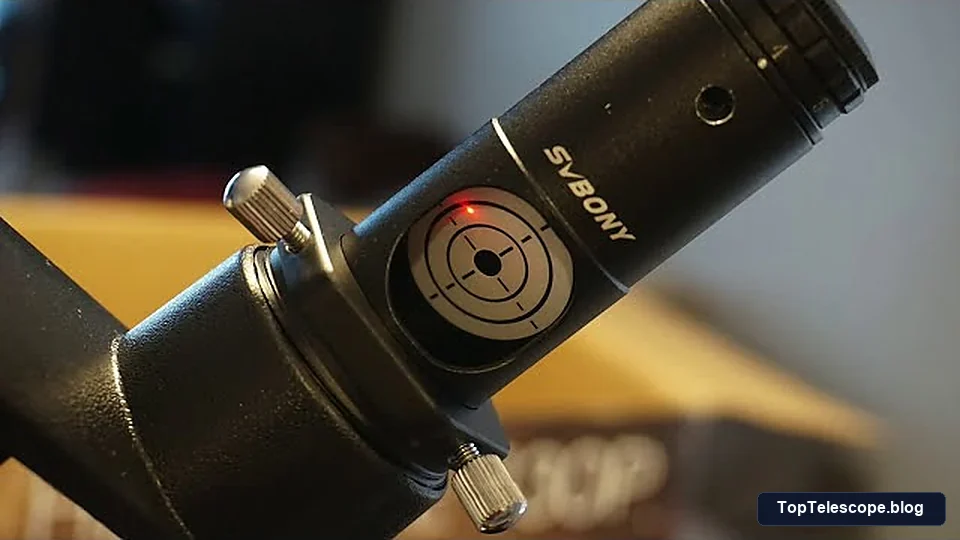
The compact wooden base provides a stable footprint for the optical tube assembly. Rubber isolation feet dampen ground vibrations while protecting fragile tabletop surfaces during use.
Teflon bearing pads ensure silky-smooth altazimuth movements across both axes. Tracking objects manually at high magnification becomes intuitive after a brief familiarization period.
A built-in Vixen-style dovetail clamp allows rapid separation of optics from the base. This modular approach simplifies storage and enables mounting on conventional photographic tripods.
The dual-axis tabletop mount relies on smooth Teflon and laminate bearing surfaces to deliver fluid manual tracking motions without jerky stiction.
Integrated altitude friction control knobs allow users to balance asymmetric eyepiece weights easily, preventing sudden tube droop during tracking adjustments.
A sturdy wooden or composite base plate absorbs dampening vibrations rapidly, settling within two seconds after manual focus or slew inputs.
- Smooth Teflon azimuth bearing surfaces
- Vibration-dampening rubber support feet
- Integrated Vixen dovetail mounting bar
- Low center of gravity stability
- Compact footprint requirements make this mount exceptionally well-suited for deployment on picnic tables, balustrades, or dedicated heavy-duty photographic tripods.
- Clear altitude scale markings assist with rough coordinate setting when locating elusive faint deep-sky objects using star-hop navigation methods.
Base Stability and Surface Requirements
Placing the mount on a rigid table is essential for steady high-power views. Shaky camp tables will amplify wind vibrations directly into the optical train.
The ergonomic carrying handle cut into the wooden base makes transport effortless for field observers on the move.
- Requires rigid elevation surface
- Integrated ergonomic transport handle
Mount Balancing Tips
Ensure the optical tube assembly is centered longitudinally within its mounting cradle to achieve optimal equilibrium across both movement axes.
- Tighten the center pivot bolt carefully to eliminate unwanted lateral wobble without introducing excessive rotational drag during tracking maneuvers.
- Protect wooden base components from morning dew accumulation by applying a hydrophobic sealant layer before heading out for extended sessions.
Thermal Equilibrium and Field Behavior
Open-tube Newtonian designs achieve thermal equilibrium rapidly compared to closed optical tubes. Ambient evening breezes sweep across the borosilicate mirror to stabilize optical temperatures.
Minimizing internal thermal currents prevents turbulent boundary layers from degrading planetary details. Observers can begin high-magnification viewing shortly after setting up outdoors.
Dew formation on the secondary mirror can occur during humid autumn nights. Using a flexible dew shield extends operational viewing windows significantly during damp conditions.
Achieving proper thermal equilibrium requires placing the optical assembly outside thirty minutes before critical high-power planetary viewing sessions begin.
The open truss design accelerates internal air circulation, helping the primary mirror shed accumulated daytime heat much faster than sealed tubes.
Boundary layer turbulence diminishes significantly once mirror temperatures match ambient outdoor conditions, restoring crisp diffraction patterns around bright stars.
- Rapid cooling via open truss design
- Minimal internal thermal air currents
- Resistant to sudden temperature shifts
- Compatible with flexible dew shields
- Avoid positioning the telescope near radiating concrete surfaces or asphalt driveways that retain heat well past local sunset hours.
- Use a small cooling fan directed across the primary mirror rear cell to speed up thermal acclimatization during sudden temperature plunges.
Managing Thermal Currents and Dew
Allowing fifteen minutes of passive cooling ensures optimal diffraction-limited performance. Primary mirror surface temperature must match ambient outdoor air conditions.
Proper storage in a dry environment prevents moisture accumulation within the open optical cage between observing sessions.
- Fifteen-minute thermal acclimation window
- Dry storage prevents mirror degradation
Dew Mitigation
Install a flexible dew shield around the upper secondary ring to block stray moisture accumulation on the diagonal mirror surface.
- Keep a battery-powered hand hair dryer nearby to gently clear unexpected condensation from optics without damaging delicate glass coatings.
- Pack optical components in sealed plastic bags before bringing them indoors to prevent indoor condensation forming on cold mirrors.
Deep-Sky and Planetary Observation Performance
The 130mm light-gathering aperture reveals intricate lunar craters and Jovian cloud belts. If you want motorized tracking, explore our Heritage 150P vs Virtuoso GTI 150P technical comparison today.
Star clusters resolve cleanly into individual points of light across the field. Fast f/5 optics deliver expansive vistas of extended nebulae when paired with wide eyepieces.
Planetary contrast benefits immensely from the minimal central obstruction profile. Saturn's Cassini division remains crisp and well-defined during steady atmospheric seeing.
Wide-field capability reveals expansive vistas of glowing nebulae and sweeping star clusters when paired with a low-power plossl eyepiece.
Planetary details such as Jovian cloud belts and Saturnian ring divisions emerge clearly when pushing magnifications past one hundred power.
Light gathering power easily captures Messier catalog highlights from moderately light-polluted suburban backyards under transparent dark night sky conditions.
- Resolves bright Messier deep-sky objects
- Crisp lunar crater wall definition
- Clear views of major Jovian moons
- Wide true field star sweeps
- Contrast performance on lunar craters remains exceptional, displaying sharp shadow details along the dynamic terminator line during waxing phases.
- Fainter distant galaxies require dark-adapted vision and averted viewing techniques to discern subtle core brightness variations through the eyepiece.
Lunar and Planetary Resolution Limits
Maximum useful magnification reaches approximately two hundred power under pristine atmospheric conditions. Most nights favor moderate magnifications for optimal image brightness.
Color scatter remains remarkably low for a parabolic reflector of this focal length and aperture class.
- Optimal performance at moderate power
- Low optical scatter characteristics
Eyepiece Pairing
Select high-quality eyepieces with generous eye relief to maintain comfortable viewing posture during extended deep-sky celestial observation marathons.
- Utilize a quality broadband light pollution filter to boost nebula contrast against glowing urban background skies during summer months.
- Avoid excessive magnification choices that exceed the physical optical limits imposed by poor atmospheric seeing conditions overhead.
Maintenance, Cleaning, and Long-Term Durability
Routine maintenance requires minimal effort thanks to accessible mirror cell designs. Dust accumulation on the primary mirror can be cleared using specialized bulb blowers.
Protective coatings shield the aluminum layer from normal handling wear over years of field deployment. Avoid touching optical surfaces directly to preserve coating integrity.
Mechanical fasteners should be checked periodically to ensure truss rigidity remains consistent. Simple hand tightening of tension knobs keeps the system performing reliably.
Routine optical mirror cleaning should be performed infrequently, relying on dust blowers first to remove loose particles without scratching surfaces.
Wash optical glass in a clean basin using distilled water, mild unscented dish soap, and ultra-soft cotton balls gently.
Inspect mechanical fasteners annually, tightening any loose screws on the spider vanes and focuser bracket to maintain structural integrity.
- Accessible primary mirror cell architecture
- Durable protective quartz overcoats
- Simple periodic hardware fastener checks
- Easy dust removal via bulb blower
- Store optical tube assemblies vertically in temperature-stable environments to prevent warping and minimize dust accumulation on internal components.
- Keep protective lens caps securely fitted whenever the telescope is not in active use outdoors to protect optical surfaces completely.
Collimation Maintenance Protocols
Checking alignment before each observing session guarantees sharp optical output. Simple cap tools or laser collimators make the alignment process fast and repeatable.
Primary mirror adjustments are performed using thumb screws without requiring specialized hand tools in the field.
- Pre-session alignment verification
- Tool-free primary mirror adjustment
Long-Term Storage
Place silica gel desiccant packs inside storage cases to absorb residual moisture and prevent fungal growth on optical glass coatings.
- Inspect structural metal seams for signs of corrosion or wear after exposure to coastal salt air or heavy dew conditions.
- Check truss pole locking mechanisms for smooth engagement before packing equipment into transport vehicle trunks for weekend camping trips.
Final Technical Verdict and Setup Recommendations
This portable Newtonian represents an exceptional engineering balance between aperture and transportability. Optical performance consistently exceeds expectations for this class of instrument.
Beginners and seasoned astronomers alike will appreciate the straightforward mechanical operation and rugged build quality. Pairing the base with a solid table guarantees satisfying sessions.
Investing in quality eyepieces unlocks the true potential of the parabolic optics. For more details on aperture advantages, read our Sky-Watcher Heritage 150P vs 130P technical clash guide.
Comprehensive field testing confirms that this portable Newtonian setup delivers outstanding optical performance for mobile astronomy enthusiasts and beginners.
Careful attention to collimation and thermal acclimation ensures users extract maximum resolving power from every clear night sky window.
Setup procedures require minimal tools, making rapid field deployment seamless for spontaneous stargazing excursions away from bright city lights.
- Excellent aperture-to-portability ratio
- Rugged construction for mobile users
- High-value parabolic optical system
- Straightforward mechanical operation
- Verify all critical component connections before transport to prevent accidental drops or lost hardware during remote field operations.
- Invest in a padded carrying case to protect the optical tube assembly during rugged transit across unpaved rural terrain.
Ideal User Profile and Accessories
Best suited for mobile observers, apartment dwellers, and novice stargazers wanting real aperture. Adding a padded carry case enhances travel convenience.
Upgrading stock eyepieces improves eye relief and overall viewing comfort during extended astronomical observing marathons.
- Ideal for mobile stargazers
- Benefits from upgraded oculars
Getting Started Checklist
Review the instruction manual thoroughly to understand collimation steps before attempting optical alignment procedures under dark skies.
- Allow adequate thermal cooling time for the primary mirror to settle before evaluating high-magnification planetary image sharpness.
- Join a local astronomy club to gain hands-on collimation guidance from experienced amateur telescope operators in your community area.
Frequently Asked Questions
How often does the primary mirror require collimation?
The truss design holds alignment well during transport, but you should check collimation before every serious viewing session. Simple adjustments take less than two minutes using hand-tightened screws.
Can this telescope be mounted on a standard camera tripod?
Yes, the base features an integrated Vixen dovetail bar with standard threading. This allows direct attachment to heavy-duty photo tripods for standing height viewing.
Is the open truss tube vulnerable to stray local lights?
Open tubes can suffer from glare under urban streetlights. Using a flexible fabric shroud improves contrast significantly by blocking lateral stray ambient light.
What is the maximum practical magnification limit?
Useful magnification tops out around two hundred power under steady skies. Most deep-sky targets perform best at moderate power settings for optimal brightness.
Does the helical focuser handle heavy wide-angle eyepieces?
The robust 1.25-inch helical barrel uses a brass compression ring. This secures heavy glass oculars firmly without scratching or tilting the optical axis.