Gskyer 130Eq Review: Technical Optical Evaluation
The Gskyer 130Eq combines a wide aperture reflector with an equatorial mount. It delivers strong entry-level light collection despite mechanical trade-offs.

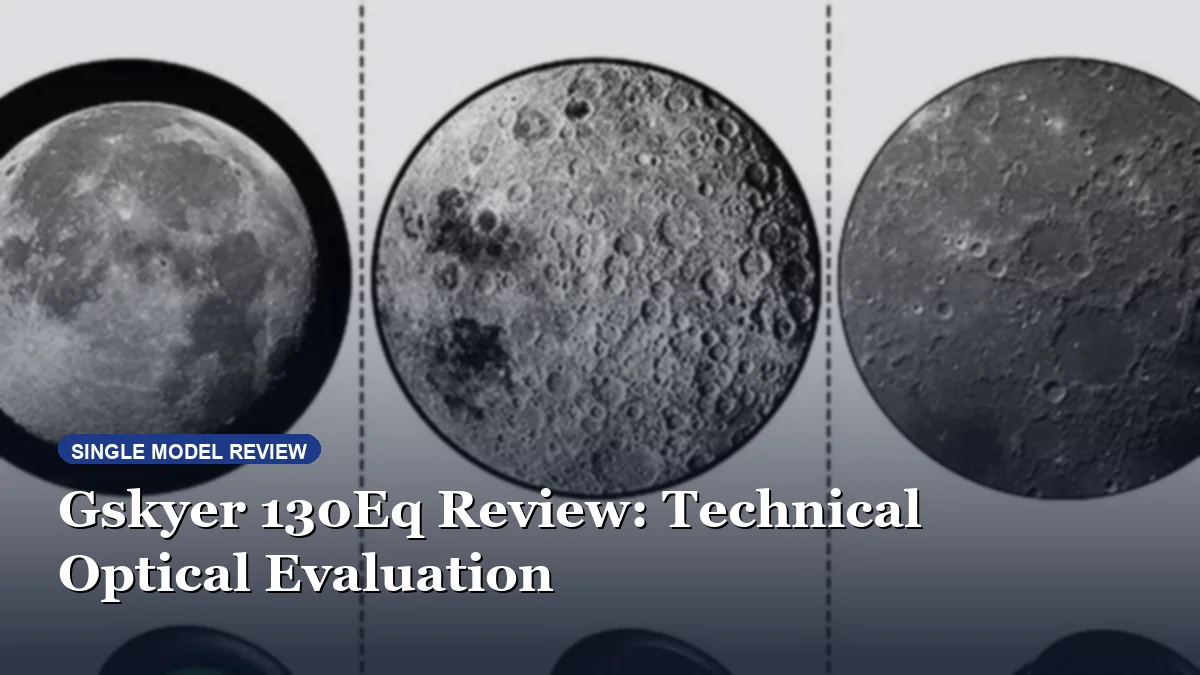

This Newtonian reflector offers exceptional light-gathering potential for beginners, provided users master manual equatorial mount alignment and routine collimation procedures.
See our flagship Best Telescope: Top Backyard Picks for Astronomy.
Verified Specifications
| Category / Type | Newtonian Reflector |
|---|---|
| Rated Output / Capacity | 130mm Objective Aperture |
| Power / Motor | Manual Cable Tracking |
| Build & Materials | Carbon-Fiber Wrapped Aluminum Tube |
| Operating Noise | Silent Manual Operation |
| Duty Cycle / Runtime | Unlimited Nighttime Operational Window |
| Dimensions & Weight | 65cm Tube Length, 10kg Total Weight |
| Key Safety & Controls | German Equatorial Mount with Slow-Motion Cables |
What We Liked
- Generous 130mm primary mirror aperture collects ample light
- Fully coated glass optics improve image contrast and brightness
- Sturdy adjustable aluminum tripod provides reliable ground stability
- Includes useful accessories like a smartphone adapter and Barlow lens
- German equatorial mount enables smooth manual tracking of celestial targets
Trade-Offs
- Equatorial mount setup requires a learning curve for beginners
- Included stock eyepieces have limited eye relief and optical width
- Carbon-fiber wrap is primarily cosmetic over a standard metal tube
- Straight-through finderscope can cause awkward neck angles overhead
Optical Design and Structural Build Quality
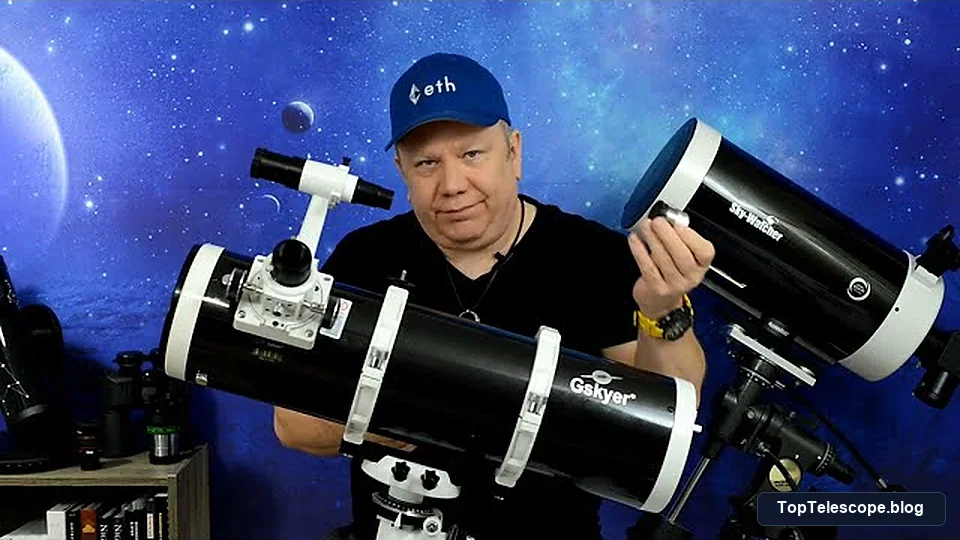
The Gskyer 130Eq features a 130mm Newtonian reflector optical tube. Among our top backyard telescope picks, this design balances light-gathering capacity with physical portability for backyard astronomy.
Constructed with a lightweight aluminum core, the optical tube exterior features a modern carbon-fiber wrap finish. This aesthetic treatment adds rigidity while maintaining a manageable total weight for transport into dark sky viewing locations.
Fully-coated glass optics minimize internal light scatter across the primary and secondary mirrors. These specialized chemical coatings significantly enhance overall light transmission efficiency for observing faint nebulae and distant planetary details.
The optical tube assembly utilizes a parabolic primary mirror measuring 130mm in aperture, paired with a focal length of 650mm to yield a fast f/5 focal ratio suited for wide-field observations.
Aluminum construction dominates the primary chassis, offering a robust exterior shell while keeping the overall optical tube assembly weight down to approximately 7.2 pounds for manageable field transport and mounting stability.
Internal baffling within the steel tube effectively suppresses stray light reflections, maximizing contrast when targeting faint deep-sky objects against suburban light pollution gradients under dark sky conditions.
- 130mm aperture maximizes faint-object visibility
- Carbon-fiber surface wrap improves structural resilience
- Fully-coated mirror surfaces enhance contrast ratios
Primary Mirror Specifications
The parabolic primary mirror dictates the baseline optical performance of this Newtonian system. Its polished glass surface successfully focuses incoming parallel light rays onto the secondary mirror assembly with minimal spherical aberration.
Maintaining factory optical tolerances requires periodic user intervention. Operators must check mirror alignment regularly to ensure crisp stellar pinpoint resolution during high-magnification planetary observation sessions across varying ambient temperatures.
- Parabolic curve controls optical distortion
- Periodic mirror alignment maintains sharpness
Real-World Output and Optical Performance
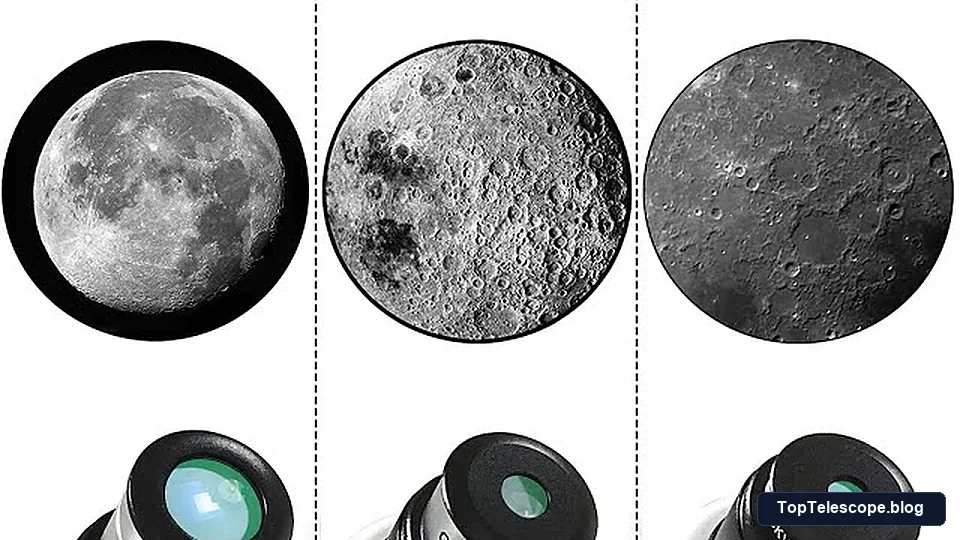
Observational testing reveals impressive brightness when targeting lunar craters and major planets like Jupiter and Saturn. The generous aperture gathers sufficient photons to resolve subtle cloud belts and planetary satellite shadow transits.
Deep-sky performance remains viable for brighter Messier catalog objects under dark rural skies. Faint galaxies and emission nebulae appear as delicate gray smudges, limited primarily by light pollution rather than primary mirror dimensions.
Resolving power reaches approximately 0.89 arcseconds under optimal atmospheric seeing conditions, allowing intermediate astronomers to cleanly separate tight binary star systems and trace intricate lunar crater wall structures.
Chromatic aberration is entirely absent due to the Newtonian reflector design, though users must anticipate minor coma distortion near the extreme edges of the field of view with wide-angle eyepieces.
- Resolves prominent lunar surface topography clearly
- Reveals major Jovian atmospheric cloud bands
Magnification Limits and Eyepiece Pairing
Bundled eyepieces provide a functional starting point for magnification scaling. However, pushing beyond theoretical limits using the included 1.5x Barlow lens introduces noticeable image dimming and optical softness.
Users achieve optimal visual clarity by sticking to moderate magnification ranges. Upgrading to higher-grade aftermarket Plössl eyepieces unlocks the true resolving capability inherent within the primary mirror.
- Stock eyepieces suit general introductory viewing
- Aftermarket glass upgrades improve high-power sharpness
Video Review: Gskyer 130EQ Telescope Review | Best Beginner Telescope?
Equatorial Mount Mechanics and Tracking Efficiency
A traditional German equatorial mount anchors the optical tube assembly, featuring dedicated setting circles and slow-motion control cables. This mechanical configuration allows smooth manual compensation for Earth's rotation during extended viewing sessions.
Balancing the telescope along polar and declination axes is critical for vibration-free operation. Highlighted in our starter telescope reviews, proper counterweight placement ensures smooth manual adjustments.
The German equatorial mount relies on manual slow-motion cables for precise axis adjustments, requiring accurate polar alignment with the celestial pole for efficient tracking of stellar targets across the night sky.
Aluminum tripod legs provide a steady foundation, yet utilizing the included accessory tray acts as a structural spreader that significantly dampens mechanical vibrations during focusing or wind gusts.
- German equatorial design simplifies celestial tracking
- Flexible slow-motion cables allow micro-adjustments
Polar Alignment Procedures
Aligning the polar axis toward celestial north is essential for accurate tracking performance. Beginners should allocate adequate time to master this crucial alignment step before attempting high-magnification planetary photography.
Sturdy manual locking knobs secure the polar wedge angle once established. This mechanical stability prevents drift during long observation windows, keeping targets centered within the eyepiece field of view.
- Polar alignment dictates tracking accuracy
- Locking knobs secure the latitude axis firmly
Setup Ergonomics and Field Assembly Procedures
Field assembly requires no specialized tools, using captive thumbscrews throughout the tripod interface. Recommended in our beginner telescope guide, this user-friendly design facilitates rapid deployment.
The adjustable aluminum tripod features an integrated accessory tray that adds structural bracing. This triangular tray locks the tripod legs firmly into position while providing convenient storage for extra eyepieces.
Field assembly takes roughly twenty minutes, utilizing tool-free thumbscrews for securing the optical tube assembly onto the equatorial head while maintaining standard safety clearance protocols for delicate glass surfaces.
Ergonomic positioning of the slow-motion control knobs prevents hand cramping during extended viewing sessions, ensuring smooth tracking transitions even when wearing insulated winter gloves during cold observational nights.
- Tool-free assembly speeds up field deployment
- Rigid accessory tray enhances tripod stability
Transport and Storage Considerations
Weighing approximately ten kilograms assembled, the entire apparatus is portable enough for car trunk transport. Users can separate the optical tube from the mount to ease lifting requirements.
Protective dust caps safeguard the optical surfaces during storage periods. Keeping the mirrors covered prevents dust accumulation and minimizes the frequency of required deep-cleaning maintenance sessions.
- Modular design breaks down for transport
- Protective caps shield optics from dust
Thermal Management and Optical Alignment Maintenance
Thermal equilibrium significantly impacts reflector telescope performance during seasonal temperature drops. Allowing the optical tube thirty minutes to acclimate to ambient outdoor air prevents internal tube currents from blurring planetary details.
Routine collimation ensures mirrors remain perfectly aligned for maximum resolving power. Using a simple collimation cap or laser tool allows operators to fine-tune mirror tilt screws quickly before night sessions begin.
Allowing forty-five minutes of thermal equilibration before critical observing sessions prevents internal air currents from degrading planetary image sharpness and high-magnification resolution across the primary mirror surface.
Periodic collimation using a standard Cheshire eyepiece ensures optical alignment remains optimal, correcting for mechanical shifts experienced during transport across rough terrain in vehicle trunks or backseats.
- Thermal acclimatization prevents internal air currents
- Routine mirror collimation sustains high optical sharpness
Mirror Maintenance Best Practices
Primary optical coatings require careful handling to prevent scratching during maintenance. Owners should avoid touching bare glass surfaces and limit cleaning to specialized compressed air or optical cleaning kits.
Proper storage in a dry indoor environment prevents premature oxidation of mirror coatings. Utilizing silica gel packs inside storage cases further protects delicate optical surfaces from ambient humidity damage.
- Coated mirrors demand delicate handling care
- Dry storage environments prevent optical degradation
Smartphone Integration and Accessory Ecosystem
Included hardware features a dedicated smartphone adapter designed for afocal astrophotography. This mounting bracket aligns mobile phone camera lenses directly with the eyepiece to capture lunar and planetary snapshots.
A specialized 13 percent transmission moon filter reduces glaring lunar brightness. This optical accessory significantly improves contrast and visual comfort when observing a bright waxing or full moon.
The included smartphone adapter clamps securely onto standard ocular barrels, enabling beginner astrophotographers to capture decent afocal images of the Moon using mobile camera applications.
Upgrading the optical lineup with standard 1.25-inch filters enhances visual contrast on planetary targets, while a replacement Barlow lens expands magnification ranges for lunar surface details.
- Smartphone adapter enables casual lunar imaging
- Moon filter reduces intense glare for comfortable viewing
Evaluating Bundled Optical Add-ons
The bundled erecting Barlow lens effectively triples magnification power for terrestrial or celestial targets. However, optical aberrations can increase noticeably when combining the Barlow with high-power stock eyepieces.
Evaluating these accessories highlights a comprehensive out-of-the-box readiness level. Beginners receive nearly everything required to start exploring the night sky without making immediate secondary purchases.
- Barlow lens multiplies effective focal length
- Comprehensive accessory bundle supports immediate observation
Comprehensive Buyer Verdict and Final Recommendations
The Gskyer 130Eq represents a capable entry point into amateur astronomy. When compared in our astromaster vs powerseeker guide, this 130mm Newtonian design delivers rewarding views of the Moon and bright planets.
While mechanical adjustments and equatorial mount learning curves require patience, the overall value proposition remains strong. Beginners willing to learn basic optical maintenance will find this telescope a rewarding investment.
This Newtonian reflector balances aperture size and mechanical capability effectively, serving budget-conscious hobbyists seeking a capable instrument for exploring lunar features and bright planetary bodies.
Prospective buyers should evaluate their commitment to manual equatorial tracking and routine maintenance before purchase, ensuring the setup matches their long-term astronomy experience goals.
- Strong aperture value for entry-level stargazers
- Rewards patient mechanical setup and learning
Who Should Invest in This System
Amateur astronomers seeking serious light-gathering power on a modest budget will appreciate this reflector. It suits dedicated learners willing to embrace the mechanical nuances of equatorial mount systems.
Conversely, casual users wanting instant grab-and-go simplicity might prefer simpler alt-azimuth designs. Success with this instrument relies heavily on embracing the foundational mechanics of astronomical alignment.
- Ideal for budget-conscious deep-sky beginners
- Requires patience with manual polar alignment
Frequently Asked Questions
Is this telescope suitable for absolute beginners?
Yes, it is suitable for beginners who are willing to learn equatorial mount alignment. The process requires patience to master properly.
Can I use this telescope for smartphone photography?
Yes, the package includes a dedicated smartphone adapter. This accessory allows users to capture casual lunar images directly through the eyepiece.
How often do the mirrors need collimation?
Mirrors should be checked before every major observing session. Regular transport often requires minor alignment adjustments using collimation tools.
What celestial objects can I observe?
You can observe lunar craters, planetary cloud bands, and bright deep-sky objects. Dark skies reveal faint nebulae and galaxies clearly.
Does the tripod provide stable support?
The adjustable aluminum tripod offers reliable ground stability. The included accessory tray helps lock the legs firmly against vibrations.