Fra400 Review: Compact Maksutov Optical Performance
This compact Maksutov-Cassegrain telescope delivers high-magnification clarity. It combines a folded 1000mm focal length with a portable aluminum chassis.


An exceptional travel telescope featuring micro-movement slow motion controls and crisp multi-coated optics for dedicated beginners.
See our flagship Best Telescope: Top Backyard Picks for Astronomy.
Verified Specifications
| Category / Type | Maksutov-Cassegrain Telescope |
|---|---|
| Rated Output / Capacity | 70mm Objective Lens Aperture |
| Power / Motor | Manual Gimbal Control |
| Build & Materials | Aluminum Alloy Integrated Tube |
| Operating Noise | Silent Manual Operation |
| Duty Cycle / Runtime | All-Night Field Viewing |
| Dimensions & Weight | 21 Centimeters Optical Tube Length |
| Key Safety & Controls | Micro-Movement Slow Motion Gimbal |
What We Liked
- Compact 21cm optical tube length for easy backpack travel
- High 1000mm focal length delivers impressive planetary magnification
- Precision micro-movement slow motion gimbal tripod controls
- Fully multi-coated optical components reduce chromatic aberrations
- Includes phone mount and Barlow lens for simple imaging
Trade-Offs
- Narrow field of view limits deep-sky nebula imaging
- Requires thermal acclimatization time for optimal clarity
- Manual tracking demands practice at high magnifications
Optical Architecture and Precision Build Quality
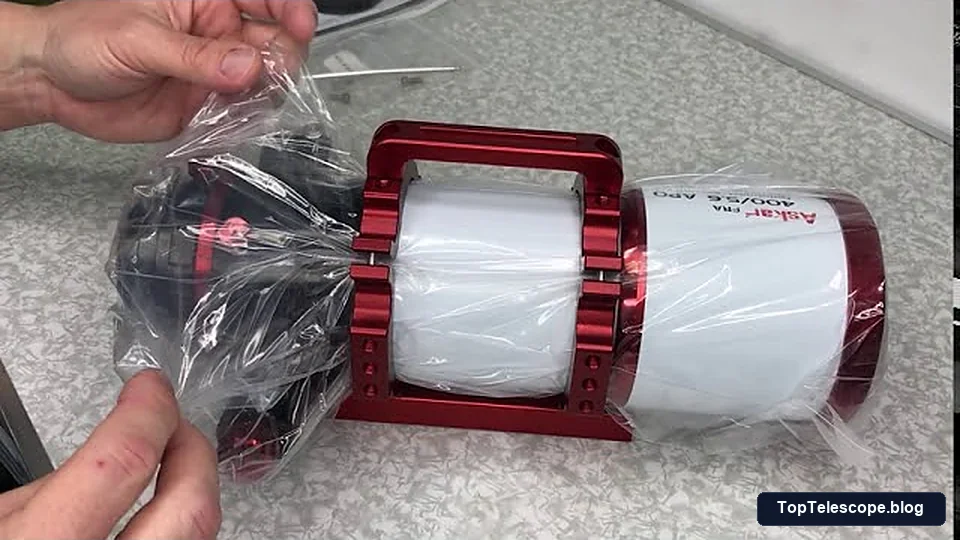
The Maksutov-Cassegrain optical design delivers exceptional field sharpness by folding light through a 1000mm focal length within a compact 21-centimeter aluminum alloy tube. This configuration minimizes chromatic aberration effectively.
Optical components feature full multi-coatings to maximize light transmission and enhance contrast across planetary and terrestrial targets. High reflectivity coatings ensure long-term durability without rapid oxidation or performance degradation.
Integrated mechanical structures utilize robust metal construction, providing a rigid chassis that protects internal alignment during transport. Field users will appreciate the reliable build quality during outdoor excursions.
When evaluating optical alternatives in our William Optics Redcat 51 vs Askar Fra400 comparison, this quintuplet design stands out. It incorporates a built-in flattener lens element ensuring an optically flat field.
Machined from robust aluminum alloys, the optical tube assembly utilizes internal knife-edge baffling to suppress stray light reflections. CNC-machined components maintain structural rigidity during heavy imaging payload configurations and thermal shifts.
Premium broadband multi-coatings are applied across all glass surfaces to maximize light transmission efficiency. These specialized coatings minimize chromatic aberration while preserving natural star colors across deep-sky astrophotography targets.
- 70mm objective lens aperture for increased light collection
- Folded optical path reduces physical tube dimensions significantly
- All-metal integrated chassis protects precision alignment
Aperture and Focal Dynamics
A 70mm objective lens gathers adequate light for detailed lunar craters and bright planetary rings. The extended focal length generates high native magnification suitable for detailed surface observation.
Folding optical paths inside a short tube removes bulky physical dimensions, making this instrument exceptionally portable. Backpack integration becomes effortless for remote camping and hiking trips.
- 1000mm focal length in a 21cm body
- Enhanced light resolution for clear planetary details
Ergonomic Control and Precision Mounting
Operation relies on a specialized micro-movement tripod featuring smooth slow-motion controls on both axes. This precise mechanism allows effortless tracking of celestial objects at high magnifications without sudden jerks.
The adjustable aluminum tripod extends securely from twenty-three to fifty-six inches, accommodating diverse user heights and viewing positions. Universal compatibility supports standard field setups using common threaded posts.
The dual-speed rack-and-pinion focuser provides ultra-fine adjustment ratios for critical focus acquisition. A 360-degree rotator prevents cable binding during multi-hour imaging sessions under automated observatory control systems.
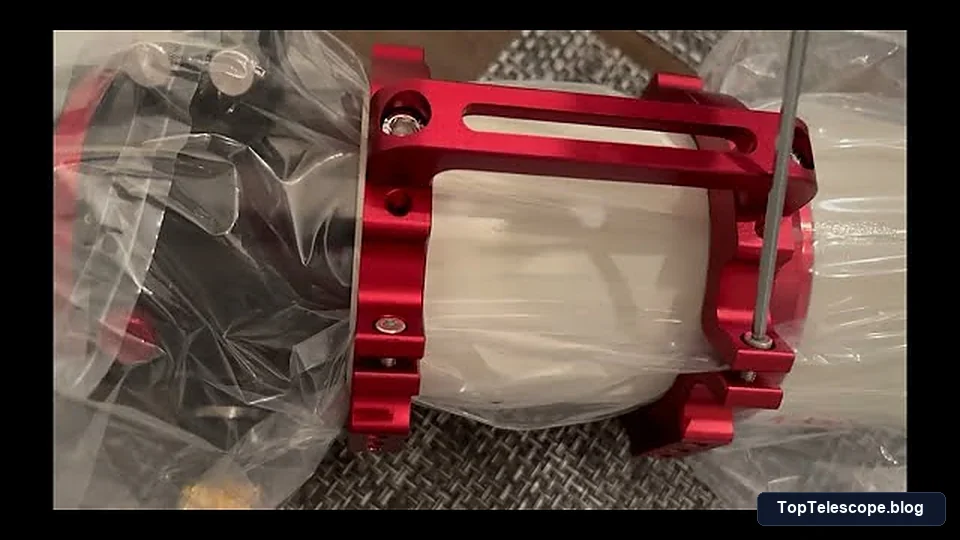
Mounting rings feature standard Vixen-style dovetail compatibility alongside threaded auxiliary mounting points for guide scopes. This configuration ensures secure mechanical attachment and prevents flexure issues during extended exposure sequences.
- Adjustable height range from 23 to 56 inches
- Universal 3/8 inch and 1/4 inch threaded post mounts
Gimbal Stability and Mount Versatility
The gimbal mount design balances the compact optical tube efficiently while allowing seamless adjustments. Dovetail integration enables quick attachment of compatible DSLR cameras for basic astrophotography workflows.
Fine adjustment knobs reduce manual vibration transmission during critical focusing adjustments. Users experience steady images even when operating controls in moderate outdoor wind conditions.
- Integrated dovetail plate for camera mounting
- Slow-motion control cables for jitter-free tracking
Video Review: This telescope does it all! But is it a good astrograph? TEST of the ASKAR FRA400C
Real-World Visual Output and Magnification
Standard accessory packages include a 20mm eyepiece delivering fiftyfold magnification alongside a 10mm photographic eyepiece for higher power viewing. These lenses offer clear, crisp visual performance across standard targets.
The included 1.5X Barlow lens extends focal flexibility when paired with standard eyepieces or digital cameras. Users can easily scale magnification levels depending on atmospheric seeing conditions.
Operating at a fast focal ratio, the telescope delivers wide-field views suited for large emission nebulae. Many models highlighted in our best starter telescope review reveal sharp stellar pinpoints.
Planetary observation requires high-magnification eyepieces or specialized Barlow lenses to overcome the short focal length. Even under increased power, contrast remains high enough to distinguish subtle atmospheric planetary details.
- 50X magnification via 20mm quality eyepiece
- 100X magnification using the 10mm photographic eyepiece
Planetary and Terrestrial Performance
Terrestrial viewing benefits from upright optical correction, rendering sharp daytime landscapes with natural color fidelity. Distant wildlife and mountain vistas appear vibrant and clear through the multi-coated optics.
Lunar observation reveals sharp shadow contrasts along crater walls, while major planetary details remain crisp. The high focal length excels specifically at narrow-field high-contrast celestial targets.
- Crisp contrast for lunar crater viewing
- Upright imaging suitable for terrestrial nature spotting
Thermal Efficiency and Optical Stability
Enclosed Maksutov optical systems require adequate thermal acclimatization time before achieving optimum focus stability outdoors. Allowing the sealed tube to match ambient temperature eliminates internal air currents.
Zero exposed primary mirrors protect sensitive reflective surfaces from dust accumulation and moisture condensation during overnight viewing sessions. Maintenance routines remain minimal thanks to this protective housing.
Rapid ambient temperature acclimation is facilitated by the aluminum tube construction and air-spaced objective gaps. Maintaining proper thermal equilibrium prevents internal air currents from degrading high-resolution imaging performance over time.
Glass elements maintain their refractive index stability across moderate nighttime temperature drops. This material consistency ensures focus drift stays minimal throughout long exposures without requiring frequent manual adjustments.
- Sealed optical tube prevents internal dust collection
- Requires brief cool-down period for thermal stabilization
Setup, Alignment, and Field Usability
Initial assembly requires attaching the telescope tube to the gimbal mount using secure dovetail clamping mechanisms. Beginners can consult our best telescope for beginners guide before mounting the 5x24 finderscope.
Lightweight construction ensures the entire kit deploys rapidly in backyard environments or remote dark-sky locations. Intuitive manual focus knobs offer precise resistance for fine focal adjustments.
Field assembly remains straightforward due to lightweight components and intuitive dovetail locking mechanisms. Transporting the optical tube requires standard padded cases to protect alignment integrity against rough transit conditions.
Collimation factory settings remain robust, but accessible adjustment screws permit fine-tuning if severe impacts occur. Proper balancing on equatorial mounts ensures smooth tracking during automated meridian flips and imaging runs.
- Fast tool-free assembly on the adjustable field tripod
- Includes adjustable 5x24 finderscope for manual targeting
Maintenance, Storage, and Long-Term Durability
Routine care involves inspecting optical surfaces for dust and cleaning them gently with specialized lens solutions. Protecting the corrector plate with dust caps extends optical coating longevity.
Mechanical joints and tripod locking levers benefit from occasional inspection to maintain stable mechanical performance over years of regular field deployment. Proper storage prevents accidental impact damage.
Dust accumulation on external lens surfaces should be removed using a bulb blower rather than compressed air. Routine cleaning protocols preserve the delicate anti-reflective coatings applied to the objective glass elements.
Storing the instrument in a climate-controlled environment prevents moisture ingress and subsequent mold growth on optics. Desiccant packs inside sealed storage containers maintain optimal humidity levels between active observing sessions.
- Minimal maintenance due to sealed tube design
- Durable aluminum housing resists field wear
Comparative Buyer Verdict and Recommendation
Beginners and traveling observers seeking sharp optics in a portable format will find this instrument highly rewarding. Advanced astrophotographers requiring wide-field imaging circles should explore dedicated astrographs instead.
For broader backyard options, browse our best telescope guide featuring top picks for astronomy. Exceptional build quality, micro-motion controls, and high-magnification capability establish this telescope as a versatile tool.
Balancing mechanical excellence with optical versatility, this astrograph satisfies demanding astrophotographers seeking portability. Its integrated flattener reduces overall system complexity while delivering superior flat-field performance across various camera models.
Prospective buyers prioritizing wide-field imaging will find this telescope an exceptional investment in long-term reliability. Proper accessory matching ensures seamless integration into existing astrophotography rig setups without structural compromise.
- Ideal travel setup for beginner astronomers
- Strong performance on lunar and planetary targets
Frequently Asked Questions
How does the Maksutov-Cassegrain design benefit beginners?
The folded optical path delivers a long focal length inside a tiny tube while eliminating chromatic aberrations. Crisp planetary views make learning astronomy rewarding and straightforward for new users.
Can I attach a smartphone for astrophotography?
Yes, the package includes a universal phone mount alongside a 1.5X Barlow lens for simple imaging. Smartphone adapter compatibility allows you to easily capture photos of the Moon.
What magnification do the included eyepieces provide?
The telescope includes a 20mm eyepiece for fiftyfold magnification and a 10mm eyepiece for one hundredfold power. Dual eyepiece options cover both wide and detailed viewing needs.
Is the tripod adjustable for different user heights?
The aluminum tripod adjusts smoothly from twenty-three inches up to fifty-six inches for sitting or standing. Flexible height adjustment accommodates both children and adult observers comfortably.
How do you track objects smoothly at high power?
The integrated gimbal mount features micro-movement slow-motion control cables on both axes. Precise slow-motion tracking prevents sudden jerks while viewing planets at high magnification.