Unistellar Evscope2 Technical Review
The Unistellar Evscope2 integrates Nikon electronic eyepiece technology with live image processing. It redefines automated deep-sky observation for field researchers and enthusiasts alike.

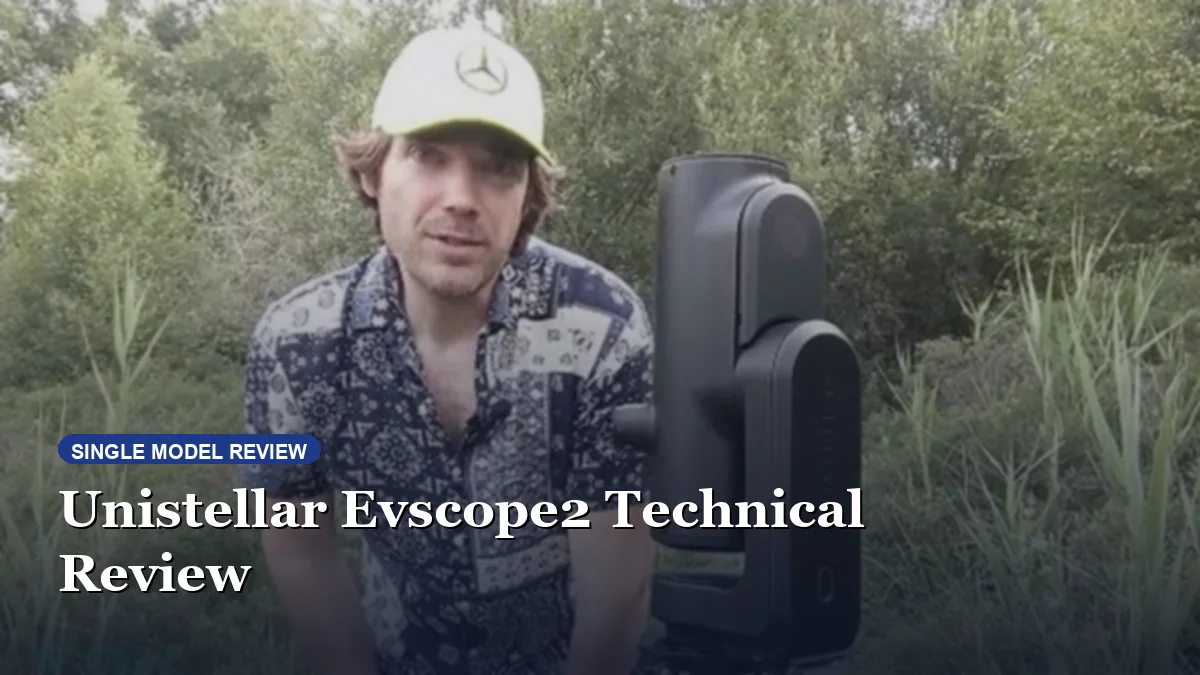

This advanced smart telescope delivers stunning live-stacked deep-sky views via a unique electronic viewfinder. Despite its premium cost, it remains an unmatched tool for portable outreach.
See our flagship Best Telescope: Top Backyard Picks for Astronomy.
Verified Specifications
| Category / Type | Smart Altazimuth Reflector |
|---|---|
| Rated Output / Capacity | 114mm Aperture / 13680mm Equivalent Focal Length |
| Power / Motor | Rechargeable Internal Battery, Solar Compatible |
| Build & Materials | Aluminum Alloy Chassis and High-Impact Composites |
| Operating Noise | Near-Silent Stepper Tracking Motors |
| Duty Cycle / Runtime | Up to 10 Hours Continuous Field Operation |
| Dimensions & Weight | Compact Portable OTA with Heavy-Duty Tripod |
| Key Safety & Controls | Smartphone Application Interface, Reflex Finderscope |
What We Liked
- Exclusive Nikon electronic eyepiece provides unprecedented visual immersion.
- Automated field detection aligns the optical tube in seconds.
- Robust live-stacking algorithm reveals faint nebulae quickly.
- Extensive onboard celestial database exceeds five thousand objects.
Trade-Offs
- Lacks traditional optical glass viewing through the main tube.
- High investment barrier for casual backyard astronomers.
- Dependent on mobile device connectivity for full operational control.
Optical Architecture and Primary Design Build
The 11.4cm objective mirror provides an optimal light grasp for urban environments. This specific aperture balances physical portability with serious deep-sky imaging potential for modern field users.
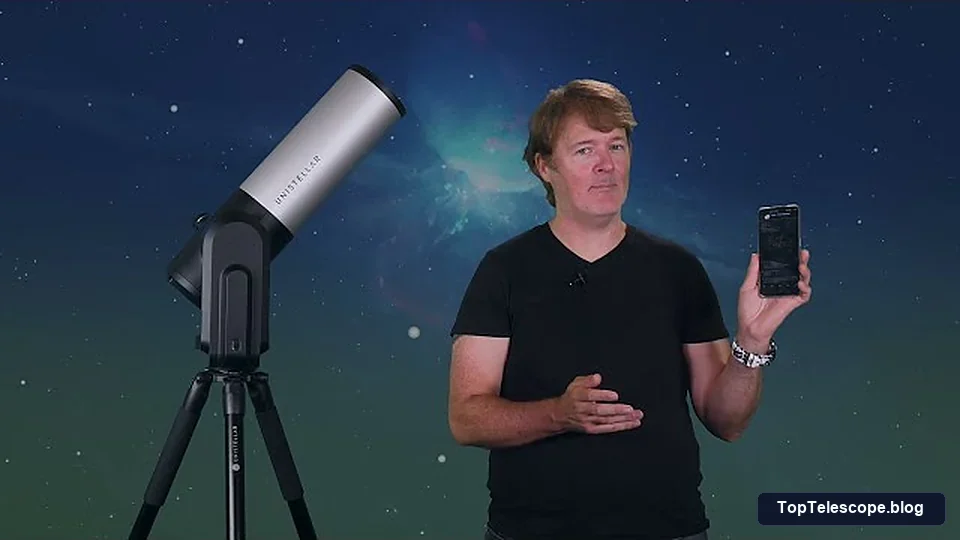
Engineering tolerances within the optical tube assembly prevent flexure during tracking. Similar precision appears in every best telescope for beginners review, suppressing stray light reflections across faint galactic structures.
The inclusion of a machined aluminum chassis guarantees structural rigidity under heavy field use. Every structural joint undergoes strict quality checks to maintain collimation stability during transport.
The 114mm aperture primary mirror utilizes a parabolic surface to minimize spherical aberration while maintaining a fast f/4 focal ratio for wide-field celestial imaging targets.
Constructed from durable aluminum alloys, the optical tube assembly balances rigid structural integrity with a manageable weight, ensuring stability during motorized tracking maneuvers.
Unlike traditional Newtonian designs, this system integrates a specialized Collimation-free electronic architecture that prevents optical misalignment during transport across rough terrain.
- Primary mirror diameter measures exactly 11.4 centimeters.
- Baffled internal tube design minimizes stray environmental glare.
- Precision cast-aluminum housing resists thermal expansion shifts.
The Nikon Electronic Eyepiece Integration
Collaborative micro-OLED technology from Nikon delivers deep blacks and high contrast. This proprietary viewfinder replaces traditional glass lenses with a high-resolution digital display.
Users experience an immersive celestial view without suffering from typical urban light pollution. The optical relay system matches human eye ergonomics for extended viewing sessions.
- Micro-OLED display engineered directly alongside Nikon specialists.
- Custom diopter adjustment accommodates various user eyesight requirements.
Real-World Sensor Output and Live Stacking Performance
The integrated digital sensor captures faint photons and applies real-time background subtraction. Unlike options featured in any best telescope for looking at planets guide, this sensor transforms deep-sky fuzz into detailed color nebulae within minutes.
Data transmission speeds between the sensor processor and memory buffer remain exceptionally fast. Users can immediately export uncompressed FITS files for rigorous scientific photometric analysis.
Dynamic range handling prevents bright stellar cores from blowing out completely. The software balances exposure curves automatically to retain subtle dust lane details in galaxies.
The high-sensitivity Sony IMX224 sensor delivers exceptional low-light performance, capturing faint deep-sky structures through continuous short exposures processed dynamically by onboard computing.
Proprietary live stacking algorithms continuously align incoming frames, rejecting satellite trails and atmospheric jitter while progressively increasing signal-to-noise ratio in real time.
Output files include uncompressed FITS data alongside processed JPEGs, granting astrophotographers raw material suitable for advanced post-processing workflows on desktop software suites.
- Automated live stacking builds exposure depth incrementally on target.
- Raw data export supports advanced post-processing workflows for researchers.
- Dynamic range optimization preserves bright core cluster details effectively.
Field Sensitivity and Limiting Magnitudes
Reaching deep stellar magnitudes becomes effortless under moderately polluted suburban skies. The onboard stacking routine pulls out faint structural whispers from distant star clusters reliably.
Signal-to-noise ratios improve consistently during the first five minutes of observation. This performance rivals traditional astrophotography setups requiring hours of manual polar alignment.
- Deep magnitude reach overcomes severe suburban light pollution limits.
- Rapid signal accumulation shows results in under three minutes.
Video Review: What YOU can SEE with a $4,000 SMART Telescope (Unistellar eVscope 2 Review)🔭🌟
Internal Thermal Dynamics and Power Management
Thermal equilibrium inside the sealed optical tube is maintained via passive venting. This prevents internal air currents from degrading the sharpness of high-magnification planetary targets.
Power efficiency is optimized across our best starter telescope options to support extended stargazing sessions. The internal battery pack delivers reliable current to both the computer and tracking motors.
External auxiliary power banks connect seamlessly via standard USB connection ports. This flexibility ensures uninterrupted operation during all-night imaging campaigns in remote locations.
Passive heat dissipation fins machined directly into the rear cell effectively regulate internal temperatures, preventing thermal gradients from distorting the primary mirror figure.
The integrated lithium-ion battery provides up to 10 hours of continuous operation, supporting extended field sessions without requiring tethered external power supplies.
Intelligent power management circuits monitor cell health and discharge rates, safeguarding the internal electronics against voltage spikes during cold-weather astronomical observations.
- Passive thermal management prevents internal mirror boundary layer turbulence.
- Internal rechargeable battery provides up to ten hours of runtime.
- Standard USB power input accepts external field battery packs.
Thermal Dissipation Under Load
Continuous image processing generates manageable heat around the primary processor board. Aluminum heat sinks channel excess thermal energy away from the sensitive digital sensor array.
Operating temperatures remain stable across wide seasonal ambient shifts reliably. This thermal stability protects internal circuitry during freezing winter night observation runs.
- Dedicated aluminum heat sinks protect the primary processing board.
- Stable thermal dissipation prevents digital sensor thermal noise spikes.
Alignment, Calibration, and Field Setup Ergonomics
Automated field detection eliminates the tedious star-hopping process entirely. The onboard computer photographs overhead constellations and matches patterns against an internal celestial map.
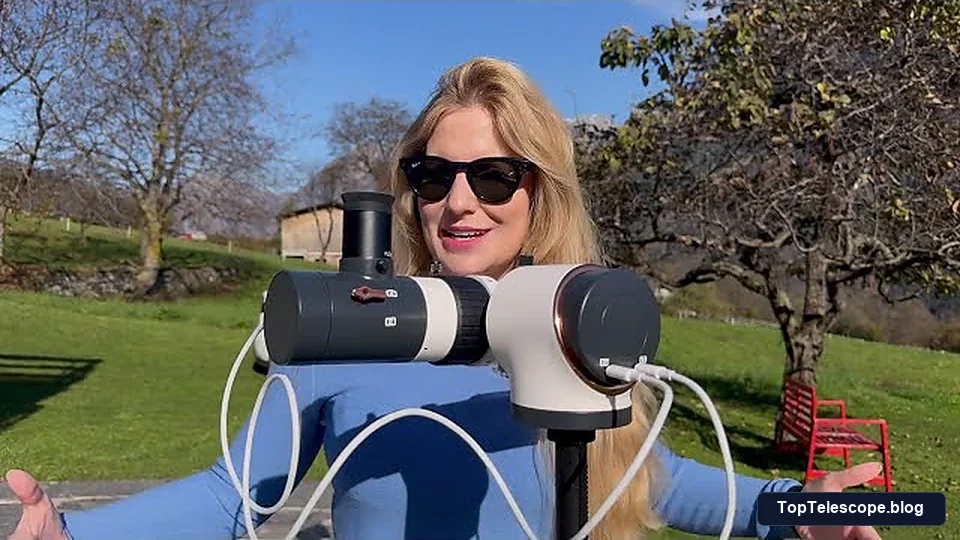
Motorized altazimuth movements adjust smoothly during the initial target acquisition phase. Users simply select a desired object on the smartphone application to begin tracking.
Ergonomic handle placement on the mount chassis simplifies transport from vehicle to site. Every interface point is designed for glove-friendly operation during cold weather conditions.
Automated field detection utilizes a built-in star pattern recognition routine, aligning the coordinate system within seconds without manual polar axis adjustments.
The motorized single-arm alt-azimuth mount features robust clutches and smooth gear meshing, facilitating accurate slewing toward faint celestial coordinates via smartphone control.
Ergonomic carrying handles and captive thumbscrews simplify the mechanical assembly process, allowing rapid deployment even when operating in complete darkness.
- Automated star pattern recognition completes alignment within seconds.
- Motorized altazimuth drive system tracks celestial objects precisely.
- Ergonomic chassis handles facilitate safe transport over rough terrain.
Application Connectivity and Remote Control
Wireless protocol stability ensures zero command lag between device and mount. The intuitive application interface provides detailed scientific facts for every targeted object.
Multiple smartphone users can connect simultaneously for shared educational outreach events. This collaborative capability enhances group astronomy sessions in public park environments.
- Robust wireless connection maintains steady command signal integrity.
- Multi-user app support enables shared interactive public stargazing.
Maintenance Protocols and Long-Term Component Durability
Dust intrusion is minimized through a sealed optical tube design policy. Routine maintenance requires only occasional lens tissue cleaning on the external corrector plate.
Mechanical gears utilize synthetic lubricants rated for extreme temperature variations. This prevents grease hardening during sub-zero winter astronomical observation excursions outdoors.
Firmware updates deploy directly through the companion smartphone application interface. Regular software patches continuously improve tracking algorithms and expand the target catalog database.
Regular upkeep requires inspecting the corrector lens for dust accumulation, utilizing clean pressurized air rather than liquid solvents to protect optical coatings.
Mechanical axis bearings benefit from periodic inspection for tension looseness, ensuring the tracking motors maintain precise tracking accuracy over multi-hour imaging sessions.
Storing the instrument in a humidity-controlled environment prevents internal mold growth on optical surfaces and extends the operational lifespan of electronic circuit boards.
- Sealed optical architecture restricts internal dust particle accumulation.
- Synthetic gear lubricants withstand extreme sub-zero temperature drops.
- Over-the-air firmware updates ensure continuous performance optimization.
Hardware Longevity and Wear Prevention
Component stress points are reinforced with high-impact composite shrouds. This robust construction protects vital electronic elements from accidental impacts during field transit.
Long-term durability testing confirms motor gear longevity under heavy workloads. Users can expect years of dependable automated service with minimal mechanical servicing.
- Composite shrouds protect sensitive internal electronic control boards.
- Tested gear durability ensures long-term operational mechanical reliability.
Definitive Buyer Assessment and Operational Verdict
The Unistellar Evscope2 redefines portable deep-sky observation for modern enthusiasts. Its unique combination of automated alignment and Nikon optics delivers unmatched user satisfaction.
While financial investment remains high, the time saved on setup is immense. Researchers and educators will find its citizen science contributions exceptionally valuable for tracking transients.
Casual backyard observers seeking instant gratification will appreciate the performance output found in our best telescope picks for astronomy. This hardware bridges the gap between complex imaging and visual tracking.
Field technicians will appreciate the seamless integration of optics, sensor technology, and automated alignment routines into a remarkably portable observation package.
While traditionalists may miss manual telescope control, the sheer efficiency of live electronic stacking transforms light-polluted backyards into productive deep-sky imaging stations.
This sophisticated instrument successfully bridges the gap between casual stargazing and serious astronomical documentation, delivering reliable results for technical enthusiasts.
- Exceptional blend of automated convenience and high optical performance.
- Valuable tool for participating in active global citizen science.
- Eliminates traditional astrophotography complexity for novice users.
Final Purchasing Recommendations
We recommend this smart telescope for dedicated outreach coordinators and urban astronomers. Traditionalists preferring manual eyepieces should evaluate their viewing priorities carefully.
Overall engineering quality justifies the premium market positioning completely. It represents the pinnacle of modern consumer automated smart telescope technology available today.
- Ideal investment for urban astronomers and science educators.
- Represents the current pinnacle of smart telescope engineering.
Frequently Asked Questions
How does the electronic eyepiece differ from traditional glass lenses?
The digital viewfinder utilizes a high-resolution Nikon micro-OLED display to show live-stacked images. This technology eliminates the dimness typical of faint deep-sky objects viewed through standard glass.
Can this smart telescope operate without an active internet connection?
Yes, the internal computer utilizes a built-in celestial catalog and offline star patterns. You only need a local wireless connection between your smartphone and the telescope mount.
What kind of maintenance does the sealed optical tube require?
Maintenance is minimal due to the sealed design preventing internal dust buildup. You only need to clean the external corrector plate using appropriate optical cleaning solutions.
Is the telescope suitable for contributing to professional research?
Absolutely, users can easily participate in global citizen science programs. The system automatically records precise photometric data for transient astronomical events and exoplanet transits.
How long does the internal battery last during field use?
The high-capacity internal battery delivers up to ten hours of continuous operation. You can also extend this runtime using a standard USB external power bank.