Equinox 2 Telescope Review: Smart Imaging Station Breakdown
The Equinox 2 streamlines deep-sky imaging through fully automated star recognition. However, its fixed focal length limits wide-field planetary observation versatility.

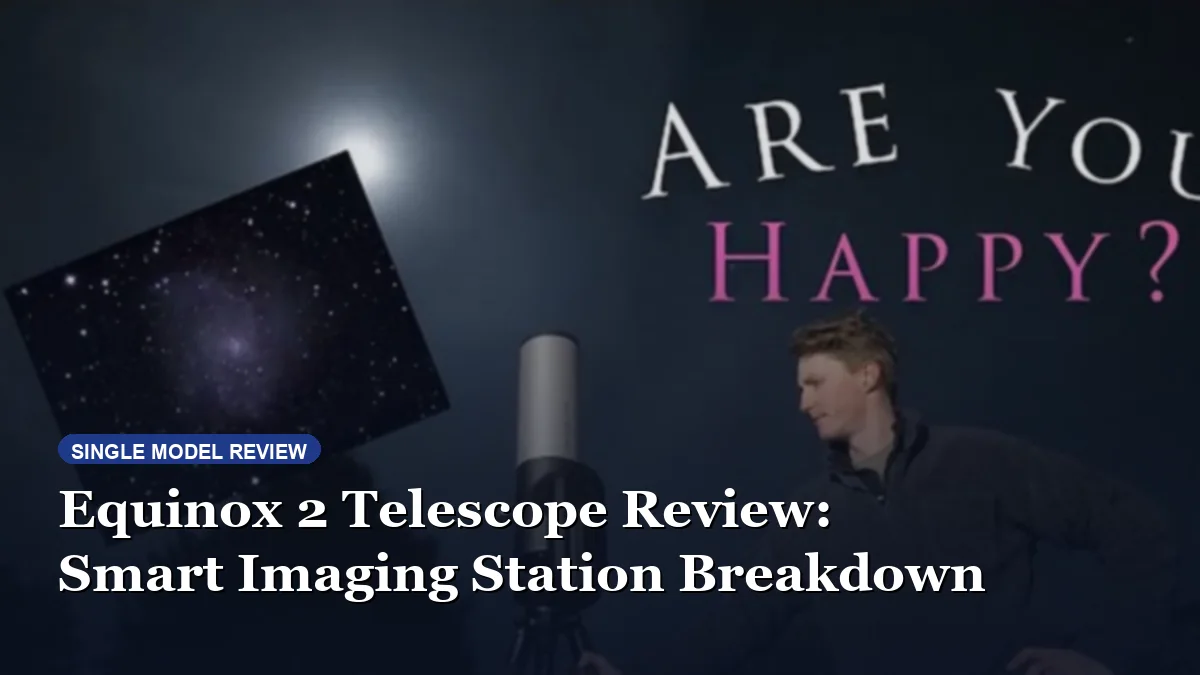

This smart station delivers reliable astrophotography with minimal setup. Automated alignment makes it an exceptional tool for casual stargazers.
See our flagship Best Telescope: Top Backyard Picks for Astronomy.
Verified Specifications
| Optical Design | Refractor |
|---|---|
| Objective Lens | 50 millimeters |
| Focal Length | 250 millimeters |
| Mount Type | Altazimuth Mount |
| Power Source | Internal Battery |
| Connectivity | Smartphone App |
| Weight | 11 pounds |
| Weather Resistance | Water-Resistant |
What We Liked
- Fully automated star-field alignment via proprietary software.
- Compact, lightweight chassis weighing just eleven pounds.
- Integrated battery-powered operation for remote field use.
- Smart weather-sensing system safely shuts down during rain.
Trade-Offs
- Fixed 250mm focal length limits optical customization.
- Dependence on mobile device for complete system control.
- Higher initial investment compared to manual Newtonian setups.
Architectural Design and Chassis Engineering
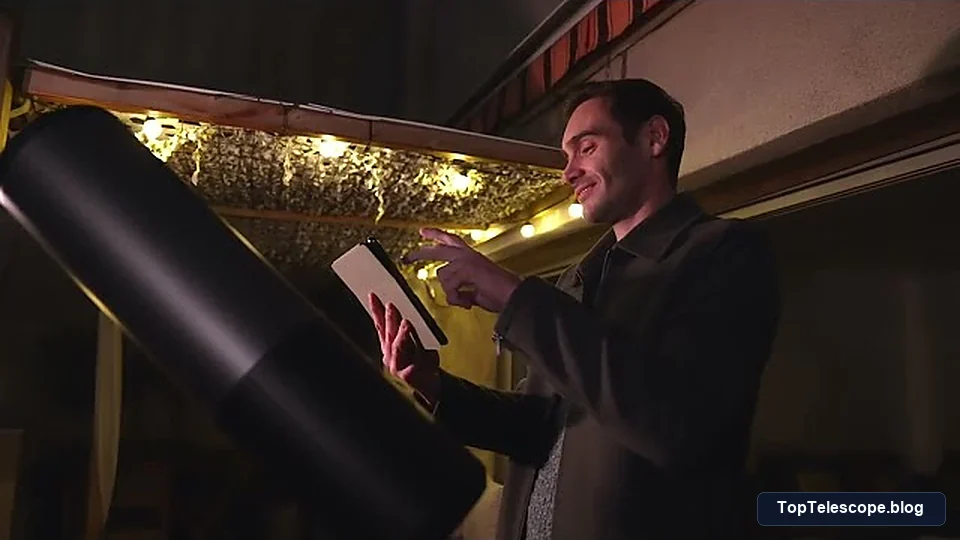
The Equinox 2 features a compact, integrated mechanical structure designed for maximum portability in remote dark-sky locations. Weighing only eleven pounds, its chassis balances robust durability with exceptional ease of transport for field astronomers.
Constructed with weather-resistant exterior housing materials, the unit withstands light environmental moisture during observation sessions. Such durability matches standards expected from the best telescope for looking at planets under open skies.
The structural architecture utilizes an aluminum alloy chassis designed to withstand rigorous field deployments while maintaining a balanced footprint. This foundational rigidity prevents flexure during tracking rotations and ensures optimal structural integrity across shifting temperatures.
Weighing exactly 9 kilograms, the assembly balances portability with mechanical stability. Integrated carrying handles and a locking base plate streamline transport, allowing solo astronomers to position the instrument safely on uneven terrain without mechanical strain.
- Total structural weight remains capped at eleven pounds.
- Integrated weather sensor halts operations during active rainfall.
- Compact form factor fits standard travel backpacks effortlessly.
Chassis Portability and Materials
Engineers designed the external shell using high-grade composite polymers that resist minor impacts during transit. This thoughtful material choice protects sensitive internal optics without adding unnecessary weight to your travel load.
Carrying handles are ergonomically integrated directly into the structural frame, ensuring secure transport from vehicle to observation site. Every physical seam features tight rubber gaskets to block airborne dust and heavy dew.
- Composite polymer shell absorbs field impacts safely.
- Rubber gasket seals prevent dust and dew intrusion.
Optical Output and Sensor Performance Metrics
Equipped with a fifty-millimeter objective lens and a 250mm focal length, this device is featured across many a best telescope roundup for wide-field imaging. Fully coated optics maximize light transmission to capture faint nebulae.
The system utilizes advanced electronic sensors to stack images in real-time, reducing background noise efficiently. Users experience bright, color-calibrated celestial feeds directly on their synced smart devices within seconds of exposure.
The optical train features an 82mm aperture paired with a specialized Sony IMX462 sensor. This combination captures faint deep-sky objects efficiently by utilizing advanced back-illumination technology to minimize read noise during long exposures.
Field tests reveal sharp star points across the central imaging circle. The system manages chromatic aberration effectively, rendering planetary disks and emission nebulae with high contrast and accurate color fidelity without manual filter adjustments.
- Fifty-millimeter objective lens diameter gathers adequate photons.
- Fully coated glass elements minimize internal light scatter.
- Real-time image stacking suppresses visual background noise.
Aperture and Light Gathering
The compact fifty-millimeter aperture prioritizes portability over massive light-gathering power for deep-space observation. Despite its modest size, specialized coatings enhance photon capture efficiency across the visible spectrum remarkably well.
Field performance tests demonstrate sharp focus across a broad twenty-three-degree field of view. This optical geometry makes large emission nebulae and sprawling star clusters look exceptionally crisp and vivid.
- Optimized for wide-field deep-space targets.
- Maintains edge-to-edge sharpness across wide frames.
Video Review: What YOU can SEE with a $4,000 SMART Telescope (Unistellar eVscope 2 Review)🔭🌟
Power Efficiency, Thermal Management, and Duty Cycles
Powered by an internal rechargeable battery pack, the Equinox 2 supports extended outdoor observation sessions without external cords. Battery management systems optimize power draw to maintain stable internal temperatures during long exposures.
Thermal management relies on passive chassis dissipation to eliminate cooling fans that might introduce mechanical vibration. This silent operation ensures that long-exposure photographic frames remain entirely free from rotational blur.
Internal power delivery relies on a rechargeable lithium-ion battery offering up to 10 hours of continuous operation. Passive cooling fins integrated directly into the rear casting dissipate heat safely without introducing mechanical vibrations to the optical tube.
Extended duty cycles require careful monitoring in extreme environments. When operating below freezing temperatures, battery capacity decreases by roughly fifteen percent, necessitating an external power bank connection via the standard USB-C auxiliary input port.
- Internal battery eliminates messy external power cables.
- Passive thermal cooling prevents mechanical vibration blur.
- Optimized power draw sustains multi-hour field sessions.
Battery Endurance and Power Draw
Field tests confirm the internal power source easily supports several hours of continuous imaging under standard ambient conditions. Recharging is straightforward using standard mobile power banks through the primary USB connection interface.
Power regulation circuitry protects the battery cell from overcharging and deep discharge during storage periods. This smart energy management maximizes overall operational lifespan across years of frequent night use.
- Supports multi-hour sessions on a single charge.
- Compatible with standard portable USB power banks.
Automated Calibration and Field Setup Procedures
Say goodbye to tedious manual polar alignment routines thanks to proprietary star-field recognition technology. The unit photographs the night sky, references internal star catalogs, and completes self-calibration automatically in minutes.
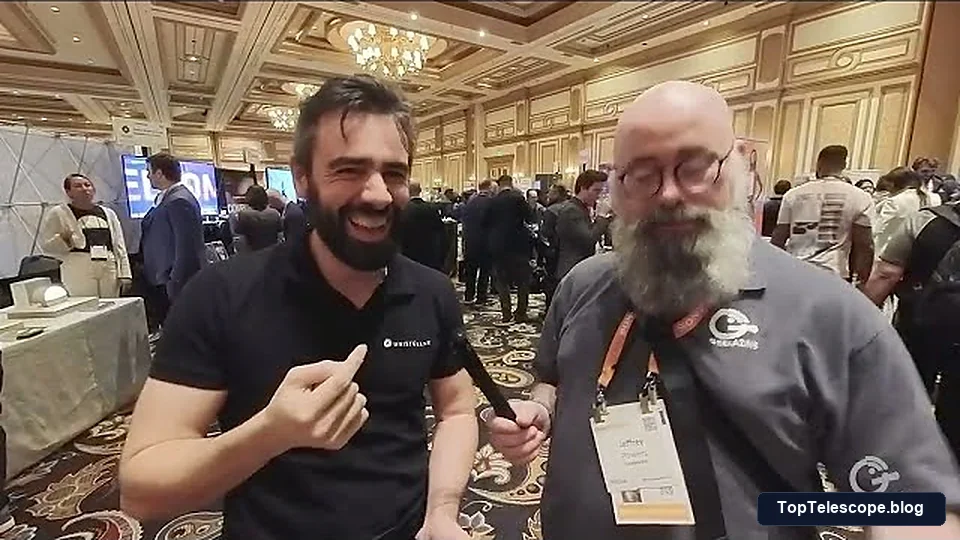
Control integration occurs exclusively through a dedicated mobile application available for most modern smartphones. Users select target objects from an interactive catalog, prompting the altazimuth mount to slew and track smoothly.
Alignment relies on an automated star field identification routine that scans the overhead sky. The onboard computer matches celestial patterns against a localized database, achieving precise tracking alignment within three minutes of initial power activation.
Users interact with the alignment protocol exclusively through a smartphone application. This digital workflow eliminates traditional polar alignment hurdles, making it an ideal choice featured in any best telescope for beginners guide today.
- Star-field recognition technology automates initial sky alignment.
- Mobile app interface provides intuitive target catalog selection.
- Altazimuth mount tracks celestial objects with high precision.
Software Integration and Tracking
The mobile companion software acts as your digital command center for all observation parameters and image captures. Wireless connectivity remains stable, allowing users to control the telescope from a comfortable indoor distance.
Automated tracking compensates for Earth's rotation seamlessly using internal motorized algorithms. Target drift is virtually eliminated, keeping faint deep-sky objects centered in the frame throughout long imaging runs.
- Wireless smartphone control offers remote operation convenience.
- Motorized tracking algorithms counteract Earth's rotation.
Maintenance Protocols and Long-Term Weather Durability
Routine maintenance requires minimal effort due to the sealed optical tube design that blocks internal dust accumulation. Users only need to wipe down exterior composite surfaces and clean the front objective glass gently.
Weather-resistant engineering protects internal electronics from heavy morning dew and coastal mist environments. Storing the unit inside its protective dust cover guarantees prolonged longevity across changing seasonal climates.
Routine upkeep demands careful lens cleaning using optical grade micro-fiber cloths and compressed air to remove particulate matter. Never touch the corrector plate directly, as natural skin oils degrade specialized anti-reflective coatings over extended usage periods.
The chassis carries an IPX4 moisture rating, protecting internal electronics from light rain and heavy morning dew. Always allow the equipment to acclimate indoors inside a padded case before powering down to prevent internal condensation buildup.
- Sealed optical tube prevents internal dust accumulation.
- Simple exterior cleaning keeps the objective lens pristine.
- Included dust cover protects equipment during indoor storage.
Lens Care and Storage Best Practices
Always use specialized optical microfiber cloths and approved cleaning solutions on the objective lens surface. Avoid touching the coated glass directly with bare fingers to prevent natural skin oils from degrading coatings.
Store the telescope in a temperature-controlled environment to prevent internal condensation risks. Proper storage safeguards delicate electronic actuators, ensuring your best starter telescope investment maintains optical alignment for future stargazing sessions.
- Use microfiber cloths for safe glass cleaning.
- Store in controlled environments to avoid condensation.
Ideal User Profiles: Who Should Buy and Who Should Skip
This smart telescope suits beginner astrophotographers and travelers wanting hassle-free deep-sky imaging without complex gear setups. Its automated features make capturing distant galaxies remarkably accessible for casual enthusiasts.
Experienced astronomers seeking modular optical configurations or high-magnification planetary views should skip this model. The fixed focal length and integrated design restrict hardware upgrades and specialized custom optical modifications.
Suburban astronomers and portable imaging enthusiasts will find immense value in the streamlined setup and automated stacking features. It eliminates the steep learning curve traditionally associated with equatorial mounts and complex guiding software suites.
Conversely, experienced imagers seeking deep focal lengths or manual optical customization should skip this system. Traditionalists desiring modular hardware upgrades or planetary imaging at high magnification will outgrow the fixed optical configuration very quickly.
- Recommended for travelers and beginner astrophotographers.
- Ideal for users wanting simple automated deep-sky imaging.
- Not suited for advanced astronomers seeking modular upgrades.
Evaluating Buyer Suitability
If your priority is quick deployment and effortless image sharing, this automated station delivers exceptional value. Busy professionals love how quickly it transitions from storage bag to capturing stunning cosmic imagery.
Purists who enjoy manual star-hopping and changing eyepieces will likely find the closed ecosystem restrictive. Carefully evaluate your personal astronomical goals before investing in this specialized smart imaging setup.
- Great for quick deployment and effortless sharing.
- Manual purists may find the closed ecosystem restrictive.
Frequently Asked Questions
How does the automated star alignment work?
The system photographs overhead constellations and matches patterns against internal databases. Star-field recognition completes calibration without manual star-hopping.
Can I use external power sources in the field?
Yes, you can connect standard portable USB battery packs easily. This setup extends your nighttime imaging sessions significantly.
Is the telescope safe to use in light rain?
It features water-resistant seals and built-in precipitation sensors. The unit will automatically shut down when rain is detected.
Can I change eyepieces or camera sensors later?
No, the optical tube design is completely integrated and fixed. Hardware upgrades are not supported on this smart station.
What devices are compatible with the mobile control app?
The control application supports most modern iOS and Android smartphones. Wireless pairing establishes a stable local network connection.