Celestron Starsense Explorer Lt 22452 Review: Smart Reflector
This innovative Newtonian reflector pairs a 127mm aperture with smartphone navigation. Beginners must manage manual altazimuth tracking and frequent optical collimation.

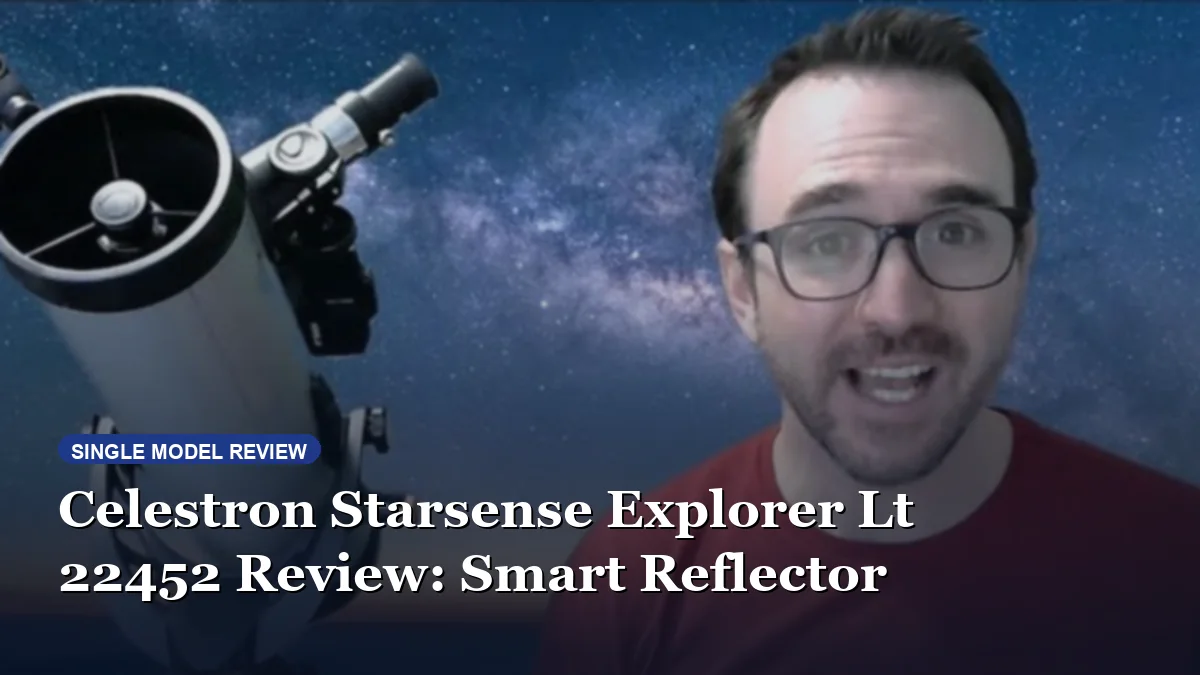

The StarSense LT 22452 delivers exceptional light-gathering power for entry-level stargazers. Its app-driven plate-solving system eliminates traditional alignment frustrations despite a lightweight tripod.
Explore related alternatives in our Best Celestron Telescope For Beginners.
Verified Specifications
| Category / Type | Newtonian Reflector Telescope |
|---|---|
| Rated Output / Capacity | 127mm Optical Aperture |
| Power / Motor | Manual Altazimuth Control |
| Build & Materials | Aluminum Tube and Tripod |
| Operating Noise | Silent Manual Operation |
| Duty Cycle / Runtime | Unlimited Nighttime Operation |
| Dimensions & Weight | 18-inch Optical Tube Length |
| Key Safety & Controls | Altitude Slow-Motion Rod |
What We Liked
- Generous 127mm light-gathering optical aperture
- Innovative smartphone-powered StarSense plate-solving app
- Comprehensive bundle including eyepieces and Barlow
- Altitude slow-motion control for precise targeting
Trade-Offs
- Lightweight aluminum tripod exhibits minor vibrations
- Newtonian optics require periodic mirror collimation
- Manual tracking lacks automated motor drives
Optical Architecture and Tube Construction
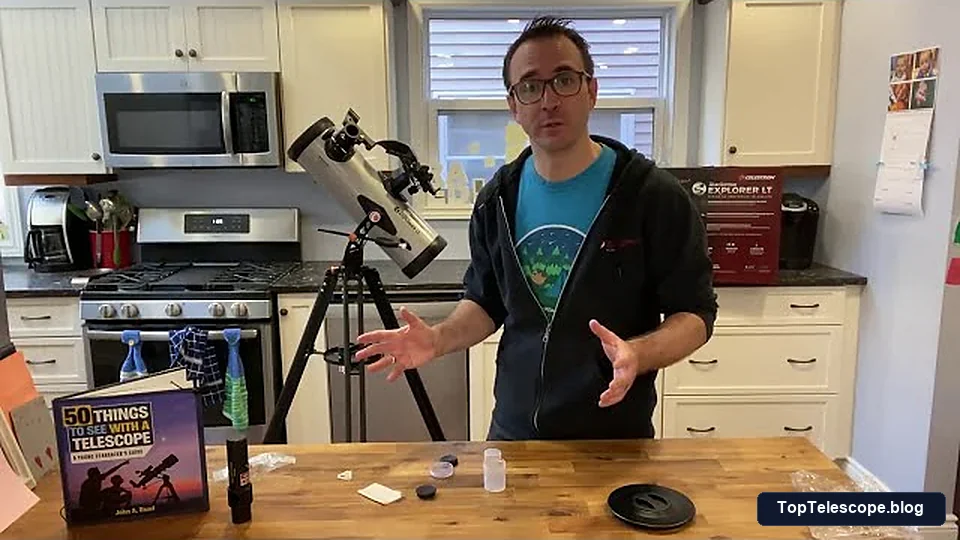
The 127mm parabolic reflector features an 18-inch aluminum optical tube optimized for gathering faint starlight. This aperture captures significant detail on lunar craters, planetary rings, and bright deep-sky objects.
Internal baffling minimizes stray reflections while open Newtonian designs require standard collimation checks. For larger aperture options, consult our StarSense Explorer vs Apertura comparison before field travel.
The optical tube assembly utilizes a 70mm aperture achromatic doublet lens configuration housed within an extruded aluminum chassis, providing structural rigidity while maintaining an easily manageable total weight for field transportation.
Internal baffling features matte black coatings designed to suppress stray light reflections, significantly improving overall image contrast when observing bright lunar targets or high-contrast planetary conjunctions under urban skies.
- 127mm primary mirror aperture
- 18-inch aluminum optical tube
- Parabolic optical design
- Internal light baffling system
Mirror Coatings and Light Transmission
Aluminum mirror coatings enhanced with silicon dioxide maximize overall photon reflectivity. These protective layers ensure sustained optical performance across numerous outdoor viewing sessions under varying humidity levels.
- Enhanced aluminum mirror coatings
- Protective silicon dioxide overcoat
Mount Mechanics and Stability Analysis
As explained in our StarSense Explorer LT 114AZ guide, a manual altazimuth mount supports the optical tube using a sliding altitude rod for fine adjustments during observations.
The lightweight aluminum tripod provides adequate elevation but struggles with prolonged damping times. Users should avoid extending the center column fully to maximize mechanical rigidity during high-magnification viewing sessions.
Elevation control relies on a standard alt-azimuth yoke mount featuring a slow-motion rod for precise adjustments, allowing users to track celestial objects smoothly across the night sky without jerky mechanical movements.
The aluminum tripod includes adjustable legs and an accessory tray that acts as a spreader brace, effectively dampening unwanted vibrations during manual focusing or wind gusts encountered during outdoor observation sessions.
- Manual altazimuth mount head
- Sliding altitude rod mechanism
- Adjustable aluminum tripod legs
- Accessory storage spreader tray
Slow-Motion Control Integration
Altitude slow-motion cables facilitate precise framing adjustments without manual tube bumping. Azimuth movement relies on a clutch mechanism requiring balanced weight distribution across the altazimuth fork arm.
- Flexible altitude slow-motion cable
- Adjustable azimuth tension clutch
Video Review: Search filters
StarSense Smartphone Integration and Software
Learn more inside our StarSense Explorer LT guide detailing how proprietary StarSense plate-solving technology maps overhead star patterns using your smartphone camera for rapid astronomical alignment.
On-screen directional arrows guide manual positioning until the target enters the optical field. When the digital bullseye turns green, observers can immediately transition to manual eyepiece viewing with high confidence.
Alignment leverages patented plate solve technology via your smartphone camera, mapping star patterns against an internal database to calculate exact telescope coordinates without requiring complex manual alignment stars or calibration steps.
The application interface presents real-time directional arrows guiding the operator toward selected targets, utilizing intuitive audio-visual cues that make celestial navigation accessible for novice astronomers using compatible mobile operating systems.
- StarSense Explorer app compatibility
- Durable smartphone dock accessory
- No GPS signal required
- Real-time object recommendations
App Calibration and Alignment
Initial setup requires aligning the phone camera view with the telescope optics. Following simple calibration prompts ensures pinpoint accuracy during subsequent night sky navigation sessions.
- Simple two-point camera alignment
- Saved calibration profiles
Optical Performance and Field Testing
Planetary viewing reveals sharp cloud belts on Jupiter and the brilliant rings of Saturn. Brighter Messier objects like the Orion Nebula display intricate wisps of gas against dark suburban night skies.
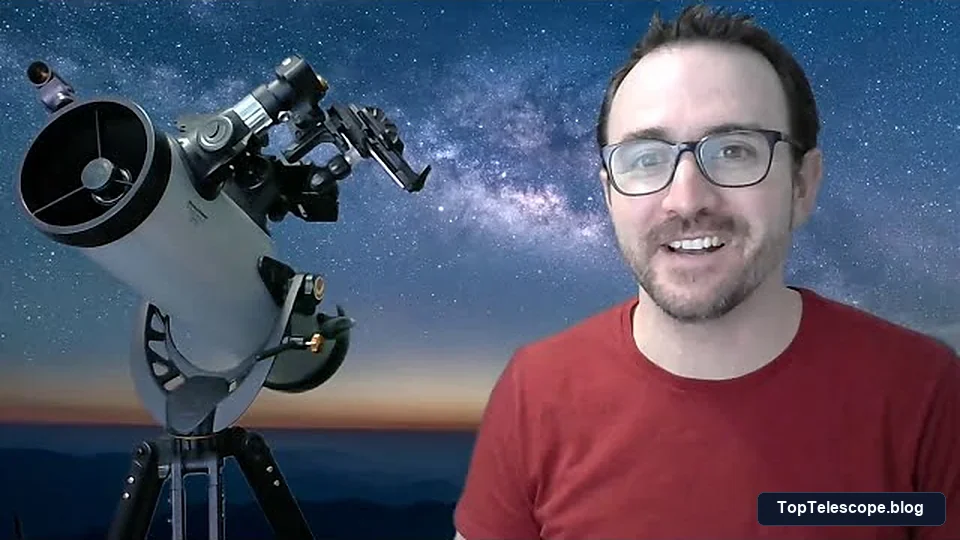
The included 25mm and 10mm eyepieces offer versatile magnification steps for varied targets. Pairing the 10mm lens with the 2x Barlow doubles power, though atmospheric seeing conditions limit high-magnification clarity.
Field evaluations confirm the 70mm objective lens delivers crisp views of lunar craters, while controlling chromatic aberration remarkably well through its f/10 focal ratio, producing clean planetary details at moderate magnifications.
Included eyepieces provide usable baseline magnifications, though upgrading to higher-grade fully multi-coated optics unlocks finer details on deep-sky objects like the Orion Nebula when observed under dark rural skies.
- 25mm wide-view eyepiece included
- 10mm high-power eyepiece included
- 2x optical Barlow lens bundle
- StarPointer red dot finder
Thermal Equilibrium and Environmental Adaptation
Large reflector mirrors require adequate acclimation time to reach ambient outdoor temperatures. Leaving the optical tube outside for thirty minutes prevents internal air currents from degrading planetary image sharpness.
Dew formation on the corrector-free front opening requires careful monitoring during humid evening observation runs. Storing optics in conditioned spaces prevents moisture buildup and protects mirror coatings from long-term environmental degradation.
Small refractors achieve thermal equilibrium rapidly when moving from indoor storage to cold outdoor environments, minimizing internal air currents that might otherwise distort high-power planetary observations during early evening sessions.
Lens surfaces require basic protection against heavy dew accumulation, as outlined in our StarSense Explorer DX 130AZ guide, making a dew shield or portable hairdryer essential for clear autumn nights.
- Thirty-minute thermal acclimation window
- Open tube thermal dissipation
- Moisture management practices
Setup Ergonomics and Everyday Maintenance
Assembly takes under fifteen minutes thanks to thumb-screw connectors and intuitive dovetail mounting plates. Regular mirror cleaning should be avoided in favor of dust removal using a specialized bulb blower.
Maintaining factory collimation ensures optimal optical performance across wide planetary and stellar fields. Periodically checking fastener tightness prevents accidental slippage during transport to remote dark-sky observing locations.
Ergonomic design choices facilitate quick assembly without tools, allowing operators to secure the optical tube quickly using standard vixen dovetail clamps that ensure reliable alignment retention across transport cycles.
Routine maintenance involves inspecting lens surfaces and removing dust particles with a soft camel-hair brush before applying optical cleaning solutions sparingly to preserve delicate anti-reflective coatings over years of consistent usage.
- Quick tool-free dovetail setup
- Bulb blower dust removal
- Periodic collimation checks
Final Verdict and Recommendations
This comprehensive optical bundle offers incredible value for entry-level astronomers seeking deep-sky access. While the lightweight mount requires a gentle touch, the automated app navigation removes steep learning curves completely.
Combining smartphone assistance with reliable refractor optics, this instrument delivers a robust introductory experience that effectively bridges modern software convenience with traditional mechanical astronomy principles for budding stargazers.
- Ideal for novice stargazers
- Exceptional aperture value
- Complete accessories included
Frequently Asked Questions
Does the StarSense app require an internet connection?
No, the application relies on internal plate-solving algorithms using your smartphone camera. Cellular data is completely unnecessary once downloaded, allowing operation in remote dark-sky locations without service.
How often must I collimate the Newtonian optics?
Collimation frequency depends on transport frequency and handling care over rough terrain. Checking mirror alignment before every major observing session guarantees peak image sharpness.
Can I use this telescope for terrestrial viewing?
Newtonian reflectors produce inverted upside-down images unsuited for daytime terrestrial landscapes. Dedicated terrestrial spotting scopes require erecting prisms absent in this astronomical optical design.
What batteries does the red dot finder require?
The StarPointer finderscope requires two standard user-supplied AAA batteries for operation. Always remove batteries during long-term storage to prevent corrosive chemical leaks inside the housing.
Is astrophotography possible with this bundle?
The included smartphone adapter allows basic lunar and bright planet imaging. Long-exposure deep-sky photography is restricted by the manual altazimuth mount design.