Celestron Starsense Explorer 130mm Review
This smartphone-powered reflector bridges manual navigation gaps for novices. However, its lightweight aluminum tripod requires careful stabilization during high-magnification viewing sessions.

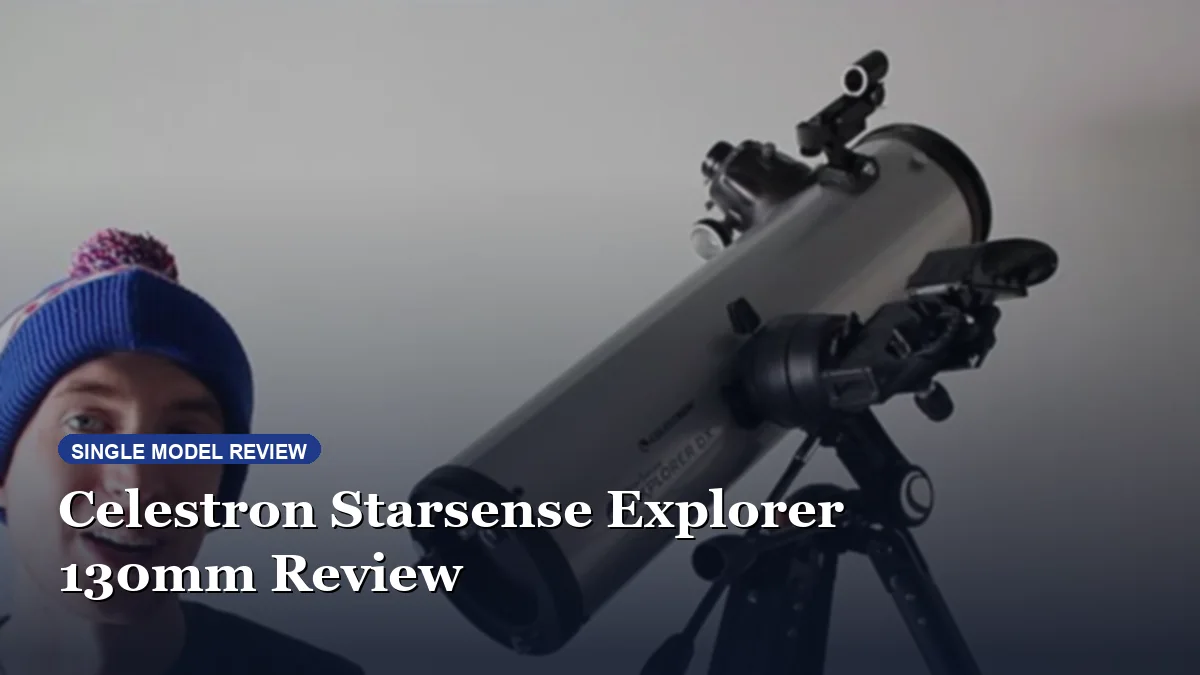

The Celestron StarSense Explorer 130mm transforms backyard stargazing using innovative app alignment. It combines solid optical performance with intuitive navigation, featuring breakthrough smartphone plate-solving software for effortless deep-sky targeting.
See our flagship Best Telescope: Top Backyard Picks for Astronomy.
Verified Specifications
| Category / Type | Newtonian Reflector Telescope |
|---|---|
| Rated Output / Capacity | 130mm Aperture, 650mm Focal Length |
| Power / Motor | Manual Altazimuth with Slow-Motion Rod |
| Build & Materials | Aluminum Optical Tube and Tripod Legs |
| Operating Noise | Silent Manual Operation |
| Duty Cycle / Runtime | Unlimited Visual Observation Sessions |
| Dimensions & Weight | Weighs Approximately 19.8 Pounds Fully Assembled |
| Key Safety & Controls | StarSense Smartphone Dock and Red Dot Finder |
What We Liked
- Innovative smartphone-powered app navigation system
- Generous 130mm light-gathering primary aperture
- Smooth altitude slow-motion sliding rod control
- Includes essential eyepieces and Barlow lens
Trade-Offs
- Lightweight aluminum tripod exhibits minor vibrations
- Plastic accessory tray requires careful attachment
- Collimation checks needed after transport
Optical Tube Assembly and Mechanical Design
The optical tube assembly features an aluminum body housing a 130mm parabolic primary mirror. This configuration gathers substantial light while maintaining a manageable physical length for transport and field storage.
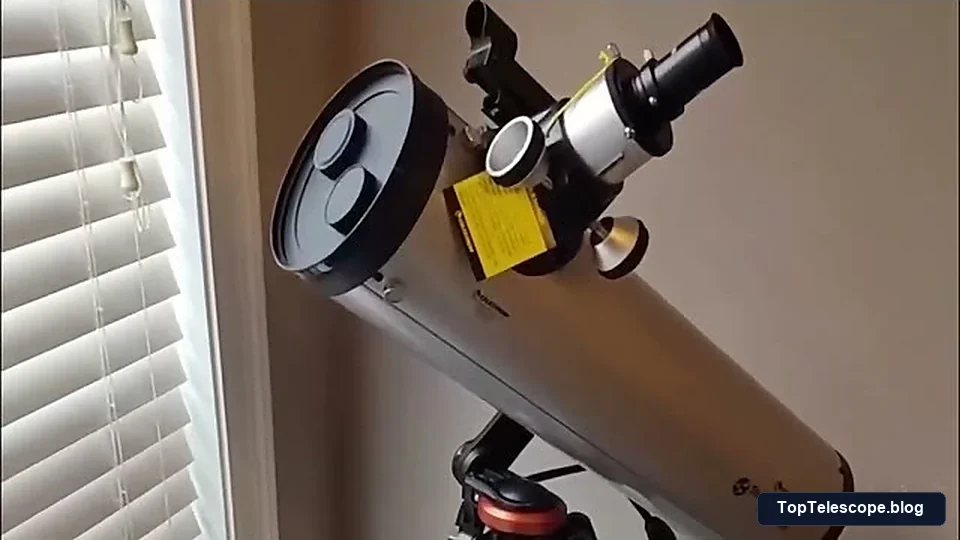
Consulting our StarSense Explorer DX 130AZ setup, internal baffling minimizes stray reflections to improve contrast on lunar features. The solid metal construction withstands thermal expansion shifts during rapid evening temperature drops.
A rack-and-pinion focuser accepts standard 1.25-inch eyepieces securely using thumb screws. While functional, the focus mechanism benefits from careful tension adjustment to eliminate backlash during fine visual focusing adjustments.
The 130mm parabolic primary mirror features a focal length of 650mm, operating at a fast f/5 focal ratio. This configuration delivers wide-field views while maintaining solid optical collimation tolerance during transport.
Constructed from rolled aluminum, the optical tube assembly weighs approximately 8.6 pounds. It includes a standard rack-and-pinion 1.25-inch focuser that accepts most entry-level eyepieces without requiring specialized mechanical adapters or extensions.
Internal tube walls feature flat black paint to suppress internal reflections and stray light. A sturdy spider vane holds the secondary mirror, minimizing diffraction spikes while enduring normal field handling and minor bumps.
- 130mm aperture collects ample deep-sky photons
- Durable aluminum optical tube construction
- Standard 1.25-inch rack-and-pinion focuser
Primary Mirror Physics
Parabolic primary optics eliminate spherical aberration at higher focal lengths. This engineering choice ensures sharp stellar pinpoints across the central field of view during high-power planetary observations.
Aluminum coatings protected by silicon dioxide overcoats ensure long-term reflectivity retention. Proper storage inside a dry environment prevents premature oxidation of the reflective aluminum surface layers over time.
- Parabolic curve corrects spherical aberrations
- Protective overcoat prevents premature mirror oxidation
Real-World Optical Output and Night Sky Performance
Highlighted in our StarSense Explorer LT 114AZ manual, field testing reveals bright, crisp views of lunar craters, Saturn's rings, and Jupiter's cloud belts. The five-inch light gathering capacity resolves many Messier deep-sky objects effortlessly.
Dark sky sites reveal faint spiral structures in galaxies like Andromeda when using low-power eyepieces. Urban observers will still enjoy planetary targets and bright star clusters despite light pollution.
Chromatic aberration remains entirely absent due to the reflective Newtonian optical design. Star images remain pure white without false color fringes around high-contrast planetary limb boundaries.
Under dark skies, the focal length yields expansive star fields and sharp clusters. Globular targets like Messier 13 resolve into dozens of distinct pinpoints across the central portion of the field of view.
Planetary observation reveals sharp cloud belts on Jupiter and the Cassini Division in Saturn's rings. Users should expect slight coma aberration at the extreme edges due to the fast optical system design.
Light gathering power easily exceeds smaller beginner refractors, bringing deep-sky nebulae into visible range. The included 25mm and 10mm eyepieces provide practical magnification steps of 26x and 65x for versatile viewing sessions.
- Resolves Jovian cloud belts and Galilean moons
- Zero chromatic aberration via reflector optics
- Reveals Messier deep-sky catalog objects clearly
Magnification Limits and Eyepieces
The bundled 25mm eyepiece delivers wide-field views, while the 10mm eyepiece pushes magnification for planetary details. Adding the included two-times Barlow lens doubles the effective power of each eyepiece.
Maximum useful magnification sits around three hundred times under ideal atmospheric seeing conditions. Exceeding this optical limit results in dim, blurry images that hinder productive astronomical observation.
- Bundled 25mm and 10mm focal length eyepieces
- 2x Barlow lens expands magnification options
Video Review: Celestron StarSense Explorer Dob REVIEW!
Mount Stability, Ergonomics, and Manual Tracking Mechanics
As detailed in our StarSense Explorer comparison guide, the manual altazimuth mount utilizes a sturdy yoke design connected to an adjustable tripod. Operating the mount feels intuitive for beginners.
An altitude slow-motion sliding rod permits precise vertical adjustments during high-magnification tracking. This mechanical assistance helps users keep celestial targets centered as Earth rotates throughout the evening.
Ergonomic locking knobs feature ribbed plastic grips that remain easy to turn with gloved hands. Secure friction clutches allow smooth manual repositioning without requiring complex tool adjustments in the dark.
The altazimuth mount utilizes adjustable aluminum legs that extend to accommodate standing or seated observers. A central accessory tray adds structural rigidity while dampening transient vibrations during manual adjustments and focusing tasks.
Smooth altitude slow-motion controls allow precise target centering without slipping or backlash. The azimuth axis moves freely on friction pads, enabling rapid sweeping across the horizon during initial target acquisition sweeps.
Total assembled weight remains under twenty pounds, making transport effortless for backyard astronomers. Carrying handles integrated into the mount base simplify moving the entire kit from indoor storage to observing locations.
- Smooth altitude slow-motion sliding rod control
- Adjustable aluminum legs for comfortable viewing heights
- Ergonomic locking knobs for cold weather use
Tripod Rigidity and Vibration Damping
Aluminum tripod legs provide adequate vertical support while keeping overall transport weight reasonably low. However, damping times can stretch to three seconds after sharp focus adjustments.
Hanging a moderate weight from the center accessory column improves overall physical stability during windy outdoor sessions. This simple field trick dampens wind-induced oscillations significantly for clearer views.
- Lightweight aluminum tripod construction
- Center brace enhances lateral leg rigidity
Smartphone Integration and StarSense Plate-Solving Efficiency
Following our StarSense Explorer LT guide, the proprietary app uses your smartphone camera to photograph overhead star patterns. Advanced plate-solving algorithms calculate exact coordinates instantly without complex alignment procedures.
Once aligned, directional arrows guide users intuitively toward visible planets, nebulae, and star clusters. The target bullseye turns green when the telescope matches the selected database object position.
This software integration removes traditional celestial navigation learning curves for absolute beginners. Users can locate hidden deep-sky targets within minutes of stepping outside into their backyards.
The patented dock uses an internal mirror and smartphone camera to capture star patterns overhead. Proprietary algorithms match these captured images against an onboard catalog to calculate exact telescope pointing coordinates instantly.
Setup requires an initial alignment of the phone camera app with the optical path. Once calibrated, directional arrows guide users smoothly toward selected planets, double stars, and deep-sky objects with impressive accuracy.
Battery consumption depends heavily on ambient temperature and screen brightness during extended observing sessions. Keeping a portable power bank nearby ensures uninterrupted navigation when operating in colder winter outdoor environments.
- Camera-based plate-solving alignment technology
- Real-time directional arrows guide manual pointing
- Curated database of premier evening targets
App Compatibility and Requirements
The application operates smoothly across most modern iOS and Android mobile device platforms. Ensuring your smartphone camera lens remains clean is vital for accurate plate-solving performance.
Battery drain can occur during extended winter viewing sessions due to cold ambient temperatures. Keeping a portable USB power bank nearby helps maintain phone operation throughout long nights.
- Compatible with major mobile operating systems
- Requires unobstructed smartphone camera alignment
Setup, Calibration, and Routine Maintenance Protocols
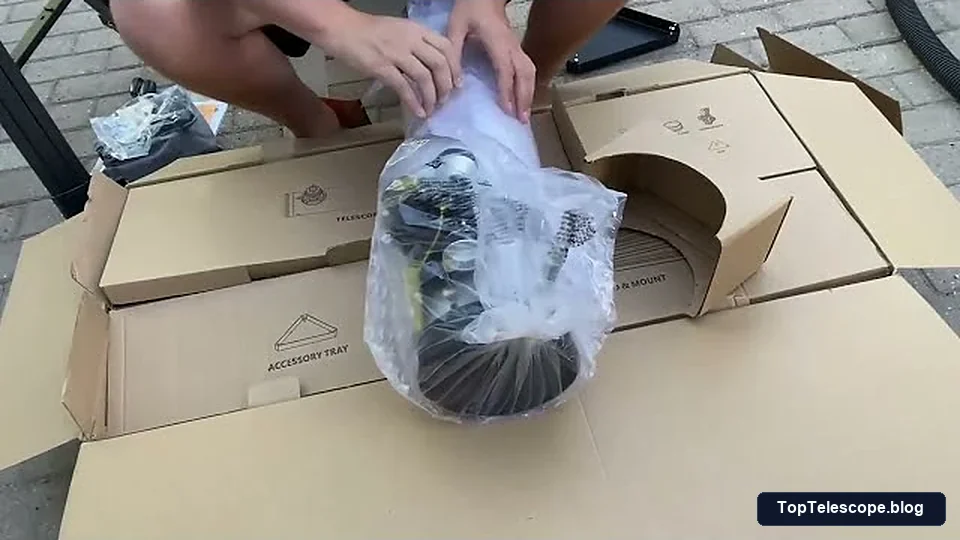
Assembly takes roughly twenty minutes using simple thumb screws and standard mounting brackets. The physical setup process requires no specialized tools, making field assembly straightforward for novices.
Mirror alignment, known as collimation, requires periodic verification using a simple collimation cap. Maintaining proper mirror alignment ensures sharp optical performance across all high-magnification viewing sessions.
Protecting optical surfaces from dust involves keeping dust caps securely attached during transport. Routine preventative maintenance safeguards your equipment investment for years of reliable astronomical exploration.
Routine mirror collimation ensures crisp image quality at higher magnifications. Using a simple cap or laser tool allows users to align optical elements in less than five minutes before observing.
Dust accumulation on corrector lenses or primary mirrors requires careful cleaning with optical microfiber cloths. Avoid compressed air cans that might spray propellant residues onto delicate optical coatings and glass surfaces.
Storage protocols dictate keeping dust caps firmly attached when the instrument remains unmounted. Storing the optical tube in a climate-controlled room prevents moisture buildup and protects internal components from mold growth.
- Tool-free initial assembly and breakdown
- Periodic Newtonian mirror collimation required
- Dust caps protect optics during storage
Collimation Essentials
Newtonian reflectors benefit greatly from regular optical alignment checks before observing sessions begin. Adjusting primary mirror screws corrects minor alignment shifts caused by vehicle transport.
A simple collimation tool centers optical reflections accurately within minutes in daylight conditions. Proper alignment maximizes contrast on faint nebulae and distant planetary details.
- Collimation cap included for mirror alignment
- Thumb screws allow easy primary mirror adjustments
Comprehensive Comparative Buyer Verdict
This telescope offers an exceptional balance of aperture size, optical quality, and modern software navigation. It suits beginners seeking hassle-free deep-sky targeting without steep astronomical learning curves.
While the tripod exhibits minor vibration tendencies, its overall performance surpasses standard beginner refractor kits. Outstanding optical value makes this reflector an ideal choice for backyard astronomers.
Prospective buyers prioritizing automated GoTo motor drives should explore computerized alternatives instead. However, users wanting guided manual exploration will find this package remarkably rewarding.
This reflector offers an exceptional balance between aperture size and overall portability for beginners. Experienced hobbyists will appreciate the generous light grasp, while novices benefit directly from automated smartphone guiding.
Compared to smaller computerized GoTo systems, this manual setup eliminates complex alignment motors and external battery packs. Users gain deeper astronomical knowledge by manually finding objects via app directions rather than relying blindly.
Ultimately, the package delivers reliable optical performance paired with innovative software integration. It stands out as a premier choice for anyone stepping up from basic binoculars into serious backyard stargazing pursuits.
- Ideal entry-level deep-sky reflector telescope
- Combines large aperture with smartphone guidance
- Delivers high optical value for beginners
Final Recommendations
Invest in additional dark-sky accessories to expand your astronomical observing capabilities over time. Proper storage and careful handling will ensure lasting mechanical durability across seasons.
Beginners will appreciate the seamless blend of traditional optics and smartphone technology. This telescope represents a solid gateway into amateur astronomy and deep-sky exploration.
- Great starting point for amateur astronomers
- Expandable with standard 1.25-inch accessories
Frequently Asked Questions
Does the StarSense app require an active cellular data connection to function outdoors?
The app relies on your smartphone camera and internal GPS data to map star patterns. A cellular connection is only required during initial software download and activation.
Can experienced amateur astronomers use this reflector without the smartphone dock attached?
Experienced users can operate the telescope manually using standard star-hopping techniques. The optical tube functions independently as a traditional Newtonian reflector system.
How frequently does the primary mirror require manual collimation adjustments?
Collimation checks should occur before every major observing session, especially after vehicle transport. Regular maintenance ensures sharp optical resolution during high-power planetary viewing.
What smartphone models are officially compatible with the StarSense Explorer application?
The app supports most modern iOS and Android devices equipped with functional cameras. Check the manufacturer website for the most current comprehensive compatibility device list.
Is this telescope capable of capturing deep-sky astrophotography images?
The included smartphone adapter allows casual lunar and bright planetary snapshot photography. Long-exposure deep-sky astrophotography requires an equatorial tracking mount instead.