Celestron StarSense Explorer Newtonian Review
This innovative Newtonian reflector pairs large aperture optics with smartphone plate-solving technology. It transforms backyard astronomy but requires manual altazimuth tracking adjustments.

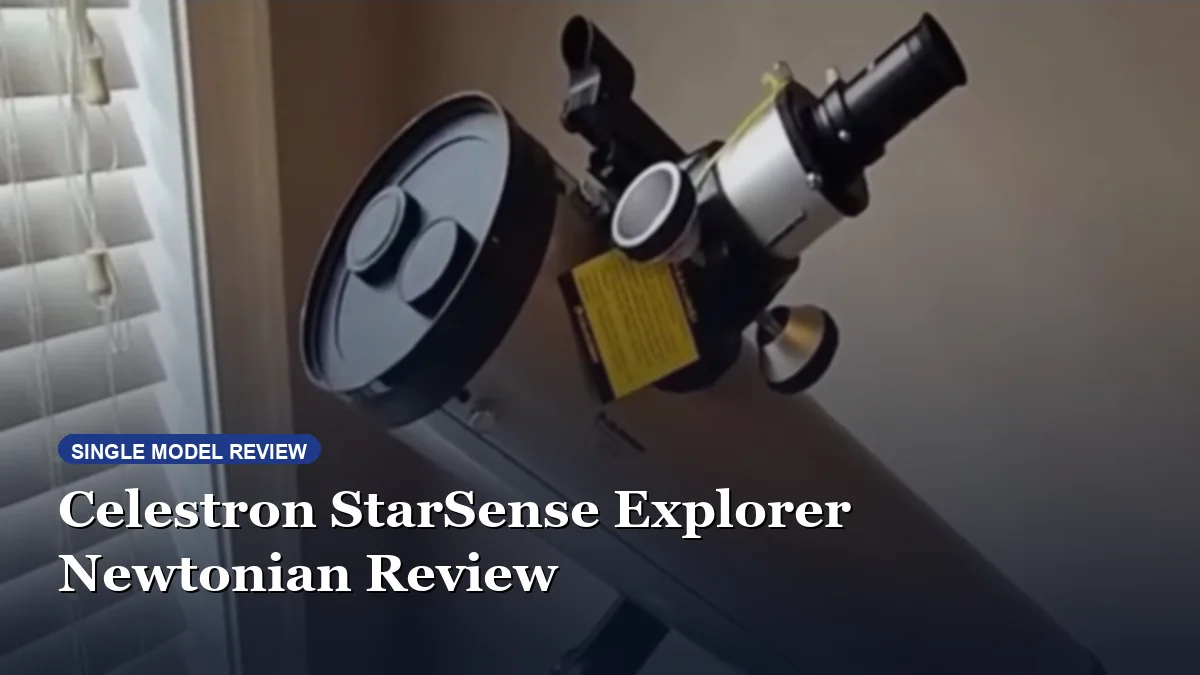

The StarSense Explorer platform delivers remarkable ease of use for novice astronomers. Its smartphone-guided navigation makes finding deep sky objects surprisingly simple despite basic manual mount mechanics.
Explore related alternatives in our Best Celestron Telescope For Beginners.
Verified Specifications
| Category / Type | Newtonian Reflector Optical Tube |
|---|---|
| Rated Output / Capacity | 130mm Light Gathering Aperture |
| Power / Motor | Manual Altazimuth Mount |
| Build & Materials | Aluminum Tripod and Steel Tube |
| Operating Noise | Silent Mechanical Movement |
| Duty Cycle / Runtime | Unlimited Visual Observing Time |
| Dimensions & Weight | 18-inch Optical Tube Length |
| Key Safety & Controls | Altitude Slow-Motion Rod |
What We Liked
- Innovative smartphone app navigation system
- Generous 130mm light gathering aperture
- Includes useful eyepieces and Barlow lens
- Sturdy aluminum tripod construction base
Trade-Offs
- Manual mount lacks motor tracking
- Coma aberration at extreme edges
- Requires periodic mirror collimation
Optical Tube Assembly and Mirror Design
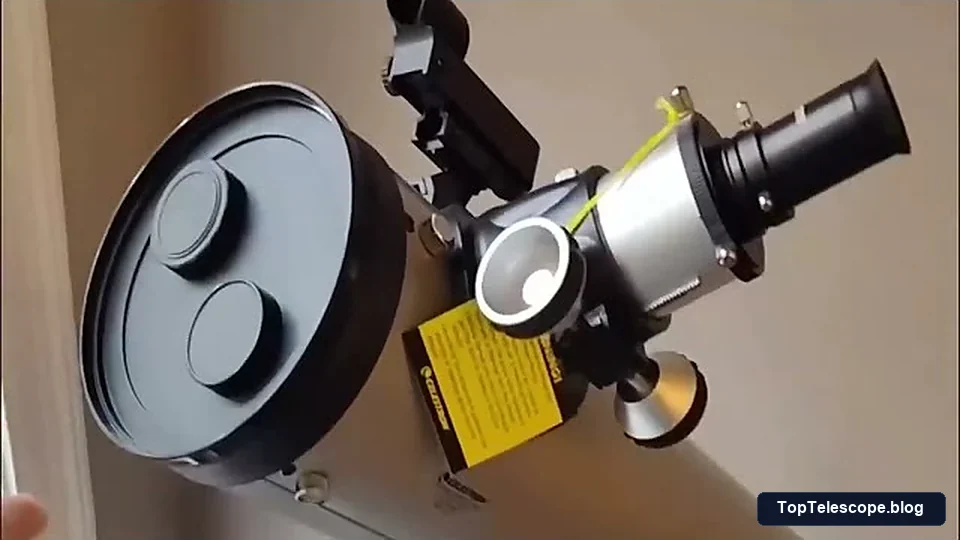
The optical tube assembly features a parabolic primary mirror designed to eliminate spherical aberration at higher magnifications. This precision grinding ensures sharp planetary details and crisp lunar terminator views during steady atmospheric conditions.
Read through our StarSense Explorer DX 130AZ manual to discover how protective quartz overcoats maximize light reflectivity while robust steel tube construction maintains optical alignment over years of regular field use.
The optical tube assembly features a 130mm aperture parabolic primary mirror crafted from low-expansion glass, housed securely within a sturdy rolled-steel chassis measuring 25 inches in physical length.
Aluminum coatings enhanced with silicon dioxide protect the reflective surfaces, delivering high reflectivity while maintaining a f/6 focal ratio that balances deep-space light grasp with manageable planetary magnifications.
- 130mm aperture gathers ample light for deep sky viewing
- Parabolic primary mirror configuration corrects spherical distortion
- Aluminum reflective overcoat layers maximize light transmission
Optical Specifications and Focal Ratios
Focal length measurements provide a versatile intermediate focal ratio suitable for varied targets. This balance allows wide-field star cluster viewing while retaining enough power for splitting tight binary star systems.
- Fast focal ratio supports wide field views
- Intermediate focal length balances power and clarity
Smartphone Dock and StarSense Plate-Solving Tech
Learn the setup steps in our Celestron StarSense Explorer LT guide to see how this patented plate-solving algorithm matches your phone camera view to celestial coordinates without complex alignment stars.
The physical smartphone dock holds various mobile devices securely using adjustable rubber clamps. A system of internal mirrors routes light from the phone camera directly into the dedicated app interface.
Utilizing a patented mirror-and-lens assembly, the StarSense dock captures a wide-field sky image, allowing the companion mobile app to perform instant plate-solving without requiring GPS or cellular connectivity.
Alignment takes less than two minutes by simply pointing the optical tube at a bright sky region, matching camera orientation to software algorithms for precise alt-azimuth targeting across thousands of database objects.
- Plate-solving app identifies overhead constellations automatically
- Adjustable dock fits most modern smartphone sizes
- Internal mirror directs camera view into optics
Video Review: Set Up Process
Mechanical Mount and Slow-Motion Controls
Follow our Celestron StarSense Explorer LT 114AZ setup guide for tips on adjusting the manual altazimuth mount and using the sliding tension rod to achieve smooth vertical positioning.
Azimuth movements rely on slip-clutch mechanics that require manual guidance based on on-screen app arrows. Users must push the telescope gently until alignment bullseyes shift into glowing green confirmation markers.
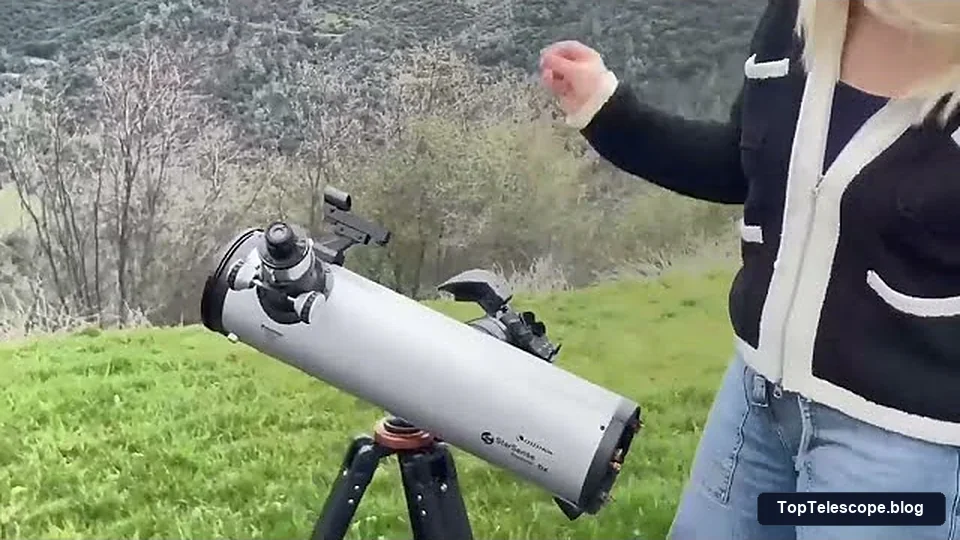
The altitude-azimuth mount utilizes sturdy aluminum leg extensions and a center accessory tray to suppress vibrations, incorporating slow-motion cables on both axes for smooth manual tracking at high powers.
Slip clutches on the mount enable rapid repositioning by hand across the night sky, letting observers quickly transition between targets before engaging the vernier control knobs for final centering.
- Altazimuth mount provides intuitive up-and-down movement
- Sliding tension rod stabilizes altitude positioning
- Slip-clutch mechanism allows fast manual panning
Real-World Optical Performance and Observations
Planetary observers will easily resolve Jovian cloud belts and Saturnian ring systems. For a deeper hardware comparison, check out our Celestron vs Apertura telescope review detailing performance under dark rural skies.
Coma aberrations become slightly noticeable near extreme field edges due to the fast focal ratio. However, central sharpness remains exceptional, providing stunning visual contrast for lunar crater rim shadows.
Under dark rural skies, the primary mirror resolves faint nebulae and distant galaxies with striking clarity, easily revealing the Great Orion Nebula and outer spiral structures in Messier 51.
Planetary observers will appreciate the sharp lunar terminator detail and distinct cloud belts on Jupiter, though bright targets may exhibit minor spherical aberration easily managed with quality oculars.
- Resolves Jovian cloud belts and Saturnian rings
- Reveals structure in bright nebulae and clusters
- Sharp central optical sweet spot for planets
Included Accessories and Eyepiece Evaluation
Bundled accessories include standard Kellner or Plossl eyepieces providing high and low magnifications. The included 2x Barlow lens effectively doubles every eyepiece focal length for enhanced planetary inspection.
A red dot finderscope assists with initial app calibration during daytime setup routines. Additional items like the Moon filter reduce glare during bright lunar phases for comfortable viewing sessions.
Out of the box, the system includes two standard Kellner eyepieces providing 25mm and 10mm focal lengths, yielding 65x and 162x magnifications suitable for general lunar and wide-field viewing sessions.
A red-dot StarPointer finderscope aids daytime alignment, while the focuser accepts standard 1.25-inch accessories, though upgrading to wide-field eyepieces significantly improves overall apparent field of view.
- Two interchangeable eyepieces for variable magnification
- 2x Barlow lens doubles optical power options
- Red dot finderscope simplifies initial calibration
Setup, Ergonomics, and Field Portability
Assembly requires minimal tools and takes approximately fifteen minutes for first-time users. The entire apparatus remains lightweight enough for easy backyard transport by a single adult observer.
Ergonomic placement of focus knobs ensures smooth adjustments while tracking celestial movements. Balancing the optical tube properly within the mounting rings prevents unwanted slippage during high-power viewing sessions.
Weighing just under twenty pounds completely assembled, this Newtonian setup is remarkably portable, featuring a manageable total system weight that allows quick transport from storage closets to dark-sky sites.
Ergonomic knobs secure the optical tube quickly to the cradle ring without tools, while the adjustable tripod height accommodates both seated children and standing adult observers comfortably.
- Fast fifteen-minute initial assembly process
- Lightweight frame facilitates easy backyard portability
- Ergonomic focus knobs offer smooth tactile control
Maintenance, Collimation, and Long-Term Durability
Newtonian reflectors require periodic mirror alignment checks known as collimation procedures. Using manual thumbscrews on the rear cell lets users maintain optical sharpness without specialized tools over years.
Dust caps protect exposed glass surfaces from particulate contamination during indoor storage periods. Regular cleaning should be avoided unless significant debris accumulates on primary or secondary mirror coatings.
Newtonian reflectors require periodic optical alignment using a collimation cap to ensure crisp images, adjusting the primary mirror tilt via rear thumbscrews while maintaining safe secondary mirror positioning.
Storing the optical tube with dust caps attached prevents particulate accumulation on optical coatings, ensuring your investment delivers decades of reliable service under frequent field conditions.
- Periodic mirror collimation keeps optics sharp
- Tool-free thumbscrews simplify alignment adjustments
- Included dust caps protect glass surfaces indoors
Frequently Asked Questions
Does the StarSense app require an active cellular data connection to function properly outdoors?
The application utilizes onboard mobile device GPS sensors and pre-downloaded internal star catalogs to perform rapid celestial plate-solving calculations without requiring any active cellular network coverage outdoors.
You only need an initial internet connection at home to download the proprietary software package and successfully activate your unique hardware unlock code before heading out to dark observing locations.
How often must users perform mirror collimation on this Newtonian optical tube?
Mirror collimation frequency depends heavily on how frequently you transport the telescope across rough roads or uneven terrain. If you store the assembly securely indoors, minor alignment checks every few observing sessions will suffice.
Using simple thumb screws on the rear mirror cell allows you to achieve precise optical alignment quickly before starting your nightly stargazing activities.
Can this manual telescope mount track objects automatically as Earth rotates?
This particular model utilizes a manual altazimuth mounting system rather than an expensive motorized GoTo tracking drive. Users must manually nudge the optical tube using slow-motion controls to keep targets centered inside the eyepiece field.
The smartphone application simplifies locating targets instantly, but tracking moving celestial bodies remains a completely manual physical process.
What types of celestial targets are visible through a 130mm aperture?
A 130mm light-gathering aperture reveals detailed lunar craters, prominent planetary ring systems, and bright Galilean moons with great clarity. You can also observe numerous deep sky wonders including prominent star clusters, glowing nebulae, and nearby galaxies.
Urban light pollution may obscure faint galaxies, but rural dark skies unlock breathtaking views across the local cosmic neighborhood.
Does the smartphone dock accommodate larger mobile phones and protective cases?
The adjustable spring-loaded smartphone dock accommodates almost all standard modern mobile devices, including many models wearing bulky protective cases. Users simply slide the adjustable brackets until their phone camera aligns perfectly with the docking mirror assembly.
Ensuring a secure and snug physical fit prevents unwanted camera shifting during active celestial navigation procedures in the field.