Celestron StarSense Explorer 114mm Newtonian Review
This innovative Newtonian reflector pairs manual altazimuth mechanics with smartphone plate-solving technology. It redefines beginner stargazing by eliminating traditional celestial coordinate alignment hassles.

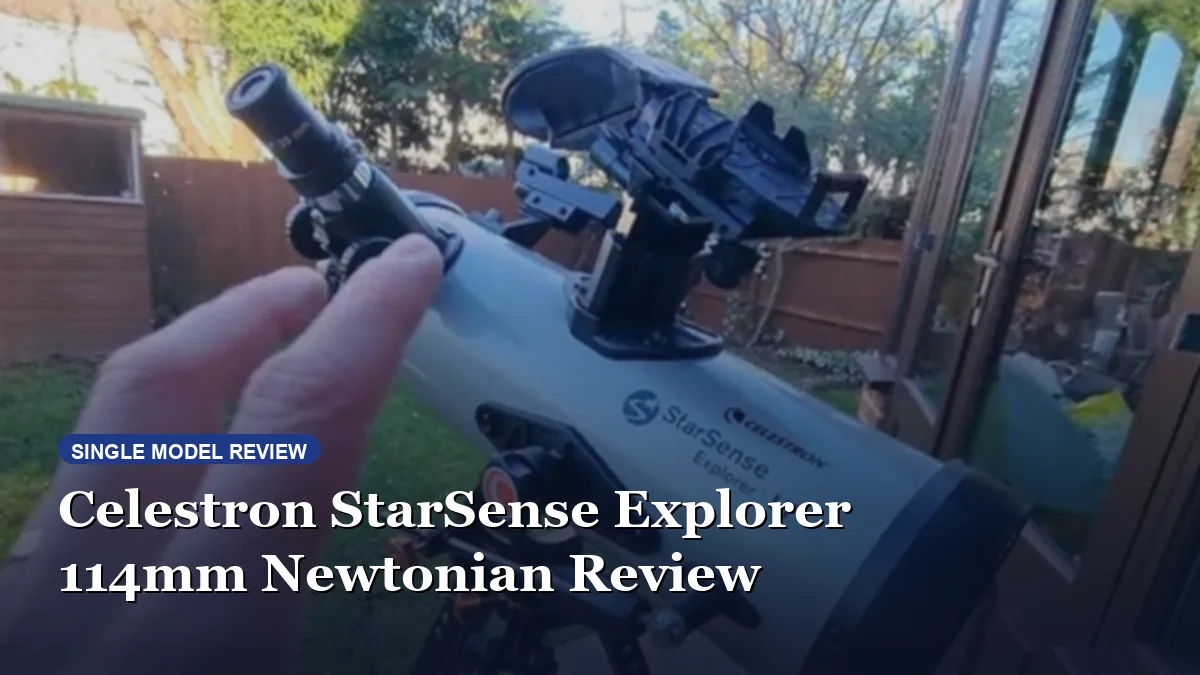

The optical assembly delivers bright, high-contrast planetary views for its aperture class. Its StarSense smartphone integration completely transforms field navigation for novice astronomers.
See our flagship Best Telescope: Top Backyard Picks for Astronomy.
Verified Specifications
| Optical Design | Newtonian Reflector |
|---|---|
| Aperture | 114mm (4.49 inches) |
| Focal Length | 1000mm (f/8.8) |
| Mount Type | Manual Altazimuth with Slow-Motion Rod |
| Finderscope | StarPointer Red Dot Finder |
| Included Eyepieces | 25mm and 10mm Kellner |
| App Compatibility | Android and iOS via StarSense Explorer |
| Optical Tube Weight | Approximately 6.8 lbs |
What We Liked
- Innovative app-driven celestial navigation system
- Decent light-gathering aperture for lunar and planetary targets
- Smooth altitude slow-motion control rod for manual tracking
- Includes essential starter eyepieces and a red dot finder
Trade-Offs
- Plasticky smartphone dock requires careful handling
- Manual altazimuth mount demands frequent manual adjustments
- Collimation checks are necessary after transport
Optical Architecture and Mechanical Design
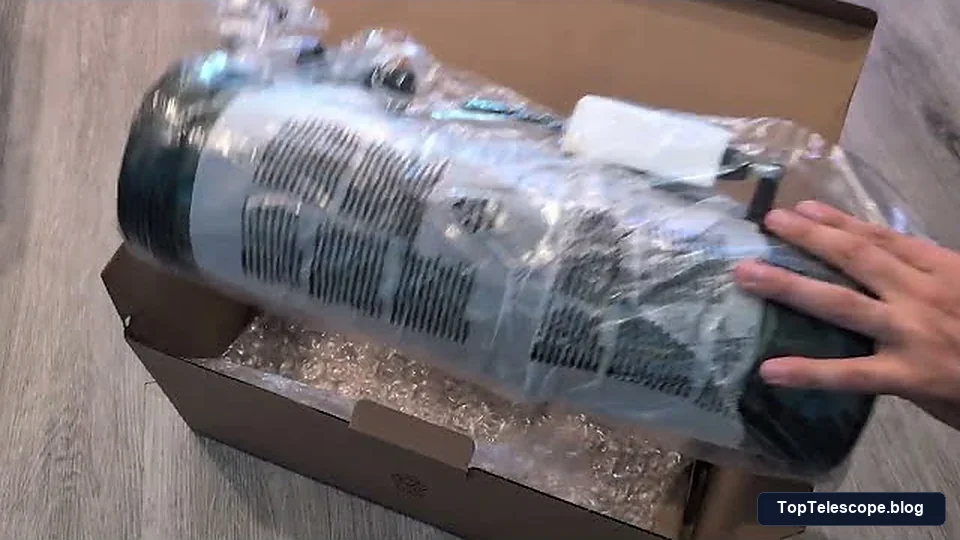
The optical tube assembly utilizes a parabolic or spherical primary mirror housed in a lightweight metal chassis. Engineers designed this Newtonian configuration to maximize light throughput while maintaining a manageable overall weight profile.
Mechanical rigidity remains vital for maintaining optical alignment during transport. Review our Starsense Explorer DX 130AZ guide for step-by-step instructions on performing routine collimation using basic tools.
The 114mm parabolic primary mirror gathers adequate light for deep-sky observation while maintaining a manageable focal length. Its aluminum coatings deliver high reflectivity across the visible spectrum for bright, crisp images.
Mounted inside a sturdy steel tube, the optics retain proper alignment through moderate transport. A rack-and-pinion focuser accommodates standard 1.25-inch eyepieces securely, minimizing image shift during high-magnification focusing procedures in the field.
- 114mm aperture balances portability and light grasp
- Metal optical tube resists thermal flexing
- Standard rack-and-pinion focuser accepts 1.25-inch accessories
Focuser Mechanics and Accessory Compatibility
A standard 1.25-inch rack-and-pinion focuser handles eyepiece duty across various magnifications. Tension adjustments prevent heavy eyepieces or smartphone adapters from slipping during vertical viewing angles.
Included Kellner eyepieces provide reasonable eye relief for casual viewing sessions. Upgrading to wide-field eyepieces significantly enhances the overall visual experience across rich star fields.
- Standard 1.25-inch format supports aftermarket upgrades
- Smooth focus knob travel minimizes image shudder
StarSense Smartphone Integration and Alignment
The proprietary StarSense docking mirror reflects star patterns directly into your smartphone camera sensor. Proprietary software analyzes the star field instantly, determining exact celestial coordinates without GPS reliance.
Initial alignment requires a simple daytime calibration procedure to match the phone camera with the optical axis. Once paired, the application provides intuitive directional arrows guiding you smoothly toward celestial targets.
Utilizing patented plate-solving technology, the companion application uses your phone camera to map starry fields instantly. This eliminates complex manual polar alignment routines for beginner astronomers seeking quick setup sessions.
Consult our Starsense Explorer LT guide to ensure proper alignment and mirror calibration using a bright reference star. Once synced, the directional pointer system guides users smoothly toward deep-sky objects.
- App plate-solving works entirely offline without cellular data
- Redesigned mirror dock secures various smartphone dimensions safely
- On-screen bullseye turns green when target alignment is achieved
Software Reliability and Field Performance
The application interface delivers a curated list of visible targets based on your exact timestamp and GPS location. This automated curation eliminates guesswork for beginners searching faint deep-sky objects.
Battery drain on mobile devices can occur during extended winter observing sessions. Keeping an external power bank nearby ensures uninterrupted navigation throughout long astrophotography or visual nights.
- Curated target lists adapt dynamically to local light pollution
- Offline database functions reliably in remote dark-sky sites
Video Review: Celestron StarSense Explorer 114 LT Telescope -Full Review
Real-World Visual Output and Planetary Resolution
Following the setup steps in our Starsense Explorer LT 114AZ guide, observing lunar craters reveals exceptional shadow contrast and sharp edge definition along the terminator line.
Brighter deep-sky objects like the Orion Nebula emerge with ghostly filaments under dark suburban skies. Resolving globular clusters requires transparent atmospheric conditions due to the modest light-gathering aperture.
Observing lunar craters reveals sharp terminator shadows when paired with a quality medium-power eyepiece. Jovian cloud belts and Saturnian rings remain discernible, though atmospheric seeing conditions heavily dictate ultimate planetary resolution limits.
Brighter Messier objects like the Orion Nebula show mottled gas structures against dark rural skies. The 1000mm focal length provides useful scale for globular clusters without sacrificing overall field brightness.
- Sharp lunar terminator views showcase fine craterlet details
- Bright planets show distinct color banding and surface features
- Meets resolving limits for Messier catalog highlights
Magnification Limits and Barlow Utilization
Pairing the system with a two-times Barlow lens doubles magnification across all inserted eyepieces. Users must monitor atmospheric seeing conditions, as excessive magnification often degrades image sharpness rapidly.
The included 25mm eyepiece offers wide, comfortable vistas suitable for expansive nebulae. Switching to the 10mm eyepiece provides high-power planetary inspection when thermal currents subside fully.
- Useful magnification ceiling sits around 220x under ideal skies
- Barlow lens effectively doubles your optical eyepiece arsenal
Thermal Equilibrium and Mirror Efficiency
Consult our StarSense 8 vs Apertura AD8 comparison regarding reflector telescopes, which require adequate thermal acclimation time before delivering optimal high-power planetary images without internal air turbulence.
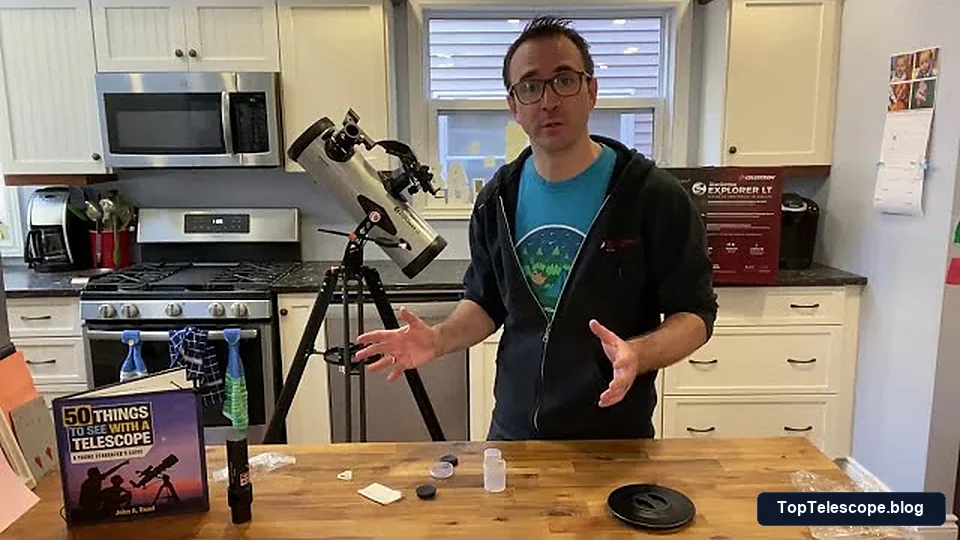
Enclosed tube designs trap warm air pockets if brought directly from heated rooms into freezing nights. Giving the system thirty minutes outside ensures stable optical performance from the very first observation.
Achieving sharp planetary focus requires allowing the optical tube assembly adequate time to reach ambient thermal equilibrium. Enclosed Newtonian designs trap ambient heat, necessitating a brief cooling period before observation sessions commence.
Regular inspection of the primary mirror prevents dust accumulation from scattering incoming light beams. Maintaining clean optical surfaces preserves maximum light transmission efficiency across faint astronomical targets during extended night sessions.
- Thermal stabilization eliminates internal tube current distortions
- Aluminum mirror coatings maximize reflective light transmission efficiency
Combating Dew and Environmental Moisture
Exposed secondary mirrors are susceptible to heavy dew accumulation during humid autumn observing sessions. Utilizing a simple aftermarket dew shield protects optical surfaces from rapid radiative cooling effects.
Storing the optical tube upright with end caps removed accelerates interior drying after damp nights. Proper moisture management prevents mold growth and preserves sensitive optical coatings long-term.
- Open Newtonian designs require careful moisture mitigation habits
- Protective end caps shield optics during daytime storage
Mount Stability and Ergonomic Control
The manual altazimuth mount features an altitude slow-motion rod for precise vertical adjustments. This mechanical control allows users to track drifting celestial objects smoothly without jerky hand movements.
Aluminum tripod legs provide adequate baseline rigidity for visual observing tasks. Extending the center column fully introduces minor vibrations, so keeping legs retracted maximizes image stability.
The lightweight altitude-azimuth mount utilizes slow-motion control cables for precise manual tracking adjustments. This mechanical setup reduces hand tremors when centering targets at high operational magnification levels.
Aluminum tripod legs offer reasonable rigidity on firm ground, though heavy wind gusts can induce minor image vibrations. Using an accessory tray adds structural bracing to damp oscillations more effectively.
- Altitude slow-motion rod enables micro-adjustments during tracking
- Adjustable aluminum tripod accommodates both seated and standing observers
Balancing Act and Slew Resistance
Properly balancing the optical tube within the mounting cradle prevents clutch slippage. Adjusting tension knobs ensures the telescope stays put when pointing at steep zenith angles.
Manual tracking requires a gentle touch to avoid disturbing the centered target field. Learning to anticipate earth rotation makes manual centering second nature over time.
- Adjustable cradle tension prevents unwanted tube sliding
- Smooth azimuth rotation facilitates sweeping star fields easily
Routine Maintenance and Long-Term Durability
Periodic mirror collimation remains essential for maintaining pinpoint star images at high magnifications. Using a simple Cheshire eyepiece or laser collimator ensures optical axes remain perfectly aligned.
Dust accumulation on optical surfaces is inevitable but rarely impacts performance significantly. Avoid aggressive cleaning unless heavy particulate matter threatens to scratch delicate reflective aluminum coatings.
Periodic collimation using a simple Cheshire eyepiece ensures optical axes remain perfectly aligned for crisp views. Keeping adjustment screws lightly lubricated prevents binding during outdoor maintenance procedures.
Storing the optical tube in a padded case shields delicate coatings from humidity and abrasive dust particles. Proper storage guarantees long-term mechanical reliability through many seasons of backyard stargazing.
- Collimation alignment keeps high-power planetary images crisp
- Minimalist mechanical design reduces potential points of failure
Storage and Field Transport Safety
Securing the optical tube in a padded case protects delicate mirror cells from shock. Always replace dust caps promptly when packing up gear after late-night sessions.
Regularly inspecting tripod fasteners prevents unexpected hardware loosening in the field. Routine upkeep guarantees years of reliable service from your portable stargazing instrument.
- Padded transport bags protect alignment during car travel
- Routine fastener checks maintain structural tripod integrity
Ideal Buyer Profile and Competitive Verdict
This telescope suits absolute beginners eager to explore deep-sky objects without memorizing star charts. The smartphone navigation integration removes the steepest learning curve traditionally associated with amateur astronomy.
Advanced astrophotographers seeking motorized tracking platforms should look toward equatorial systems instead. Casual observers wanting an intuitive, grab-and-go visual setup will find exceptional value here.
This Newtonian reflector suits beginner astronomers who value smartphone-guided navigation over traditional manual star hopping. It bridges the gap between complex computerized setups and pure manual observation.
Anyone seeking an approachable reflector with reliable app-driven tracking assistance will find tremendous educational value here. It delivers satisfying performance without overwhelming novice telescope operators.
- Perfect entry point for tech-savvy beginner astronomers
- Delivers impressive visual aperture value for the investment
Final Purchasing Recommendations
Evaluate your local light pollution levels before committing to any reflector telescope purchase. Pairing this instrument with dark-sky excursions unlocks the true potential of its 114mm mirror.
Enjoy the journey of learning constellations aided by modern digital plate-solving tools. This hybrid approach bridges traditional optics with contemporary mobile convenience seamlessly.
- Dark skies dramatically improve deep-sky object visibility
- Hybrid setup bridges manual optics with modern software
Frequently Asked Questions
Does the StarSense app require an active internet connection?
No cellular data or internet connection is required once downloaded. The app utilizes your phone camera and onboard plate-solving software to map stars offline.
Can I connect my DSLR camera for deep-space astrophotography?
This manual altazimuth mount lacks motorized tracking capabilities necessary for long-exposure deep-sky imaging. It works best for visual observation and casual lunar smartphone snapshots.
How often do I need to align or collimate the mirrors?
Collimation checks are recommended whenever the telescope travels in a vehicle. Frequent stationary backyard use requires only occasional alignment tweaks to maintain sharpness.
What kind of views can I expect from light-polluted city skies?
Bright planets, the Moon, and prominent double stars remain clearly visible from urban backyards. Deep-sky nebulae and galaxies require darker rural locations for optimal contrast.
Is assembly complicated for someone with zero astronomy experience?
Assembly takes roughly thirty minutes using clear, step-by-step printed instruction manuals. The intuitive design ensures beginners can start navigating the night sky quickly.