Celestron StarSense 130AZ Review: Performance Guide
This innovative Newtonian reflector uses smartphone plate-solving technology to bypass manual celestial mapping. However, its lightweight altazimuth mount requires patience during high-magnification focusing adjustments.

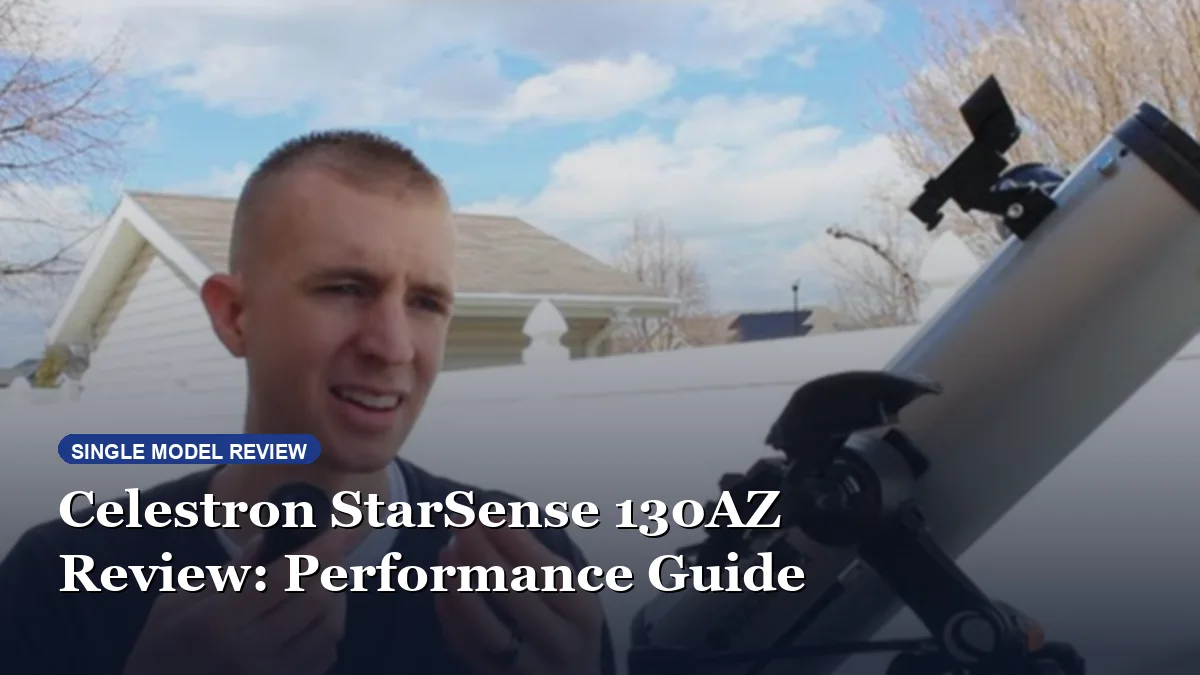

The StarSense system revolutionizes beginner astronomy by making object location completely intuitive. Despite minor mount vibrations, its optics deliver impressive clarity for planetary and deep-sky viewing.
See our flagship Best Telescope: Top Backyard Picks for Astronomy.
Verified Specifications
| Category / Type | Newtonian Reflector Telescope |
|---|---|
| Rated Output / Capacity | 130mm Aperture |
| Power / Motor | Manual Altazimuth with Slow-Motion Rod |
| Build & Materials | Aluminum Tripod and Steel Optical Tube |
| Operating Noise | Silent Manual Operation |
| Duty Cycle / Runtime | Unlimited Nighttime Viewing |
| Dimensions & Weight | 20 Pounds Total Assembled Weight |
| Key Safety & Controls | Red Dot Finderscope & Smartphone Dock |
What We Liked
- Innovative smartphone plate-solving navigation app
- Substantial 130mm light-gathering primary mirror
- Includes versatile eyepieces and 2x Barlow
- Smooth altitude slow-motion adjustment rod
Trade-Offs
- Tripod exhibits minor high-magnification vibrations
- Newtonian optics require periodic mirror collimation
- Plastic smartphone dock components feel fragile
Optical Tube Assembly and Primary Mirror Design
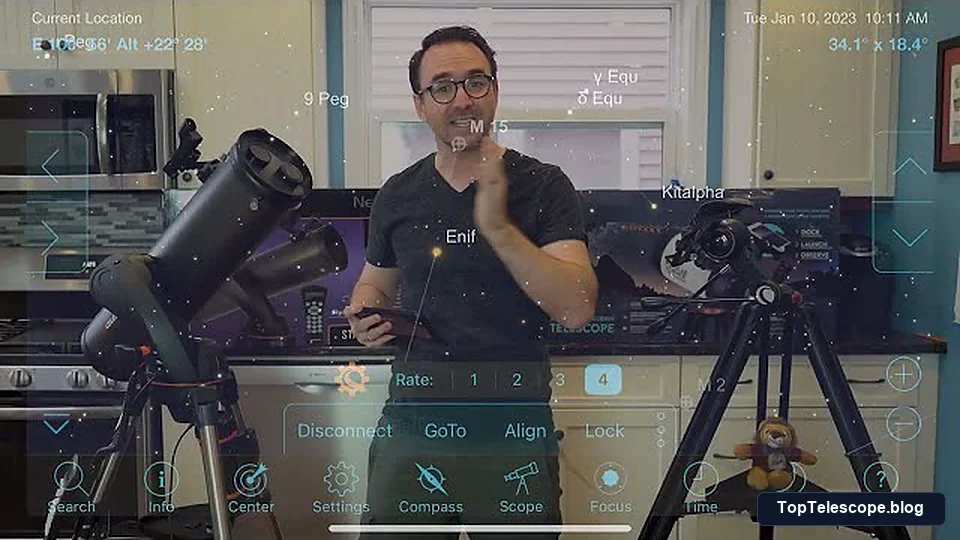
The optical tube assembly features a 130mm parabolic primary mirror that collects ample light for faint deep-sky targets. Aluminum coatings enhance reflectivity, ensuring bright images reach the eyepiece during night sessions.
A short focal length keeps the physical tube compact and manageable for transport. Users must periodically check mirror alignment using a collimation cap to maintain sharp stellar pinpoints.
The optical tube assembly features a 130mm aperture parabolic primary mirror housed in a lightweight aluminum chassis. This Newtonian reflector design eliminates spherical aberration, delivering sharp planetary and deep-sky views.
Measuring 650mm focal length at an f/5 focal ratio, the system offers a wide baseline field of view. The secondary mirror uses thin 0.5mm spider vanes to minimize diffraction spikes during high-magnification sessions.
- 130mm aperture gathers substantial light
- Parabolic mirror minimizes optical aberrations
- Short focal length improves portability
Mirror Coatings and Durability
Protective silicon dioxide overcoats shield the aluminum reflective layer from atmospheric oxidation. Following our StarSense Explorer LT guide ensures proper maintenance during outdoor use and varying humidity conditions.
- Silicon dioxide protective overcoat
- Resists environmental moisture damage
Smartphone Plate-Solving and StarSense Technology
StarSense app integration transforms your mobile phone into an intelligent guidance computer. By capturing star patterns through a dock mirror, the software instantly calculates your exact celestial coordinates.
On-screen directional arrows guide manual adjustments until the target enters your field of view. This patented plate-solving algorithm eliminates tedious star alignments and complex coordinate tracking procedures.
The StarSense Explorer app utilizes patented lost-in-space algorithm technology for smartphone alignment. Following our StarSense Explorer DX 130AZ guide helps users map overhead star patterns and calculate celestial coordinates quickly.
Physical dock alignment requires initial mirror calibration via an adjustable bracket. Once synced, on-screen blue targeting arrows guide you seamlessly through manual adjustments until your target centers perfectly within the eyepiece view.
- Proprietary app solves star fields
- No GPS required for operation
- Compatible with most modern smartphones
App Calibration and Alignment Accuracy
Initial setup requires aligning the phone dock camera with the main optical tube. Completing this simple calibration step ensures high pointing accuracy across different constellations and observing sites.
- Quick camera-to-optic alignment
- Consistent pointing precision across skies
Video Review: Celestron StarSense Explorer DX Review
Altazimuth Mount Stability and Ergonomic Handling
The manual altazimuth mount utilizes a sliding altitude rod for smooth vertical positioning. Reading our StarSense Explorer 8 comparison highlights how fine-adjustment controls help users center objects without sudden jerks.
Aluminum tripod legs provide a lightweight footprint but introduce minor damping oscillations. Users should avoid touching the eyepiece directly during critical focusing tasks to prevent image shaking.
Supported by a sturdy aluminum tripod, the manual altazimuth mount features smooth altitude slow-motion controls. This geared rod mechanism allows minute adjustments to track celestial objects steadily as Earth rotates beneath them.
The accessory tray locks the tripod legs firmly into place, significantly reducing vibrational damping time. Users should avoid extending the center column fully to maintain maximum rigidity during high-power astronomical observations.
- Altitude slow-motion control rod
- Adjustable aluminum tripod legs
- Quick-release dovetail mounting clamp
Vibration Damping and Payload Balance
Balancing the optical tube properly within the mounting ring minimizes strain on axis clutches. Adding accessory trays enhances overall tripod rigidity during outdoor observing sessions.
- Proper tube balancing reduces wear
- Accessory tray adds structural rigidity
Eyepiece Performance and Magnification Limits
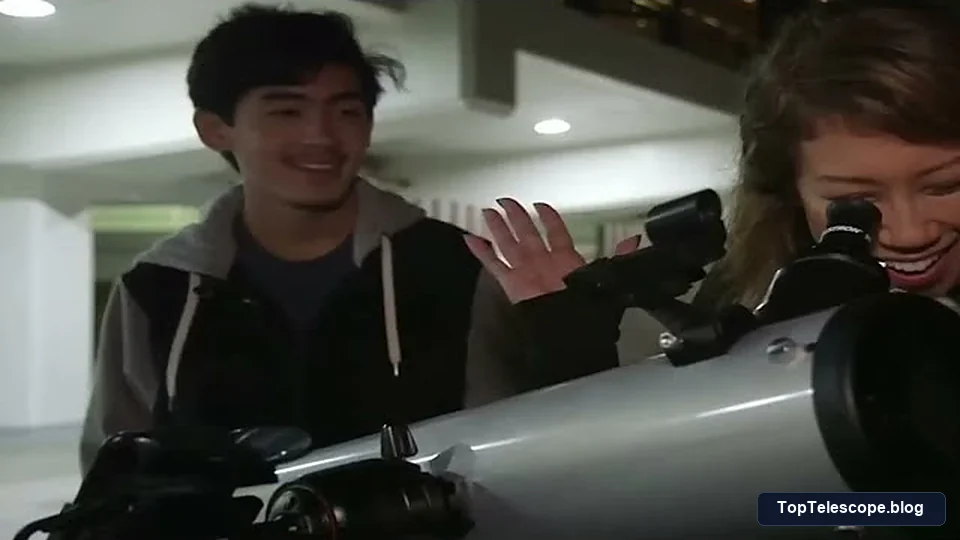
Included 25mm and 10mm eyepieces offer versatile starting magnifications for wide-field and planetary views. The included 2x Barlow lens effectively doubles power across all compatible optical accessories.
Eye relief on the higher magnification eyepiece requires closer positioning for comfortable viewing. Upgrading to wide-field multi-coated glass significantly improves edge sharpness and overall contrast.
Included with the optical tube are 25mm and 10mm eyepieces, providing 26x and 65x magnification right out of the box. The standard 1.25-inch rack-and-pinion focuser accepts a wide variety of aftermarket optical accessories.
The theoretical maximum useful magnification is 307x under optimal seeing conditions, though atmospheric turbulence usually limits practical viewing to around 206x. Avoid stacking multiple Barlow lenses to preserve high-contrast image clarity.
- Standard 1.25-inch focuser drawtube
- Includes 25mm low-power eyepiece
- Includes 10mm high-power eyepiece
Thermal Equilibrium and Routine Maintenance Protocols
Newtonian reflectors require time to acclimate to outdoor ambient temperatures before high-power viewing. Leaving the tube outside for thirty minutes prevents internal air currents from degrading image quality.
Dust accumulation on the primary mirror is inevitable during regular outdoor use. Reviewing our StarSense Explorer LT 114AZ guide helps owners clean optics sparingly using specialized blower bulbs.
Newtonians require thermal acclimation; allow the optical tube thirty minutes outdoors before viewing to eliminate internal air currents. Store the assembly horizontally with dust caps secured to prevent dust accumulation on optics.
Collimation checks are vital for fast f/5 Newtonian reflectors. Use a dedicated Cheshire eyepiece or laser collimator annually to align primary and secondary mirrors, ensuring crisp, aberration-free stellar pinpoints during sessions.
- Allow thirty-minute thermal acclimatization
- Use compressed air for dust
- Store tube with end caps
Definitive Buyer Verdict and Target Audience Analysis
This telescope excels as an intuitive gateway for enthusiastic beginners and curious families. Its revolutionary smartphone navigation removes traditional astronomical barriers while delivering genuinely satisfying optical performance.
Advanced imagers may find manual tracking limitations frustrating for long-exposure astrophotography projects. However, casual observers will appreciate the balance of portability, aperture, and modern technological convenience.
This telescope excels as an introductory instrument for smartphone-savvy beginners seeking effortless celestial navigation without complex equatorial setups. The app-driven interface bridges the gap between manual observing and computerized GoTo systems.
Advanced astrophotographers may find the altazimuth mount and fast focal length limiting for long-exposure deep-sky imaging. However, visual observers will appreciate the portability and aperture offered in this complete package.
- Ideal for novice astronomers
- Excellent lunar and planetary detail
- Straightforward manual operation
Frequently Asked Questions
Does the StarSense app require an active cellular or internet connection to function properly?
No cellular data or active internet connection is ever required because the mobile application relies entirely on advanced onboard camera plate-solving technology.
The smartphone software maps visible overhead constellations directly against a comprehensive internal catalog stored locally on your device, ensuring seamless navigation in remote observing locations.
Can I use this telescope for serious astrophotography of faint deep-sky nebulae?
This manual altazimuth platform is generally not designed for long-exposure deep-sky astrophotography work due to natural field rotation and manual tracking limitations.
However, enthusiastic beginners can easily capture sharp snapshots of the bright lunar surface and major planets by attaching a mobile device through the included smartphone adapter.
How often do I need to perform optical collimation on the primary mirror?
You should check primary mirror alignment periodically, especially after transporting the optical tube across bumpy roads or experiencing significant temperature swings.
Most casual viewing sessions require only minor secondary mirror tweaks using a simple collimation cap to maintain crisp, pinpoint stellar images in the eyepiece.
What kind of maintenance do the aluminum reflective optical coatings require?
Protective silicon dioxide overcoats shield the delicate reflective aluminum surface from normal atmospheric oxidation and environmental moisture during regular outdoor use.
You should always avoid touching the optical glass directly and utilize specialized blower bulbs or compressed air to safely remove loose dust particles without scratching.
Are batteries required to operate the StarSense telescope mount and optical system?
Batteries are never needed for the manual altazimuth mount or the primary optical tracking mechanics since positioning is entirely user-powered.
However, you will need to supply a pair of standard user-supplied AAA batteries to power the electronic red dot finderscope during initial alignment procedures.