Celestron Nexstar 8Se Telescope Review
This iconic orange-tube setup balances robust 8-inch aperture performance with automated GoTo tracking. However, its single-fork arm requires careful power management during extended winter observation sessions.

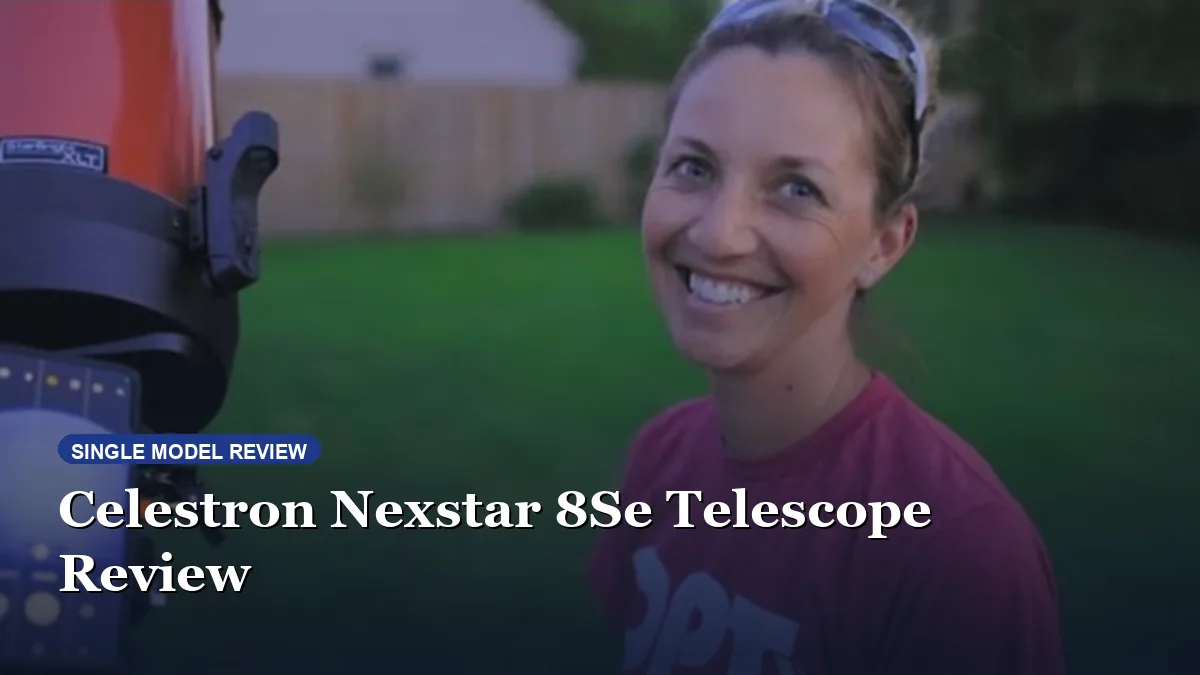

The Celestron NexStar 8SE delivers exceptional optical resolution for planetary and deep-sky observation. Buyers must manage the single-arm mount stability and power draw carefully for optimal performance.
See our flagship Best Telescope: Top Backyard Picks for Astronomy.
Verified Specifications
| Category / Type | Schmidt-Cassegrain Computerized Telescope |
|---|---|
| Rated Output / Capacity | 203mm Objective Aperture |
| Power / Motor | DC Servo Motors with Encoders |
| Build & Materials | Aluminum Optical Tube and Steel Tripod |
| Operating Noise | Audible DC Servo Whir During Fast Slews |
| Duty Cycle / Runtime | Varies by 12V Power Source Capacity |
| Dimensions & Weight | 32"D x 34"W x 52"H, Portable Rig |
| Key Safety & Controls | NexStar+ Hand Control with SkyAlign |
What We Liked
- High-resolution 8-inch optical aperture
- Automated GoTo database with 40,000 targets
- Portable and compact optical tube length
- Proprietary SkyAlign rapid setup technology
Trade-Offs
- Single-fork arm stability limitations
- High power consumption in cold weather
- Thermal acclimatization period required
Optical Tube Assembly and Schmidt-Cassegrain Engineering
The 8-inch optical tube utilizes a folded Schmidt-Cassegrain design to maintain a remarkably compact physical profile. This configuration delivers an impressive focal length of 2032mm while remaining portable enough for frequent backyard transport.
Internal baffling minimizes stray light reflections, significantly boosting image contrast during high-magnification planetary viewing sessions. Readers can compare heavier base options using our Celestron CPC 800 vs NexStar 8SE breakdown.
The 8-inch primary mirror features StarBright XLT coatings yielding up to 97.4% light transmission. This optical design packs a 2032mm focal length into a compact aluminum tube measuring just 17 inches long.
Collimation stability remains vital during transit. Adjusting the three front-cell Phillips screws requires a 2mm hex key for fine adjustments. Always secure the mirror lock knobs after achieving optimal axial alignment.
- 203.2mm primary mirror diameter
- F/10 focal ratio optics
- StarBright XLT optical coatings
Primary Mirror Shifting and Focus Mechanics
Manual focusing utilizes a primary mirror translation mechanism that can introduce slight image shift. Careful fine-tuning at high magnifications easily mitigates this minor mechanical characteristic during critical planetary imaging runs.
Adding an external micro-focuser provides ultra-precise image control without touching the main focus knob, preserving your celestial alignment. This mechanical upgrade benefits both visual observers and astrophotography enthusiasts alike.
- Rear-cell visual back compatibility
- Optional electronic focus motor support
Automated GoTo Mount and Alignment Mechanics
The computerized single-fork arm houses precise internal gears driven by DC servo motors. You can evaluate mount capacities by reviewing our Celestron NexStar 6SE vs 8SE guide to find your ideal aperture size.
Alignment utilizes proprietary SkyAlign technology, which requires centering any three bright celestial points. The onboard computer quickly calculates your exact geographic position to initiate precise tracking routines.
The single-fork arm houses DC servo motors driving brass worm gears. Using SkyAlign requires pointing at three bright celestial objects to establish accurate pointing models without requiring prior constellation knowledge.
Encoder resolution determines tracking precision across extended deep-sky sessions. The internal gearing maintains sidereal, solar, and lunar tracking rates while minimizing backlash errors through software compensation routines integrated in the hand controller.
- DC servo motors with encoders
- NexStar+ flash-upgradable hand control
- Multiple alignment routines available
Video Review: Celestron NexStar 8SE Telescope Review
Power Consumption, Thermals, and Operating Noise
Internal battery compartments accept eight AA cells, though cold weather rapidly drains standard alkaline options. You can review power demands via our Compare Celestron Nexstar 6Se And 8Se specifications guide.
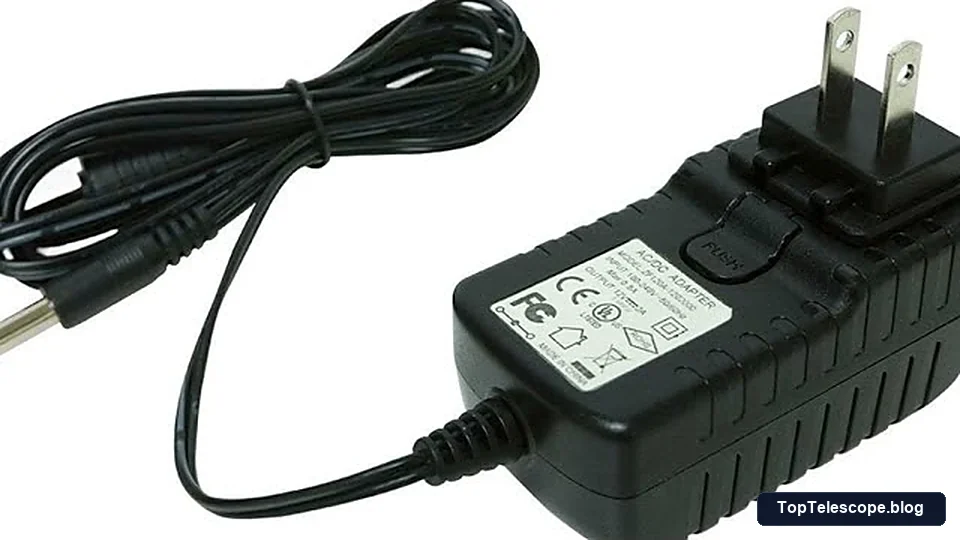
Slewing operations produce a distinct mechanical whir from the internal gear drives, increasing noticeably during high-speed alignment sweeps. Thermal acclimatization requires roughly forty-five minutes for the massive mirror to reach ambient temperature.
Internal battery trays utilizing eight AA alkaline cells drain rapidly in cold weather. Experienced astronomers connect an external 12V DC power tank providing at least 5Ah capacity to prevent voltage dropouts during slewing.
Thermal equilibrium demands up to forty-five minutes of cool-down time. The sealed optical tube traps ambient heat, making an optional cooling fan or passive thermal stabilization essential for high-magnification planetary resolution.
- 12V DC power requirement
- Audible motor noise during fast slews
- Thermal cooling period required
Field Ergonomics, Portability, and Mechanical Setup
The steel tripod features adjustable legs that provide a stable platform for the optical tube assembly. Despite its sturdy construction, the entire rig remains lightweight enough for one-person backyard deployment.
Ergonomic carrying handles molded into the fork base simplify mounting the heavy optical tube safely. Taking time to level the tripod base ensures optimal tracking accuracy throughout your entire viewing window.
Weighing 33 pounds fully assembled, the instrument bridges portability and aperture. The steel tripod features 2-inch diameter legs that suppress low-frequency vibrations significantly better than aluminum alternatives during gusty wind conditions.
Carrying handles integrated into the fork base assist during vertical lifting tasks. Securing the optical tube to the quick-release dovetail clamp requires tightening the heavy-duty hand bolts firmly to prevent accidental slippage.
- Heavy-duty steel tripod legs
- Accessory tray spreader lock
- Quick-release optical tube clamp
Accessories, Upgrades, and Maintenance Protocol
Routine maintenance requires periodic cleaning of the Schmidt corrector plate using optical-grade microfiber cloths. Protecting your optics with a secure dust cover prevents environmental particulate buildup between outdoor sessions.
Upgrading the visual back to a two-inch configuration allows utilization of wide-field eyepieces. Such enhancements drastically improve your overall viewing comfort when exploring sprawling deep-sky nebulae and star clusters.
Upgrading the standard visual back to a 2-inch dielectric diagonal expands your eyepiece field of view. Routine maintenance involves wiping exterior corrector plate dust using optical-grade microfiber cloths moistened with approved cleaning solutions.
Storing optical components in humidity-controlled environments prevents organic mold growth on specialized mirror coatings. Periodically inspect all internal wiring harnesses and secure loose terminal connections to maintain reliable electrical continuity across long-term field operations.
- Schmidt corrector dust protection
- Optional GPS module integration
- Optional StarSense auto-alignment accessory
Comprehensive Performance Verdict and Ideal User Profile
This computerized telescope represents a balanced solution for intermediate astronomers demanding optical power. For fork mount insights, consult our Celestron Nexstar 8Se vs Evolution 8 analysis covering stability and tracking.
Beginners willing to learn the alignment procedures will find tremendous value in this versatile package. Experienced observers will appreciate the optical resolution packaged within such a convenient transportable chassis.
This Schmidt-Cassegrain system excels at resolving lunar craters, tight double stars, and globular clusters. Intermediate observers seeking a portable powerhouse will appreciate its balanced blend of optical aperture and automated tracking capability.
Wide-field astrophotography remains challenging due to the long focal ratio and alt-azimuth mount tracking limitations. Dedicated imagers should utilize an equatorial wedge or transition to specialized refractors for deep-sky long-exposure imaging.
- Ideal for planetary and lunar study
- Requires careful power management
- Outstanding optical resolution per weight
Frequently Asked Questions
Can this telescope handle deep-sky astrophotography out of the box?
The standard alt-azimuth fork mount naturally introduces field rotation during extended exposure imaging, making this specific package much better suited for high-resolution planetary capture rather than long-duration deep-sky stacking.
You can eventually overcome this rotational limitation by purchasing a heavy-duty equatorial wedge to enable proper polar tracking for advanced astrophotography projects.
What is the best power source for cold-weather observation sessions?
Internal AA battery compartments drain extremely rapidly in freezing outdoor temperatures and frequently cause erratic computer behavior due to sudden voltage drops during heavy motor slewing operations.
We therefore strongly recommend investing in a dedicated external lithium-ion power tank to ensure a completely stable electrical current throughout your extended winter observation sessions.
How long does the optical tube require for thermal equilibrium?
Large closed Schmidt-Cassegrain optical tubes trap residual indoor heat very efficiently and require adequate time to properly match falling outdoor ambient temperatures before viewing.
Allowing roughly forty-five to sixty minutes of passive cooling time completely prevents internal thermal air currents from severely blurring fine planetary and lunar surface details during high-magnification viewing sessions.
Can beginners operate the computerized alignment system easily?
The proprietary SkyAlign technology significantly simplifies initial telescope setup by letting you center any three bright celestial stars without requiring prior constellation identification knowledge.
Most beginners master this intuitive alignment routine very quickly with minimal practice under clear night skies while following the straightforward hand controller display prompts.
What maintenance is required for the Schmidt corrector plate?
The front glass corrector plate naturally accumulates environmental dust over time and therefore requires careful periodic cleaning using dedicated optical microfiber cloths and specialized lens cleaning fluid.
You must always avoid aggressive wiping to protect the delicate multi-layer coatings from accidental scratching during your regular maintenance sessions.