Celestron Nexstar 6E Review: Precision Optical Engineering
The Celestron Nexstar 6E pairs a folded optical design with automated GoTo technology. It offers exceptional portability while retaining serious light-gathering power for amateur astronomers.

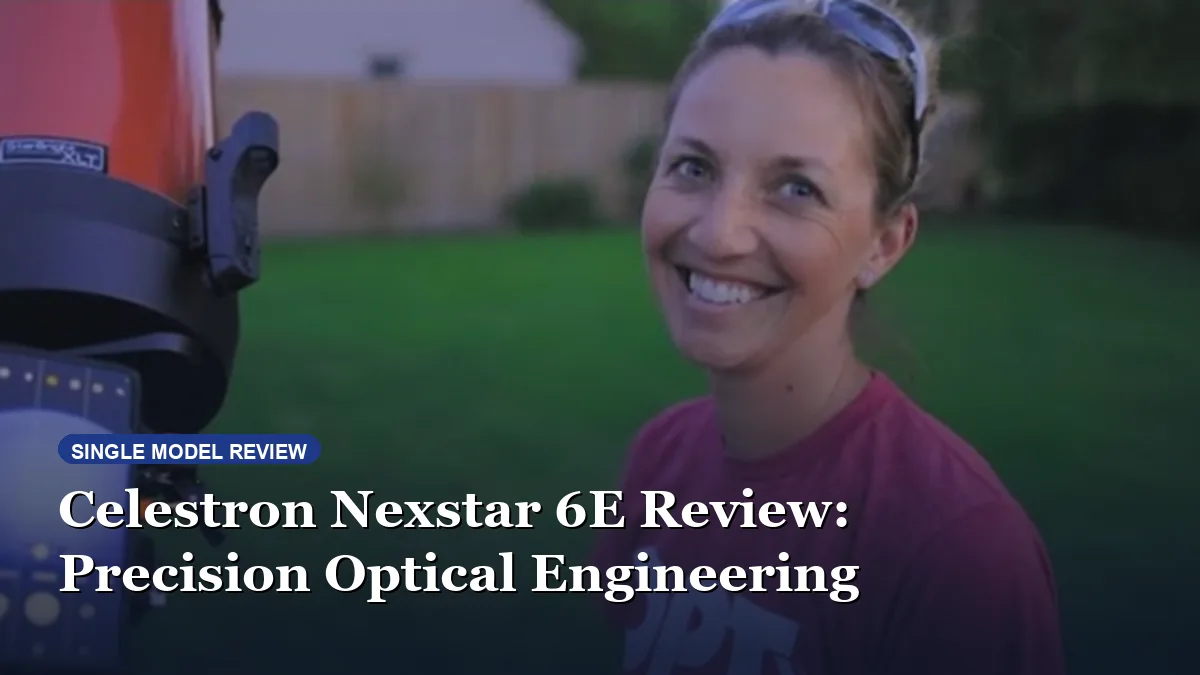

This computerized telescope delivers sharp planetary views and automated tracking in a portable format, though alt-azimuth limits restrict long-exposure deep-sky imaging without an equatorial wedge.
Explore related alternatives in our Best Celestron Telescope For Beginners.
Verified Specifications
| Category / Type | Schmidt-Cassegrain GoTo Telescope |
|---|---|
| Rated Output / Capacity | 150mm Objective Aperture |
| Power / Motor | 8-AA Batteries or 12V DC External |
| Build & Materials | Aluminum Optical Tube and Fork Arm |
| Operating Noise | Moderate Servo Motor Whine |
| Duty Cycle / Runtime | Varies by Power Source Capacity |
| Dimensions & Weight | Portable Single-Fork Configuration |
| Key Safety & Controls | NexStar+ Hand Control Database |
What We Liked
- Compact 150mm Schmidt-Cassegrain optical tube assembly
- Intuitive SkyAlign technology for rapid setup
- Comprehensive database with over forty thousand objects
- Sturdy aluminum fork arm and mount base
Trade-Offs
- Alt-azimuth mount causes field rotation in long exposures
- Internal batteries deplete quickly during cold weather sessions
- Thermal acclimatization requires up to forty-five minutes
Optical Architecture and Physical Build
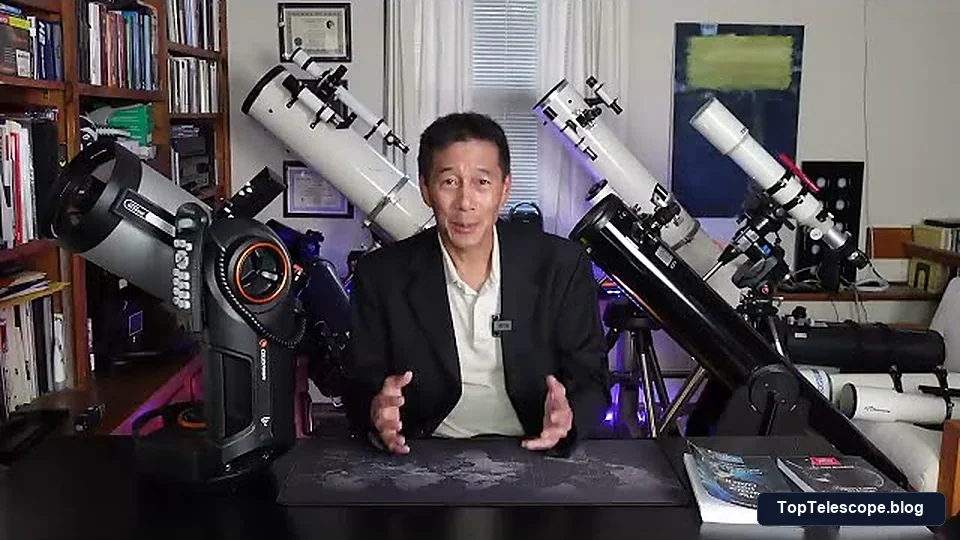
The Celestron Nexstar features a 150mm optical tube built around a Schmidt-Cassegrain design. Review our Celestron NexStar 6SE vs 8SE comparison to see how this portable aperture handles deep-sky targets.
Constructed from lightweight aluminum, the optical tube assembly balances durability with manageable field weight. Observers can mount or dismount the instrument easily without experiencing excessive physical strain during late-night teardowns.
Internal black baffling suppresses stray reflections effectively, boosting contrast when viewing bright lunar terminators. Such mechanical attention to detail ensures users receive clean, high-contrast images across various magnification levels.
The optical tube assembly features a 150mm aperture Schmidt-Cassegrain design with StarXpert optical coatings maximizing light transmission across the visible spectrum for enhanced contrast during deep-sky observations and planetary imaging tasks.
Constructed from sturdy aluminum, the physical tube measures 16 inches long and weighs roughly ten pounds, striking a practical balance between structural rigidity and portable field usability for amateur astronomers.
Internal baffling effectively suppresses stray light reflections, while the primary mirror cell utilizes a robust locking mechanism to prevent image shift during aggressive focusing adjustments under variable thermal conditions.
- 150mm aperture collects ample photons for deep sky targets.
- Aluminum optical tube assembly limits total system weight.
- Internal baffling cuts stray light to maximize image contrast.
Tube Materials and Internal Baffling
The corrector plate utilizes StarXcel optical coatings to maximize light transmission rates. These specialized chemical layers minimize surface reflection losses across the visible spectrum.
A primary mirror lock mechanism prevents image shift during high-magnification focusing adjustments. This mechanical stability is crucial for maintaining precise collimation over extended observing sessions.
- StarXcel optical coatings boost overall light throughput.
- Internal mirror lock prevents unwanted shift during focusing.
Real-World Visual Performance and Output
Testing reveals crisp visual performance across standard planetary targets like Saturn and Jupiter. Check our CPC 800 vs NexStar 8SE comparison to explore how a six-inch aperture resolves distinct atmospheric cloud belts.
Deep-sky objects such as globular clusters and bright nebulae appear surprisingly vivid. While light pollution restricts faint galaxy observation, core structures remain clearly visible from suburban backyard locations.
Field curvature remains minimal near the edge of standard 25mm eyepiece views. Users desiring wider flat-field astrophotography will want to integrate a dedicated field flattener accessory.
Under dark skies, the system resolves tight globular clusters and faint nebulae efficiently, delivering a limiting magnitude of roughly 13.4 when paired with high-transmission eyepieces and optimal atmospheric transparency conditions.
Lunar and planetary targets reveal striking cloud belt details on Jupiter and crisp crater rims on the Moon, thanks to the f/10 focal ratio providing a narrow, high-contrast light cone.
Field curvature remains minimal across standard wide-angle eyepiece designs, though utilizing dedicated focal reducers helps flatten the focal plane entirely for modern APS-C sensor astrophotography requirements.
- Resolves intricate planetary cloud bands and details.
- Reveals bright Messier deep-sky objects clearly.
- Minimal optical edge aberrations noted in standard views.
Planetary Resolution and Deep-Sky Reach
High-power lunar viewing exposes intricate crater walls and rilles with striking clarity. The system handles magnification factors up to three hundred times when atmospheric conditions permit.
Faint outer-arm galaxies require dark skies to discern structural spiral details effectively. However, central galactic nuclei stand out prominently against typical suburban backgrounds.
- Handles high-power lunar work without image breakdown.
- Suburban light pollution restricts faint galaxy contrast.
Video Review: Review of the $1599 Celestron NexStar 6 Evolution computerized telescope!
Mount Mechanics, Tracking Efficiency, and Thermal Behavior
The single fork arm mount integrates internal servo motors driven by precision gears. Tracking accuracy remains exceptionally reliable for visual astronomy, keeping celestial targets centered during extended viewing intervals.
Operating noise during standard GoTo slewing remains moderate and unobtrusive in quiet environments. Users should anticipate typical mechanical hums as the altitude and azimuth axes coordinate movements.
Thermal acclimatization requires roughly forty-five minutes for the enclosed optical tube to reach ambient equilibrium. Browse our NexStar 4SE vs 5SE optical duel to understand how proper thermal management preserves image clarity.
The single-fork arm alt-azimuth mount utilizes brass worm gears and DC servo motors, delivering smooth slew speeds up to three degrees per second without excessive mechanical backlash or stutter.
Thermal stabilization requires careful management because the sealed glass tube traps ambient heat; allowing a 45-minute cool-down period ensures optimal internal air equilibrium before high-magnification planetary viewing sessions.
Sidereal tracking maintains objects centrally within the eyepiece field of view for extended periods, though long-exposure astrophotography will eventually require an optional wedge for equatorial tracking accuracy.
- Internal servo motors drive reliable celestial tracking.
- Moderate slewing noise levels during automated target location.
- Requires thermal equilibration time for optimal clarity.
Drive Train Noise and Power Draw
Power consumption varies depending on motor activity and external ambient temperatures. Utilizing an external 12V power tank prevents unexpected battery failure during extended overnight imaging runs.
Gear backlash is minimal, allowing quick directional reversals when centering objects manually through the hand controller interface. This precise mechanical engagement improves overall user satisfaction.
- External 12V power recommended for cold evening sessions.
- Minimal internal gear backlash ensures precise manual centering.
Usability, Alignment Technology, and Ergonomics
SkyAlign technology simplifies the initial setup procedure significantly for beginner and intermediate astronomers alike. Users simply center any three bright celestial objects to calibrate the internal computer.
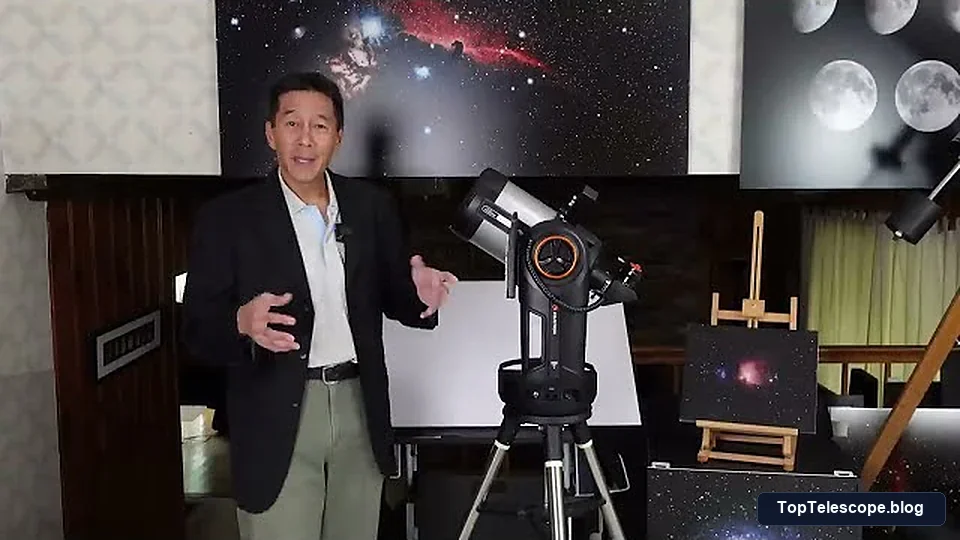
The computerized mount calculates your precise geographic position and local time automatically without manual intervention. This streamlined workflow reduces setup frustration during cold outdoor sessions.
Ergonomic handles molded into the base facilitate safe transport of the entire mount assembly. Every structural control point is positioned intuitively for comfortable tactile operation in total darkness.
Celestron's proprietary SkyAlign technology simplifies setup by letting users center any three bright celestial objects without prior polar alignment. Read our NexStar 8SE vs Evolution 8 verdict for detailed mount specifications.
The ergonomic hand controller features a dual-line liquid crystal display with adjustable red backlighting, preserving dark-adapted night vision while navigating the extensive 40,000-object database easily.
Cable management requires mindful routing around the fork arm to prevent snagging during full three-hundred-sixty-degree horizontal rotations, ensuring uninterrupted automated tracking throughout extended viewing sessions.
- SkyAlign requires three stars without naming them.
- Automated position calculation routines streamline field setup.
- Ergonomic base transport handles improve field portability.
Hand Controller Interface and Database
The NexStar+ hand controller features a backlit liquid crystal display for night-vision preservation. Navigating the forty-thousand-object database is straightforward thanks to well-organized categorical menus.
Firmware updates are accessible via computer connection to keep internal astronomical databases current. This ensures long-term usability as orbital elements and catalog parameters evolve.
- Backlit red LCD screen preserves dark adaptation.
- Forty-thousand-object internal database offers vast target choices.
Maintenance, Durability, and Field Longevity
Routine maintenance involves keeping the corrector plate clean from dust and dew residue. Users should apply specialized optical cleaning solutions sparingly using micro-fiber cloths to protect coatings.
Mechanical fasteners on the tripod and fork arm require periodic inspection to ensure stability. Tightening these components prevents unwanted wobbling during heavy wind gusts or manual focusing.
Storage in a temperature-controlled environment prevents moisture accumulation inside the optical tube assembly. Protective dust caps safeguard vulnerable internal optical surfaces between scheduled observing nights.
Routine maintenance demands minimal effort beyond cleaning the corrector plate sparingly with optical-grade micro-fiber cloths and approved fluid solutions to prevent scratching the delicate anti-reflective coatings.
Storing the optical tube assembly in a padded transport case protects internal alignment, shielding delicate mechanical components from environmental moisture and abrasive dust particles during frequent transit.
Battery longevity depends heavily on power source stability; utilizing an external lithium-ion power tank prevents voltage drops that can cause erratic motor behavior and erratic alignment failures.
- Clean corrector plate carefully using approved solutions.
- Inspect mechanical tripod fasteners for stability regularly.
- Store in dry environments to prevent internal moisture.
Final Buyer Verdict and System Recommendations
The system delivers an impressive balance of optical aperture, portability, and automated GoTo technology. Intermediate observers seeking reliable performance will find exceptional value in this versatile package.
While astrophotography tracking limits exist due to the alt-azimuth fork design, visual astronomers gain an outstanding instrument. Comprehensive warranty support provides additional peace of mind for buyers.
This optical system delivers an exceptional blend of portability, aperture size, and automated goto capability, making it an ideal choice for intermediate astronomers seeking versatile deep-sky performance.
Prospective buyers should invest in dedicated power accessories and dew shields to maximize operational reliability, ensuring years of productive stargazing enjoyment across diverse observational environments.
- Balances aperture size and physical portability effectively.
- Excellent instrument choice for dedicated visual astronomers.
- Backed by reliable manufacturer warranty support.
Frequently Asked Questions
Can this telescope track celestial objects automatically after alignment?
Yes, once the SkyAlign routine successfully identifies three bright reference points, the internal computer continually drives the altitude and azimuth servo motors to track celestial targets smoothly across the night sky.
This automated tracking capability eliminates constant manual adjustments during extended viewing sessions.
What power sources are compatible with the computerized mount?
The mount operates using eight standard AA batteries, an optional 12-volt AC adapter, or portable external lithium power tanks for field use. Utilizing an external power source prevents unexpected voltage drops during cold weather observing nights.
Reliable power supply is essential for uninterrupted GoTo tracking.
Is the optical tube suitable for astrophotography pursuits?
The Schmidt-Cassegrain design works well for lunar and planetary imaging using specialized planetary cameras attached to the rear visual back. However, deep-sky long-exposure astrophotography requires an equatorial wedge to eliminate field rotation artifacts caused by the alt-azimuth mount configuration.
Equatorial wedge integration overcomes rotational limits.
How difficult is the alignment process for absolute beginners?
SkyAlign makes the initial setup remarkably straightforward because you do not need to identify specific star names beforehand. Simply centering any three bright objects in the eyepiece allows the internal processor to calculate your exact location and alignment parameters rapidly.
Simplified alignment reduces beginner frustration.
What type of maintenance does the optical system require?
Routine care focuses primarily on keeping the exterior corrector plate free from dust, pollen, and moisture accumulation using approved optical cleaning wipes. Mechanical fasteners should also be checked periodically to ensure structural rigidity during transport and field setup.
Regular preventative maintenance preserves optimal optical performance.