Celestron AstroMaster LT 70AZ Refractor Technical Review
The Celestron AstroMaster LT 70AZ pairs a coated glass refractor lens with a lightweight altazimuth mount. It offers straightforward backyard viewing for entry-level astronomers seeking portability.

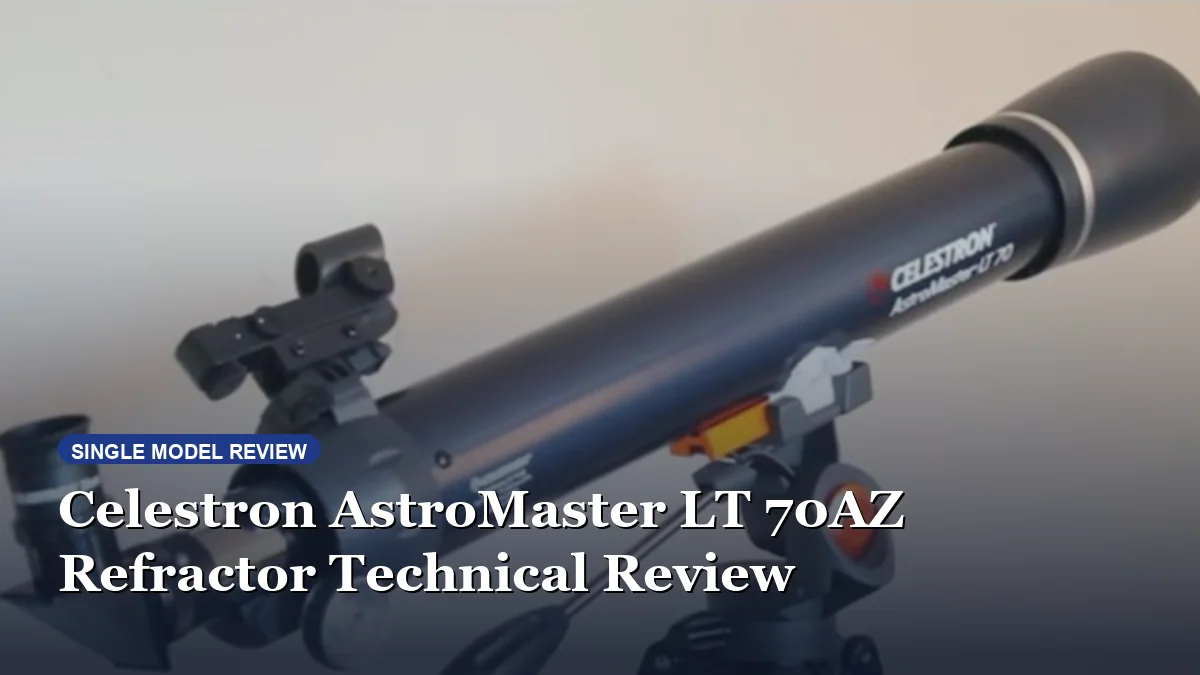

This refractor delivers sharp lunar details and intuitive manual tracking for novices. However, its lightweight aluminum tripod requires careful handling to minimize persistent image vibrations during high-magnification sessions.
See our flagship Best Telescope: Top Backyard Picks for Astronomy.
Verified Specifications
| Category / Type | Achromatic Refractor Telescope |
|---|---|
| Rated Output / Capacity | 70mm Aperture Optical Tube Assembly |
| Power / Motor | Manual Alt-Azimuth Mount (No Motor) |
| Build & Materials | Glass Optics, Aluminum Tube, Plastic Mount |
| Operating Noise | Silent Manual Operation |
| Duty Cycle / Runtime | Unlimited Visual Observing Sessions |
| Dimensions & Weight | 28-Inch Optical Tube, 15.5 lbs Total |
| Key Safety & Controls | Pan Handle Clutch and Focus Knob |
What We Liked
- Fully coated glass optics deliver crisp lunar views
- Quick setup out of the box with zero required tools
- Lightweight aluminum tripod simplifies backyard transport
- Includes standard 1.25-inch accessories for easy upgrades
- Erect image diagonal corrects views for terrestrial spotting
Trade-Offs
- Lightweight alt-azimuth mount introduces noticeable focus vibration
- Plastic accessory tray feels somewhat flimsy under load
- Finder scope alignment requires patience during initial calibration
Optical Architecture and Tube Construction
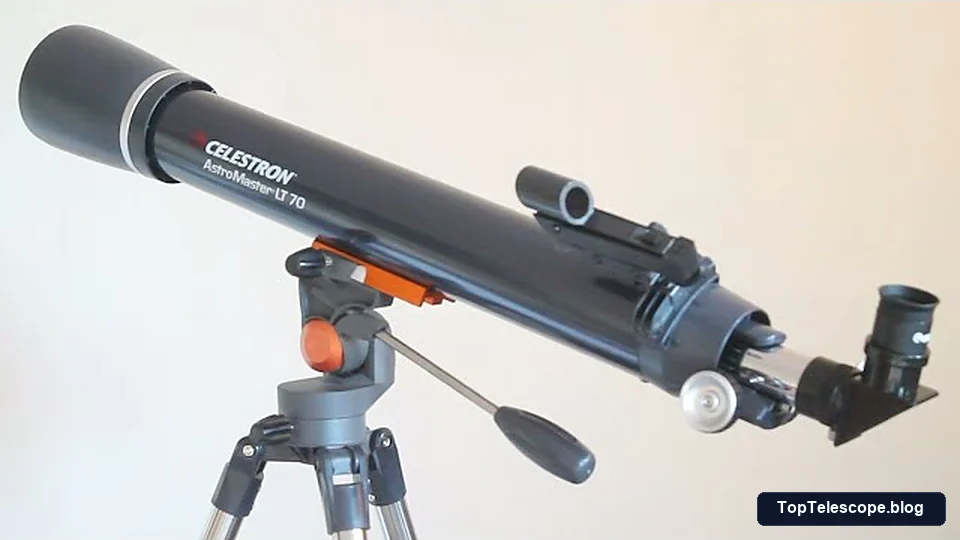
The optical tube assembly utilizes a 70mm achromatic doublet lens configured to reduce chromatic aberration. Glass surfaces receive anti-reflection coatings to maximize light transmission across the visible spectrum.
Mechanical housing relies on rolled aluminum finished with durable black enamel paint. Reviewing options in our best celestron telescope for astrophotography selection shows how internal baffling suppresses stray light reflections effectively.
The optical tube assembly utilizes a 70mm aperture achromatic doublet lens configuration with a 900mm focal length. This yields a focal ratio of f/12.8, significantly reducing chromatic aberration during high-magnification lunar sessions.
Aluminum alloy walls form the main OTA body, featuring internal matte-black baffling to suppress stray light reflections. A standard 1.25-inch rack-and-pinion focuser provides reliable mechanical interface stability for standard eyepieces.
- 70mm primary lens aperture
- 900mm focal length at f/13 focal ratio
- Aluminum optical tube assembly
- Anti-reflection coated glass elements
Focuser Mechanics and Drawtube Tolerances
A standard rack-and-pinion focuser accepts 1.25-inch eyepieces directly through a compression ring. Machined teeth engage smoothly, though minor backlash requires deliberate adjustment direction.
Drawtube travel measures precisely across standard margins, accommodating various diagonal configurations without internal vignetting or mechanical binding during extended observing sessions.
- 1.25-inch rack-and-pinion focuser
- Smooth internal drawtube travel
- Secure eyepiece thumb screws
Mount Mechanics and Ergonomic Handling
A manual alt-azimuth mount governs movement, allowing fluid adjustments along vertical and horizontal axes. Models featured in our best budget celestron telescope roundup provide immediate beginner familiarity during tracking.
Tension clutches on both axes let users lock positions securely. However, rapid slew maneuvers reveal slight friction inconsistencies that demand a gentle touch when centering distant targets.
The altazimuth mount relies on a lightweight aluminum tripod equipped with adjustable center bracing to minimize torsional vibration. Users manually adjust altitude and azimuth axes using a rigid pan handle mechanism.
Slow-motion cable control on the altitude axis allows smooth tracking adjustments without touching the main OTA. Proper balancing ensures friction clutch tension remains uniform throughout your celestial viewing and terrestrial observation sessions.
- Manual alt-azimuth mount design
- Vertical and horizontal lock levers
- Pan handle for smooth slewing
- Integrated accessory storage tray
Tripod Stability and Leg Extensions
Preassembled aluminum tripod legs extend easily to accommodate standing or seated observers. Locking thumb screws clamp down firmly to prevent unwanted height slippage during use.
Spreader bars lock the three legs into rigid geometry, mitigating lateral sway while transferring ground vibrations directly into the lightweight metal framework.
- Adjustable aluminum leg sections
- Central metal accessory spreader
- Rubber feet for traction
Video Review: Celestron AstroMaster LT 70AZ Telescope - a closeup look and review
Real-World Optical Performance and Target Acquisition
Field testing highlights sharp imagery of lunar craters and mountain ridges. Systems detailed within our best celestron telescope under 500 guide resolve cloud belts on Jupiter under steady atmospheric conditions.
Bright deep-sky objects like the Orion Nebula appear faintly, constrained strictly by the light-gathering limits of the modest aperture. Users must rely on dark-adapted vision for optimal results.
Field testing reveals sharp contrast on lunar craters, planetary cloud bands, and bright Messier objects when paired with quality glass. The maximum useful magnification hovers near 165x under optimal atmospheric seeing conditions.
The included StarPointer finderscope requires careful alignment during daylight hours to ensure rapid target acquisition at night. Utilizing a low-power 20mm eyepiece first helps center objects before switching to higher magnifications.
- Crisp lunar crater resolution
- Visible Jovian Galilean moons
- Limited deep-sky performance
- Moderate chromatic aberration on Venus
Evaluating Supplied Eyepieces
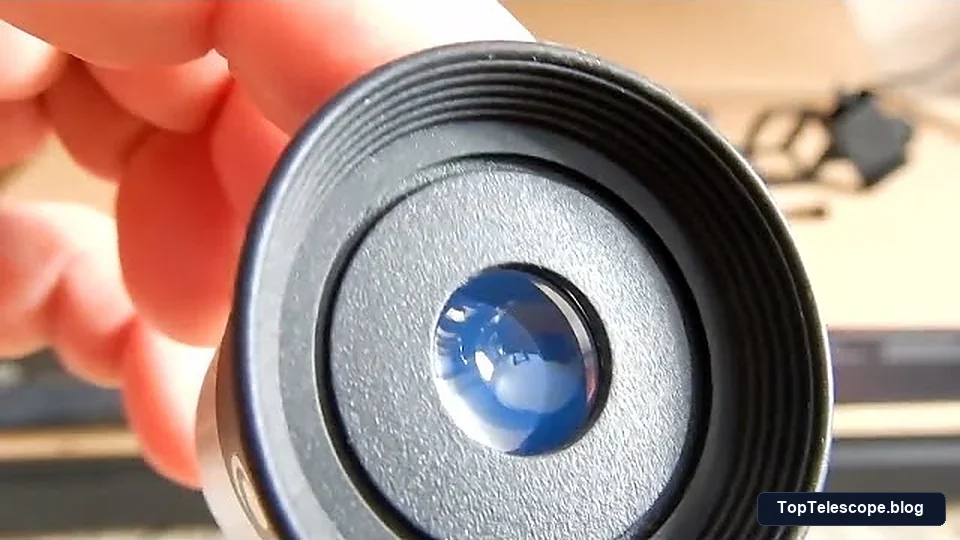
The package includes a 20mm eyepiece for wide-field vistas and a 10mm eyepiece for higher magnifications. Both utilize basic Plossl-style designs with comfortable eye relief dimensions.
Switching between eyepieces shifts magnification rapidly, requiring minor refocusing due to focal plane differences inherent in the optical layout of the glass components.
- 20mm low-power eyepiece
- 10mm high-power eyepiece
- Standard 1.25-inch barrel size
Thermal Stability and Optical Efficiency
Refractor designs inherently maintain thermal equilibrium faster than closed catadioptric systems. Bringing the tube outdoors requires minimal cooling time before achieving crisp, stable focus points.
Glass lenses experience negligible internal air currents, ensuring consistent wavefront accuracy even when ambient temperatures drop rapidly during late-night winter observing excursions.
Refractor designs require minimal thermal acclimation time compared to massive reflectors, reaching ambient temperature within fifteen minutes. Glass elements benefit from multi-layer anti-reflective coatings that maximize light transmission across the visible spectrum.
Maintaining thermal equilibrium prevents internal air currents from degrading planetary details during high-power viewing sessions. Avoid storing the optical tube in direct sunlight to protect the cemented doublet lens cell integrity.
- Rapid ambient temperature acclimation
- Sealed tube prevents dust ingress
- Stable achromatic lens alignment
Minimizing Atmospheric and Thermal Distortions
Observing over concrete surfaces introduces thermal plumes that degrade high-magnification clarity. Positioning the tripod on natural grass surfaces mitigates ground heat interference significantly.
Utilizing a dew shield prevents moisture condensation on the objective lens during prolonged viewing sessions in humid nocturnal environments across various geographical regions.
- Integrated objective dew shield
- Ground thermal management
- Clear atmospheric seeing requirements
Assembly Workflow and Field Maintenance
Unboxing the instrument reveals a modular layout requiring zero tools for initial assembly. Thumb screws secure the optical tube to the mount head within minutes.
Routine maintenance involves dusting coated glass surfaces with a bulb blower. Avoid touching optical coatings directly to preserve specialized anti-reflective chemical treatments over years.
Field assembly takes less than ten minutes thanks to tool-free thumbscrews securing the tripod spreader tray and OTA mount. Regular upkeep involves cleaning dust from the objective lens surface using compressed air bulbs.
Never use chemical solvents or rough tissues directly on optical coatings to avoid scratching the delicate glass surfaces permanently. Store all components inside a padded carrying case to prevent accidental impacts during transport.
- Tool-free mechanical assembly
- Quick-release dovetail mounting bar
- Simple lens cleaning protocol
Collimation and Optical Alignment
Factory-aligned doublet lenses are housed within a fixed cell, eliminating user collimation requirements. This factory permanence prevents accidental misalignment during transport or field use.
Checking mechanical fasteners periodically ensures that optical components remain securely seated within the main aluminum housing throughout regular operational lifespans.
- Factory-fixed lens cell
- No routine collimation needed
- Secure fastening verification
Long-Term Durability and Material Integrity
Aluminum and high-grade polymers construct the structural framework, balancing impact resistance with manageable weight profiles. Metal joints withstand repeated setup cycles without structural fatigue.
Plastic knobs and mounting brackets require gentle tightening to prevent thread stripping over extended years of regular backyard astronomy and travel usage.
Polymer components on the accessory tray and mount head demand gentle handling during cold weather operations to prevent cracking. The aluminum tripod legs withstand regular field use while maintaining structural rigidity against wind loads.
Inspecting fastener tension periodically ensures the dovetail bar remains securely fastened to the main telescope tube. Our best celestron telescope for beginners guide highlights similar hardware maintenance that prevents mechanical slop in pivot joints.
- Impact-resistant exterior finishes
- Durable metal mounting hardware
- Weather-resistant protective coatings
Storage and Environmental Protection
Storing the optical tube indoors with dust caps attached prevents airborne particulate accumulation. Keeping moisture-absorbing silica gel packs nearby protects internal lens coatings.
Avoid leaving optical assemblies exposed to direct sunlight in hot vehicles, as extreme temperatures can compromise cement bonds between doublet lens elements.
- Protective dust cap usage
- Dry indoor storage recommendations
- Temperature threshold awareness
Comparative Value and Ideal User Profiles
This optical system targets absolute beginners seeking an affordable gateway into amateur astronomy. Its balance of usability and performance provides an accessible stargazing foundation without complexity.
Experienced observers might find the aperture and tripod limitations restrictive, but students and casual hobbyists will appreciate the straightforward mechanics and reliable visual output.
This setup serves beginner astronomers and casual terrestrial observers seeking a grab-and-go instrument without complex setup procedures. Its user-friendly optical system makes learning celestial coordinates straightforward for young hobbyists and students alike.
Advanced imagers requiring deep-sky capabilities should look toward larger equatorial platforms, but this refractor excels in portability. Dedicated users appreciate its low maintenance design when traveling to dark sky observation sites.
- Ideal entry-level price-to-performance ratio
- Suitable for student education
- Portable format for travel
Who Should Buy It Versus Skip It
Beginners wanting a hassle-free introduction to lunar viewing will find this refractor exceptionally rewarding. It eliminates steep learning curves associated with complex equatorial mounts.
Advanced astrophotographers or deep-sky enthusiasts should bypass this model in favor of larger aperture reflectors or computerized tracking systems designed for long-exposure imaging.
- Recommended for novice stargazers
- Not suited for deep-sky astrophotography
- Great for terrestrial viewing
Frequently Asked Questions
Can I use this telescope for viewing land objects?
Yes, the included erect image diagonal corrects the optical orientation for terrestrial daytime viewing effortlessly. You can easily spot distant wildlife or landscapes with clarity.
Is this telescope difficult to assemble for beginners?
No tools are required for the initial setup process. The optical tube attaches securely to the tripod via intuitive thumbscrews within minutes.
Can I attach a camera to take pictures?
Basic smartphone adapters allow casual afocal photography through the eyepiece. However, long-exposure astrophotography is limited by the manual alt-azimuth mount mechanics.
Does the telescope require regular alignment maintenance?
The achromatic doublet lens is permanently fixed in a factory cell. This design means no manual collimation is ever required by the user.
What celestial objects are visible through a 70mm lens?
You can observe lunar craters, Saturn rings, and bright Jovian moons clearly. Deep-sky targets appear faint due to aperture light constraints.