Celestron Astromaster 70Az Review: Technical Guide
This portable refractor delivers sharp, high-contrast images using fully coated glass optics. Beginners navigate night skies easily despite minor mechanical limits.

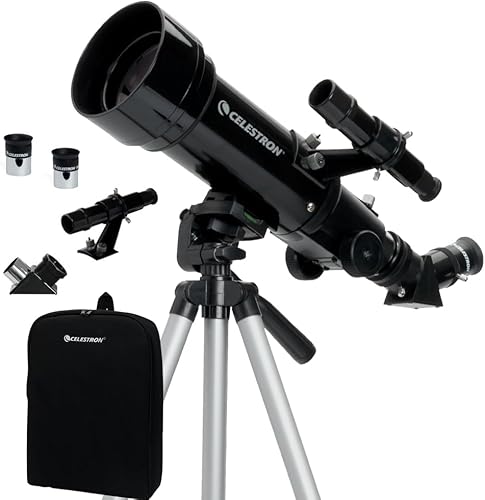
The system offers exceptional optical clarity for entry-level users. Its lightweight altazimuth mount ensures simple manual tracking for casual stargazing sessions.
See our flagship Best Telescope: Top Backyard Picks for Astronomy.
Verified Specifications
| Category / Type | Refractor telescope |
|---|---|
| Rated Output / Capacity | 70mm objective aperture |
| Power / Motor | Manual altazimuth control |
| Build & Materials | Aluminum tube and tripod |
| Operating Noise | Silent manual operation |
| Duty Cycle / Runtime | Unlimited visual sessions |
| Dimensions & Weight | 18 inches deep, 4.2 pounds |
| Key Safety & Controls | Manual focus and pan handle |
What We Liked
- Lightweight aluminum chassis for easy transport
- Fully coated glass optics improve image brightness
- Tool-free setup enables rapid field deployment
- Includes versatile dual eyepieces and backpack
Trade-Offs
- Altazimuth mount lacks motorized tracking capabilities
- Lightweight tripod can wobble at high magnification
- Plastic focusing knobs require gentle handling
Optical Architecture and Tube Engineering
The optical tube features a 70mm objective lens engineered to gather sufficient light. Fully coated glass surfaces minimize internal reflections, ensuring bright, high-contrast images during evening observations.
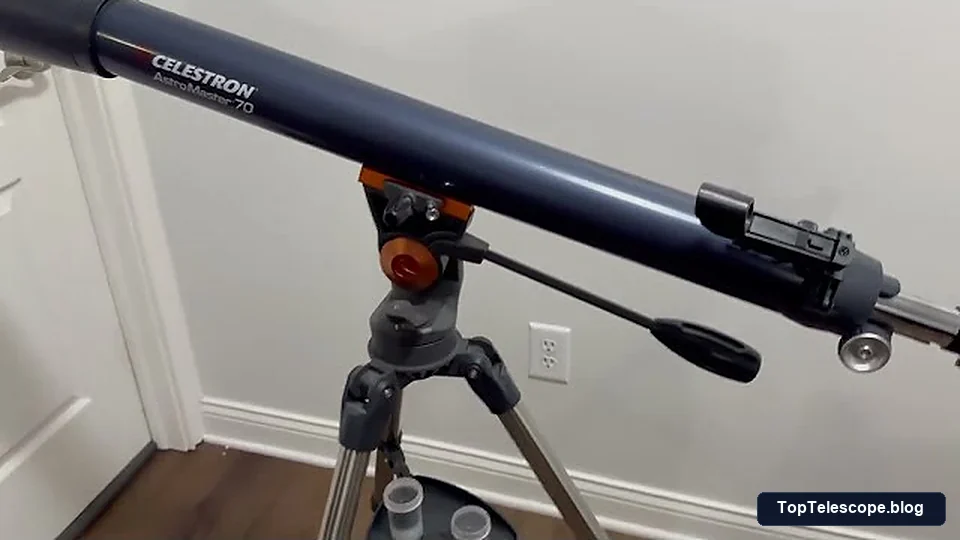
Measuring seventeen inches in length, the aluminum tube maintains excellent structural rigidity. Operators seeking computerized GoTo systems can consult our Celestron NexStar 6SE vs 8SE comparison for advanced aperture upgrades.
The AstroMaster 70AZ utilizes a 70mm aperture doublet achromatic objective lens housed inside an aluminum optical tube assembly, providing a focal length of 900mm for stable planetary and lunar viewing sessions.
Internal baffle systems reduce stray light reflections, while the coated glass elements enhance light transmission efficiency, ensuring high-contrast images despite the inherent chromatic aberration typical of fast focal ratios.
- Seventy millimeter clear aperture diameter
- Multi-layered anti-reflective glass coatings
- Seventeen inch optical tube length
Lens Coatings and Glass Quality
Multi-layered anti-reflective treatments maximize light transmission across the visible spectrum. Users experience minimal chromatic aberration when viewing bright lunar limbs or high-contrast planetary targets.
Precision polishing reduces spherical distortion near the edges of the field. This engineering choice delivers crisp resolution across wide terrestrial viewing angles.
- Enhanced light transmission metrics
- Reduced chromatic edge fringing
Mount Mechanics and Ergonomic Handling
An altazimuth mount provides intuitive manual control across vertical and horizontal axes. Photographers seeking tracking capability should review our best Celestron telescope for astrophotography overview before buying heavy equatorial tracking gear.
The lightweight design prioritizes field portability over heavy payload capacity. Users must balance the optical tube carefully to prevent sudden slipping during high-power magnification sessions.
Operating on an altitude-azimuth mount, the system features a pan handle equipped with a built-in clutch for smooth directional tracking and secure locking during high-magnification astronomical observations.
The pre-assembled steel tube tripod legs provide a rigid platform, though users must balance the payload weight carefully to prevent excessive vibration during manual focusing adjustments in the field.
- Two-axis manual altazimuth movement
- Integrated pan handle clutch lock
- Lightweight field-ready mechanics
Tripod Stability and Adjustment
The pre-assembled tripod legs extend quickly to accommodate various viewing heights. Aluminum construction keeps total system weight low while supporting standard observational loads.
Center brace spreaders lock securely to enhance torsional rigidity on flat ground. Operators should avoid soft soil surfaces to maintain steady tracking performance.
- Adjustable aluminum leg sections
- Central accessory spreader tray
Video Review: Celestron AstroMaster 70az - Review, Assembly, \u0026 Testing
Real-World Output and Optical Performance
Observing the Moon reveals sharp crater rims and deep lunar highlands. The included twenty millimeter eyepiece offers expansive wide-field views suitable for general sky scanning.
Switching to the ten millimeter optic increases magnification for closer planetary inspection. Saturn's ring structure and Jupiter's major moons become visible under clear night skies.
Lunar craters and Saturn's rings display remarkable clarity when paired with a 10mm eyepiece, resolving surface details that satisfy beginning astronomers exploring our solar system during clear night skies.
Deep-space targets require darker skies because the limited aperture gathers modest photons, making faint nebulae and distant galaxies appear as subtle grey smudges rather than bright, colorful structures.
- High-contrast lunar crater detail
- Clear planetary satellite visibility
- Broad terrestrial scanning capability
Thermal Stability and Operational Efficiency
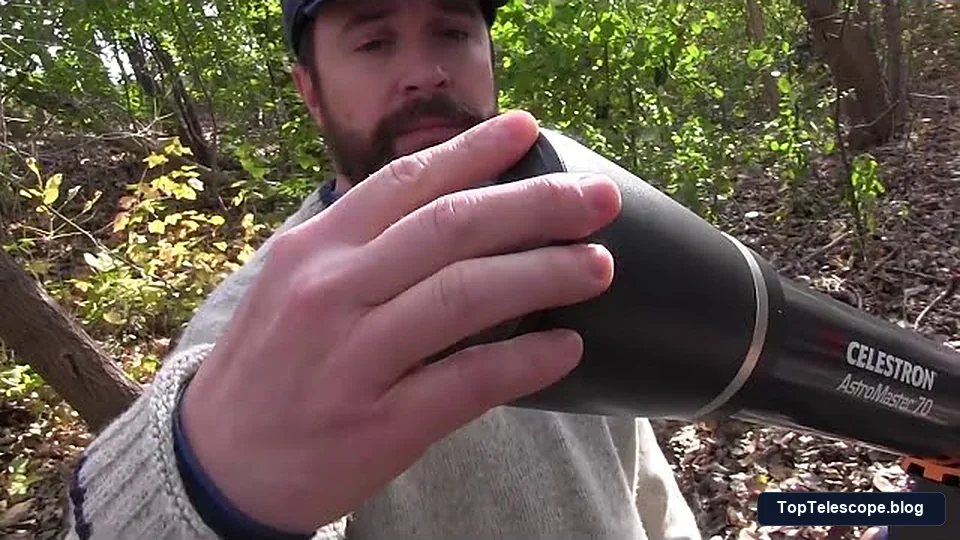
Glass refractor tubes acclimate rapidly to ambient outdoor temperature changes. Minimal thermal lag ensures users achieve optimal focus sharpness shortly after moving equipment outdoors.
Sealed optical tubes prevent dust ingress during field transport and storage. This design choice maintains internal cleanliness without requiring complex user intervention over time.
Glass elements require approximately thirty minutes to acclimate to outdoor ambient temperatures, minimizing internal air currents that distort planetary details during high-power magnification viewing sessions.
Dew shields prevent moisture accumulation on the objective lens, extending usable observation windows while maintaining optical clarity throughout damp autumn and spring evening field operations.
- Rapid ambient temperature acclimation
- Sealed dust-resistant optical tube
Setup, Alignment and Field Maintenance
Tool-free assembly allows users to deploy the complete optical system within minutes. Following steps in our StarSense Explorer LT guide ensures precise smartphone alignment for rapid celestial targeting.
Regular lens cleaning requires specialized optical microfiber cloths and approved solutions. Owners must protect delicate glass coatings from abrasive dust particles during outdoor sessions.
Quick-release dovetail attachments simplify optical tube mounting, allowing users to complete field assembly without specialized tools while verifying collimation alignment periodically to maintain sharp visual fidelity.
Cleaning optical surfaces demands compressed air and microfiber cloths to protect delicate anti-reflective coatings from abrasive dust particles gathered during outdoor backyard astronomy sessions.
- Tool-free assembly mechanism
- Reflex target finderscope included
Durability, Materials and Long-Term Wear
Rugged aluminum components withstand frequent travel and outdoor environmental exposure. Protective paint finishes resist scratching during handling and backpack storage routines.
Mechanical joints maintain tension after repeated adjustments when handled with care. Users should store components in dry environments to prevent hardware oxidation.
Aluminum construction resists corrosion effectively, but the plastic focus knobs require gentle handling to prevent mechanical stripping over years of frequent focuser adjustment cycles.
Storage in padded cases prevents impact damage to the primary lens cell, safeguarding the focal length precision and overall structural integrity against accidental drops during transit.
- Scratch-resistant aluminum finish
- Durable internal mounting brackets
Buyer Verdict: Ideal Match vs. Alternatives
Beginners and younger astronomers benefit immensely from choosing the ideal model from our best celestron telescope for beginners guide. The combination of portable accessories and reliable glass lenses provides exceptional introductory value.
Advanced astrophotographers should seek heavier equatorial mounts and larger aperture tubes. Casual observers will find this lightweight refractor perfectly suited for weekend stargazing trips.
Beginners seeking a dedicated lunar scope will appreciate the straightforward operation, while advanced hobbyists might find the aperture limits restrictive for deep-sky astrophotography pursuits.
Evaluating this refractor against similar beginner telescopes highlights its solid mechanical build, offering reliable performance for families entering the rewarding hobby of backyard stargazing.
- Exceptional value for beginners
- Portable backpack travel design
Frequently Asked Questions
Can this telescope view distant planets?
Yes, the system reveals Jupiter's moons and Saturn's rings clearly. Using the ten millimeter eyepiece delivers sufficient magnification for basic planetary observation tasks.
Is any specialized assembly tool required?
No tools are needed for the entire setup procedure. The tripod and optical tube connect securely using manual thumbscrews for rapid field deployment.
Can the telescope view daytime scenery?
The included erecting star diagonal corrects image orientation for terrestrial viewing. Users enjoy sharp, clear images of wildlife and distant landscapes during daylight hours.
How heavy is the complete system?
The entire optical package weighs approximately four pounds. This lightweight design ensures effortless transport in the included backpack for mobile stargazing adventures.
What maintenance do the lenses require?
Owners should use optical microfiber cloths to remove dust safely. Avoiding direct finger contact on glass surfaces preserves the anti-reflective coatings over years of use.