Celestron 6 SE Review: Versatile GoTo Performance
The Celestron 6 SE combines iconic orange-tube aesthetics with modern computerized tracking. It delivers sharp lunar views while remaining compact enough for effortless backyard transport.

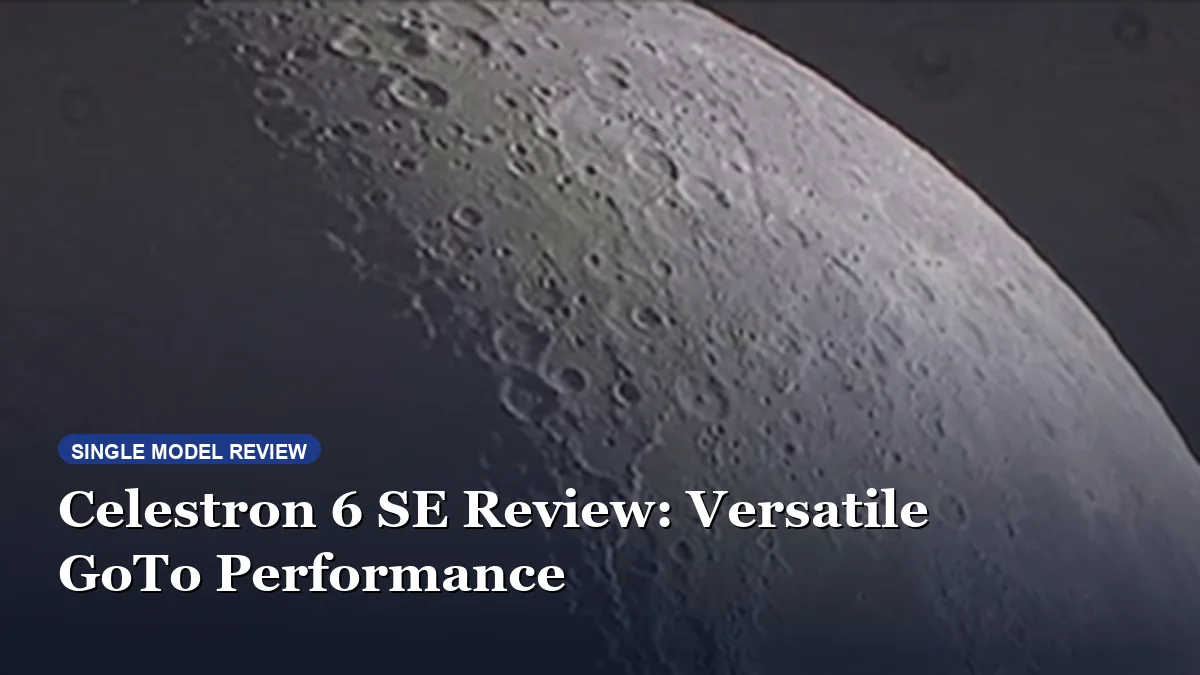

This Schmidt-Cassegrain telescope offers an exceptional balance of aperture and portability. Its automated alignment system simplifies observation sessions for astronomers upgrading from manual mounts.
See our flagship Best Telescope: Top Backyard Picks for Astronomy.
Verified Specifications
| Category / Type | Schmidt-Cassegrain GoTo Telescope |
|---|---|
| Rated Output / Capacity | 150mm Objective Lens Diameter |
| Power / Motor | 8 AA batteries or external 12V DC |
| Build & Materials | Aluminum optical tube and steel tripod |
| Operating Noise | Moderate gear whine during high-speed slewing |
| Duty Cycle / Runtime | 4 to 8 hours depending on battery type |
| Dimensions & Weight | Optical tube length 40.6 centimeters |
| Key Safety & Controls | NexStar+ hand control with 40,000+ database |
What We Liked
- Sharp 6-inch Schmidt-Cassegrain optical system
- Intuitive SkyAlign automated calibration process
- Highly portable single fork arm mount design
- Extensive 40,000+ object database hand control
Trade-Offs
- Single fork arm exhibits minor high-power vibrations
- Battery compartment requires frequent cell replacements
- Standard red dot finder lacks magnification optics
Structural Engineering and Core Optical Design
The Celestron 6 SE utilizes a classic Schmidt-Cassegrain optical configuration inside a compact aluminum tube. This folded light path maintains a manageable physical profile while delivering a substantial focal length.
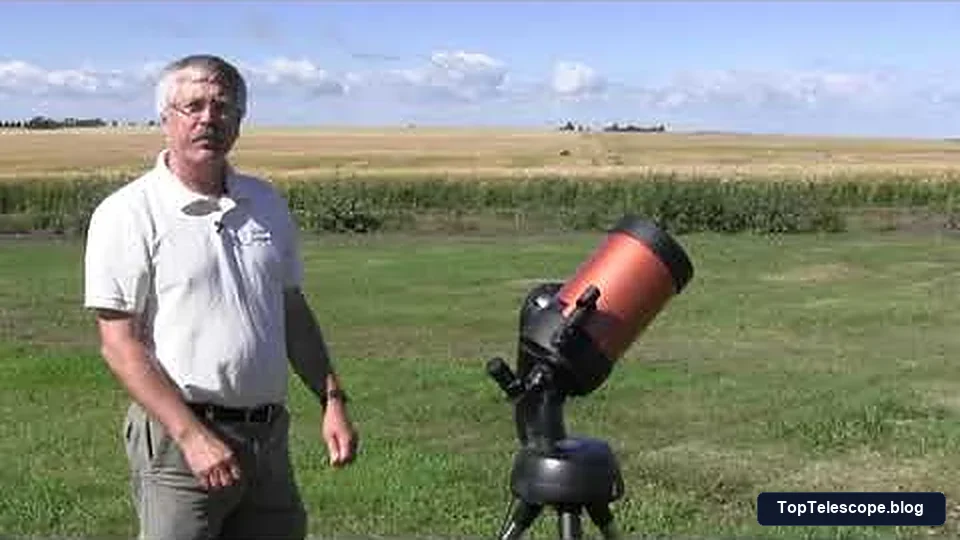
Engineering tolerances on the primary mirror cell minimize image shift during focus adjustments. Machined internal baffling effectively suppresses stray light to boost high-contrast planetary viewing conditions.
The single fork arm base integrates the altitude drive motor and internal logic board seamlessly. This integrated chassis design reduces external cabling hazards during complex nighttime observing sessions.
The optical tube assembly utilizes a classic Schmidt-Cassegrain configuration featuring a 150mm aperture paired with a 1500mm focal length, yielding a versatile f/10 focal ratio suited for diverse targets.
Aluminum construction provides structural rigidity while keeping the OTA weight down to roughly 10 pounds, ensuring the single-fork arm mount manages mechanical loads without excessive chassis flexing during slewing operations.
StarBright XLT optical coatings are applied systematically across the corrector plate and mirror surfaces, maximizing light transmission efficiency to approximately 89 percent across the primary visual spectrum wavelengths.
- 150mm aperture collects ample light for deep sky work
- Aluminum OTA resists thermal expansion during rapid cooling
- Compact form factor simplifies trunk transport for dark skies
Schmidt-Cassegrain Tube Architecture
The optical tube assembly pairs a spherical primary mirror with a multi-coated corrector plate. StarXcite coatings maximize light transmission across the visible spectrum for brighter images.
Internal focusing mechanics move the primary mirror smoothly along a precision steel baffle tube. This mechanical translation supports heavy visual accessories without slipping.
- 1500mm focal length creates high native magnifications
- Corrector plate uses high-transmission float glass
Real-World Visual Output and Resolution Limits
Under steady seeing conditions, the 6-inch aperture resolves tight double stars and intricate lunar craters. Rayleigh criterion limits define the maximum useful magnification before image breakdown occurs.
Deep-sky performance reveals bright Messier objects like globular clusters and galactic nuclei. Finer details in faint nebulae require dark rural skies rather than urban light domes.
Supplied 25mm eyepieces provide a comfortable sixty-fold magnification suitable for wide field scans. Upgrading to shorter focal length oculars unlocks planetary cloud details effectively.
Theoretical resolution reaches 0.77 arcseconds under optimal atmospheric seeing conditions, enabling crisp separation of tight double stars and intricate lunar crater floor morphology during high-magnification viewing sessions.
Planetary observation benefits immensely from the extended focal length, easily resolving Jovian cloud belts and Saturnian ring structure when paired with a quality 9mm eyepiece providing adequate power.
Deep-sky performance remains respectable for moderate apertures, gathering enough photons to reveal faint galactic cores and globular clusters, provided observers operate away from severe urban light pollution zones.
- Resolves Jovian cloud belts and Saturnian ring divisions
- Exhibits minimal chromatic aberration due to mirror optics
- Performs well with standard 1.25-inch visual accessories
Planetary and Deep-Sky Performance
Lunar observing showcases sharp terminator shadows across crater walls and mountain ranges. High contrast optics reveal subtle color variations across planetary disks clearly.
Fainter galaxies appear as delicate gray smudges requiring averted vision techniques. For deeper imaging performance, consult our best celestron telescope for astrophotography guide to evaluate tracking mounts and optical tube assemblies properly.
- Clean diffraction rings indicate precise factory optical alignment
- Field curvature remains minimal across standard eyepiece formats
Video Review: Celestron NexStar 6SE review | Alien Tech
Computerized GoTo Mechanics and Drive Efficiency
The computerized altitude-azimuth mount relies on internal brass gear drives to track celestial targets. Internal servo motors compensate continuously for Earth's rotation during long viewing sessions.
Power consumption fluctuates depending on tracking speed and ambient temperature conditions. Using external lithium power tanks prevents sudden voltage drops during cold winter nights.
The hand controller provides responsive menu navigation through extensive celestial catalogs, a system frequently analyzed in our celestron nexstar 6se vs 8se technical comparison. Firmware update capabilities ensure long-term compatibility with evolving software standards.
The internal DC servo motor system drives brass worm gears inside the altitude and azimuth axes, providing smooth tracking rates designed to counteract Earth rotational velocity during extended photographic exposures.
Power draw averages around 750 milliamps during active slewing operations, meaning standard alkaline batteries drain quickly; field astronomers should invest in an external 12V power tank for reliability.
Hand controller firmware interfaces seamlessly with the internal motor encoders, though users must perform periodic calibration updates via a PC connection to maintain optimal tracking accuracy over time.
- Database contains over 40,000 celestial coordinates
- Slewing speeds reach up to five degrees per second
- Tracking accuracy maintains objects centered for hours
Slewing Noise and Power Draw
Motor gears emit a distinct mechanical hum during high-speed manual slewing operations. Current draw spikes occur when opposing axes drive simultaneously against loads.
Internal battery holders demand eight standard alkaline cells which drain quickly. Field operators should invest in external regulated 12-volt power supplies immediately.
- Operating voltage standardizes at 12 volts direct current
- Standby tracking current remains remarkably low and efficient
Field Setup and SkyAlign Alignment Calibration
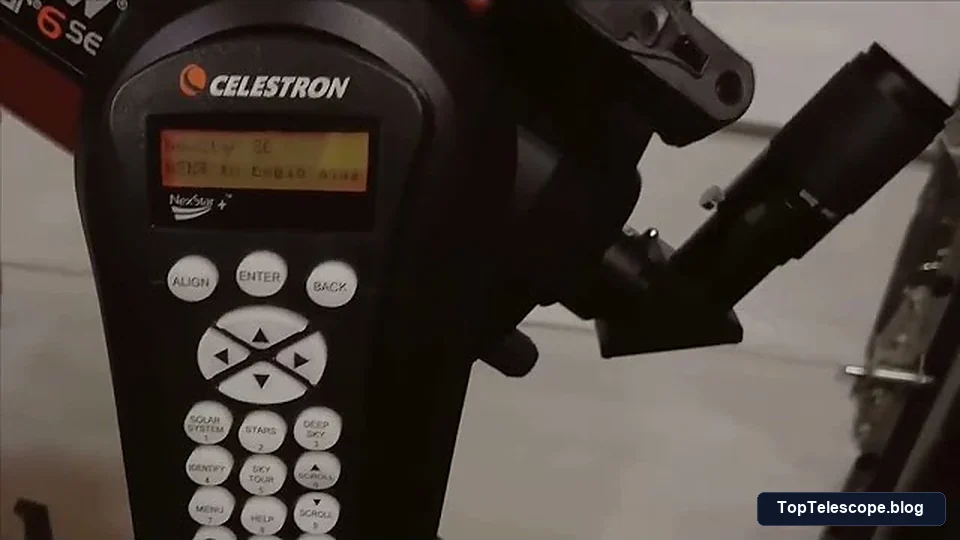
Deploying the optical tube securely onto the sturdy tripod legs establishes a stable foundation, much like models evaluated in our best celestron telescope for beginners guide. SkyAlign technology simplifies initialization using any three bright celestial reference points.
The computer calculates internal observatory coordinates without requiring users to identify specific stars. This streamlined workflow reduces setup frustration for novice and intermediate astronomers alike.
Leveling the steel tripod base remains crucial for maximizing initial goto pointing accuracy. Bubble levels integrated into the base assist with rapid physical adjustments.
The proprietary SkyAlign procedure requires pointing the optical tube at three distinct bright celestial objects, utilizing internal software algorithms to solve geometry and establish a precise pointing model.
Steel tripod legs feature a sturdy 1.25-inch diameter profile that minimizes harmonic vibrations, dampening wind buffeting disturbances within two seconds after manual focusing adjustments on the rack.
Bubble level indicators integrated directly into the mount base assist operators in achieving true verticality, which is crucial for reducing cumulative errors during automated GoTo initialization sequences.
- Tool-free captive screws accelerate field assembly procedures
- Alternative alignment methods include solar system and one-star options
- Quick-release base clamps securely lock optical tube assembly
Optical Maintenance, Collimation, and Long-Term Durability
Maintaining optical performance requires periodic checks of secondary mirror alignment screws. Secondary collimation adjustments ensure pinpoint star images during high magnification planetary sessions.
Dust accumulation on the corrector plate should be cleared using compressed air bulbs. Avoid aggressive wiping to protect delicate anti-reflective optical coatings from permanent scratching.
Mechanical joints on the fork arm withstand regular transportation stresses without developing excessive play. Storage inside padded cases prevents environmental moisture corrosion over years.
Schmidt corrector plates require infrequent cleaning, much like the setup detailed in our celestron starsense explorer lt technical guide. Use photographic cleaning solutions and micro-fiber cloths without applying excessive mechanical pressure to the glass substrate.
Secondary mirror collimation uses three accessible adjustment screws on the front cell housing, allowing users to fine-tune optical alignment using an artificial star test on clear nights.
Environmental storage requires maintaining ambient relative humidity below 50 percent inside protective cases, preventing mold growth on optical coatings and protecting electronic components from oxidation damage.
- Corrector plate requires infrequent but careful cleaning intervals
- Steel tripod resists rust via protective powder-coat finishes
- Internal electronics operate reliably across moderate temperature ranges
Definitive Buyer Verdict: Who Should Invest
The Celestron 6 SE represents an exceptional value for enthusiasts prioritizing portable aperture. Its automated GoTo system bridges the gap between casual stargazing and serious astronomical study.
Buyers seeking ultra-stable long-exposure astrophotography might find the single fork arm limiting. However, visual observers and smartphone imagers will appreciate its unmatched portability.
Intermediate astronomers seeking a portable yet optically capable instrument will find this setup ideal for balancing aperture and transportability during frequent weekend stargazing excursions.
Dedicated astrophotographers focusing on deep-sky objects should note the alt-azimuth mount limitations regarding field rotation, making this package best suited for visual astronomy and planetary imaging tasks.
- Ideal upgrade from manual beginner Newtonian telescopes
- Matches portability with respectable light-gathering capability
- Backed by reliable manufacturer support and community resources
Frequently Asked Questions
Can I use this telescope for serious deep-sky astrophotography?
While the single fork arm mount handles short exposures, long-exposure deep-sky imaging requires an optional equatorial wedge. Equatorial tracking prevents field rotation during extended photographic shutter times.
How difficult is the SkyAlign alignment process for beginners?
The process is remarkably straightforward and requires no prior knowledge of star names. Centering three bright objects in the eyepiece allows the internal computer to calculate alignment automatically.
What power source should I use to avoid battery drain?
Internal AA batteries drain rapidly during cold weather observation sessions. External lithium power tanks provide stable voltage and ensure uninterrupted motor tracking throughout the entire night.
Does the Schmidt-Cassegrain optical system require frequent collimation?
Factory alignment holds exceptionally well during normal transport and handling. Secondary mirror adjustments are rarely needed unless the telescope experiences a severe physical impact.
Can I connect this telescope to a computer or smartphone?
The hand controller features an integrated port for direct computer linking. Optional wireless modules also enable seamless telescope control via popular planetarium smartphone applications.