Celestron 130 Eq Technical Review
This computerized Newtonian reflector pairs a 130mm optical tube with automated tracking. It delivers bright planetary views despite minor battery draw concerns during extended cold-weather imaging sessions.

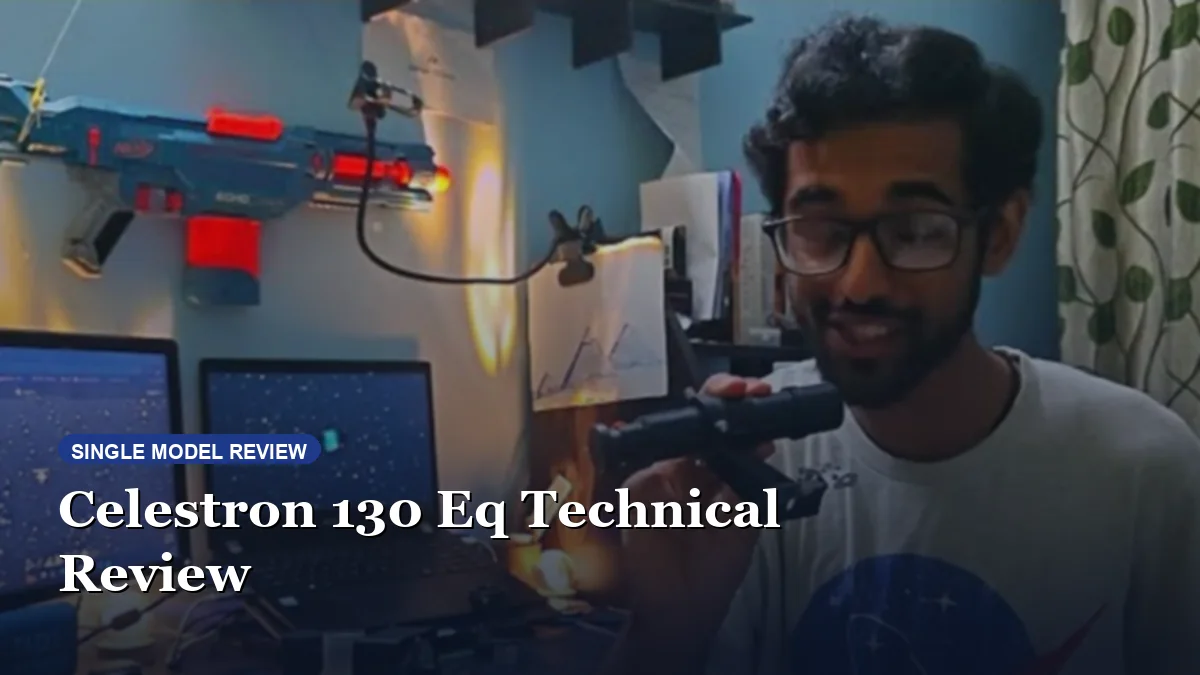
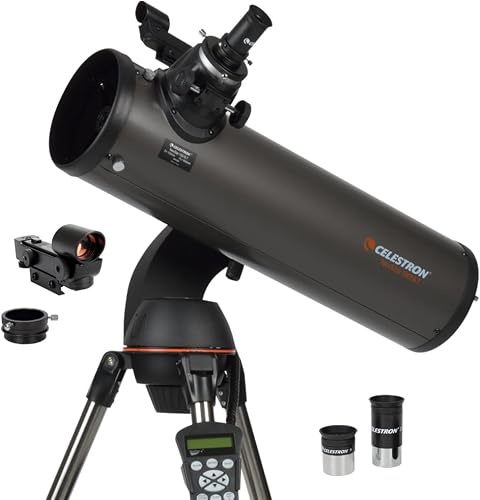
The Celestron 130 Eq offers reliable tracking precision and expansive deep-space views. Its motorized altazimuth mount simplifies navigation for beginners seeking fast setup times and clear lunar details.
See our flagship Best Telescope: Top Backyard Picks for Astronomy.
Verified Specifications
| Category / Type | Newtonian Reflector |
|---|---|
| Rated Output / Capacity | 130mm Objective Aperture |
| Power / Motor | 12 VDC (8x AA Batteries) |
| Build & Materials | Aluminum Optical Tube Assembly |
| Operating Noise | Moderate Servo Motor Hum |
| Duty Cycle / Runtime | 4-6 Hours on Fresh Alkaline Cells |
| Dimensions & Weight | 63.5 cm Optical Tube Length |
| Key Safety & Controls | StarPointer Red-Dot Finderscope |
What We Liked
- Large 130mm aperture gathers exceptional light for deep-space nebulae.
- Computerized GoTo hand control database features over 4,000 celestial objects.
- Lightweight aluminum tube design ensures hassle-free field transport.
- Included StarPointer red-dot finderscope accelerates alignment procedures.
Trade-Offs
- Internal servo motors generate noticeable tracking noise under quiet skies.
- Plastic-heavy altazimuth mount base exhibits mild vibration during manual focusing.
- High power draw demands external AC adapters or rechargeable battery packs.
Optical Architecture and Light Gathering Power
The 130mm parabolic primary mirror collects substantial light, allowing users to resolve faint deep-sky targets. Its 650mm focal length balances wide-field scanning with manageable magnification thresholds for everyday visual astronomy applications.
Aluminum coatings maximize reflectivity across the visible spectrum. Observing lunar craters and bright Messier objects becomes easier when following our starsense explorer setup guide for smartphone alignment.
- Aperture diameter measures 130 millimeters for enhanced light collection.
- Focal length is fixed at 650mm for versatile medium-power viewing.
- Parabolic mirror design minimizes spherical aberration across the field.
Secondary Obstruction and Contrast
The secondary mirror spider vane causes minimal diffraction spikes on exceptionally bright stars. Proper collimation alignment preserves sharp contrast during high-magnification planetary observation sessions.
Users must periodically check mirror alignment using standard collimation tools. Maintaining this calibration guarantees optimal performance when targeting subtle details on Jupiter and Saturn.
- Spider vanes maintain rigid structural alignment under field stresses.
- Collation screws allow straightforward user adjustments in minutes.
Computerized Tracking and Alignment Mechanics
The integrated computerized hand control provides access to over 4000 celestial objects stored within its internal database. SkyAlign technology permits rapid alignment using any three bright stars in the night sky.
Internal servo motors drive both axes smoothly while tracking celestial motion across the rotating Earth. This automated system keeps target objects centered within the eyepiece during long observation sessions.
- Hand controller features intuitive menus and backlit display screens.
- Automatic tracking compensates continuously for Earths rotational axis.
- Multiple alignment routines accommodate different user skill levels.
GoTo Accuracy and Pointing Precision
Precision encoders ensure the telescope slews accurately toward selected coordinates within the night sky. First-time buyers often compare models by reading our best celestron telescope for beginners guide to ensure optimal optical performance.
Backlash compensation settings refine gear engagement to reduce tracking lag during directional changes. This feature enhances overall pointing reliability across varied sky quadrants.
- Slewing speeds adjustable across multiple distinct gear tiers.
- Internal database easily updated via computer interface ports.
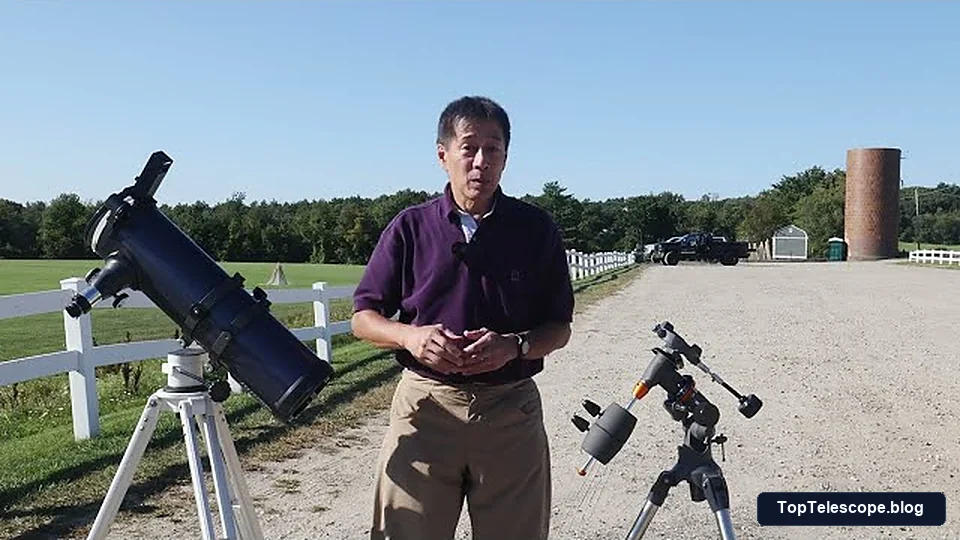
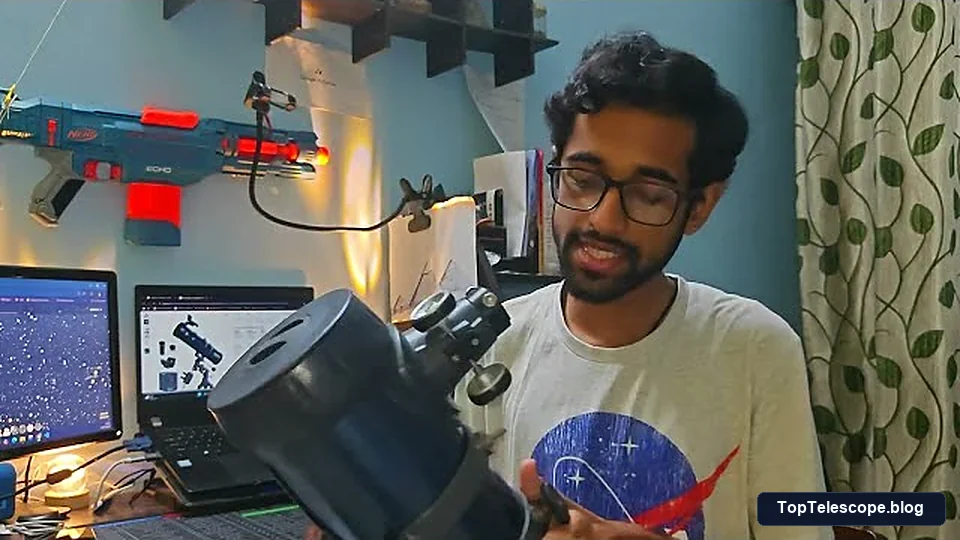
Video Review: Celestron AstroMaster 130 Review - Not Recommended, But...
Mechanical Build Quality and Ergonomics
Constructed primarily from lightweight aluminum, the optical tube assembly weighs under seven kilograms for effortless transport. The compact form factor fits comfortably into standard vehicle trunks for weekend dark-sky excursions.
The altazimuth mount utilizes sturdy metal castings complemented by durable engineering plastics. Ergonomic locking levers allow secure manual adjustments without requiring excessive physical force from operators.
- Aluminum tube resists thermal expansion during rapid temperature drops.
- Carrying handle integrated directly into the mount chassis.
- Accessory tray provides stable storage for eyepieces and filters.
Tripod Stability and Vibration Dampening
Adjustable steel tripod legs provide a stable foundation on uneven outdoor terrain. Spiked foot attachments anchor the structure firmly into soil or grass surfaces during windy conditions.
Dampening times remain brief after focusing adjustments, minimizing annoying image vibrations. Users should avoid extending center columns fully to maintain maximum structural rigidity.
- Steel leg bracing enhances overall torsional rigidity.
- Quick-clamp levers secure leg height adjustments rapidly.
Field Performance and Optical Resolution
Theoretical resolution limits approach 0.89 arc seconds under pristine atmospheric seeing conditions. This optical capacity resolves tight binary star systems and intricate lunar surface features with striking clarity.
Included 20mm and 9mm eyepieces offer versatile starting magnifications for general planetary scanning. Upgrading to higher-grade glass oculars unlocks even sharper visual details across deep-sky nebulae.
- Dawes limit calculated at roughly 0.89 arc seconds.
- Maximum useful magnification reaches approximately 306 power.
- Field of view remains wide enough for sprawling star clusters.
Planetary and Deep-Sky Capabilities
Lunar craters display razor-sharp shadow transitions along the terminator line during waxing phases. Jupiter reveals prominent equatorial cloud belts alongside its four brightest Galilean moons clearly.
Fainter deep-sky targets like the Orion Nebula show mottled gas structures under dark rural skies. Light pollution filters significantly improve contrast when observing galaxies near urban environments.
- Resolves Saturn ring division structures on steady nights.
- Bright Messier objects appear distinct against dark backgrounds.
Power Management and Thermal Dynamics
Internal electronics draw power from eight standard AA batteries housed within the mount base. Because active slewing drains alkaline cells quickly, users frequently adopt external 12V power tanks for extended sessions.
Thermal equilibrium requires thirty minutes of acclimation when moving the telescope outdoors. Astrophotographers seeking long-exposure stability frequently consult our top astrophotography telescope picks before upgrading their gear setups.
- Battery compartment securely sealed against morning dew accumulation.
- External power jack prevents unexpected mid-session shutdowns.
- Thermal stabilization reduces internal tube currents effectively.
Cold Weather Operational Efficiency
Alkaline batteries experience reduced lifespan during freezing winter astronomy observation nights. Lithium or rechargeable NiMH cells maintain voltage stability much better in sub-zero ambient temperatures.
Grease viscosity inside mechanical gearboxes increases slightly during extreme cold weather snaps. Allowing motors to warm up prevents unnecessary strain on internal drive mechanisms.
- Battery drain accelerates rapidly below freezing thresholds.
- External cable management prevents snagging during movement.
Setup, Alignment, and Maintenance Protocols
Initial assembly requires no specialized tools thanks to captive thumbscrews throughout the mount. The StarPointer red-dot finderscope aligns quickly with the main optical tube for fast calibration.
Routine maintenance involves keeping optical surfaces free from dust using compressed air. Mirror cleaning should occur infrequently to protect specialized aluminum and silicon dioxide optical coatings.
- Tool-free assembly reduces field setup frustration significantly.
- Dust caps protect optics during daytime storage intervals.
- Finderscope alignment screws operate with smooth precision.
Long-Term Durability and Storage
Storing the optical tube in a padded bag prevents accidental chassis denting. Keeping electronic components in dry environments eliminates internal corrosion risks during humid summer months.
Regular inspection of mechanical fasteners ensures nothing loosens during transport over rough roads. Proper care guarantees years of dependable astronomical exploration performance for users.
- Padded transport cases protect delicate alignment calibration.
- Desiccant packs control moisture inside storage containers.
Comprehensive Technical Verdict and Recommendations
The Celestron 130 Eq bridges the gap between portability and computerized automation. Users often review our nexstar 6se vs 8se comparison when deciding between manual Newtonian systems and advanced GoTo mounts.
While power consumption and mount rigidity present minor trade-offs, its overall value remains exceptional. This instrument delivers rewarding views of our solar system and beyond for dedicated hobbyists.
- Balances automated tracking with accessible physical dimensions.
- Offers strong educational value for beginner and intermediate users.
- Requires minor accessory upgrades for optimal long-term satisfaction.
Ideal Buyer Profile and Final Thoughts
Amateur astronomers seeking a portable GoTo telescope will find this model exceptionally rewarding. It suits users who prioritize rapid deployment and automated object location over heavy observatory gear.
Investing in supplemental power supplies ensures uninterrupted observing sessions throughout long nights. Ultimately, this Newtonian reflector provides an engaging gateway into deep-sky exploration.
- Perfect for mobile backyard astronomers and campers alike.
- Delivers impressive aperture value for budget-conscious buyers.
Frequently Asked Questions
How does the computerized GoTo mount locate celestial objects?
The internal computer uses alignment star data to calculate precise motor coordinates. This automated system slews the optical tube directly to your target and tracks its celestial motion continuously across the night sky.
What kind of power source is required for the telescope motors?
The mount operates on eight standard AA batteries housed internally. For longer observation sessions, we strongly recommend using an external 12-volt rechargeable power tank to prevent sudden shutdowns.
Can this telescope be used for astrophotography work?
It performs well for casual lunar and bright planetary snapshot photography using a smartphone adapter. However, the altazimuth mount causes field rotation during long exposures, limiting deep-sky imaging success.
How often do the optical mirrors require collimation alignment?
Collimation checks should happen before every major observing session, especially after vehicle transport. Maintaining proper mirror alignment guarantees maximum optical resolution when viewing distant planets and faint nebulae.
What objects are visible through the 130mm aperture mirror?
You can easily view lunar craters, Jupiter cloud bands, and Saturn rings in brilliant detail. Under dark rural skies, it also resolves bright deep-sky objects like star clusters and glowing nebulae.