Celestron NexStar 4SE Review: Compact GoTo Optics
The Celestron NexStar 4SE pairs a signature orange optical tube with automated GoTo tracking. It delivers sharp lunar views while remaining compact for travel.

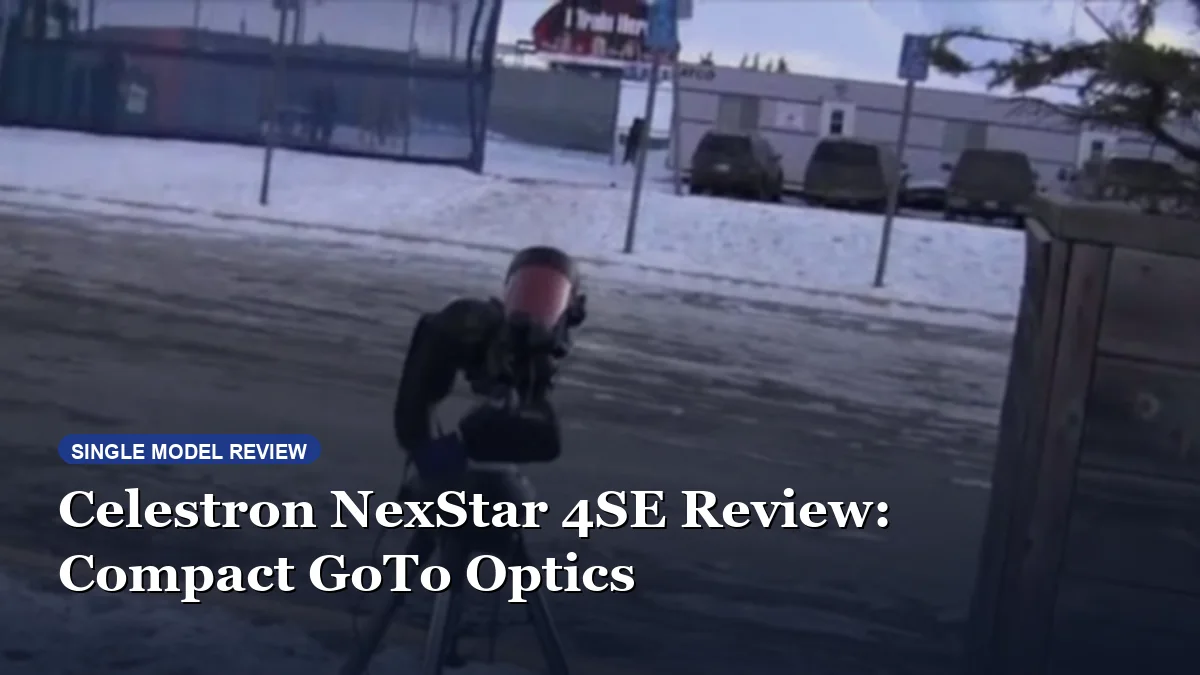
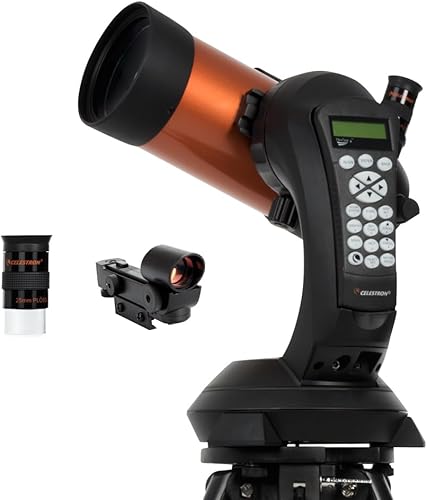
This compact Maksutov-Cassegrain system excels at planetary observation and quick setups. SkyAlign technology makes alignment effortless for beginners entering computerized astronomy.
Explore related alternatives in our Best Celestron Telescope For Beginners.
Verified Specifications
| Category / Type | Maksutov-Cassegrain GoTo Telescope |
|---|---|
| Rated Output / Capacity | 102mm Objective Lens Aperture |
| Power / Motor | 8 AA batteries or 12V DC Adapter |
| Build & Materials | Aluminum Optical Tube Assembly |
| Operating Noise | Moderate gear whir during slewing |
| Duty Cycle / Runtime | Varies by battery capacity (approx. 4-6 hrs) |
| Dimensions & Weight | 34.3 cm optical tube length, portable |
| Key Safety & Controls | NexStar+ Hand Control database (40,000+ objects) |
What We Liked
- Sharp, high-contrast planetary and lunar views
- User-friendly SkyAlign automated setup procedure
- Compact and highly portable optical tube design
- Integrated wedge for basic astrophotography
Trade-Offs
- Modest aperture limits faint deep-sky targets
- Closed optical tube requires thermal stabilization time
- Motorized slewing consumes battery power rapidly
Optical Architecture and Build Quality
The Celestron NexStar 4SE features a 4-inch Maksutov-Cassegrain optical design. For larger aperture insights, consult our NexStar 6SE vs 8SE comparison before choosing a portable scope.
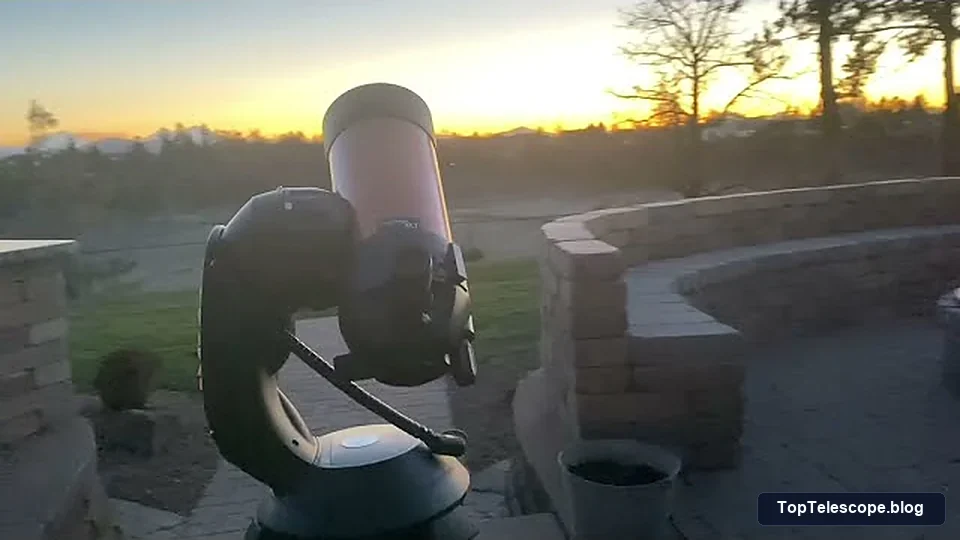
Multi-layer coatings on the corrector lens maximize light transmission. Users will notice enhanced contrast when observing subtle cloud belts on Jupiter and lunar craters under varying atmospheric seeing conditions.
The Maksutov-Cassegrain optical design utilizes a 102mm aperture paired with a 1325mm focal length. This configuration delivers high-contrast planetary views while maintaining a compact optical tube assembly for easy field transport.
StarBright XLT coatings maximize light transmission across the glass surfaces. Internal baffling suppresses stray light reflections, ensuring dark backgrounds when observing faint deep-sky objects under moderately light-polluted suburban night skies.
- 102mm aperture diameter
- 1325mm focal length optics
- Aluminum optical tube construction
Internal Mechanics and Materials
The internal baffling system suppresses stray light effectively. Durable metal components secure the primary mirror, minimizing shift and maintaining collimation during transport to remote dark-sky observing sites.
- Precision internal baffling
- Stable primary mirror mounting
Real-World Visual Performance and Output
Planetary observation stands out as a primary strength for this focal design. For larger aperture comparisons, check out our CPC 800 vs NexStar 8SE technical review to evaluate performance differences.
Deep-sky targets present a different challenge due to the modest aperture limit. Brighter Messier objects like the Orion Nebula remain visible, but faint galaxies require genuinely dark skies.
Planetary observers will appreciate the crisp diffraction patterns visible on Jupiter and Saturn. The f/13 focal ratio yields high magnification easily, though users must manage narrower fields of view during manual star-hopping sessions.
Lunar craters display sharp territorial demarcations along the terminator line. Resolving tight double stars requires steady atmospheric seeing conditions, as the small aperture concentrates fine details cleanly when thermal equilibrium is reached.
- Sharp lunar terminator views
- Low light grasp for faint nebulae
- Zero chromatic aberration
Eyepiece Pairing and Magnification Limits
The included 25mm eyepiece provides a useful starting magnification. Upgrading to higher-power eyepieces allows observers to push the system toward its theoretical magnification limit safely.
- Standard 25mm eyepiece included
- Supports high-power planetary eyepieces
Video Review: Celestron NexStar 4SE: The Best Beginner Telescope?
Mount Mechanics, Tracking Efficiency, and Thermal Behavior
A computerized single fork arm drives the altitude-azimuth movement smoothly. To evaluate heavier mount options, read our Celestron NexStar 8SE vs Evolution 8 verdict for stability details.
Thermal equilibrium requires careful attention with closed-tube Maksutov designs. Allowing thirty minutes for internal air temperatures to stabilize prevents thermal currents from blurring high-magnification planetary images.
The single-fork arm altazimuth mount utilizes a DC servo motor drive. SkyAlign technology simplifies initialization by letting users center any three bright celestial objects without requiring prior knowledge of constellation names.
Maksutov systems trap internal heat due to the thick corrector lens. Allowing forty-five minutes of thermal acclimatization prevents internal air currents from degrading high-magnification planetary images during early evening viewing sessions.
- 40,000+ object database
- Single fork arm mount design
- Thermal stabilization required
Motor Noise and Power Draw
Slew operations produce a moderate mechanical whir typical of gear-driven mounts. Power consumption increases during prolonged tracking, making external power tanks essential for long observation sessions.
- Audible gear-driven slewing
- High tracking power draw
Setup Procedures and Field Usability
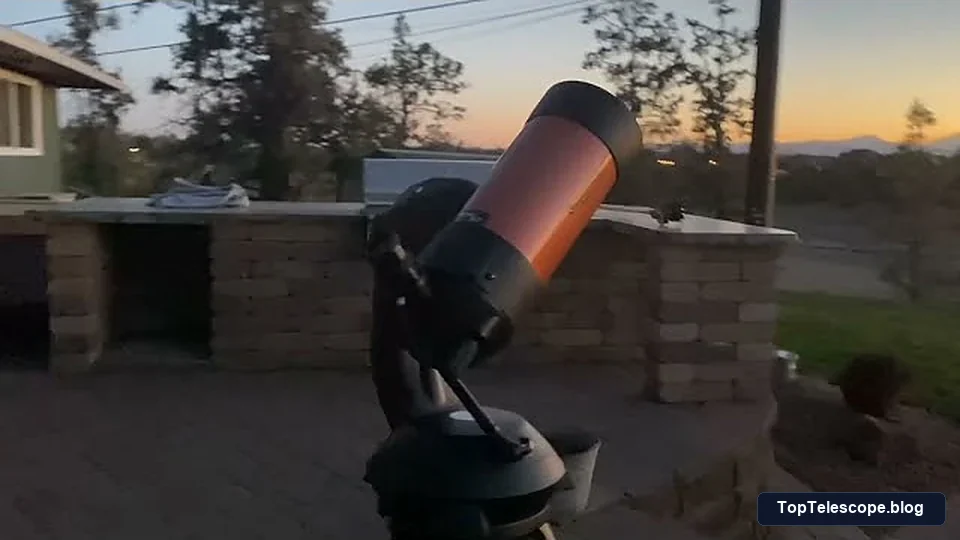
Field deployment remains remarkably fast thanks to the integrated tripod design. Transporting the lightweight assembly requires minimal physical effort, accommodating mobile astronomers who travel frequently.
Aligning the system involves the proprietary SkyAlign routine successfully. Centering three bright celestial objects allows the internal computer to calculate exact geographic coordinates without manual star chart referencing.
Transporting the lightweight assembly requires minimal physical effort from the operator. The steel tripod provides adequate rigidity, though dampening vibration pads enhance stability on wooden decks or breezy observation hillsides.
Powering the computerized hand controller demands reliable external sources to prevent tracking dropouts. Utilizing an external rechargeable power tank avoids erratic motor behavior caused by dropping alkaline battery voltage levels.
- SkyAlign three-star procedure
- Lightweight steel tripod legs
- Integrated accessory tray
Ergonomics and Cable Management
Careful cable routing prevents snags during full 360-degree slew rotations. The hand control bracket attaches securely to the tripod leg for convenient access during dark observing sessions.
- Secure hand control holder
- Tangle-free cable pathways
Astrophotography Potential and Wedge Integration
Entry-level astrophotography benefits from the built-in equatorial wedge feature. Tilting the base matches local latitude to reduce field rotation during long-exposure imaging of the lunar surface.
Planetary imaging with a dedicated CMOS camera yields impressive results. Short exposures freeze atmospheric turbulence, capturing fine planetary details that visual observation might occasionally miss.
Lunar and planetary imaging yields successful results using dedicated CMOS cameras. The slow focal ratio requires longer exposure times, making deep-sky imaging challenging without adding an equatorial wedge for polar tracking.
Attaching an optional wedge converts the altazimuth base into an equatorial platform. This physical modification eliminates field rotation artifacts during multi-minute exposures of bright nebulae and extended star clusters.
- Built-in equatorial wedge
- CMOS planetary camera compatibility
- Reduced field rotation capability
Tracking Limitations for Deep-Sky Imaging
Alt-azimuth tracking introduces field rotation during prolonged deep-sky exposures. Serious astrophotographers will eventually require an equatorial wedge or separate equatorial mount for extended exposure tracking.
- Alt-azimuth field rotation limits
- Requires equatorial tracking upgrades
Maintenance, Power Management, and Final Verdict
Routine maintenance protects optical coatings from dust and environmental moisture accumulation. Before upgrading, read our NexStar 4SE vs 5SE optical duel to compare aperture sizes and mounting capabilities.
Battery longevity depends heavily on ambient operational temperatures in the field. Using an optional AC adapter or external power tank prevents unexpected shutdown during critical GoTo alignments.
Routine maintenance involves protecting the corrector plate from dust accumulation using a secure dust cover. Never touch optical glass surfaces directly; instead, employ clean compressed air for removing loose particulate debris safely.
This instrument serves urban astronomers seeking portable planetary performance. The robust feature set balances optical excellence with computerized convenience, satisfying hobbyists who prioritize grab-and-go usability over massive aperture gathering power.
- Regular corrector plate dusting
- External power tank recommended
- Two-year manufacturer warranty
Comprehensive Verdict for Buyers
This telescope delivers exceptional portability and sharp optics for dedicated lunar observers. Computerized GoTo automation simplifies navigation, making it a reliable companion for mobile hobbyists.
- Exceptional optical portability
- Reliable GoTo navigation system
Frequently Asked Questions
Can this telescope run on standard household batteries?
Yes, the internal battery compartment accepts eight standard alkaline AA batteries to facilitate completely cord-free field operations without managing tangled power cables across the ground.
Because motorized GoTo slewing drains standard batteries rapidly during cold weather, utilizing an external rechargeable power tank remains strongly advised for maintaining reliable voltage stability throughout long nights.
How difficult is the SkyAlign procedure for total beginners?
The proprietary SkyAlign system makes initial alignment remarkably straightforward for absolute beginners with zero prior astronomical experience or star chart knowledge.
Users simply center any three bright celestial objects in the eyepiece without identifying individual stars, allowing the internal computer to calculate your exact geographic position within just a few minutes.
Is the telescope suitable for serious deep-sky astrophotography?
While the built-in wedge helps reduce field rotation for basic lunar and planetary imaging, deep-sky astrophotography presents significant tracking challenges for advanced users.
The alt-azimuth mount design and modest four-inch aperture limit long-exposure capability, making this instrument primarily optimized for visual astronomy and introductory planetary photography rather than faint distant nebulae.
What maintenance is required to protect the optical tube?
Maintaining the telescope requires keeping dust caps firmly attached whenever the instrument is not actively observing the night sky to prevent particulate accumulation.
Users should avoid touching the glass corrector plate directly and instead rely on clean compressed air for safely removing loose debris from optical surfaces during routine seasonal maintenance routines.
Can I upgrade the eyepieces and accessories later?
The standard visual back accommodates standard 1.25-inch eyepieces, specialized Barlow lenses, and various camera adapters available from multiple optical manufacturers.
Owners can easily expand their accessory collection over time to achieve higher magnifications or wider fields of view as their observational skills and astronomical interests naturally develop further in the field.