Astromaster 70Az Telescope Review: Optical Analysis
This budget refractor combines coated glass with a simple altazimuth mount. It delivers sharp lunar views despite minor plastic components.

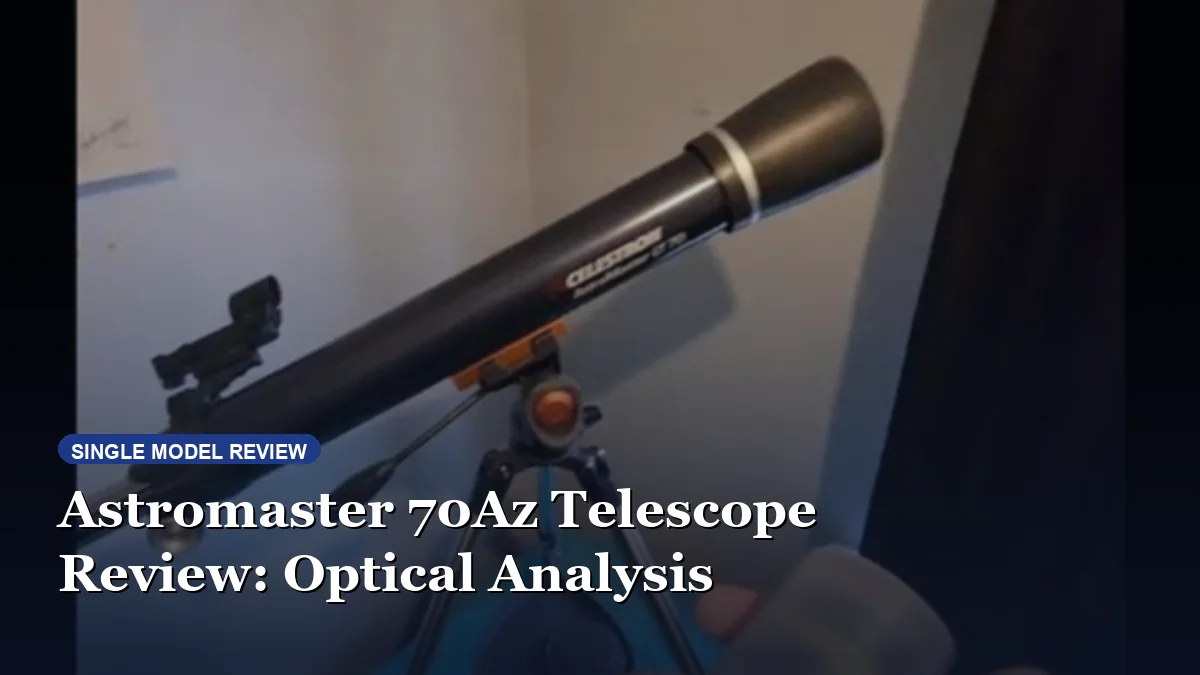
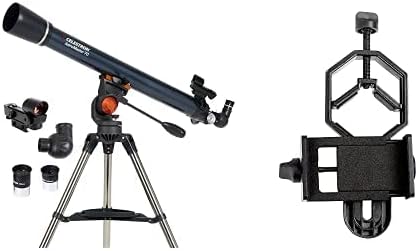
The optical tube assembly provides exceptional clarity for entry-level stargazers. Fully coated glass ensures bright images while maintaining overall system portability.
See our flagship Best Telescope: Top Backyard Picks for Astronomy.
Verified Specifications
| Category / Type | Achromatic Refractor Telescope |
|---|---|
| Rated Output / Capacity | 70mm Objective Lens Diameter |
| Power / Motor | Manual Altazimuth Operation |
| Build & Materials | Aluminum Optical Tube and Plastics |
| Operating Noise | Silent Mechanical Adjustment |
| Duty Cycle / Runtime | All-Night Visual Astronomy |
| Dimensions & Weight | Lightweight Portable Field Frame |
| Key Safety & Controls | Direct Manual Focus Control |
What We Liked
- Fully coated glass optics deliver bright, crisp images.
- Quick setup altazimuth mount suits absolute beginners.
- Included smartphone adapter facilitates easy casual astrophotography.
- Erect image optics enable dual daytime terrestrial use.
Trade-Offs
- Altazimuth mount lacks fine slow-motion altitude controls.
- Plastic accessories feel slightly fragile during field use.
- Aperture limits deep-sky observation of faint nebulae.
Optical Design and Build Quality
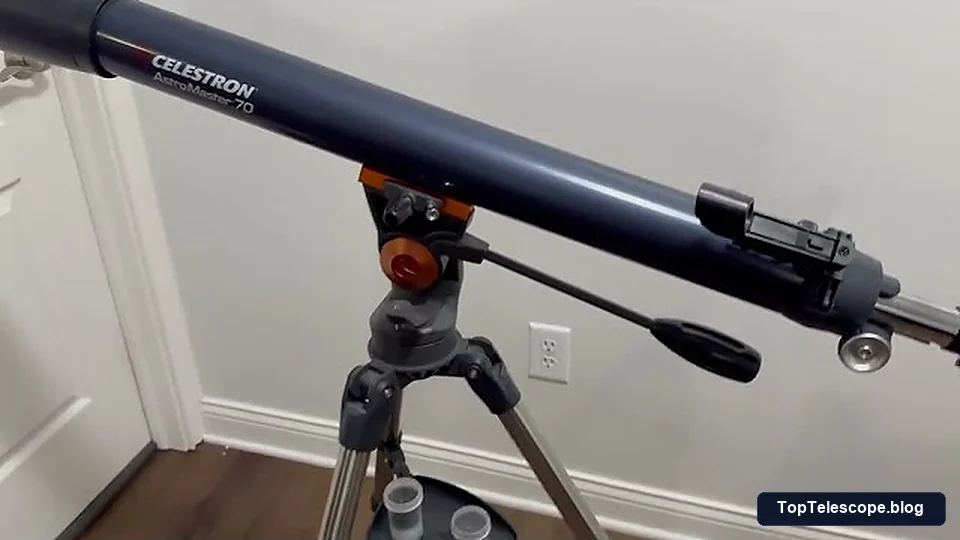
The primary objective lens features a 70mm aperture with full chemical coatings. This configuration maximizes light transmission while suppressing internal chromatic aberration across high-contrast lunar viewing sessions.
Machined aluminum components interface smoothly with lightweight composite plastics. Such material choices reduce total assembly weight without sacrificing essential structural integrity during outdoor field deployment.
Internal baffling prevents stray light reflections from degrading final contrast. Observers will appreciate how effectively this optical architecture maintains deep black backgrounds during detailed planetary observations.
The 70mm aperture achromatic doublet lens utilizes Crown and Flint glass elements to minimize chromatic aberration. This configuration delivers respectable contrast when observing high-contrast lunar terminators and bright planetary discs.
A focal length of 900mm yields a native focal ratio of f/12.8, naturally suppressing false color fringes compared to faster refractors. Multi-coatings applied across air-to-glass optical surfaces maximize light transmission efficiency during twilight viewings.
The aluminum optical tube assembly features an internal flat-black baffling system designed to absorb stray off-axis light. This structural measure effectively enhances image contrast by reducing internal reflections before photons reach the eyepiece.
- 70mm fully coated glass objective lens
- Lightweight aluminum optical tube assembly
- Anti-reflective chemical surface treatments
- Precision internal optical baffle system
Glass Quality and Coatings
Specialized anti-reflective layers applied to the doublet lens minimize glare significantly. Users benefit from enhanced light gathering capacity when targeting faint deep-sky Messier targets.
Color fringing stays remarkably minimal around bright planets like Jupiter and Venus. Such impressive performance frequently earns top marks across our best telescope recommendations for entry-level stargazers.
- Doublet lens configuration
- Multi-layer anti-reflective coatings
Real-World Output and Celestial Performance
Resolving power easily reveals lunar craters and Jovian Galilean moons. Sharp visual clarity makes this instrument an engaging tool for novice astronomers entering the hobby.
Terrestrial viewing benefits greatly from the included erect image diagonal optics. Landscapes and wildlife appear correctly oriented during daytime spotting sessions without inversion issues.
High magnification limits emerge quickly past one hundred power settings. Users must manage eyepiece selections carefully to maintain optimal image brightness and structural stability.
Resolving power reaches 1.66 arcseconds under optimal atmospheric seeing conditions, enabling clear separation of tight binary star systems. Lunar craters like Copernicus and Tycho display sharp shadow boundaries through standard medium-power eyepieces.
Planetary targets such as Jupiter reveal two primary equatorial cloud belts alongside the four Galilean moons. Saturn showcases its distinct ring system, though Cassini division visibility remains limited due to the 70mm objective lens diameter limit.
Deep-sky performance is strictly restricted to brighter Messier catalog entries like the Orion Nebula and Andromeda Galaxy. Surface brightness fades significantly beyond 100x magnification, making wider-field low-power oculars mandatory for faint nebulae.
- Crisp lunar crater boundary resolution
- Clear sighting of major planetary bodies
- Correct daytime terrestrial image orientation
- Balanced magnification range via eyepieces
Planetary and Lunar Resolution
Crater walls along the lunar terminator show impressive shadow definition. Saturn's rings remain distinct when paired with appropriate high-power ocular accessories.
Atmospheric seeing conditions heavily dictate maximum usable magnification thresholds here. Keeping expectations realistic is a core lesson emphasized throughout our best starter telescope review roundup for new hobbyists.
- Clean lunar terminator shadow tracking
- Distinct planetary ring observations
Video Review: Celestron AstroMaster 70az - Review, Assembly, \u0026 Testing
Mechanical Mount and Tracking Efficiency
The manual altazimuth mount relies on a straightforward pan handle mechanism. Smooth panning action allows users to sweep across night skies with minimal physical resistance.
Locking knobs secure the optical tube once a desired target is centered. However, tracking fast-moving celestial objects requires frequent manual corrections due to earth rotation.
Wind gusts can introduce minor vibrations into the lightweight mechanical platform. Keeping the center column lowered significantly dampens these environmental stability issues.
The manual altazimuth mount utilizes a pan handle featuring an altitude clutch for fluid vertical adjustments. Slewing across the night sky feels intuitive, though manual tracking requires constant simultaneous adjustments on both axes.
Pre-assembled steel tube legs provide a rigid foundation compared to flimsy aluminum alternatives often found in entry-level packages. However, the central accessory tray must be fully tightened to eliminate torsional chassis vibration during focusing.
Tracking celestial objects at magnifications exceeding 100x proves challenging due to stick-slip friction in the altitude bearing. Users must anticipate Earth's rotation and gently nudge the tube ahead of moving targets.
- Intuitive manual pan handle control
- Secure altitude and azimuth locking knobs
- Lightweight altazimuth mounting interface
- Vibration-sensitive central column design
Manual Tracking Precision
Tracking high-magnification objects demands a gentle touch on the pan handle. Sudden movements cause the target to drift completely out of the narrow eyepiece field.
Patience during manual centering rewards users with steady, uninterrupted planetary viewing. Practice quickly builds the muscle memory needed for smooth tracking maneuvers.
- Requires steady manual input adjustments
- Narrow field tracking techniques
Setup Usability and Ergonomic Adjustments
Unboxing and assembling the entire apparatus takes less than ten minutes. Such easy setup highlights why many models featured in our best telescope for planets guide appeal to novices.
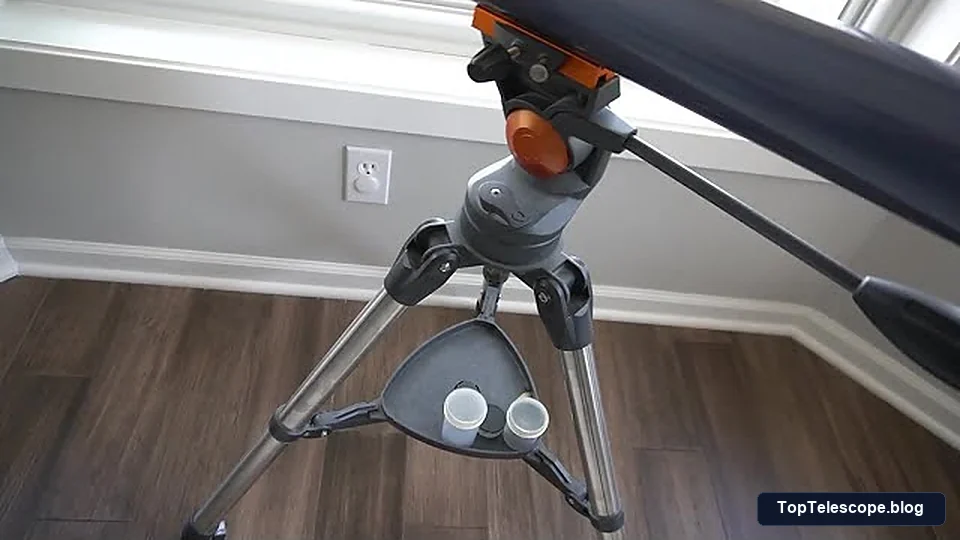
The adjustable height tripod accommodates both seated and standing viewing positions. Leg braces add stability while preventing accidental collapse during field operations.
The red dot finder scope projects a clear reference point onto the sky. Aligning this reflex sight with the main optical tube simplifies initial star hopping routines.
Field assembly requires no tools, utilizing large knurled thumbscrews to secure the optical tube to the mount head. The star diagonal incorporates a 1.25-inch barrel standard, accepting most aftermarket planetary and lunar filters.
Ergonomic positioning varies drastically depending on whether you are observing zenith targets or low-altitude horizons. A variable-height tripod helps mitigate neck strain, but viewing objects directly overhead still demands uncomfortable crouching postures.
The permanent StarPointer finderscope projects an unmagnified red dot onto a clear window for rapid alignment. Calibrating this red dot requires adjusting two thumbwheels until the reticle matches the main telescope view precisely.
- Rapid ten-minute unboxing and assembly
- Fully tool-free mechanical fastener design
- Adjustable height aluminum tripod legs
- Intuitive red dot reflex finderscope
Finderscope Alignment
Zeroing the reflex sight during daylight saves immense frustration later. Aligning it with a distant landmark ensures night sky objects fall directly into view.
Battery conservation matters because the red dot unit relies on standard cells. Always remember to turn off the illuminator switch after completing your observation session.
- Daylight landmark alignment procedure
- Battery-powered LED reflex sight
Thermal Stability and Environment Tolerance
Refractor optics require minimal cool-down time compared to massive mirror designs. Rapid thermal equilibration gets you observing night skies within minutes of stepping outside.
Sealed optical tube construction prevents dust and moisture from entering internally. This barrier protects delicate lens surfaces during extended outdoor dew-heavy nights.
Extreme cold weather can stiffen mechanical grease inside altitude focusers. Storing the unit at ambient temperature before viewing prevents sluggish mechanical operation.
Glass elements require approximately 30 minutes of thermal acclimatization when moving from a warm indoor environment to cold night air. Skipping this crucial cooling period introduces internal air currents that severely degrade high-magnification clarity.
Sealed optical tubes trap residual humidity, making dew accumulation on the objective lens a persistent hazard during autumn sessions. Utilizing a flexible dew shield prevents moisture buildup and extends usable observation time outdoors significantly.
Metal mechanical components expand and contract under fluctuating ambient temperatures, occasionally causing minor shifts in focus alignment. Regular checks of the rack-and-pinion focuser tension ensure smooth mechanical operation across varying weather conditions.
- Fast thermal equilibration optical design
- Sealed tube protects internal lens elements
- Weather-resistant exterior housing materials
- Cold-tolerant mechanical focus assembly
Dew Mitigation in the Field
Night moisture accumulation can cloud objective lenses during prolonged viewing sessions. Adding a flexible dew shield prevents condensation from halting your astronomical observations prematurely.
Wiping wet exterior surfaces must be avoided until optical gear dries indoors. Safe handling practices ensure your coated glass remains pristine for years.
- Dew shield protection accessories
- Safe moisture management protocols
Maintenance, Cleaning, and Long-Term Durability
Maintaining optical cleanliness requires specialized lens cleaning brushes and microfiber cloths. Proper lens care prevents microscopic dust scratching delicate anti-reflective coatings over time.
Storing components in padded bags safeguards plastic fittings from accidental impacts. Durable aluminum sections withstand regular transit inside trunk compartments without structural deformation.
Periodic tightening of tripod leg screws maintains overall mechanical rigidity. Routine maintenance guarantees smooth operation throughout countless backyard astronomical adventures.
Dust accumulation on the front doublet should be removed using a bulb blower before applying any liquid solutions. Direct physical contact with optical surfaces risks scratching the delicate anti-reflective coatings applied during factory production.
Mechanical joints and altitude clutches benefit from an occasional application of light silicone grease to maintain smooth operation. Inspecting tripod leg fasteners prevents structural loosening caused by frequent transport to dark sky sites.
Storing the optical tube upright with lens caps securely fastened protects internal components from airborne particulate contamination. A dedicated padded carrying case safeguards the aluminum chassis against accidental impact during transit or storage.
- Microfiber cloth and brush cleaning
- Protective padded transit bag storage
- Regular hardware fastener inspections
- Durable aluminum structural framework
Lens Care Best Practices
Always blow loose particles off glass surfaces using compressed air bulbs. Direct wiping on dusty lenses grinds abrasive grit across chemical optical coatings.
Use approved optical cleaning solutions sparingly on stubborn smudges. Gentle circular wiping motions preserve lens integrity and optical transmission efficiency.
- Compressed air dust removal steps
- Approved optical cleaning solutions
Comprehensive Buyer Verdict and Recommendations
This instrument represents a balanced entry point for curious astronomy newcomers. Exceptional optical clarity and straightforward handling outweigh minor mechanical trade-offs encountered during use.
Beginners seeking an affordable, dual-purpose optical tool will find immense value here. Models like this frequently rank high on our best telescope for beginners list due to simple handling.
Experienced astronomers might want heavier equatorial mounts and larger apertures. However, casual observers will appreciate the portable design and reliable out-of-the-box performance.
This refractor serves as a capable introductory tool for novice astronomers prioritizing lunar and planetary observation. Its straightforward mechanical design teaches foundational celestial navigation without overwhelming beginners with complex equatorial alignment procedures.
Advanced astrophotographers will find significant limitations regarding tracking accuracy and payload weight capacity on this mount. Long-exposure deep-sky imaging remains entirely unfeasible due to field rotation inherent in standard altazimuth tracking systems.
Upgrading standard eyepieces to higher-quality Plössls vastly improves overall image sharpness and relieves eye relief constraints. Budget-conscious buyers willing to master manual tracking will discover a rewarding gateway into amateur astronomy.
- Ideal entry-level astronomy optical package
- Strong balance of performance and value
- Versatile terrestrial and celestial use
- Portable design for easy traveling
Final Purchasing Advice
Evaluate your primary viewing interests before committing to this refractor model. Those prioritizing portability and ease of use will secure a satisfying viewing experience.
Pairing this setup with supplementary accessories enhances long-term observational capabilities. Enjoy exploring the night sky with reliable equipment designed for learning.
- Match equipment to viewing goals
- Upgrade accessories for extended use
Frequently Asked Questions
Can this telescope view faint deep-sky galaxies?
Limited light gathering from the 70mm aperture restricts deep-sky views. Brighter Messier objects appear, but faint galaxies require larger apertures.
Is the smartphone adapter difficult to attach?
The adapter clamps securely onto standard eyepieces with ease. Precise alignment takes a moment to center your phone camera perfectly.
Does the mount support slow-motion tracking controls?
This altazimuth mount uses a direct manual pan design. Smooth manual handling replaces mechanical slow-motion cables for target tracking.
Can I use this telescope for daytime birdwatching?
Erect image optics provide correct daytime terrestrial viewing orientations. Daytime landscapes and wildlife appear crisp and naturally oriented.
How heavy is the entire telescope assembly?
The lightweight aluminum frame weighs only a few kilograms. Portable field transport requires minimal effort for younger users.