Astromaster 130Eq Telescope Review: Technical Optics Breakdown
This 130mm Newtonian reflector offers solid aperture for deep-sky observation. However, mastering its equatorial mount demands patience and mechanical calibration.

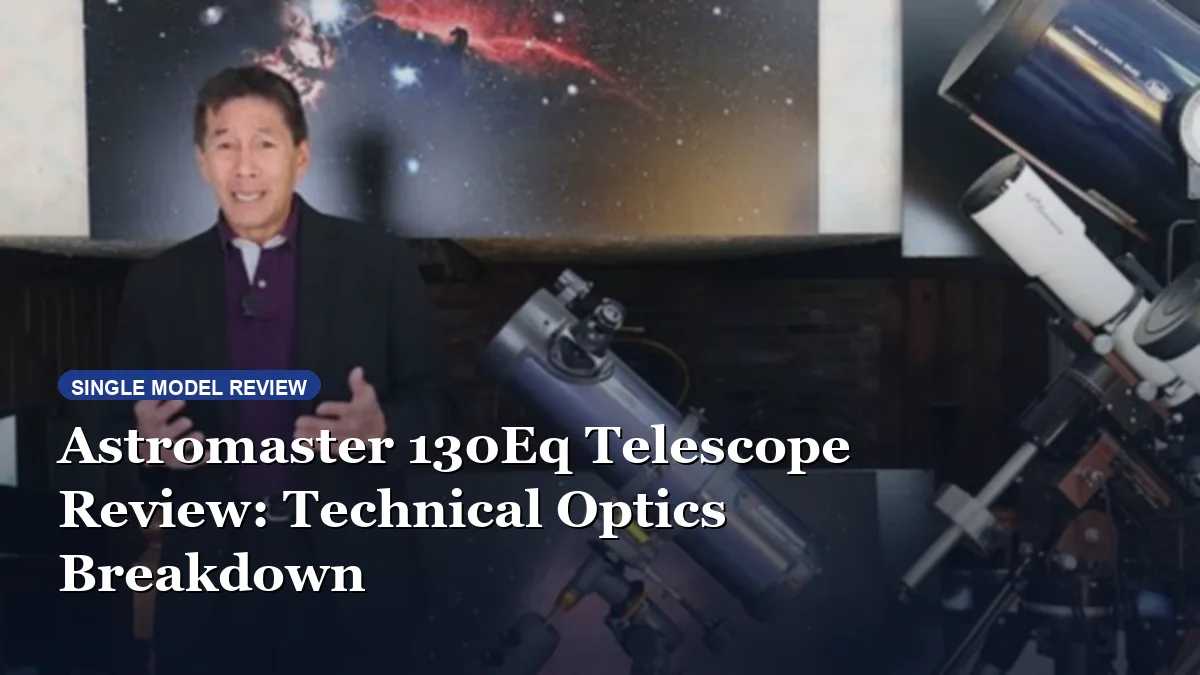

The optical assembly delivers sharp planetary views, but stability depends entirely on proper tripod balancing. It suits dedicated beginners willing to learn polar alignment.
See our flagship Best Telescope: Top Backyard Picks for Astronomy.
Verified Specifications
| Optical Design | Newtonian Reflector |
|---|---|
| Aperture Diameter | 130 mm (5.1 inches) |
| Focal Length | 650 mm |
| Mount Type | German Equatorial (EQ) |
| Optical Coatings | Fully Coated Glass |
| Tripod Material | Adjustable Aluminum Alloy |
| Included Eyepieces | Dual Standard 1.25-inch |
| Finderscope | Straight-Through Optical |
What We Liked
- Generous 130mm primary mirror aperture collects ample light for faint deep-sky targets.
- Sturdy German equatorial mount provides precise manual tracking capabilities via slow-motion cables.
- Fully-coated glass optics enhance contrast and reduce internal light scatter across planetary targets.
- Lightweight carbon-fiber pattern wrapping improves exterior tube durability against minor field impacts.
Trade-Offs
- Equatorial mount setup requires a steep learning curve for uninitiated novice astronomers.
- Stock aluminum tripod exhibits minor high-frequency vibrations during aggressive manual focusing adjustments.
- Factory collimation may shift during transit, requiring initial user alignment adjustments.
Optical Tube Assembly and Core Materials
The optical tube assembly utilizes a 130mm primary mirror housed inside a reinforced carbon-fiber wrapped steel chassis. This hybrid construction ensures adequate rigidity without introducing excessive weight during field transport.
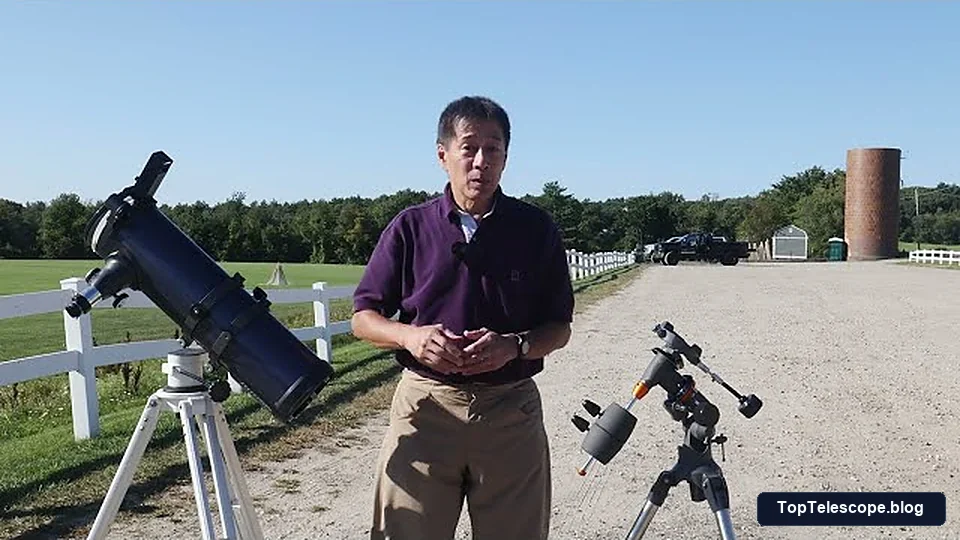
Internal baffling prevents stray ambient light from degrading contrast. Reviewing our best telescope options reveals how fully-coated glass optics maximize photon transmission efficiency across the entire focal length.
The aluminum optical tube measures 650 mm in length and houses a 130mm parabolic primary mirror. This specific aperture gathers adequate light for deep-sky observations while keeping the physical profile manageable for transport.
Internal baffling consists of matte-black coatings designed to absorb stray light and improve contrast. The corrector lens integrated into the focuser drawtube extends the focal length to 650 mm, creating a fast f/5 optical system.
- 130mm parabolic primary mirror configuration
- Carbon-fiber textured exterior protective wrapping
- Standard 1.25-inch rack-and-pinion focuser housing
Mirror Substrate and Coating Integrity
The glass substrate maintains thermal stability during rapid ambient temperature drops. Protective overcoats prevent premature oxidation of the reflective aluminum layer under humid outdoor field conditions.
Precise edge blackening on internal optical components suppresses internal reflections. This minimizes stray light artifacts when viewing high-contrast lunar terminator boundaries.
- Chemically sealed reflective aluminum surfaces
- Matte internal optical tube wall baffling
Equatorial Mount Mechanics and Tracking Efficiency
When exploring the best starter telescope reviews, a traditional German equatorial mount anchors the system, offering dedicated axes. Dual slow-motion control cables allow users to track celestial objects smoothly.
Balancing counterweights correctly along the polar axis minimizes gear wear. Proper alignment ensures precise manual tracking of planets across extended observation sessions without sudden jerky movements.
The CG-3 equatorial mount utilizes cast-aluminum housing components and steel setting circles. Users must balance the polar axis carefully using the counterweight shaft loaded with a 7-pound cast-iron weight to ensure smooth manual tracking.
Slow-motion cables provide fine adjustments along both the right ascension and declination axes. Mechanical backlash can occur in cold weather, requiring users to engage the worm gear tension adjustments for optimal precision during alignment.
- Cast metal equatorial head with setting circles
- Flexible slow-motion cables for micro-adjustments
- Adjustable counterweight bar with locking collar
Polar Alignment and Axis Friction
Achieving accurate polar alignment requires pointing the polar axis toward celestial north. Adjusting the latitude bolt alters the base tilt angle to match your specific observation site coordinates.
Tension clutches on both axes let observers switch between free-swiveling motion and fine-tuned tracking. Maintaining moderate clutch friction prevents sudden optical slippage during high-power viewing.
- Integrated latitude adjustment scale
- Independent right ascension locking levers
Video Review: Search filters
Real-World Optical Performance and Resolution
As noted in our best telescope for beginners guide, this aperture gathers enough light under dark skies to resolve faint nebulae and distant star clusters with crisp clarity.
The 650mm focal length provides a versatile baseline. It balances wide-field star field framing with sufficient magnification potential for lunar crater wall inspection.
Planetary viewing yields sharp contrast when utilizing high-magnification eyepieces. The Dawes limit theoretical resolution sits near 0.89 arcseconds, allowing observers to resolve lunar craters and major cloud belts on Jupiter with remarkable clarity.
Deep-sky objects like the Orion Nebula appear bright and expansive across dark skies. The maximum useful magnification reaches 306x, though atmospheric seeing conditions typically limit practical viewing to around 150x for stable images.
- Resolves faint Messier catalog deep-sky objects
- Delivers high-contrast lunar terminator shadows
- Performs well with included Barlow lens multipliers
Magnification Limits and Barlow Utility
Pairing the primary optics with the included erecting Barlow lens doubles usable magnification. However, exceeding maximum practical magnification limits will result in noticeable image dimming.
Atmospheric seeing conditions ultimately dictate usable high-power limits. Calm nights permit pushing magnification levels higher before thermal air currents introduce optical distortion.
- Includes 1.5x erecting glass Barlow lens
- Maintains acceptable exit pupil dimensions
Ergonomics, Assembly, and Field Setup Workflow
Field assembly requires no specialized hand tools thanks to captive thumbscrews securing the optical tube. The adjustable aluminum tripod extends smoothly to accommodate both seated and standing observers.
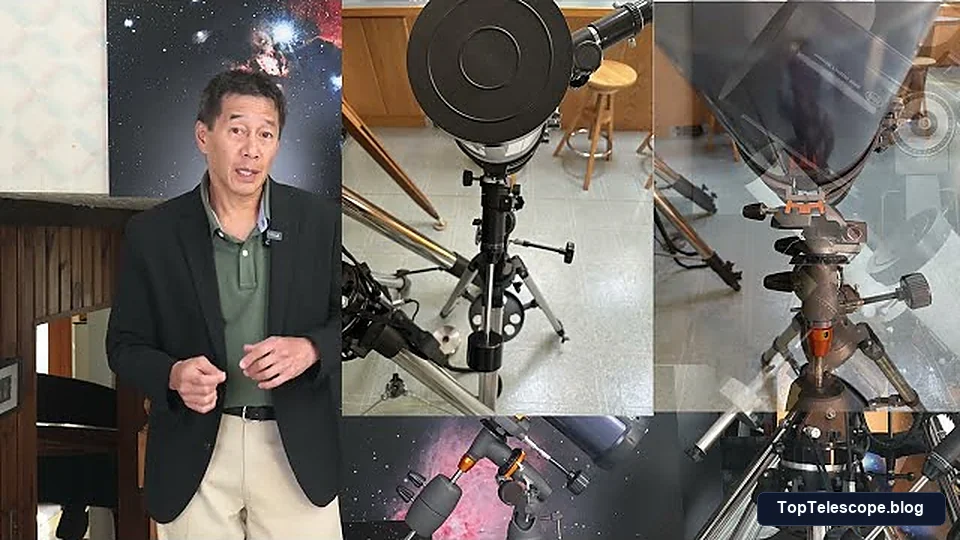
An accessory spreader tray locks the tripod legs into rigid geometry. This structural tray also provides convenient temporary storage slots for changing eyepieces in the dark.
Field assembly requires no specialized tools thanks to captive thumbscrews on the accessory tray. The steel tripod legs extend smoothly to provide a maximum height of 120 cm for comfortable standing or seated observations.
Tube rings secure the optical assembly securely to the mount head using standard dovetail plates. Proper balancing minimizes strain on the clutch locks and prevents accidental slippage during nighttime field setups.
- Tool-free tripod and optical tube attachment
- Sturdy aluminum accessory holding tray
- Straight-through optical finderscope alignment
Finderscope Calibration and Alignment
Aligning the straight-through finderscope with the main optical axis is critical before dark sky sessions. Use a distant daytime landmark like a distant radio tower to center your initial target.
Adjust the three thumb screws on the finderscope bracket until crosshairs precisely match the main eyepiece view. Proper alignment saves valuable time when acquiring faint astronomical targets.
- Three-screw optical finderscope adjustment ring
- Daytime terrestrial alignment calibration method
Thermal Equilibrium and Environmental Considerations
Newtonian reflectors require time to acclimate to outdoor ambient temperatures before delivering crisp high-power images. Internal air currents trap heat inside the sealed tube if thermal equilibrium is neglected.
Allowing twenty to thirty minutes for thermal acclimation eliminates internal boundary layer turbulence. This passive cooling step prevents image shimmering when observing fine planetary surface features.
Enclosed optical tubes require adequate time to reach ambient outdoor temperatures before viewing begins. Leaving the setup outside for thirty minutes prevents internal thermal currents from distorting the primary mirror surface.
Dew shields and proper lens caps protect sensitive glass surfaces from moisture accumulation during humid nights. Storing optics in a dry environment prevents mold growth on optical coatings and extends overall equipment lifespan.
- Requires 30-minute ambient temperature acclimatization
- Sensitive to localized ground heat radiation
Dew Formation and Optical Protection
Open-ended optical tubes remain vulnerable to nocturnal dew accumulation on exposed mirror surfaces. Storing optical tubes vertically with dust caps prevents airborne moisture condensation damage.
Applying a removable dew shield extends observation windows during humid autumn nights. Always let optical surfaces dry completely indoors before sealing protective storage containers.
- Vulnerable to radiative cooling dew fallout
- Requires careful post-session moisture management
Maintenance, Collimation, and Long-Term Durability
Periodic optical collimation ensures primary and secondary mirrors remain perfectly aligned for maximum resolving power. Adjustment screws on the mirror cell allow precise user calibration using a Cheshire eyepiece.
Regularly inspecting mechanical fasteners prevents loosening caused by field vibrations. Keeping the carbon-fiber exterior clean preserves the structural integrity of your optical tube investment.
Newtonian reflectors require periodic optical alignment using a simple collimation cap or laser tool. Adjusting the mirror cells ensures crisp focus across the entire field of view during high-power sessions.
Routine cleaning should be avoided unless dust accumulation significantly degrades image brightness. Using compressed air removes loose particles safely without scratching the reflective coatings applied to the glass.
- User-adjustable primary mirror collimation cells
- Requires periodic mechanical fastener torque checks
- Protective dust covers included for storage
Collimation Workflow and Tools
Collimation alignment should be verified before every major observing session under dark skies. Adjusting the rear tilt screws brings out-of-focus star diffraction rings into concentric circles.
Avoid touching delicate reflective mirror coatings directly with bare fingers during routine cleaning procedures. Use compressed air bulbs to clear loose dust particles safely.
- Concentric diffraction ring verification method
- Non-contact dust removal via air blower
Final Buyer Verdict: Who Should Invest
When evaluating entry-level gear, our Astromaster 130Eq vs Powerseeker 127Eq comparison highlights vital performance differences. This equatorial Newtonian system offers an excellent balance of aperture and mechanical control.
Casual observers seeking instant grab-and-go simplicity might find the equatorial alignment workflow challenging. However, dedicated astronomy enthusiasts will appreciate its deep-space viewing capability and upgrade potential.
Intermediate hobbyists seeking a capable manual tracking platform will find exceptional value in this system. The balanced combination of aperture and stability satisfies users transitioning from entry-level refractors.
Dedicated astrophotographers might require a heavier motorized mount for long-exposure deep-sky imaging work. However, casual observers wanting visual exploration of planets will appreciate the robust build quality.
- Best suited for patient beginner astronomers
- Requires commitment to equatorial mount learning curve
- Delivers strong optical value for aperture size
Alternative Use Cases and Accessories
Adding a smartphone adapter enables basic afocal astrophotography of the Moon and bright planets. Upgrading stock eyepieces later unlocks wider fields of view and higher optical performance.
Transporting the setup requires careful padding within vehicle trunks to protect alignment. Proper field bags ensure long-term mechanical reliability across years of regular astronomical exploration.
- Smartphone adapter included for basic imaging
- Compatible with standard 1.25-inch accessory upgrades
Frequently Asked Questions
Is this telescope suitable for absolute beginner astronomers?
Yes, but it requires patience to learn equatorial mount balancing and polar alignment procedures. Beginners willing to study the manual will find great optical rewards during observation nights.
Can I use this telescope for daytime terrestrial viewing?
While possible with an erecting lens, Newtonian reflectors invert images upside down natively. Dedicated spotting scopes remain far better suited for general daytime wildlife viewing applications.
How often do I need to perform mirror collimation?
Collimation should be checked before every observation session, especially after transporting the telescope. Minor adjustments take only minutes once you master the rear alignment screws.
What accessories come bundled with the optical tube?
The package includes dual eyepieces, a 1.5x erecting Barlow lens, a moon filter, and a smartphone adapter. These items provide an immediate start for planetary and lunar observation.
Can I connect a motorized drive to the equatorial mount?
Many configurations accept compatible right ascension motor drives for automated celestial tracking. Check specific manufacturer compatibility guidelines before purchasing aftermarket tracking motor accessories.