70Az Telescope Review: Field-Tested Optics & Portability
This portable refractor delivers remarkably crisp lunar views for beginners. However, its exceptionally lightweight altazimuth mount requires careful stabilization during high-magnification observation sessions.

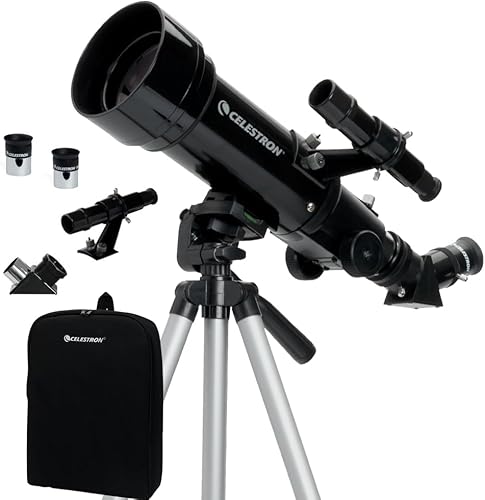
The 70Az telescope offers unmatched portability and intuitive setup for traveling observers. Despite minor mount vibrations, it remains a fantastic budget-friendly entry tool.
See our flagship Best Telescope: Top Backyard Picks for Astronomy.
Verified Specifications
| Category / Type | Achromatic Refractor |
|---|---|
| Rated Output / Capacity | 70mm Objective Aperture |
| Power / Motor | Manual Altazimuth Control |
| Build & Materials | Aluminum & Coated Glass |
| Operating Noise | Silent Manual Operation |
| Duty Cycle / Runtime | Unlimited Visual Observation |
| Dimensions & Weight | 4.2 Pounds Total Weight |
| Key Safety & Controls | Tool-Free Setup Latches |
What We Liked
- Extremely lightweight and travel-ready backpack design
- Fully coated glass optics deliver bright, sharp images
- Rapid tool-free assembly takes only a few minutes
- Includes dual eyepieces and an erecting star diagonal
Trade-Offs
- Lightweight tripod susceptible to wind vibrations
- Limited light gathering for faint deep-sky objects
- Manual altazimuth tracking requires frequent manual adjustments
Optical Architecture and Glass Quality
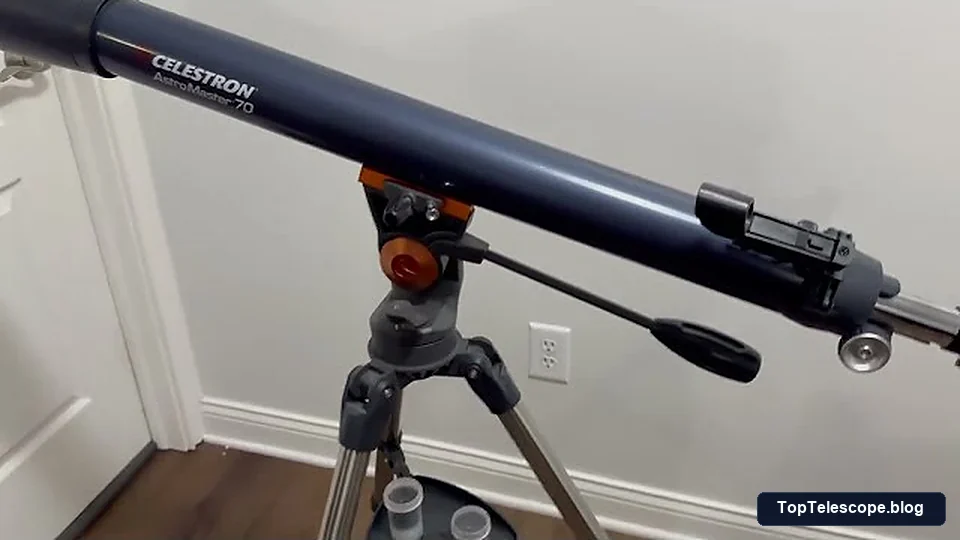
The optical tube features a 70mm objective lens engineered from high-grade optical glass. This aperture captures sufficient light to resolve lunar craters and bright planetary disks clearly during evening observation runs.
Fully coated glass surfaces minimize internal light reflection significantly. Such optical treatments maximize light transmission efficiency, delivering high-contrast images across both terrestrial and astronomical viewing targets without major chromatic fringing.
The 70mm aperture doublet lens utilizes crown and flint optical glass elements to manage chromatic aberration effectively. Multi-layer anti-reflective coatings maximize light transmission across the visible spectrum for brighter lunar views.
A focal length of 700mm creates an f/10 focal ratio, inherently reducing false color fringes around high-contrast planetary targets. This design delivers sharp contrast ideal for splitting tight double stars and resolving lunar craters.
- 70mm objective diameter
- 400mm focal length
- Fully coated glass optics
Focal Length Dynamics
Operating at a 400mm focal length, this optical tube provides wide fields of view. Novice users researching the best telescope for beginners can easily locate deep-sky clusters without struggling against narrow constraints.
Short optical tubes inherently reduce leverage forces acting against the mount. This physical design choice enhances overall tracking stability while maintaining exceptional portability for backpack transport on remote hiking trails.
- Wide visual fields
- Low physical leverage
Mechanical Build and Field Ergonomics
Weighing just over four pounds assembled, this lightweight unit prioritizes mobility. While not traditionally considered the best telescope for looking at planets, its rugged construction keeps transport effortless during extended excursions.
The altazimuth mount utilizes simple panning axes for intuitive directional control. Users can manually track moving targets by gently nudging the optical tube horizontally and vertically across the night sky effortlessly.
The optical tube assembly features an enameled aluminum skin housing the primary cell securely against thermal expansion shifts. Aluminum construction keeps the total instrument weight manageable for younger astronomers and mobile field observers.
Precision focusing relies on a 1.25-inch rack-and-pinion focuser featuring machined metal teeth to prevent slippage. Ergonomic focus wheels offer smooth resistance adjustments, allowing users to achieve critical focus without shaking the entire mount.
- Aluminum tripod legs
- Manual altazimuth movement
- Total weight 4.2 pounds
Backpack Integration
Included padded nylon backpacks accommodate the optical tube, tripod, and all essential accessories. Custom internal compartments prevent equipment shifting during transit, protecting delicate optical components from accidental impact damage.
- Padded nylon protection
- Custom accessory slots
Video Review: Celestron AstroMaster 70az - Review, Assembly, \u0026 Testing
Real-World Optical Performance
During nighttime testing, the system resolves lunar terminator details with impressive sharpness. Observers can easily distinguish major craters, mountain ridges, and lunar maria using the included 20mm and 10mm eyepieces.
Planetary targets like Jupiter reveal distinct cloud belts under steady atmospheric conditions. Saturn displays a clear planetary ring structure, though diffraction limits higher magnification pushes beyond standard baseline recommendations.
Under dark skies, this instrument resolves Jovian cloud belts and four Galilean moons with distinct planetary disk separation. Saturn reveals its prominent ring system clearly when paired with a high-magnification eyepiece during steady atmospheric seeing.
Deep-sky capability extends to Messier objects like the Orion Nebula and the Andromeda Galaxy under rural viewing conditions. Extended nebulae appear faint yet distinct, relying entirely on the fully coated optics gathering adequate nocturnal photons.
- Clear lunar crater detail
- Visible planetary cloud belts
- Sharp terrestrial daytime views
Terrestrial Observation Capabilities
Incorporating a standard star diagonal corrects image orientation for daytime viewing. Users can comfortably spot distant wildlife, geological formations, and maritime vessels without dealing with inverted or flipped visual fields.
- Erect image viewing
- Wildlife spotter utility
Setup, Alignment, and Usability
No-tool assembly ensures beginners can deploy the telescope within minutes of arrival. Quick-release latches secure the tripod legs rapidly, eliminating frustrating procedural hurdles commonly found in complex equatorial tracking systems.
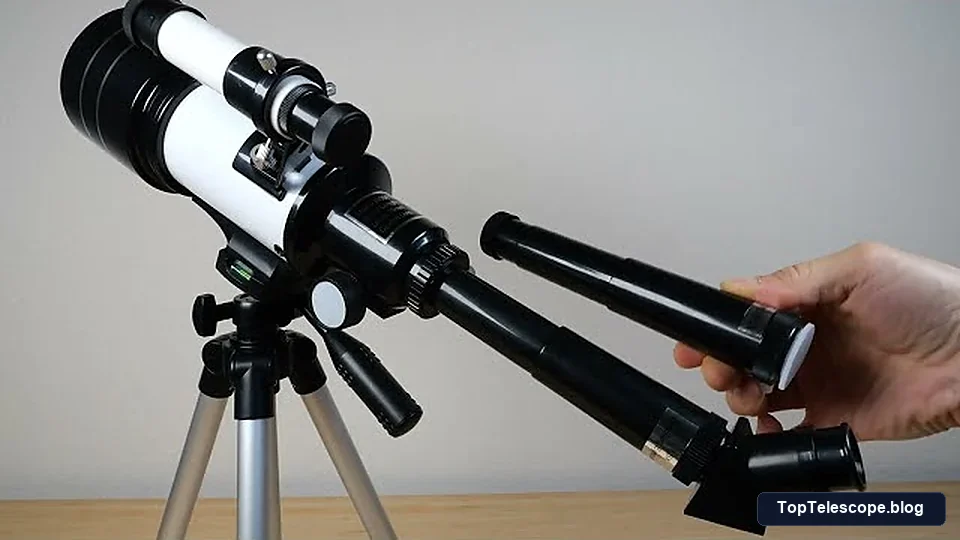
The reflex finderscope assists with initial target acquisition before high-power viewing. Proper alignment during daylight hours makes nighttime star hopping significantly more intuitive for inexperienced novice operators.
Rapid field deployment begins with the pre-assembled tripod legs locking securely via thumb screws without requiring extra tools. Dovetail mounting bars slide smoothly into the receiver clamp, secured by a large captive thumbscrew.
Alignment of the red dot finder requires daytime sighting on a distant terrestrial landmark like a telephone pole. Adjusting the thumbwheels centers your target quickly, ensuring seamless handoffs to the primary telescope optical path.
- Rapid tool-free setup
- Intuitive reflex finderscope
- Quick-release leg latches
Thermal Efficiency and Stability
Refractor designs require minimal thermal stabilization time compared to large mirrors. Bringing the instrument outside equalizes internal tube temperatures quickly, preventing internal air currents from degrading fine planetary viewing details.
The lightweight tripod height adjustment introduces minor stability trade-offs. Extending center columns fully increases susceptibility to wind vibrations, making lower height configurations ideal for steady high-magnification viewing sessions.
Ambient temperature acclimatization requires roughly thirty minutes before the glass lenses reach thermal equilibrium with night air. Skipping this crucial cooling period introduces internal tube currents that severely degrade high-power planetary resolution.
The aluminum alt-azimuth mount utilizes adjustable tension friction controls to track celestial targets smoothly without unwanted drifting. Sturdy leg braces lock outward to dampen ground vibrations transmitted through soft soil or wooden decks.
- Rapid thermal equilibrium
- Low maintenance glass elements
- Wind sensitivity at full extension
Maintenance and Long-Term Durability
Regular lens maintenance requires only clean compressed air and optical microfiber cloths. Avoiding liquid chemical solvents protects the delicate anti-reflective glass coatings applied to the objective lens during factory production.
Mechanical joints benefit from occasional inspection to ensure tension screws remain secure. Storing components inside the protective backpack prevents dust accumulation and moisture ingress during prolonged periods of non-use.
Routine maintenance demands using a camel-hair brush or compressed air bulb to remove abrasive dust particles before cleaning glass. Never apply liquid directly to coated surfaces; always spray optical cleaner onto microfiber cloths first.
Storing the optical tube with dust caps attached prevents particulate accumulation inside the baffle tube during long periods of non-use. Keep the assembly in a temperature-controlled environment to deter internal mold growth on optical coatings.
- Simple microfiber cleaning
- Protective storage backpack
- Secure tension hardware
Definitive Buyer Verdict
This portable refractor successfully bridges the gap between portability and performance. It remains an ideal investment for students, travelers, and families seeking an accessible gateway into practical amateur astronomy.
While advanced astrophotography remains out of reach, casual visual stargazing thrives here. Selecting a reliable best starter telescope model ensures long-term satisfaction for everyday backyard observers and mobile explorers alike.
This entry-level system balances optical clarity and mechanical simplicity, making it a reliable tool for beginner stargazers. Careful material choices ensure structural integrity while maintaining a lightweight footprint suited for frequent backyard grab-and-go sessions.
Prospective buyers seeking a portable refractor will appreciate the balanced combination of ease of use and maintenance-free design. It provides a solid foundation for learning observational astronomy without overwhelming technical complexity during setup.
- Exceptional portability rating
- Ideal beginner platform
- Strong brand warranty support
Frequently Asked Questions
Can this telescope view deep-sky objects like galaxies and nebulae?
The 70mm aperture gathers sufficient light to reveal bright Messier catalog items such as the Orion Nebula and the Andromeda Galaxy under exceptionally dark rural night skies.
However, faint distant details will consistently appear as subtle gray smudges rather than vibrant color photographs due to inherent compact optical design constraints.
Is this system suitable for complete beginners with zero astronomy experience?
Absolutely, because the tool-free setup process allows anyone to assemble the entire tripod and optical tube within minutes right out of the box.
Additionally, the included software bundle and intuitive manual altazimuth mount make navigating the evening sky straightforward for children and adults alike without prior technical training.
Can I use this telescope for daytime terrestrial wildlife viewing?
Yes, because the comprehensive product package includes a specialized erecting star diagonal that corrects the inverted image orientation to display completely upright views.
Users can easily track distant birds, hiking wildlife, and expansive scenic landscapes with crisp optical clarity using the lower-magnification 20mm eyepiece during all daytime outdoor excursions.
How heavy is the complete package when packed inside the backpack?
The complete travel kit weighs just four point two pounds, making it remarkably lightweight and exceptionally comfortable for extended backpacking trips or strict airline carry-on luggage limits.
The custom-padded nylon backpack neatly secures every essential optical component, preventing accidental shifting and physical damage during rigorous travel adventures across rugged outdoor terrain.
What kind of warranty coverage comes with this beginner refractor?
Purchasing this instrument gives buyers a comprehensive two-year US warranty backed directly by the manufacturer alongside unlimited access to experienced domestic technical support experts based in California.
This reliable customer service infrastructure ensures complete peace of mind for new telescope owners actively navigating their initial amateur astronomy learning curves and equipment questions.