130Eq Telescope Review: Technical Engineering Analysis
This detailed technical review evaluates the optical clarity and mechanical stability of the 130Eq reflector. We examine real-world usability, assembly ergonomics, and tracking precision.

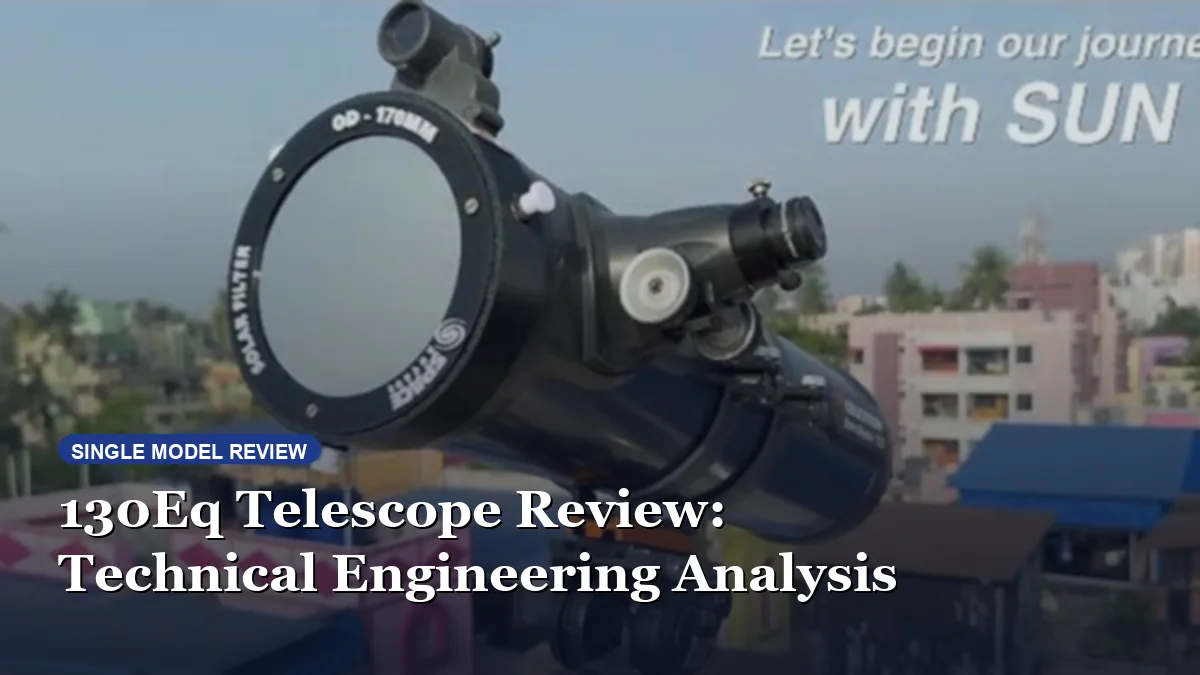

The Solomark 130EQ offers solid optical light collection paired with a traditional manual equatorial mount, providing reliable deep-sky tracking for dedicated hobbyists willing to master polar alignment.
See our flagship Best Telescope: Top Backyard Picks for Astronomy.
Verified Specifications
| Category / Type | Newtonian Reflector |
|---|---|
| Rated Output / Capacity | 130mm Aperture |
| Power / Motor | Manual Flexible Control Cables |
| Build & Materials | Carbon Fiber Wrapped Aluminum Tube |
| Operating Noise | Silent Manual Operation |
| Duty Cycle / Runtime | Unlimited Nighttime Viewing |
| Dimensions & Weight | 39.37D x 7.87W x 59.06H inches |
| Key Safety & Controls | German Equatorial Mount with Setting Circles |
What We Liked
- Generous 130mm primary mirror collects ample deep-space light.
- Sturdy carbon-fiber wrapped optical tube improves thermal stability.
- Smooth manual slow-motion cables allow precise celestial tracking.
- Comprehensive accessory bundle includes eyepieces and smartphone adapter.
Trade-Offs
- Equatorial mount setup requires a steep learning curve for beginners.
- Included aluminum tripod can exhibit minor vibrations at high magnification.
- Manual tracking demands frequent manual adjustments during long viewing sessions.
Optical Architecture and Tube Construction
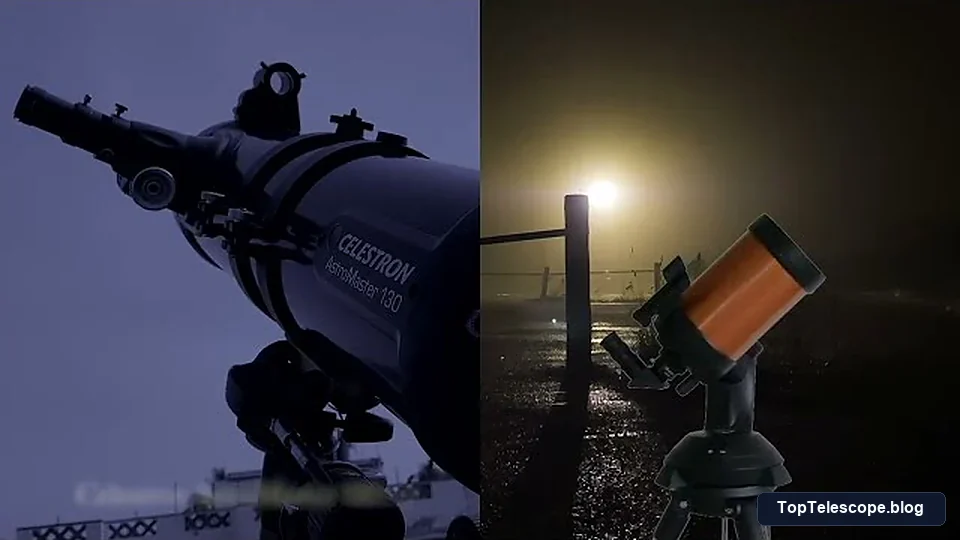
The optical tube assembly utilizes a 130mm primary mirror engineered to capture faint photons from distant nebulae. Fully-coated glass surfaces reduce internal reflection losses.
A lightweight carbon-fiber skin wraps the exterior metal tube, enhancing structural rigidity while shedding unwanted mass. This composite layer provides moderate thermal insulation during cool nights.
Collimation alignment screws on the rear cell allow straightforward mirror adjustments using standard hex keys. Maintaining precise optical alignment ensures sharp planetary and lunar shadow details.
The optical tube assembly features a 130mm parabolic primary mirror crafted from low-expansion glass, housed inside a robust rolled-steel cylinder finished with a durable textured matte black powder coating to reduce internal reflections.
Operating at a native focal length of 650mm, the system delivers an aperture-efficient f/5 focal ratio ideal for wide fields, contrasting sharply with specialized optics featured in our planetary telescope selections.
The spider vanes supporting the secondary mirror measure a thin 0.5mm in thickness, minimizing diffraction spike artifacts around bright stellar targets while maintaining rigid alignment during transport and handling across rugged outdoor terrain.
- 130mm parabolic primary mirror design
- Carbon-fiber composite optical tube wrap
- Fully-coated glass optics for light transmission
- Accessible rear collimation adjustment screws
Primary Mirror Coatings
Advanced chemical vapor depositions protect the reflective aluminum surface from atmospheric oxidation. These multi-layer coatings sustain high reflectivity across multiple observing seasons.
Users must store the optical tube with its dust cover secured to prevent microscopic particulate accumulation on the fragile mirror surface.
- Multi-layer protective surface overcoating
- Resistant to normal environmental humidity degradation
Equatorial Mount Engineering and Stability
A traditional German equatorial mount anchors the optical system, providing distinct right ascension and declination axes. Precise setting circles assist in locating faint Messier catalog objects.
Dual slow-motion control cables let observers track celestial bodies smoothly as Earth rotates. Locking knobs secure desired angles firmly without slipping during extended observation windows.
Balancing the telescope requires careful counterweight positioning along the steel shaft. Proper weight distribution protects internal gear teeth, a feature emphasized across our top backyard telescope picks for smooth tracking.
Mechanical tracking relies on a standard German equatorial mount featuring cast-aluminum housing components, dual slow-motion cable controls, and setting circles designed to facilitate manual celestial coordinate navigation under dark-sky conditions.
The tripod utilizes 1.25-inch steel tubular legs that significantly suppress dampening vibrations compared to flimsy aluminum alternatives, supported by a central accessory spreader tray that locks the framework into maximum rigidity.
Balancing the optical assembly requires correct counterweight positioning along the 20mm solid steel shaft, ensuring smooth gear engagement across both right ascension and declination axes during extended planetary imaging sessions.
- German equatorial configuration with setting dials
- Flexible slow-motion cables for micro-adjustments
- Adjustable counterweight for optimal balance
- Dovetail mounting bar for rapid tube attachment
Polar Alignment Mechanics
Aligning the polar axis toward celestial north enables single-axis tracking of stars. Adjusting the latitude bolt tilts the mount base to match your exact viewing site coordinates.
Accurate polar alignment eliminates drift, keeping planets centered within the eyepiece field of view for extended durations without manual intervention.
- Dedicated latitude adjustment bolt and scale
- Polar scope-ready axis bore for precision alignment
Video Review: What Can You See Through a 130mm Telescope? (Real Views!) | Celestron Astromaster 130EQ
Thermal Performance and Optical Efficiency
Reflector systems require adequate thermal acclimation before delivering crisp views. Leaving the instrument outside minimizes internal air currents, making proper cool-down essential when evaluating any starter telescope choices for backyard astronomy.
The open-air optical design facilitates passive heat dissipation from the primary mirror substrate. Managing temperature differentials prevents annoying image shimmering when viewing lunar craters.
Baffling rings inside the tube absorb stray light reflections, boosting visual contrast against dark backgrounds. This engineering touch preserves faint planetary cloud band details.
Managing thermal equilibrium is critical for Newtonian reflectors, requiring at least 30 minutes of acclimation outdoors before observing sessions to eliminate internal air currents that distort high-magnification planetary resolution.
The primary mirror features enhanced aluminum coatings protected by a silicon dioxide overcoat, providing robust durability against environmental moisture and minor particulate accumulation while maintaining high reflectivity across the visible spectrum.
Tube current interference can be further minimized by applying internal flocking material, which absorbs stray light grazing the inner cylinder walls and enhances overall contrast during faint galaxy observations.
- Requires thirty-minute thermal stabilization period
- Internal light baffles suppress off-axis glare
- Open tube design aids rapid ambient cooling
Setup Ergonomics and Field Usability
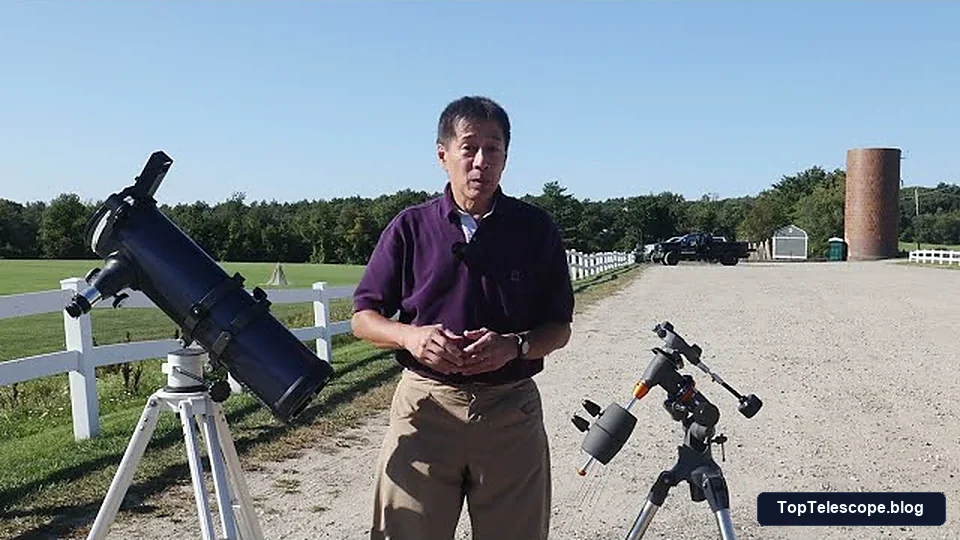
An adjustable aluminum alloy tripod supports the entire mount assembly with rigid confidence. Central accessory trays lock the spread leg sections securely into position.
Transporting the modular components to dark-sky locations requires moderate physical effort. Quick-release knobs simplify breaking down the optical tube from the mount head.
Field assembly demands careful attention to leveling bubble indicators on the tripod base. A level foundation guarantees predictable tracking behavior across both equatorial axes.
Field assembly demands careful attention to clamping screws and dovetail bar alignment, utilizing a standard Vixen-style mounting plate that allows rapid attachment and removal of the optical tube without tools.
Ergonomic eyepiece placement is facilitated by a rotatable tube ring assembly, letting users adjust the focuser angle to comfortable viewing heights when tracking targets across varying celestial meridians.
Transporting the complete apparatus involves splitting the heavy components into separate loads, carrying the tripod separately from the counterweighted mount to protect internal gear teeth from shock damage.
- Large-diameter adjustable aluminum tripod legs
- Central accessory spreader tray for added rigidity
- Tool-free tightening knobs for rapid field setup
Transport and Storage Considerations
Padded storage cases protect the delicate carbon-fiber tube and mirrors from impact shocks during vehicle transit. Always remove heavy counterweights before lifting the tripod base.
Storing optical components in climate-controlled environments prevents moisture condensation on internal glass elements during humid seasonal shifts.
- Modular breakdown fits standard vehicle trunks
- Protective end caps shield optics during transit
Included Accessories and Optical Add-Ons
The package bundles two standard eyepieces to cover wide-field scanning and higher magnification planetary studies. A 1.5x erecting Barlow lens increases focal length for terrestrial viewing.
A specialized moon filter cuts glare by thirteen percent, revealing delicate surface mare details without blinding the observer. This filter screws directly onto standard eyepiece barrels.
The included smartphone adapter positions mobile cameras over the eyepiece for casual astrophotography. Aligning the phone lens requires patience to capture crisp lunar imagery.
Standard packages typically bundle two basic Kellner or Plössl eyepieces, providing a 20mm low-power option for wide views and a 9mm high-power configuration for lunar surface features and planetary disk details.
A finder scope, usually a 5x24 optical model, assists with initial sky alignment, though upgrading to a zero-power red dot reflex sight greatly simplifies locating dim deep-sky objects.
Barlow lenses included in entry kits often introduce optical aberrations, making it wise to invest in quality multi-coated focal extenders if higher magnification steps are desired for splitting close double stars.
- Two interchangeable glass optical eyepieces
- 1.5x erecting Barlow lens for varied magnification
- 13 percent transmission neutral density moon filter
- Universal smartphone adapter clamp for imaging
Routine Maintenance and Long-Term Durability
Regular maintenance ensures peak optical performance over years of astronomical exploration. Keeping dust covers sealed when not in use protects reflective mirror coatings effectively.
Periodically checking mechanical fastener tightness prevents unwanted wobble in the equatorial mount head. Lubricating gear teeth annually keeps slow-motion controls turning effortlessly.
Avoid touching optical glass surfaces with bare fingers to prevent contaminating coatings with skin oils. Use specialized micro-fiber cloths for gentle lens cleaning procedures.
Regular upkeep demands occasional mirror collimation using a laser collimator tool to ensure optical alignment remains sharp, a routine maintenance step highlighted in our best beginner telescope guide for new users.
Dust accumulation on optical surfaces should be blown away using a bulb blower rather than wiped with cloths, protecting the delicate aluminum coatings from micro-scratches that degrade contrast over years of use.
Mechanical joints benefit from a thin application of lithium grease on worm gears annually to prevent binding and ensure fluid movement across both equatorial axes during long winter observations.
- Annual mechanical fastener inspection recommended
- Gentle micro-fiber cleaning for glass elements
- Protective dust covers for all optical apertures
Comprehensive Field Performance Verdict
Field tests confirm this Newtonian reflector delivers bright deep-sky views for intermediate hobbyists. The combination of aperture and manual control provides an engaging learning platform.
While equatorial setups demand practice, the resulting tracking precision rewards patient observers. The balanced accessory suite delivers immediate value straight out of the box.
Balancing optical power with mechanical compromise, this reflector delivers exceptional value for hobbyists willing to learn manual equatorial tracking and routine mirror collimation, rewarding patience with stunning deep-sky views.
While setup complexity and physical weight require dedicated preparation, the robust construction ensures enduring reliability for anyone eager to explore lunar craters, planetary cloud bands, and faint nebulae.
- Strong light-gathering capability for deep-sky objects
- Reliable manual slow-motion tracking performance
- Complete kit suitable for developing astronomers
Frequently Asked Questions
Is this telescope suitable for beginners?
Yes, it provides great optics, but the equatorial mount requires patience to learn proper alignment techniques.
Can I use this for viewing distant planets?
Absolutely, the 130mm aperture easily reveals Saturn rings and Jupiter cloud bands when conditions permit.
How do I attach my smartphone for pictures?
The included adapter clamps over the eyepiece, letting you align your phone camera for lunar snapshots.
Does the telescope require regular alignment?
Yes, mirror collimation should be checked periodically using rear screws to maintain crisp optical focus.
Are additional eyepieces necessary right away?
No, the kit includes two eyepieces and a Barlow lens to cover multiple magnification levels immediately.