Heritage 150P vs Virtuoso GTI 150P: Technical Comparison
These two collapsible Newtonian reflectors share identical optics but diverge completely in mount technology. Choosing between them depends on your preference for manual tracking versus motorized computer control.

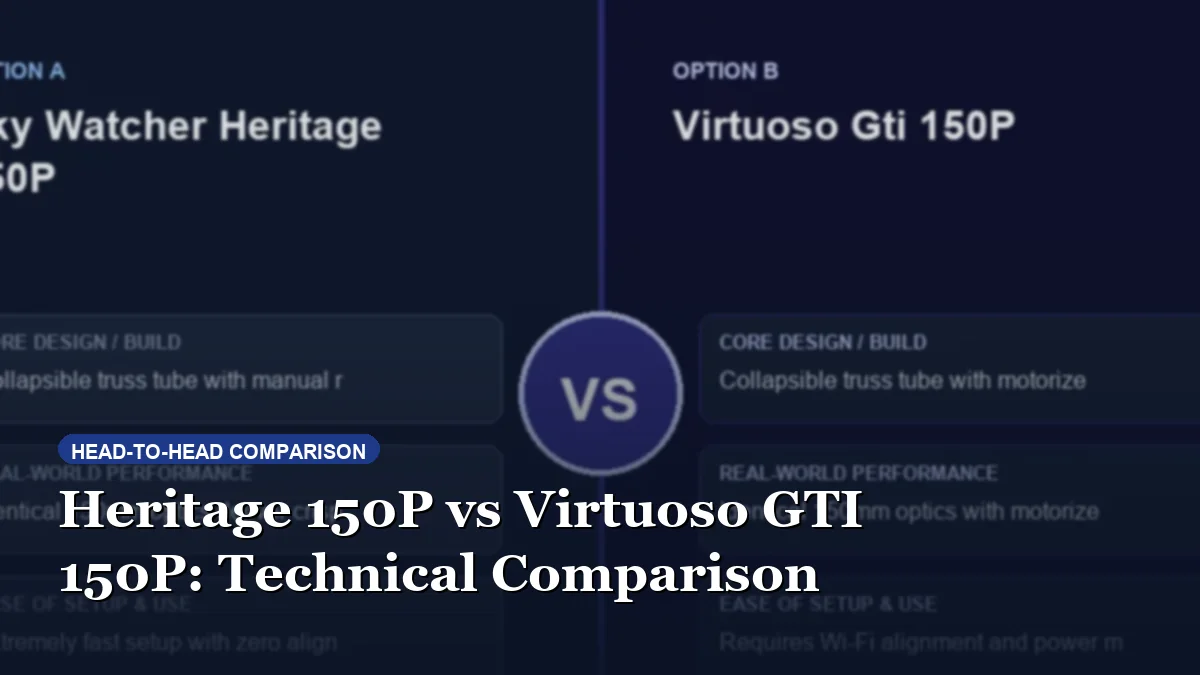
Choose the Heritage 150P if you want simple, lightweight manual stargazing without electronics. Select the Virtuoso GTI 150P if you require motorized GoTo alignment and smartphone tracking capabilities for astrophotography.
Compare all top models in our Best Telescope: Top Backyard Picks for Astronomy.
Side-by-Side Breakdown
| Criteria | Sky Watcher Heritage 150P | Virtuoso Gti 150P | Edge |
|---|---|---|---|
| Core Design / Build | Collapsible truss tube with manual rocker box. | Collapsible truss tube with motorized GoTo mount. | Virtuoso Gti 150P |
| Real-World Performance | Identical 150mm optics deliver crisp deep-sky views. | Identical 150mm optics with motorized tracking. | Tie |
| Ease of Setup & Use | Extremely fast setup with zero alignment needs. | Requires Wi-Fi alignment and power management. | Sky Watcher Heritage 150P |
| Durability & Reliability | Minimal failure points due to pure mechanical design. | Complex internal gears and electronics require care. | Sky Watcher Heritage 150P |
| Efficiency / Operating Footprint | Ultra-lightweight tabletop base for easy transport. | Slightly heavier base due to internal battery and drives. | Sky Watcher Heritage 150P |
| Maintenance Requirements | Standard collimation and dust cleaning. | Collimation plus firmware updates and battery checks. | Sky Watcher Heritage 150P |
| Best Ideal Use Case | Casual visual observers wanting grab-and-go simplicity. | Tech-savvy stargazers wanting automated target location. | Split |
Core Design and Engineering Differences
Both telescopes feature a 150mm aperture optical tube assembly utilizing a collapsible truss-tube design. This innovative mechanical structure reduces storage length significantly while maintaining precise optical alignment during outdoor field transport operations.
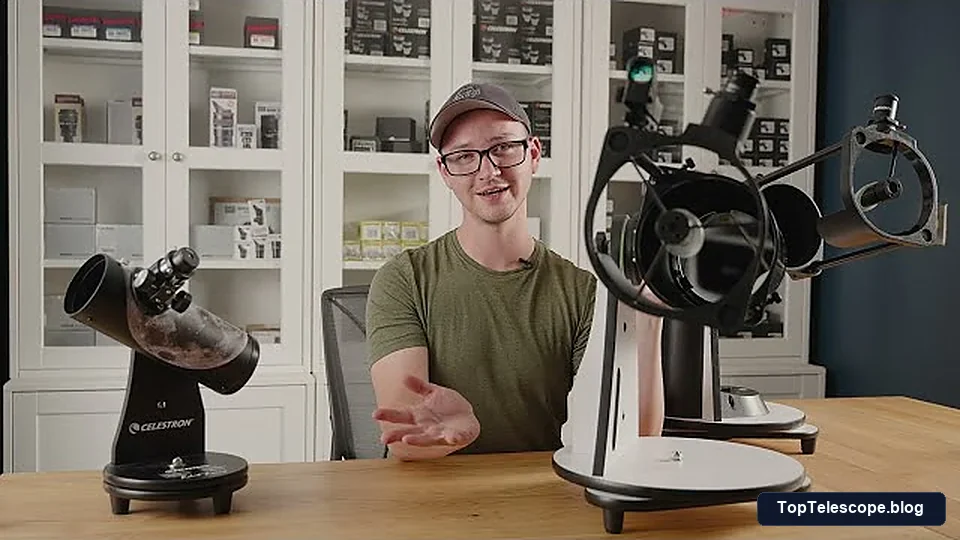
Despite sharing identical primary mirror dimensions, their mounting systems differ fundamentally in purpose. Explore our detailed Virtuoso Gti 150P review to understand how this motorized base operates in the field.
Engineering choices dictate how each instrument behaves under field conditions. Simplicity drives the manual variant, while computational precision guides its motorized sibling through complex night sky coordinates.
- Truss-tube mechanism for compact storage.
- Identical optics housed in distinct operational bases.
- Manual rocker box versus motorized tracking.
Structural Footprint and Weight Ratios
The manual Heritage configuration prioritizes extreme portability, shedding unnecessary mechanical weight to remain easily packable for airline travel or hiking. Total system weight stays remarkably low for a six-inch reflector setup.
Conversely, the electronic Virtuoso base adds internal battery compartments, circuit boards, and heavy-duty gears. This increases overall setup weight, requiring a sturdier table or dedicated tripod for stable high-magnification viewing sessions.
- Lower travel weight for the manual base.
- Internal electronics add heft to the motorized option.
Materials and Mechanical Build Quality
Both optical tubes utilize robust metal construction to protect the delicate glass elements from accidental impacts. Powder-coated finishes resist scratching during frequent transport cycles across rough terrain.
Friction adjustment mechanisms differ between the units to accommodate varying payload dynamics. The manual mount relies on tension knobs, while the electronic version utilizes internal clutch gears.
- Durable powder-coated metal tubes.
- Different friction systems for smooth movement.
Optical Tube Assembly and Parabolic Mirrors
Each instrument utilizes a fast f/5 focal ratio, yielding a focal length of 750 millimetres. This optical configuration provides wide field views ideal for sprawling nebulae, star clusters, and expansive Milky Way constellations.
The primary mirrors are precision-ground parabolic glass surfaces protected by high-reflectivity coatings. These quality optical elements minimize spherical aberration, delivering crisp lunar details and sharp planetary contrast when seeing conditions allow.
Optical performance remains identical across both packages because the glass components are manufactured in the same production facilities under strict quality control standards.
- 750mm focal length for wide fields.
- Parabolic mirrors reduce optical aberration.
- Fast f/5 system requires careful collimation.
Collimation Maintenance and Alignment
Newtonian reflectors demand regular optical alignment to maintain peak performance during transport. Both models feature accessible primary mirror adjustment screws and secondary spider vanes designed to hold collimation under normal handling.
Frequent setup and teardown cycles can nudge mirrors out of true alignment. Utilizing a laser collimator ensures rapid optical tuning before serious stargazing sessions commence.
- Accessible mirror adjustment screws.
- Collapsible struts maintain decent alignment hold.
Eyepiece Selection and Magnification Limits
The fast focal ratio imposes steep demands on eyepiece design to control edge aberrations. Premium oculars deliver superior pinpoint stars across the entire visual field compared to budget stock eyepieces.
Maximum useful magnification reaches approximately three hundred times under exceptional atmospheric conditions. Most deep-sky viewing, however, benefits from moderate power settings between fifty and one hundred fifty times.
- Demanding fast optics require quality eyepieces.
- Moderate magnification yields best deep-sky results.
Mount Mechanics and Tracking Technology
The standard Heritage mount relies entirely on human input and PTFE bearing pads for smooth movement. Check our Skywatcher Heritage 150P review to see how manual tracking performs.
The Virtuoso system incorporates built-in Wi-Fi and dual encoders, allowing the mount to maintain positional awareness even when manually moved. You can track objects effortlessly via smartphone apps without losing manual slip capability.
Technological integration transforms the observing experience for users who prefer guided tours over star-hopping charts.
- Manual friction clutches on the Heritage base.
- Built-in Wi-Fi for wireless smartphone control.
- Dual encoders retain alignment after bumps.
Power Management and Battery Systems
Operating the motorized mount requires reliable external power sources during extended outdoor observing sessions. Internal battery compartments or portable field power tanks prevent sudden shutdown interruptions under cold conditions.
The manual telescope completely bypasses power dependencies, operating silently without batteries, charging cables, or electronic troubleshooting procedures.
- Motorized unit requires steady power input.
- Manual scope operates entirely without batteries.
Pointing Accuracy and Software Integration
Smartphone applications interface smoothly with the electronic base to locate celestial targets automatically. Initial alignment star selection remains critical for successful GoTo positioning accuracy throughout the night.
Without software assistance, manual users must rely on finderscopes and star atlases to navigate the cosmos, building genuine celestial navigation skills over time.
- App-based alignment guides automated pointing.
- Manual operation fosters constellation familiarity.
Real-World Performance and Planetary Views
Under dark skies, the six-inch light gathering power reveals faint deep-sky objects with impressive clarity. Our Sky-Watcher Heritage 150 review highlights how these optics resolve distant galaxies and globular clusters.
When observing Jupiter and Saturn, crisp atmospheric seeing permits magnifications exceeding one hundred fifty times. Planetary cloud belts and the Cassini division emerge clearly if the optics are well collimated and thermally acclimated.
Aperture size dictates light grasp, ensuring both instruments deliver breathtaking views of celestial wonders regardless of the mounting technology underneath.
- Six-inch aperture reveals faint deep-sky structures.
- Planetary details emerge under good seeing.
- Thermal acclimation improves high-power sharpness.
Deep-Sky Contrast and Dark Adaptation
Blackened tube interiors and properly baffled secondary holders enhance image contrast against faint nebulae. Preserving dark adaptation helps observers detect subtle wisps of galactic structure in rural environments.
Light pollution filters screw easily into eyepieces to boost nebula contrast when viewing from suburban backyards or urban observation sites.
- Baffled tubes improve faint contrast.
- Optional filters help combat light pollution.
Lunar Observing and High-Contrast Detail
Lunar craters, mountain shadows, and rilles appear razor-sharp through the parabolic primary mirror. Using a neutral density filter prevents eye strain when observing bright lunar phases.
Thermal equilibrium prevents internal air currents from blurring fine lunar features during early evening observation windows.
- Sharp crater walls and shadow details.
- Neutral density filters manage lunar glare.
Setup, Ergonomics and Portability Factors
Field readiness defines the primary appeal of these collapsible Newtonian reflector systems. Read our Virtuoso Gti 150P review to see how easily the mechanical struts lock securely into place.
Tabletop designs require an elevated platform like a picnic table or heavy tripod to prevent uncomfortable crouching. Ergonomic positioning directly affects your viewing endurance during long astronomical observation sessions throughout the night.
Portability remains exceptional since the entire apparatus fits easily into small vehicle trunks for weekend camping excursions.
- Rapid field deployment via collapsible struts.
- Tabletop elevation required for comfortable viewing.
- Compact form factor fits small vehicle trunks.
Transporting Delicate Optical Assemblies
Padded storage bags protect the open truss structure from dust accumulation and accidental bumps during transit. Keeping optical components secure prevents alignment shifts before arriving at dark sky locations.
The motorized base demands extra care to shield internal circuit boards and gears from moisture and severe mechanical shocks.
- Padded bags safeguard truss mechanisms.
- Electronic mounts need careful transit protection.
Observer Posture and Seating Choices
Adjustable observing chairs reduce neck strain and back fatigue during extended stargazing marathons. Proper eyepiece height alignment ensures relaxed viewing angles toward zenith targets.
Table height variations require adaptable seating arrangements to maintain comfortable posture throughout variable celestial viewing angles.
- Adjustable chairs improve viewing endurance.
- Match seating height to table placement.
Maintenance, Efficiency and Longevity
Open truss designs expose optical surfaces to ambient dust, dew, and stray fingerprints over time. Regular preventive maintenance, including careful mirror cleaning and proper storage dust covers, ensures long optical lifespan and performance.
Electronic mounts introduce potential failure points via internal wiring, circuit boards, and battery drain. Power management becomes crucial during cold winter nights to prevent sudden voltage drops during automated tracking operations.
Simple mechanical designs generally outlive complex electronic systems over decades of active astronomical use.
- Open truss design requires dust management.
- Electronic mounts need careful power oversight.
- Mechanical simplicity promotes long equipment lifespan.
Primary Mirror Cleaning Protocols
Cleaning aluminum-coated glass requires extreme caution to avoid scratching the delicate reflective surface. Submerging mirrors in distilled water with mild soap safely lifts away accumulated particulate matter.
Frequent cleaning should be avoided in favor of protective covers and careful dust prevention habits during storage periods.
- Gentle washing preserves reflective coatings.
- Dust covers minimize cleaning frequency.
Firmware Updates and Electronic Care
Motorized bases occasionally require firmware updates via computer connections to resolve software bugs and improve tracking algorithms. Keeping mobile apps current ensures seamless Wi-Fi communication.
Protecting control panels from heavy dew accumulation prevents electrical short circuits during damp night observation sessions.
- Regular firmware updates optimize tracking.
- Dew shields protect electronic control boards.
Which Option Fits Your Observing Style
Budget-conscious stargazers who value simplicity and rapid deployment will find the manual version exceptionally rewarding. It encourages active constellation learning and eliminates troubleshooting headaches associated with electronic alignment procedures and smartphone connections.
Technology enthusiasts and beginner astrophotographers will benefit immensely from the motorized platform. Automated tracking transforms casual stargazing into a seamless educational experience, especially when sharing celestial targets with family and friends.
Your personal tolerance for technology setup versus pure grab-and-go simplicity ultimately determines the ideal telescope choice.
- Manual version suits purists and budget buyers.
- Motorized platform appeals to tech enthusiasts.
- Match features to your personal observing patience.
Evaluating Experience Levels and Learning Curves
Beginners learning the night sky often appreciate the tactile satisfaction of finding objects using star maps. Manual operation builds foundational astronomical knowledge that automated mounts bypass entirely.
Conversely, crowded urban skies make finding faint targets difficult without GoTo assistance, making automated tracking systems invaluable for city-based astronomers.
- Manual scopes build foundational sky knowledge.
- GoTo systems help bypass urban light pollution.
Investment Value and Long-Term Satisfaction
Both models offer outstanding optical value, delivering six inches of light-gathering power at reasonable price points. Selecting the right base ensures lasting satisfaction without buyer remorse.
Consider whether automated tracking features justify the added weight, cost, and complexity for your specific astronomical goals.
- Exceptional optical value in both packages.
- Weigh complexity against automated convenience.
Frequently Asked Questions
Can the manual Heritage 150P be upgraded to motorized tracking later?
Directly converting a manual Heritage model into a GoTo system is generally impractical due to missing internal gears. Purchasing the Virtuoso GTI from the start is much more cost-effective.
Do both telescopes share the exact same optical performance?
Yes, both instruments utilize identical parabolic mirrors and focal lengths, ensuring identical light gathering and image sharpness. The only difference lies in their mounting systems.
What kind of surface is required to mount these tabletop telescopes?
A sturdy picnic table, heavy-duty camera tripod, or dedicated flat platform works best for stable viewing. Minimizing vibrations is crucial for maintaining high-magnification clarity.
Can these telescopes be used for serious deep-sky astrophotography?
While wide-field lunar and planetary imaging is possible, long-exposure deep-sky astrophotography requires an equatorial wedge. These alt-azimuth tabletop mounts suffer from field rotation over extended exposures.
How often do these Newtonian reflectors require mirror collimation?
Collimation should be checked before every observing session, especially after transporting the collapsible tube. Using a laser collimator ensures quick and precise optical alignment.