Refractor vs Schmidt Cassegrain: Technical Comparison
Choosing between a refractor and a Schmidt Cassegrain telescope defines your entire astronomical workflow. Understanding their optical physics ensures optimal performance under dark skies.

Choose the refractor for pristine contrast and zero thermal acclimation delays, or pick the Schmidt Cassegrain for compact portability and high-magnification planetary resolution without massive tube lengths.
Compare all top models in our Best Telescope: Top Backyard Picks for Astronomy.
Side-by-Side Breakdown
| Criteria | Refractor | Schmidt Cassegrain | Edge |
|---|---|---|---|
| Core Design / Build | Lenses in sealed tube | Catadioptric corrector and mirrors | Refractor |
| Real-World Performance | High contrast, sharp stars | Long focal length, planetary detail | Schmidt Cassegrain |
| Ease of Setup & Use | Simple mounting, balanced | Compact tube, heavy rear cell | Schmidt Cassegrain |
| Durability & Reliability | Fixed elements, rugged build | Moving primary mirror focus | Refractor |
| Efficiency / Operating Footprint | Long physical tube length | Short folded optical path | Schmidt Cassegrain |
| Maintenance Requirements | No alignment needed | Frequent mirror collimation | Refractor |
| Best Ideal Use Case | Wide-field imaging and planets | Deep sky and high magnification | Schmidt Cassegrain |
Core Optical Design and Engineering Differences
A refractor relies on front objective lenses to bend incoming starlight directly to a rear focal point. This traditional lens configuration yields a completely unobstructed optical path for maximum light transmission.
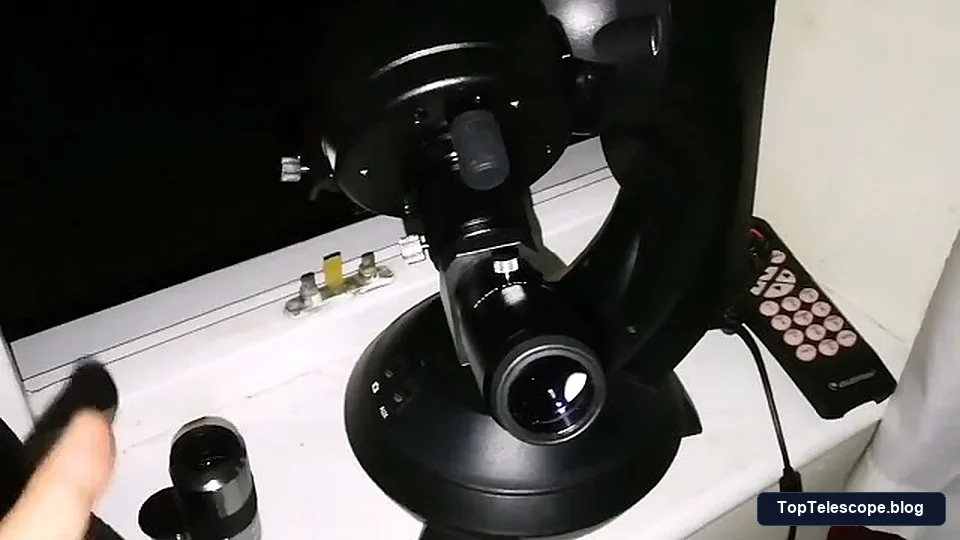
Conversely, a Schmidt Cassegrain utilizes a folded optical design featuring a front corrector plate and spherical mirrors. You can compare popular models in our best schmidt cassegrain telescope guide to find suitable apertures.
Engineering tolerances dictate how well these systems maintain alignment over time. Refractors feature fixed, permanent cell mountings that rarely shift during transport or standard field handling operations.
Refractor telescopes utilize a front objective lens system that bends light to a single focal point. This air-spaced doublet or triplet design eliminates central obstructions, yielding unobstructed wavefronts and maximum theoretical contrast.
Schmidt-Cassegrain systems employ a folded optical path using a spherical primary mirror and a correcting front corrector plate. This hybrid design folds long focal lengths into remarkably compact aluminum or carbon fiber tubes.
Glass selection heavily dictates manufacturing tolerances in both telescope genres. High-end refractors rely on FPL-53 extra-low dispersion glass to minimize chromatic aberration, whereas catadioptrics depend on precise corrector plate figuring to suppress spherical distortion.
- Refractors use glass objective lens elements without internal obstructions.
- Schmidt Cassegrains fold light using dual mirrors and a thin corrector plate.
- Refractor light paths remain permanently aligned from the factory.
Achromatic Versus Apochromatic Lens Systems
Achromatic refractors use two glass elements to bring two primary wavelengths into focus together. Residual false color remains visible around bright lunar and planetary targets during high-power sessions.
Apochromatic designs integrate three or more specialized glass types, such as extra-low dispersion fluorite. This advanced engineering completely eliminates chromatic aberration for pure color fidelity.
- Achromats balance two wavelengths with minor false color traces.
- Apos use exotic glass to eliminate secondary spectrum fringing entirely.
Real-World Performance and Planetary Resolution
Observing planetary details requires high optical contrast to resolve subtle atmospheric bands and storm features. Refractors excel here because their unobstructed apertures scatter very little light across the focal plane.
Schmidt Cassegrains offer significantly longer focal lengths packed into remarkably short optical tubes. This enables high magnification figures using standard eyepieces without requiring extreme barlow lens combinations.
Central obstructions in catadioptric designs slightly reduce peak contrast transfer compared to pure lens systems. However, their larger aperture options gather more total light for faint deep sky targets.
High-magnification planetary viewing demands exceptional optical fidelity and tight Airy disk patterns. Refractors excel here by delivering unobstructed diffraction patterns that cleanly reveal subtle Jovian cloud belts and low-contrast lunar surface features.
Schmidt-Cassegrains offer larger apertures at affordable manufacturing costs, gathering more light photons. However, the secondary mirror obstruction scatters a tiny fraction of light, slightly reducing high-frequency contrast transfer across delicate planetary targets.
Atmospheric seeing conditions frequently limit maximum usable magnification regardless of telescope optical type. When steady air prevails, premium refractors maintain image sharpness far past typical limits, while large-aperture catadioptric systems resolve tighter double stars.
- Unobstructed refractor apertures deliver maximum image contrast.
- Folded catadioptric designs provide high focal lengths efficiently.
- Larger mirror diameters capture faint deep sky photons effectively.
Magnification Limits and Image Scale
Calculating useful magnification depends directly on the clear aperture diameter of your primary optic. Exceeding recommended limits results in dim, blurred images regardless of the telescope type used.
Schmidt Cassegrains easily achieve high focal ratios, making them natural partners for narrow planetary imaging sensors. Refractors often require dedicated barlow elements to reach equivalent planetary scales.
- Magnification scales directly with clear objective or mirror diameter.
- Long focal ratios suit planetary imaging setups exceptionally well.
Mechanical Ergonomics and Mounting Requirements
Physical weight distribution drastically influences mount selection and overall field setup ergonomics. Refractors often require longer mount counterweight shafts due to their extended physical tube lengths.
Schmidt Cassegrains feature short, stubby optical tubes that place less leverage strain on equatorial or altazimuth mounts. However, their heavy rear cells demand careful balancing during initial setup.
Focuser placement on refractors provides comfortable viewing angles across most altitude adjustments. Catadioptric systems utilize rear-cell visual backs that can require diagonal adjustments during zenith observations.
Physical tube balance and moment arms dictate the rigidity required from your alt-azimuth or equatorial mount. Long focal length refractors create severe leverage forces, demanding heavy-duty stainless steel tripods and robust locking clutches.
Compact Schmidt-Cassegrain optical tubes position mass closer to the declination axis pivot point. Many enthusiasts explore our best 8 inch schmidt cassegrain telescope roundup for portable, high-aperture payload stability.
Eyepiece position ergonomics vary drastically between these two distinct telescope architectures. Refractors require diagonal mirrors that shift positions wildly during tracking, while catadioptrics maintain a fixed rear eyepiece location that ensures comfortable seated viewing.
- Long refractor tubes demand sturdy mounts with adequate clearance.
- Compact catadioptric tubes reduce moment arm stress significantly.
- Rear cell configurations require careful diagonal positioning.
Focuser Mechanics and Image Shift
Most refractors utilize robust rack and pinion or crayford focusers that move the eyepiece smoothly. This mechanical action avoids any noticeable image shift during critical focusing adjustments.
Standard Schmidt Cassegrains focus by moving the primary mirror forward and backward along a sliding baffle tube. This mechanical movement can introduce slight image shift during fine focus adjustments.
- Rack and pinion focusers provide smooth, shift-free travel.
- Primary mirror focusing mechanisms can introduce slight image wobble.
Thermal Dynamics and Acclimation Efficiency
Thermal equilibrium is vital for achieving sharp planetary details during high-power viewing sessions. Thick glass blanks and sealed optical tubes trap heat, creating internal air currents that distort incoming starlight.
Refractors generally acclimate much faster than large catadioptric systems because their tubes are narrower. Smaller volumes of trapped air cool down rapidly to match ambient nighttime temperatures outdoors.
Schmidt Cassegrains often require cooling fans or extended acclimation periods before delivering optimal high-power resolution. Trapped boundary layers near the primary mirror surface take time to dissipate completely.
Glass mass and tube enclosure design dictate how rapidly an optical assembly reaches ambient nighttime temperature. Reviewing our schmidt-cassegrain collimation masterclass helps maintain sharp, high-magnification planetary views despite thermal currents.
Open-air cell designs and smaller glass volumes allow premium refractors to shed thermal energy significantly faster. This rapid acclimation minimizes boundary layer turbulence across the objective lens, ensuring crisp, stable views shortly after setup.
Mitigating thermal lag in large catadioptric instruments requires active ventilation accessories like low-vibration cooling fans. Integrating these devices accelerates thermal equalization, preventing frustrating viewing delays during rapidly dropping evening temperatures.
- Sealed optical tubes trap heat and require thermal acclimation time.
- Narrow refractor designs cool down significantly faster outdoors.
- Catadioptric mirrors need extended settling periods for sharp views.
Dew Formation and Prevention Strategies
Exposed front corrector plates on catadioptric telescopes radiate heat quickly and collect dew rapidly. Using flexible dew shields or active heating strips is mandatory for prolonged night sessions.
Refractors also utilize dew shields, but their recessed objective lenses are slightly less vulnerable. Adding a dedicated dew heater band ensures uninterrupted viewing throughout damp autumn nights.
- Corrector plates radiate heat and attract moisture very quickly.
- Dew shields and heating bands protect vulnerable front optics.
Maintenance, Collimation, and Long-Term Durability
Optical alignment stability represents a major deciding factor for mobile astronomers and outreach volunteers. Refractor lens cells are factory-set and permanently locked to prevent accidental misalignment during transit.
Schmidt Cassegrains feature adjustable secondary mirrors that can require periodic collimation checks. Transporting these instruments over rough roads frequently knocks the optical train slightly out of alignment.
Routine exterior cleaning requires caution for both designs to protect specialized anti-reflective coatings. Always use professional optical cleaning solutions and micro-fiber cloths to prevent scratching delicate glass surfaces.
Optical alignment stability represents a major differentiator for amateur astronomers traveling to dark sites. Refractors feature permanently aligned objective cells that rarely require user adjustment, surviving bumpy car rides without losing critical collimation.
Schmidt-Cassegrain systems feature movable primary mirrors and secondary assemblies that routinely demand user collimation. Following our daytime schmidt-cassegrain collimation guide ensures pinpoint stellar images during your night observing sessions.
Dust accumulation and environmental exposure require careful preventative maintenance routines for both optical configurations. Regular cleaning of exterior corrector plates and sealed tube designs protects internal coatings from moisture ingress and airborne contaminants.
- Refractor optics remain permanently aligned and require zero collimation.
- Catadioptric secondary mirrors need periodic user alignment adjustments.
- Coated glass surfaces demand careful cleaning using proper optical supplies.
Long-Term Structural Integrity and Storage
Aluminum optical tubes and anodized metal fittings provide exceptional resistance against everyday field wear. Storing your telescope in a padded hard case protects internal mechanics from dust and moisture.
Mechanical grease inside focusers can stiffen during freezing winter observation runs. Periodic maintenance ensures smooth mechanical operation across all seasonal temperature ranges.
- Padded hard cases protect instruments from dust and impacts.
- Metal tubes and fittings ensure decades of reliable service.
Matching Your Observing Lifestyle to the Right System
Selecting the ideal telescope depends heavily on your specific travel habits and storage space limitations. Backyard astronomers with permanent observatory sheds can comfortably house large catadioptric systems.
Mobile observers who frequently travel to dark sky sites often prefer compact refractor setups. Their quick setup times and rugged mechanical build streamline the entire field deployment process.
Evaluating your personal tolerance for maintenance tasks helps narrow down the final equipment choice. Choosing the right optical format guarantees years of rewarding astronomical discovery under the stars.
Urban backyard astronomers prioritizing quick grab-and-go sessions will appreciate the instant readiness of small refractors. Their rugged mechanical builds and fast thermal acclimation suit unpredictable weather windows and limited balcony space.
Dedicated astroimagers and deep-sky observers seeking high focal lengths in compact housings gravitate toward catadioptrics. Their high light-gathering capacity and narrow field scales perform exceptionally well on faint galaxies and distant planetary nebulae.
Budget allocation must balance optical tube assembly costs against necessary mount and accessory investments. Selecting the correct system guarantees long-term observing satisfaction by aligning equipment mass and optical strengths with your specific astronomical goals.
- Permanent backyard setups suit large-aperture catadioptric systems well.
- Mobile travelers benefit from compact, durable refractor packages.
- Matching maintenance preferences ensures long-term user satisfaction.
Final Purchasing Considerations and Summary
Balance your budget between the optical tube assembly and a stable mounting platform. A high-quality mount is just as important as premium optics for successful astrophotography.
Consult local astronomy clubs to experience both optical designs firsthand before making a final investment. Hands-on testing provides invaluable insights into real-world handling characteristics.
- Allocate adequate budget funds for a stable, sturdy mount.
- Test equipment at local club gatherings before purchasing.
Frequently Asked Questions
Which telescope design is better for viewing planets?
Both designs perform well, but refractors offer superior contrast for crisp planetary details. Schmidt Cassegrains provide higher magnification natively within a compact housing.
Do Schmidt Cassegrains require regular user collimation?
Yes, their movable secondary mirrors require periodic optical alignment using a bright star. Refractors arrive factory-aligned and rarely need any user adjustments.
Why do refractors have longer physical tube lengths?
Refractors must project light directly from the front lens to the rear eyepiece. This requires full focal length tubing unlike folded catadioptric systems.
Are refractors easier to set up for quick viewing sessions?
Refractors generally require zero thermal acclimation and simpler mounts. This makes them ideal for spontaneous backyard stargazing sessions.
Can I use the same eyepieces on both telescope types?
Standard 1.25-inch and 2-inch eyepieces fit both optical systems seamlessly. Always check your focal length pairings to maximize usable magnification.