Optical Design Showdown: Refractor vs Reflector and Cassegrain
Choosing the right telescope requires understanding optical physics. Each design balances aperture, portability, and maintenance differently.

Choose a refractor for zero-maintenance lunar views and sealed optical tubes. Alternatively, select reflectors or cassegrains for maximum light gathering per unit of length.
Compare all top models in our Best Telescope: Top Backyard Picks for Astronomy.
Side-by-Side Breakdown
| Criteria | Refractor | Reflector Vs Cassegrain | Edge |
|---|---|---|---|
| Core Design / Build | Lenses in closed tube | Mirrors in open or folded tube | Tie |
| Real-World Performance | High contrast planetary | High deep-sky reach | Side B |
| Ease of Setup & Use | Immediate grab-and-go | Requires alignment checks | Side A |
| Durability & Reliability | Factory-sealed ruggedness | Movable mirror cells | Side A |
| Efficiency / Operating Footprint | Long physical length | Compact folded paths | Side B |
| Maintenance Requirements | Zero regular maintenance | Frequent laser collimation | Side A |
| Best Ideal Use Case | Lunar and double stars | Faint nebulae and galaxies | Side B |
Optical Architecture and Light Paths
Selecting an optical system demands careful evaluation of glass types, focal ratios, and mechanical housings. Every design handles incoming light wavefronts through distinct reflection or refraction principles, directly impacting overall image fidelity.
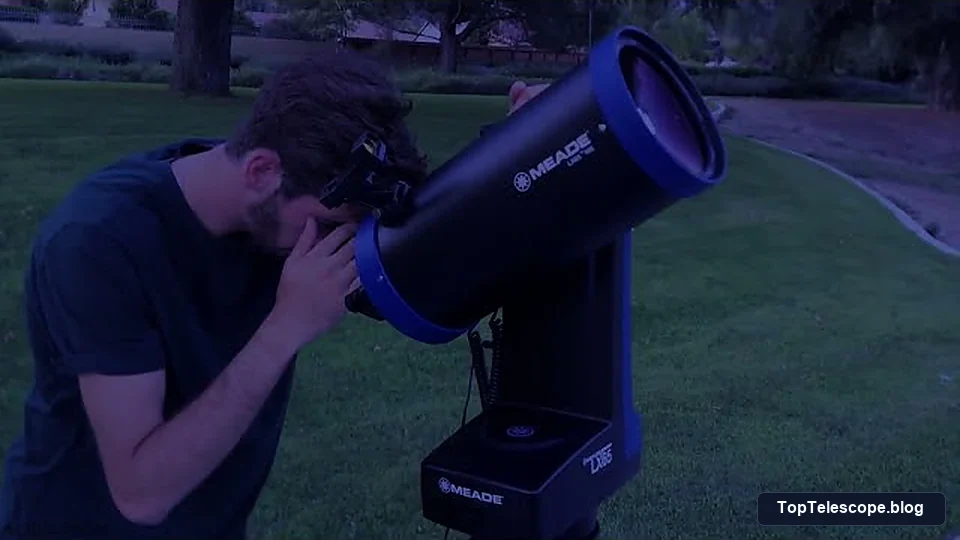
Refractors bend light rays through objective glass elements, routing photons straight to a rear eyepiece. This closed tube design prevents internal air currents, ensuring stable thermal equilibrium during rapid temperature drops outdoors.
- Glass lenses versus metallic mirror coatings
- Closed tube designs versus open frames
- Straight-through versus folded light paths
Lens vs Mirror Mechanics
Reflectors redirect incoming starlight using a primary parabolic mirror located at the tube base. This configuration eliminates chromatic distortion entirely while introducing central obstructions that slightly scatter fine planetary details.
Cassegrain variants fold this optical path by bouncing light between primary and secondary mirrors. Such folding drastically reduces physical tube length while maintaining exceptionally long focal lengths for high-magnification planetary observation.
- Parabolic primary mirror light collection
- Folded secondary mirror light paths
Aperture Scaling and Cost Efficiency
Aperture remains a critical specification dictating light-gathering power. When exploring options via our best beginner refractor telescopes guide, remember that larger apertures resolve tighter double stars and reveal faint deep-sky nebulae.
Manufacturing large glass lenses with high homogeneity is extraordinarily expensive and technically demanding. Consequently, large refractors command massive financial investments and require heavy-duty mounting hardware to support their extended leverage.
- Cost scaling per inch of aperture
- Physical weight and mounting constraints
- Manufacturing complexity for large lenses
Inch-Per-Aperture Value
Newtonian reflectors provide the absolute highest aperture per unit of mass and overall equipment budget. Amateur astronomers gain massive light-gathering capacity without breaking physical support limits or draining bank accounts.
Cassegrains offer a middle ground by packaging large apertures into compact, highly portable aluminum optical tubes. However, complex multi-mirror manufacturing processes increase costs above standard Newtonian reflectors of identical diameter.
- Newtonian mass-to-aperture ratio benefits
- Cassegrain compact aluminum tube packaging
Chromatic Aberration and Optical Purity
Optical aberrations plague all lens and mirror systems unless rigorously corrected through specialized glass or figuring techniques. Understanding these inherent visual flaws helps observers select equipment matching their specific astronomical targets.
Standard achromat refractors suffer from chromatic aberration, rendering bright objects with purple or yellow halos. Upgrading to an apochromatic doublet or triplet configuration resolves this using extra-low dispersion glass.
- Refractive dispersion causing false color halos
- Mirror reflection eliminating chromatic fringing
- Off-axis coma aberrations in fast paraboloids
Managing False Color
Reflectors and cassegrains are completely immune to chromatic aberration because mirrors reflect all light wavelengths equally. However, fast Newtonian mirrors introduce native coma, blurring stars near the extreme edges of wide fields.
Coma correctors successfully mitigate edge distortions in fast reflectors during imaging. While shoppers examining our best astrophotography refractors roundup see native flatness, Newtonian users must budget for extra optical corrector elements.
- Wavelength-independent mirror reflection physics
- Parabolic mirror edge coma correction
Physical Footprint and Ergonomic Mounts
Field ergonomics dictate how frequently an amateur astronomer actually transports and deploys their heavy gear. Heavy, unbalanced optical tubes strain mechanical mounts, causing frustrating vibrations during high-power focusing adjustments.
Refractor tubes are front-heavy or elongated, requiring sturdy equatorial or alt-azimuth mounts with substantial counterweights. Despite this length, their sealed tubes endure rough field transport far better than open reflector designs.
- Eyepiece positioning ergonomics across designs
- Moment arm leverage affecting mount stability
- Portability and vehicle transport constraints
Moment Arms and Payload Capacities
Unlike systems featured in our best refractor telescopes guide, Newtonian reflectors feature side-mounted focusers near the tube. Observers often need rotating rings to reach the eyepiece during zenith tracking.
Cassegrain systems place the eyepiece at the rear bottom of the short tube, ensuring comfortable seated viewing positions. This compact moment arm places minimal strain on computerized tracking mounts during extended observation runs.
- Top-end focuser positioning in Newtonians
- Rear cell ergonomic comfort in Cassegrains
Collimation Routines and Alignment Stability
Routine optical maintenance ensures crisp planetary images and sharp stellar pinpoint stars night after night. Ignoring basic alignment procedures leads to degraded contrast and blurry resolution during critical high-magnification viewing sessions.
Refractor optics are permanently factory-aligned inside heavy metal cells, requiring virtually zero user maintenance over decades. This makes them ideal grab-and-go instruments for users who despise tinkering with mechanical adjustment screws.
- Factory-sealed permanent alignment in refractors
- Periodic laser collimation for Newtonian reflectors
- Sensitive secondary mirror adjustments in cassegrains
Maintaining Optical Alignment
Reflectors demand frequent mirror alignment before every serious observing session. Transporting Newtonian tubes inevitably knocks optics out of place, making our guide to collimating reflectors essential.
Cassegrains also require precise mirror collimation, though their secondary mirrors are often more sensitive to small adjustments. Mastering collimation is a mandatory skill for owners of mirror-based telescopes seeking optimal performance.
- Laser and Cheshire collimation tools
- Secondary mirror sensitivity in folded systems
Thermal Equilibrium and Cool-Down Times
Thermal adaptation is a crucial yet frequently overlooked factor governing high-magnification planetary resolution performance. Glass and metal components must reach ambient outdoor temperatures to eliminate internal air turbulence inside optical tubes.
Large glass lenses take considerable time to cool because heat is trapped deep within thick objective elements. Owners must store refractors in cool garages or deploy them early to accelerate thermal stabilization.
- Thermal mass of thick objective lenses
- Open-tube cooling efficiency in reflectors
- Trapped internal heat in closed cassegrains
Managing Air Currents
Open Newtonian reflector tubes cool down much faster once ambient air circulates across the primary mirror surface. Many observers install small cooling fans behind the mirror cell to speed up thermal equilibrium.
Cassegrains feature closed or semi-sealed tubes that trap warm air, requiring longer cooling periods or integrated ventilation fans. Failing to stabilize temperatures results in swirling thermal plumes that ruin high-power planetary details.
- Primary mirror active cooling fans
- Trapped thermal boundary layers in tubes
Planetary Contrast Versus Deep-Sky Reach
Selecting the right optical configuration ultimately depends on your specific astronomical targets and viewing environment. Urban balconies favor compact systems, while dark rural sites reward massive light-gathering apertures with breathtaking faint views.
Refractors excel at high-contrast lunar, solar, and bright planetary observations where razor-sharp edge definitions matter most. Their crisp point-source stars delight dedicated observers who prioritize pristine optical cleanliness over raw aperture.
- High-contrast lunar and planetary detailing
- Deep-sky galaxy and nebula light gathering
- Versatile hybrid performance for mixed targets
Selecting Target Objects
Reflectors dominate deep-sky observation by delivering massive light collection for faint galaxies, nebulae, and star clusters. Their cost-effective apertures reveal faint photons that remain completely invisible in smaller, expensive refractor scopes.
Cassegrains bridge the gap by offering planetary contrast similar to refractors combined with deep-sky reach. They serve versatile astronomers who want deep-sky capability without managing excessively long Newtonian optical tube assemblies.
- Deep-sky photon collection capabilities
- Hybrid planetary and faint galaxy tracking
Frequently Asked Questions
Which telescope type is best for absolute beginners?
Refractors are widely considered the absolute best choice for novices because their factory-sealed objective lenses require zero alignment or collimation maintenance over many years of regular field use.
This exceptional mechanical reliability lets new astronomers focus entirely on learning night sky navigation without struggling with complex mechanical adjustments during chilly outdoor observing sessions.
Why do Newtonian reflectors require frequent collimation?
Newtonian reflectors require frequent collimation because their primary and secondary mirror cells shift slightly during vehicle transportation over bumpy roads or through drastic temperature fluctuations outdoors.
Maintaining this precise optical alignment is absolutely essential for preserving sharp stellar point-sources and maximizing high-magnification contrast during critical planetary viewing sessions across the night.
Can I use a Cassegrain telescope for deep-sky astrophotography?
Cassegrain telescopes can indeed be used effectively for deep-sky astrophotography, provided they sit on exceptionally sturdy equatorial mounts equipped with reliable electronic autoguiding systems.
Their long focal lengths excel at capturing tiny planetary nebulae and distant spiral galaxies, though tracking requires immense patience and exceptionally steady atmospheric seeing conditions overhead at night.
What causes chromatic aberration in refractor telescopes?
Chromatic aberration occurs in standard refractor telescopes because glass naturally bends different wavelengths of incoming light at slightly different physical angles as they pass through the objective lens element.
This optical dispersion creates distracting purple or yellow halos around bright celestial targets, which can be fully eliminated by purchasing expensive apochromatic triplet glass designs.
Are reflectors better than refractors for viewing galaxies?
Reflectors are generally much better than refractors for viewing distant galaxies because their large mirror apertures gather significantly more faint photons per unit of equipment investment.
While small refractors offer high-contrast planetary views, deep-sky observers genuinely need the massive light-gathering power provided by large Newtonian reflectors to resolve faint distant spiral structures.