Refractor vs Reflector Telescope: Definitive Technical Guide
Choosing between lens-based refractor systems and mirror-based reflector telescopes defines your astronomy experience. This technical guide contrasts their core engineering, maintenance demands, and optical performance.

Choose a refractor for low-maintenance planetary viewing with high contrast, or a reflector telescope for maximum light gathering aperture on deep-sky celestial targets.
Compare all top models in our Best Telescope: Top Backyard Picks for Astronomy.
Side-by-Side Breakdown
| Criteria | Refractor | Reflector Telescope | Edge |
|---|---|---|---|
| Core Design / Build | Front objective glass lenses | Rear parabolic primary mirror | Reflector |
| Real-World Performance | High contrast planetary images | Bright deep-sky nebulae views | Tie |
| Ease of Setup & Use | Instant grab-and-go usability | Requires cooling and checks | Refractor |
| Durability & Reliability | Sealed tube holds alignment | Open tube needs collimation | Refractor |
| Efficiency / Operating Footprint | Compact for small apertures | Bulkier tube for large inches | Refractor |
| Maintenance Requirements | Minimal exterior lens cleaning | Frequent mirror alignment tasks | Refractor |
| Best Ideal Use Case | Lunar, planetary, and wide-field | Faint galaxies and star clusters | Tie |
Core Optical Design and Engineering Mechanics
Refractor telescopes rely on a primary glass objective lens at the front of the tube to bend incoming starlight. This dioptric design converges light rays smoothly to a precise focal point at the rear.
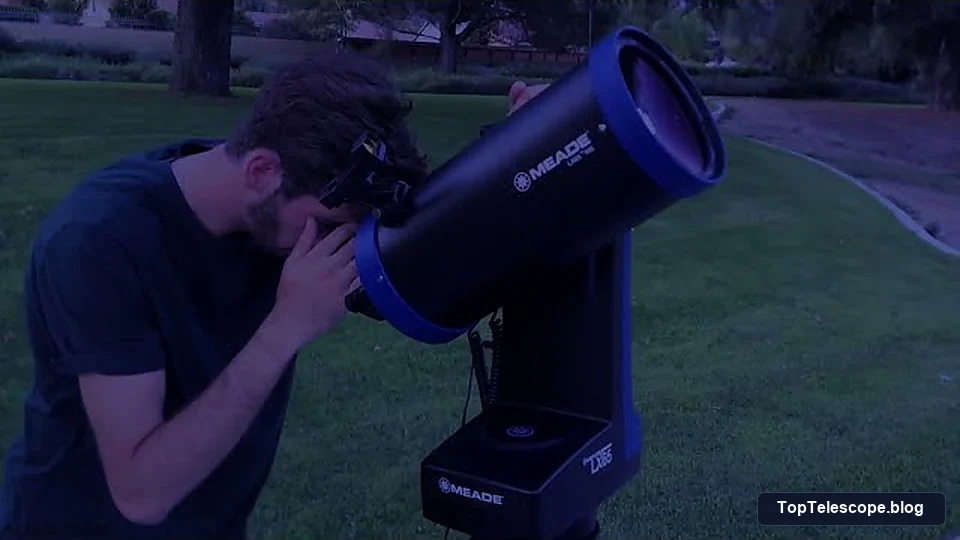
Conversely, Newtonian reflectors capture photons using a curved parabolic primary mirror positioned at the base of an open optical tube. This catoptric approach reflects light forward to a flat secondary diagonal mirror.
Understanding these foundational engineering pathways helps observers anticipate the physical length, tube weight, and internal light paths of each instrument before making a definitive purchase decision for backyard astronomy.
- Refractors use front glass lenses to refract incoming light rays
- Reflectors utilize rear parabolic mirrors to reflect optical paths
- Tube architecture dictates overall physical length and weight balance
Light Path Architecture and Enclosures
Refractors feature a straight-through optical path that requires a star diagonal for comfortable viewing angles. The enclosed tube protects internal glass surfaces from airborne dust and moisture accumulation over time.
Reflectors route light twice inside the tube assembly, sending incoming photons backward before bouncing them sideways toward the focuser. This folded optical layout keeps physical tube lengths manageable for large apertures.
- Sealed refractor tubes prevent internal dust buildup
- Open reflector tubes require protective covers when stored
Glass Properties and Aberration Management
Lenses bend different wavelengths of light at slightly different angles, creating a visual defect known as chromatic aberration. High-end apochromatic optics use special extra-low dispersion glass to bring all colors into sharp focus.
Reflectors bypass this color-fringing limitation entirely because reflection laws apply equally to all wavelengths of light. Mirrors bounce every color of the spectrum to the exact same focal plane without dispersion.
Managing optical defects requires careful material selection in refractors and precise mirror figure polishing in reflectors to ensure crisp planetary and stellar images across high magnifications.
- Apochromatic refractors eliminate false color fringes using special glass
- Reflecting mirrors are inherently free from chromatic color dispersion
Spherical Aberration and Mirror Figures
Fast Newtonian reflectors can suffer from spherical aberration if primary mirrors are ground spherically rather than parabolically. Grinding a true parabolic curve ensures all parallel light rays converge perfectly.
Refractor objective doublets and triplets undergo rigorous optical testing to eliminate spherical errors, ensuring high Strehl ratios and maximum contrast for discerning visual observers and planetary astrophotographers.
- Parabolic primary mirrors correct edge blurring
- Doublet and triplet lenses control spherical wavefront errors
Light Gathering Power and Aperture Realities
Aperture diameter remains critical, but reviewing our best refractor telescope options helps resolve faint celestial details. Larger diameters capture significantly more photons from distant nebulae and faint galaxies.
Manufacturing large glass objective lenses for refractors becomes exponentially expensive and heavy past four inches of aperture. Reflector mirrors provide a much cheaper manufacturing path for large light-gathering surfaces.
Astronomers seeking faint deep-sky targets typically prioritize large aperture reflectors, while lunar and planetary observers often accept smaller refractor apertures for sharper, higher-contrast visual experiences.
- Aperture size dictates light grasp and maximum useful magnification
- Reflectors offer larger apertures per unit of financial cost
Central Obstruction Trade-offs
Newtonian reflectors feature a secondary mirror suspended inside the light path, causing a minor central obstruction. This physical blockage scatters a small percentage of light and slightly reduces image contrast.
Refractors present an entirely unobstructed optical aperture, allowing pure wavefront transmission that maximizes subtle contrast details on planetary disk features like Jupiter cloud belts and Martian polar caps.
- Secondary mirrors create minor diffraction spikes on bright stars
- Unobstructed refractor apertures deliver maximum theoretical contrast
Optical Alignment and Mechanical Maintenance
Maintaining optical alignment is critical for sharp high-power focus. Selecting a top refractor for astrophotography ensures lenses remain permanently mounted in rigid factory cells, requiring virtually no user collimation.
Reflector telescopes require frequent mirror collimation because their primary and secondary mirrors shift slightly during transport and temperature changes. Using laser tools helps align optical axes quickly.
Evaluating your patience for routine maintenance helps determine whether a zero-maintenance refractor or a field-collimated reflector best suits your lifestyle and observing frequency.
- Factory-aligned refractor cells maintain collimation indefinitely
- User collimation tools keep reflector mirrors properly aligned
Cleaning and Long-Term Care
Cleaning glass lenses requires specialized optical solutions and microfiber cloths to avoid scratching delicate anti-reflective coatings. Sealed tubes mean you rarely need to clean internal glass surfaces.
Reflector mirror coatings degrade over years of exposure to atmospheric pollutants and dew, eventually requiring professional re-coating. Dust on primary mirrors has surprisingly minimal impact on visual performance.
- Coated objective lenses require gentle exterior cleaning
- Aluminum mirror coatings degrade over extended decades
Ergonomics, Mounting Footprints, and Portability
Physical ergonomics dictate how easily you can transport, mount, and operate your telescope in the backyard or dark-sky field. Refractors feature compact, balanced tubes that mount easily on alt-azimuth mounts.
Large Newtonian reflectors often require massive Dobsonian rocker boxes or heavy equatorial mounts to support their heavy, wide tubes. Eyepiece placement on reflectors can also require awkward viewing angles.
Consider your vehicle storage capacity and physical strength when selecting a telescope design to ensure it gets frequent use rather than sitting idle in storage.
- Compact refractor tubes fit easily into standard travel bags
- Dobsonian reflector bases provide stable ground-based support
Eyepiece Height and Focuser Position
Newtonian reflectors position the eyepiece near the top front of the optical tube, which remains convenient when the scope points overhead. However, tracking targets low on the horizon can require stepping stools.
Refractors place the eyepiece at the very rear of the telescope tube. When pointing straight up at the zenith, the eyepiece drops very low, requiring an adjustable tripod or diagonal extension.
- Top-mounted reflector focusers require standing or stepping
- Rear-mounted refractor focusers vary widely in operating height
Planetary Contrast Versus Deep-Sky Performance
High-contrast planetary viewing demands tight optical wavefronts and scatter-free light paths. High-end refractors excel at delivering razor-sharp planetary details and pinpoint stellar diffraction patterns during steady nights.
Deep-sky observing relies entirely on light-gathering surface area to reveal faint photons from distant galaxies, emission nebulae, and globular clusters. Large reflectors dominate this category by capturing abundant light.
Matching your preferred astronomical targets to the correct optical design ensures you achieve satisfying views of both nearby solar system bodies and distant deep-sky wonders.
- Refractors deliver superior planetary contrast and dark sky backgrounds
- Reflectors reveal spiral structure in faint distant galaxies
Wide-Field Astrophotography vs Visual
Short-tube refractors serve as premier optical instruments for wide-field astrophotography, capturing expansive constellations and large nebulae with flat fields. Smaller focal lengths simplify tracking requirements.
Fast Newtonian reflectors provide enormous light buckets for deep-sky imaging, but their mechanical weight demands heavy-duty motorized mounts to track celestial objects with sub-arcsecond accuracy.
- Short focal length refractors offer wide photographic fields
- Fast reflectors require sturdy equatorial tracking mounts
Thermal Equilibrium and Environment Acclimatization
Telescope optics must match ambient outdoor temperatures to prevent internal air currents from degrading image sharpness. Exploring our best refractor telescope for beginners highlights systems taking moderate time to cool down fully.
Large reflector mirrors hold substantial thermal mass inside enclosed or semi-open tubes, often requiring cooling fans to accelerate thermal equilibrium before sharp viewing is possible.
Managing thermal currents correctly prevents internal tube turbulence from blurring fine planetary details during critical moments of steady atmospheric seeing.
- Lens cells require steady temperature acclimatization periods
- Primary mirrors need active cooling fans for fast thermal matching
Dew Formation and Shielding
Nighttime radiative cooling frequently causes dew to condense on exposed objective lenses and corrector plates. Extending dew shields protects front refractor elements from rapid moisture accumulation.
Reflector tubes shield their primary mirrors deep inside the optical housing, making them naturally resistant to heavy overhead dew settling directly onto the main reflective surface.
- Dew shields prevent moisture buildup on glass lenses
- Deep tube placement protects primary mirrors from overhead dew
Determining the Ideal Setup for Your Observing Goals
Selecting between a refractor and a reflector depends on balancing aperture, maintenance, portability, and your specific astronomical interests. Beginners often benefit from defining their primary targets first.
Urban observers battling light pollution often enjoy refractors for lunar and double star viewing, while rural astronomers appreciate large reflectors for hunting faint deep-sky objects across dark skies.
Investing in quality mounts and stable tripods ensures whichever optical design you choose performs reliably for years of engaging backyard astronomy.
- Match telescope design to your local light pollution levels
- Prioritize mount stability alongside optical tube quality
Final Purchasing Considerations
Weighing total system weight, storage space, and mastering Newtonian reflector collimation guides you toward the optimal instrument. A well-chosen telescope delivers unforgettable views of the universe.
Take time to join local astronomy clubs or attend star parties to test both optical designs in person before finalizing your equipment investment for backyard stargazing.
- Test optical equipment at local astronomy club meetups
- Consider total system weight before buying large aperture scopes
Frequently Asked Questions
Which telescope type is better for absolute beginners?
Refractor telescopes are generally better for beginners because they require zero optical collimation and feature sealed tubes. Choosing a simple refractor ensures hassle-free setup during your first stargazing sessions.
Do reflector telescopes require frequent mirror alignment?
Yes, reflector telescopes require regular mirror alignment known as collimation to maintain sharp focus. Transporting the telescope across bumpy roads typically shifts the mirrors slightly out of optimal alignment.
Why do large refractors cost significantly more than reflectors?
Manufacturing large, flawless glass objective lenses requires grinding and polishing multiple surfaces with extreme precision. This complex glass-making process makes large refractors prohibitively expensive compared to mirrors.
Can I use both telescope types for astrophotography?
Both telescope types support astrophotography when mounted on sturdy, motorized equatorial tracking mounts. Short refractors excel at wide-field imaging, while fast reflectors capture faint deep-sky nebulae effectively.
How does aperture size affect my nighttime observing views?
Aperture size determines how many photons your telescope collects from faint celestial targets. Larger apertures reveal fainter details in deep-sky objects and higher resolution on planets.