Reflector vs Refractor For Astrophotography: Concise Verdict
Choosing the right astrophotography optical system requires balancing aperture costs against optical purity. Understanding mechanical payloads and focal ratios ensures clean deep-sky imaging results.

Pick the refractor telescope for wide-field nebulas and zero-maintenance optics. Choose the reflector telescope for maximum light-gathering aperture at a fraction of the budget.
Compare all top models in our Best Telescope: Top Backyard Picks for Astronomy.
Side-by-Side Breakdown
| Criteria | Reflector | Refractor For Astrophotography | Edge |
|---|---|---|---|
| Core Design / Build | Parabolic primary mirror with secondary flat | Air-spaced objective lens elements | Refractor For Astrophotography |
| Real-World Performance | High light collection for faint galaxies | Pristine star colors without diffraction spikes | Refractor For Astrophotography |
| Ease of Setup & Use | Requires frequent collimation checks | Grab-and-go permanent lens alignment | Refractor For Astrophotography |
| Durability & Reliability | Open tubes collect dust and misalign | Sealed optical tubes protect coatings | Refractor For Astrophotography |
| Efficiency / Operating Footprint | Large physical length and heavy counterweights | Compact transportable imaging footprint | Refractor For Astrophotography |
| Maintenance Requirements | Regular mirror cleaning and laser collimation | Minimal exterior lens dusting only | Refractor For Astrophotography |
| Best Ideal Use Case | Deep-sky faint nebulae and distant galaxies | Wide-field star clusters and large emission nebulae | Refractor For Astrophotography |
Optical Design Principles and Glass Types
Astrophotography demands exceptional optical precision to capture sharp celestial details. Reflector systems rely on curved primary mirrors to gather light, eliminating chromatic aberration entirely.
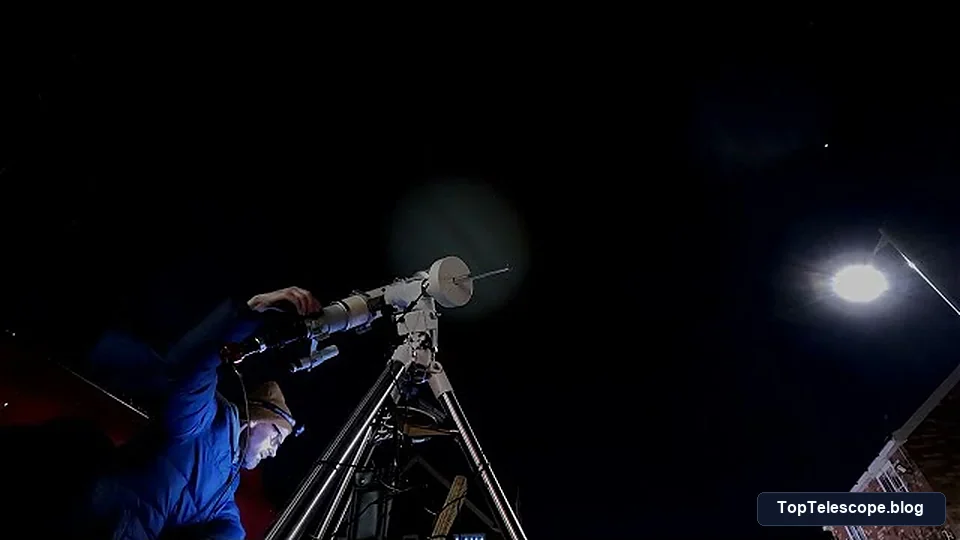
Refractor instruments utilize multi-element glass lenses to bend light rays. Exploring options in our best 80mm refractor for astrophotography roundup reveals how extra-low dispersion glass elements eliminate false color halos.
Selecting the correct optical design dictates how cleanly your camera sensor records faint starlight. Evaluating glass purity helps prevent frustrating optical distortions during long exposure imaging sessions.
- Parabolic primary mirrors eliminate spherical aberration effectively.
- Apochromatic triplet lenses correct all primary color wavelengths.
- Open optical tubes require careful thermal management for stability.
Understanding Lens Element Configurations
Doublet refractors use two glass elements, which remain budget-friendly while managing basic false color. Triplet configurations add a third lens element to achieve absolute color correction.
Advanced glass formulations like FPL-53 provide superior refractive indices for demanding astrophotographers. Matching glass quality to your camera sensor resolution prevents unwanted color fringing.
- Doublet designs suit monochrome narrowband imaging filters.
- Triplet lenses provide flawless color fidelity for color cameras.
Managing Chromatic Aberration and Optical Errors
Uncontrolled chromatic aberration ruins fine stellar details by focusing different wavelengths at separate points. Selecting options from our best apochromatic refractor for astrophotography recommendations helps ensure high-end glass prevents this issue.
Newtonian reflectors bypass false color completely because reflection laws apply equally to all wavelengths. However, reflectors introduce coma at the edges of fast focal ratios, requiring corrective lenses.
Balancing these inherent optical compromises ensures your astro-images remain crisp across the entire sensor frame. Proper field flatteners are mandatory accessories for modern wide-field imaging setups.
- Reflectors suffer from off-axis coma in fast focal ratios.
- Refractors require specialized glass to eliminate violet halos.
- Field flatteners restore pinpoint stars at sensor corners.
Correcting Coma in Fast Newtonian Systems
Fast Newtonian reflectors feature steep parabolic curves that generate distracting off-axis optical aberrations. Inserting a dedicated coma corrector inside the drawtube restores pinpoint star shapes.
Backfocus spacing must be measured meticulously when attaching field flatteners and filter wheels. Proper spacing guarantees optimal geometric correction across large sensor formats.
- Coma correctors thread directly into standard 2-inch focusers.
- Precise backfocus measurements prevent residual field curvature.
Aperture Light Gathering Versus Focal Length
Aperture diameter dictates the total light-gathering power and maximum resolving resolution of your telescope. Larger mirrors collect faint photons faster, reducing required exposure times for distant galaxies.
Refractor apertures are constrained by manufacturing limitations and massive glass weight penalties. Analyzing models in our best apo refractor for astrophotography guide shows why large apertures become exceedingly expensive and heavy.
Matching your local seeing conditions and target objects helps determine the ideal aperture size. Wide nebulae require shorter focal lengths, whereas planetary nebulae demand higher magnification.
- Larger apertures resolve fainter deep-sky nebulosity quickly.
- Refractor lenses become prohibitively heavy past modest diameters.
- Focal length determines framing scale for various celestial objects.
Balancing Focal Ratios for Imaging Speed
Fast focal ratios below f/5 deliver wider fields of view and shorter exposure durations. Slow optical systems demand significantly longer sub-exposure times to capture equivalent detail.
Managing focal length ensures your chosen targets fit comfortably within your camera sensor. Wide targets need short refractors, while tiny planetary nebulae require long focal instruments.
- Fast optical systems shorten total integrated imaging time.
- Slow focal ratios require sturdy tracking mounts for stability.
Mechanical Rigidity and Focuser Tolerances
Heavy imaging gear demands exceptionally rigid mechanical focusers to prevent camera sag during tracking. Rack and pinion focusers handle heavy payloads much better than older friction-based designs.
Reflector tubes can flex slightly under thermal shifts and heavy loads, altering optical alignment. Carbon fiber tubes offer superior dimensional stability compared to standard rolled aluminum alternatives.
Ensuring tight mechanical tolerances eliminates unwanted tilt that ruins corner star shapes. Investing in robust mounting hardware protects your sensitive optical train throughout long nights.
- Rack and pinion focusers support heavy multi-camera rigs.
- Carbon fiber tubes resist temperature-induced focal shifts.
- Rigid adapters prevent unwanted mechanical image tilt.
Evaluating Focuser Payload Capacities
Modern CMOS cameras, filter wheels, and rotators add substantial weight to your imaging train. Rated focuser capacities must exceed your total attached accessory weight with comfortable margins.
Dual-speed micro-focusers allow precise adjustments necessary for achieving razor-sharp stellar focus. Motorized focus controllers further automate this critical step during unattended imaging sessions.
- Heavy imaging trains require robust locking thumbscrews.
- Motorized focusers eliminate manual vibration during focusing.
Thermal Acclimation and Tube Currents
Thermal equilibrium is vital for maintaining sharp planetary and deep-sky imaging performance outdoors. Enclosed optical tubes trap warm air currents that degrade internal optical wavefront quality significantly.
Newtonian reflectors often feature open trusses or cooling fans to accelerate thermal acclimation. Allowing adequate cool-down time prevents swirling internal air currents from blurring high-magnification targets.
Insulating telescope tubes protects internal optics from rapid ambient temperature drops during night sessions. Proper thermal management guarantees consistent optical performance from dusk until dawn.
- Enclosed tubes require extended time to match ambient temperatures.
- Rear cooling fans accelerate mirror thermal stabilization effectively.
- Truss designs dissipate trapped heat rapidly in open air.
Using Boundary Layer Fans Effectively
Active boundary layer fans sweep warm air away from primary mirror surfaces rapidly. Running low-vibration fans during imaging maintains steady thermal boundaries inside the optical tube.
Power management for fans and dew heaters requires careful cable routing around mounts. Keeping cables organized prevents snagging during meridian flips and tracking arcs.
- Low-vibration fans prevent blurring during long exposures.
- Proper airflow eliminates internal tube thermal currents.
Maintenance Routines and Collimation Precision
Reflector telescopes require routine user collimation to align primary and secondary mirrors accurately. Transporting reflectors often knocks optics out of alignment, necessitating quick field adjustments before shooting.
Refractors feature factory-sealed lens cells that permanently maintain optical alignment across decades of use. This maintenance-free nature makes refractors exceptionally reliable for remote automated imaging stations.
Learning proper mirror collimation procedures is a mandatory skill for all Newtonian telescope owners. Simple laser tools make alignment straightforward once you master the basic mechanical adjustment screws.
- Reflectors demand periodic mirror collimation before imaging.
- Refractor lens cells are permanently aligned at the factory.
- Laser collimators simplify routine Newtonian maintenance tasks.
Mastering Newtonian Collimation Steps
Collimation starts by centering the secondary mirror beneath the focuser drawtube accurately. Next, adjustment screws tilt the primary mirror until the laser return dot hits its origin.
Checking collimation regularly ensures maximum sharpness across your entire astrophotography sensor. Neglecting this routine maintenance step leads to soft, distorted star images.
- Secondary mirror placement centers the optical axis precisely.
- Primary mirror tilt controls final on-axis image sharpness.
Astrophotography Mounting and Payload Demands
Equatorial mounts must support the physical weight of your telescope securely. When reviewing our best refractor telescope for astrophotography choices, note that long reflector tubes demand heavier, sturdier counterweighted mount platforms.
Compact refractors place less torque on equatorial mounts, simplifying mobile field imaging setups greatly. Lighter gear footprints reduce overall setup fatigue during multi-day astrophotography trips.
Calculating total payload weight against mount ratings prevents tracking errors during exposures. Always stay well below maximum payload limits for optimal guiding performance.
- Long reflectors require heavy-duty equatorial mount platforms.
- Compact refractors reduce overall mobile imaging footprint.
- Mount tracking accuracy depends on balanced payload weights.
Balancing Polar Axes and Counterweights
Proper declination and right ascension balancing prevents excessive motor wear on mounts. Slight eastward imbalance helps gear teeth maintain consistent meshing pressure during tracking.
Secure cable management prevents snags when mounts execute automatic meridian flips overnight. Careful setup ensures worry-free automated astrophotography data collection.
- Eastward imbalance optimizes gear meshing performance.
- Proper balancing protects internal motor drive gears.
Frequently Asked Questions
Why do reflectors require frequent collimation checks?
Transport vibrations and thermal shifts easily nudge mirrors out of alignment. Regular mirror collimation ensures pinpoint stars during long exposures.
Are apochromatic refractors worth the higher cost?
Yes, specialized glass elements eliminate distracting false color halos entirely. This optical purity delivers pristine star colors without extra filters.
Can I use a reflector for wide-field nebulas?
Most standard reflectors feature long focal lengths suited for small galaxies. Selecting a fast Newtonian provides wider fields of view.
How does aperture size affect deep-sky imaging?
Larger apertures collect faint photons much faster than smaller lenses. This increased light gathering power reduces total exposure times.
Which design is better for beginners in astrophotography?
Refractors offer a maintenance-free optical setup for hassle-free learning. Their sealed lens cells eliminate complex alignment routines for novices.