Maksutov vs Schmidt: Optical Design Comparison Guide
Choosing between Maksutov and Schmidt optical systems involves balancing focal length, aperture size, and portability for specific astronomical targets. This technical comparison evaluates their real-world optical performance.

Choose the Maksutov design for planetary sharpness and durability, while the Schmidt system suits wide-field imaging and versatile deep-sky observing.
Compare all top models in our Best Telescope: Top Backyard Picks for Astronomy.
Side-by-Side Breakdown
| Criteria | Maksutov | Schmidt | Edge |
|---|---|---|---|
| Core Design / Build | Thick meniscus corrector lens with spherical mirrors | Thin aspheric corrector plate with spherical mirrors | Maksutov |
| Real-World Performance | Exceptional planetary contrast and tight stellar points | Wide field of view for deep-sky objects | Schmidt |
| Ease of Setup & Use | Compact tube with slower focal ratios | Faster focal ratios and flexible mounting options | Schmidt |
| Durability & Reliability | Rugged sealed optical tube assembly | Ventilated structure with accessible adjustments | Maksutov |
| Efficiency / Operating Footprint | Long focal length requiring careful tracking | Moderate footprint adaptable to diverse mounts | Schmidt |
| Maintenance Requirements | Sealed tube minimizes internal dust accumulation | Exposed corrector plate requires regular cleaning | Maksutov |
| Best Ideal Use Case | Lunar, planetary, and double star viewing | Deep-sky astrophotography and wide-field surveys | Split |
Optical Architecture and Corrector Plates
Maksutov systems utilize a thick, curved meniscus corrector lens that matches the primary mirror's spherical shape. This heavy front element effectively eliminates chromatic aberration without requiring expensive glass types.
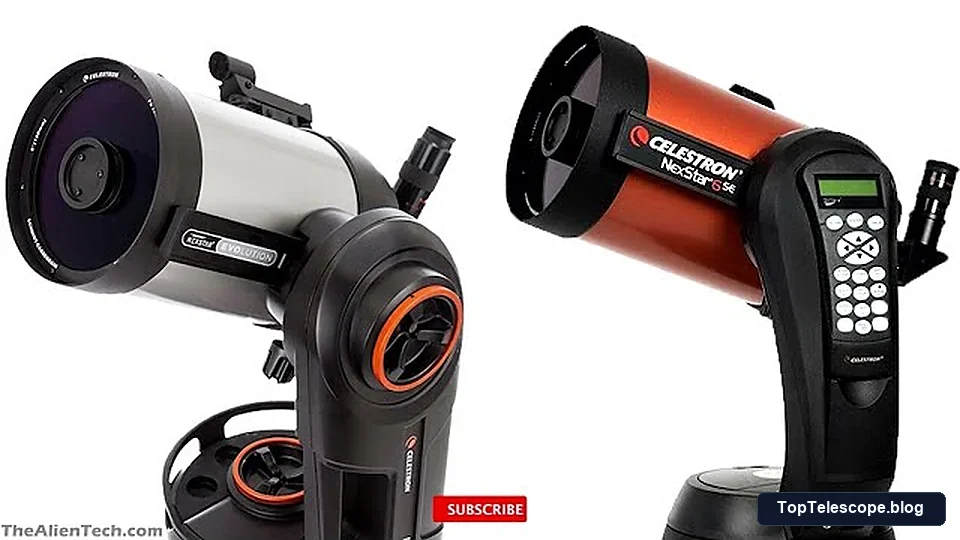
Schmidt telescopes rely on a thin, aspheric corrector plate positioned at the front opening. If you want a versatile OTA, check out options in our best schmidt cassegrain telescope guide.
Maksutov-Cassegrains use a thick, deeply curved meniscus corrector lens featuring a silvered secondary spot. This heavy glass lens introduces substantial weight but minimizes spherical aberration natively across the visual spectrum.
Schmidt designs employ a thin aspheric plate near the front aperture, matched with a separate secondary mirror. This lighter configuration reduces optical tube mass while managing off axis coma efficiently across wider fields.
- The thick meniscus lens found in Maksutov optics provides exceptional structural rigidity, protecting vital optical alignments during transport across rugged terrain.
- Schmidt designs incorporate a specialized thin corrector plate that significantly reduces front-end weight, making the complete optical tube assembly much easier to handle.
Meniscus versus Aspheric Plate Geometry
Manufacturing a deep meniscus lens requires extensive polishing time, which directly increases production costs and overall retail pricing for high-end Maksutov optical tube assemblies.
Producing thin aspheric plates demands precision computer-controlled generation equipment to shape the complex glass surfaces accurately before final manual correction processes begin.
- Meniscus curves demand prolonged optical figuring cycles to achieve precise surface accuracy across the entire aperture of the primary corrector element.
- Aspheric plates require automated vacuum-slumping or computerized milling techniques to attain the exact correction profile needed for sharp imagery.
Focal Ratios and Field of View
Long focal ratios characterize standard Maksutov instruments, frequently operating around f/12 or f/15. This optical configuration naturally delivers high magnification suitable for detailed planetary and lunar observation.
Schmidt telescopes typically feature faster focal ratios ranging from f/2 to f/10. Many astronomers prefer aperture systems featured in our best 8 inch schmidt cassegrain telescope roundup for deep-sky imaging.
Standard Maksutov systems typically operate around f/12 to f/15, yielding narrow fields ideal for planetary imaging, lunar observing, and splitting tight binary star systems under steady atmospheric seeing conditions.
Schmidt designs traditionally feature faster f/10 focal ratios, accommodating larger sensor formats and providing wider corrected fields of view suitable for extensive deep sky astrophotography and rich cluster study.
- Extended focal lengths restrict Maksutov platforms from capturing large nebulae comfortably, limiting their primary effectiveness to small, high-surface-brightness celestial targets.
- Moderate focal lengths allow Schmidt assemblies to cover expansive star clusters and sprawling gas clouds with remarkable photographic efficiency.
Magnification Potential and Image Scale
High focal ratios simplify the task of achieving high planetary magnification without relying on extreme eyepiece designs or low-quality Barlow magnification lenses.
Shorter focal lengths require specialized focal reducers or barlow elements to match the small pixel arrays found in modern astronomical imaging cameras.
- Planetary observers appreciate the inherent magnification scaling provided by slow focal ratios without introducing detrimental optical distortions.
- Astrophotographers utilize versatile focal lengths to adapt their image scales for diverse targets ranging from galaxies to faint nebulae.
Optical Aberrations and Contrast Control
Maksutov designs excel at suppressing off-axis aberrations, delivering pinpoint star images across a narrow circle. You can find top models detailed in our best maksutov cassegrain guide.
Schmidt systems manage spherical aberration effectively but often introduce slight coma and field curvature when paired with large modern camera sensors.
The thick meniscus lens of a Maksutov introduces virtually zero chromatic dispersion while suppressing higher order wavefront errors. This design delivers exceptional planetary contrast for discerning subtle cloud belts on Jupiter.
Schmidt systems manage chromatic aberration effectively through their thin corrector plates, though larger central obstructions can slightly scatter light. Proper baffle design is vital to maintain deep sky contrast during dark sessions.
- Excellent baffling inside Maksutov tubes enhances lunar contrast by blocking stray light from entering the light path directly.
- Corrective coatings applied to Schmidt corrector plates minimize internal reflections and maximize light transmission efficiency across the visible spectrum.
Secondary Mirror Obstruction Impacts
Both optical layouts feature a secondary mirror spot or secondary housing that scatters a small percentage of incoming light, slightly reducing fine-detail contrast.
Maksutov spot mirrors are typically aluminized directly onto the rear surface of the thick corrector lens, eliminating mechanical spider vanes entirely.
- Eliminating spider vanes removes troublesome diffraction spikes around bright stars, resulting in cleaner planetary limb definitions and darker backgrounds.
- Schmidt secondary mirrors require conventional mechanical holders with multiple support vanes that produce recognizable diffraction spikes on bright stellar objects.
Thermal Equilibrium and Cool-Down Times
Thick corrector lenses and sealed optical tubes trap internal heat efficiently, requiring substantial time for Maksutov systems to reach ambient nighttime temperatures.
Thin corrector plates and ventilated Schmidt designs dissipate internal heat much faster, reducing overall preparation times during urgent field observation sessions.
Thick corrector lenses trap ambient heat extensively within sealed optical tubes. Selecting models from a quality best maksutov cassegrain telescopes review ensures you budget proper extended cool down time before imaging.
Schmidt optical tubes feature thinner corrector plates that shed internal heat somewhat faster, though enclosed aluminum housings still demand active air circulation to eliminate internal thermal plumes and preserve high magnification focus.
- Active cooling fans installed on modern tubes help accelerate thermal equalization for large closed-tube Maksutov instruments significantly.
- Passive cooling remains standard for most Schmidt configurations, relying on ambient airflow around open cell structures to stabilize internal temperatures.
Managing Thermal Plumes in Sealed Tubes
Trapped thermal plumes circulate inside sealed optical tubes, causing image blurring and frustrating high-magnification planetary observation until complete thermal stability is reached.
Insulation wraps or specialized cooling attachments prevent internal temperature differentials from ruining delicate high-resolution planetary imaging sessions during winter nights.
- Temperature management routines ensure optimal optical performance by eliminating internal air currents that distort incoming wavefronts.
- Careful storage practices in unheated garages help minimize thermal lag when moving equipment outdoors for evening observation.
Mechanical Stability and Mounting Demands
Heavy optical tube assemblies demand sturdy equatorial or alt-azimuth mounts to ensure vibration-free tracking during high-power planetary viewing sessions.
Schmidt telescopes offer a favorable weight-to-aperture ratio, allowing smaller, more portable mounts to support intermediate optical tube sizes reliably.
Heavy optical tubes demand robust equatorial mounts featuring sturdy steel legs and precision gear drives. Proper counterweight balancing prevents excessive wear on motor clutches during long exposure tracking runs and astrophotography sessions.
Internal mirror focusing mechanisms require stable greasing compounds to prevent image shift during directional reversals. Rigid dovetail mounting bars ensure secure mechanical coupling between the telescope tube and heavy duty mounts.
- Robust dovetail mounting bars secure heavy Maksutov tubes firmly against slippage during aggressive tracking and slewing movements.
- Internal mirror lock mechanisms prevent unwanted primary mirror shifting during long-exposure astrophotography tasks with Schmidt instruments.
Focusing Mechanisms and Image Shift
Moving the primary mirror via internal focusing knobs can introduce image shift, requiring external crayford focusers for critical astrophotography focus tuning.
Rear cell focusers on Schmidt units slide the primary mirror along a central baffle tube, necessitating secondary mirror locks during imaging.
- External linear-bearing focusers eliminate image shift entirely, providing butter-smooth adjustments for demanding planetary and lunar videography.
- Regular mechanical inspections ensure focus assemblies remain tightly aligned and free from excessive backlash during directional reversals.
Portability, Weight, and Field Setup
Compact tube lengths make Maksutov telescopes exceptionally easy to pack into small vehicles for remote dark-sky travel excursions and expeditions.
Schmidt configurations provide large apertures in surprisingly short tube lengths, balancing portability with significant light-gathering capability for deep-sky objects.
Compact apertures allow smaller Maksutov tubes to travel easily, but larger versions become prohibitively heavy for single user transport. Ergonomic carrying handles and padded transport cases are essential field accessories.
Schmidt configurations offer an advantageous power to weight ratio for medium to large apertures, facilitating field setup. Fork mount variants simplify assembly procedures, while modular optical tube assemblies require sturdy tripod legs.
- Dense glass components increase total lift weight, requiring careful handling when mounting heavy Maksutov tubes onto tripods.
- Lightweight aluminum or carbon fiber tubes reduce overall carrying strain for field astronomers transporting Schmidt systems.
Ergonomics and Carrying Handle Design
Integrated carrying handles simplify the awkward task of lifting heavy optical tubes onto elevated mounting platforms safely and securely.
Balanced weight distribution prevents accidental tipping during assembly phases in dark field environments where visibility remains extremely limited.
- Ergonomic placement of focus knobs and finder scopes ensures comfortable operation during extended night-sky observation marathons.
- Protective dust covers safeguard delicate corrector plates from accidental fingerprints and environmental dew accumulation during teardown.
Maintenance, Cleaning, and Long-Term Care
Sealed optical tubes protect internal mirror surfaces from dust accumulation, minimizing the frequency of professional cleaning and realignment interventions required.
Exposed corrector plates on Schmidt systems collect dew and airborne particulates rapidly, necessitating frequent cleaning with specialized optical solutions.
Sealed optical tubes minimize dust accumulation on internal mirror surfaces, reducing the frequency of invasive cleaning procedures. Periodic exterior dusting with bulb blowers protects optical coatings from abrasive particle damage.
Corrector plate surfaces require careful cleaning using professional optical grade solutions and micro fiber cloths to avoid scratching delicate antireflective coatings. Proper storage in humidity controlled environments prevents fungal growth on glass.
- Dew shields prevent moisture condensation on exposed front corrector elements during humid observation nights in the field.
- Desiccant plugs inserted into sealed tubes absorb residual humidity, preventing internal fogging of optical glass surfaces.
Optical Alignment and Collimation Stability
Fixed optical alignment in Maksutov systems rarely requires adjustment, maintaining factory collimation through rigorous travel and handling conditions.
Schmidt telescopes feature accessible collimation screws on their secondary mirror cells, allowing users to fine-tune alignment periodically.
- Stable collimation ensures consistent high-contrast performance without constant tinkering before every observation session begins.
- Proper storage in padded transport cases prevents jarring impacts from knocking sensitive optical components out of alignment.
Frequently Asked Questions
Which telescope design offers better planetary contrast?
Maksutov systems deliver superior planetary contrast due to their slow focal ratios and small secondary mirror obstructions. This makes them ideal for lunar studies.
Are Schmidt telescopes better for deep-sky imaging?
Schmidt optics provide wider field imaging capabilities through faster focal ratios and lighter corrector plates. They excel at capturing extended nebulae.
How does cool-down time differ between the two?
Maksutov tubes require extended cool-down periods because of their thick meniscus corrector lenses and sealed housings. Schmidt systems stabilize much faster.
Do Maksutov telescopes require frequent collimation adjustments?
Maksutov systems maintain exceptional collimation stability thanks to their fixed mirror designs and robust internal structural bracing elements.
Which system is easier to transport for travel?
Both designs offer compact tube lengths, but Schmidt units provide larger apertures at lower weights for field astrophotography setups.