Maksutov vs Schmidt Cassegrain: Optical Showdown
Choosing between these popular catadioptric designs depends on focal length, thermal adaptation time, and deep-sky imaging goals. Understanding their unique optical layouts ensures optimal performance under dark skies.

Choose the Maksutov for planetary sharpness and low maintenance, or select the Schmidt Cassegrain for a wider field and faster photographic focal ratios.
Compare all top models in our Best Telescope: Top Backyard Picks for Astronomy.
Side-by-Side Breakdown
| Criteria | Maksutov | Schmidt Cassegrain | Edge |
|---|---|---|---|
| Core Design / Build | Thick meniscus corrector lens with a spot secondary mirror | Thin Schmidt corrector plate with a separate secondary mirror | Maksutov |
| Real-World Performance | Exceptional contrast for high-magnification planetary viewing | Versatile all-around performance for mixed visual and imaging tasks | Schmidt Cassegrain |
| Ease of Setup & Use | Heavier optical tube requiring robust mounting solutions | Lighter overall weight profile with shorter physical lengths | Schmidt Cassegrain |
| Durability & Reliability | Permanently aligned optics resist accidental mechanical decollimation | Open or semi-accessible primary mirror assembly needing occasional tweaks | Maksutov |
| Efficiency / Operating Footprint | Long focal ratios demand patient thermal stabilization periods | Faster native speeds accommodate quicker operational deployment windows | Schmidt Cassegrain |
| Maintenance Requirements | Sealed optical tube keeps internal dust accumulation minimal | Accessible corrector plates require routine exterior cleaning routines | Maksutov |
| Best Ideal Use Case | Dedicated lunar, planetary, and double star observation | General astrophotography and varied deep-sky object tracking | Tie |
Core Design and Engineering Differences
Catadioptric telescopes combine lenses and mirrors to fold long focal lengths into compact tubes. The Maksutov system uses a thick meniscus corrector lens that features a strong curved profile.
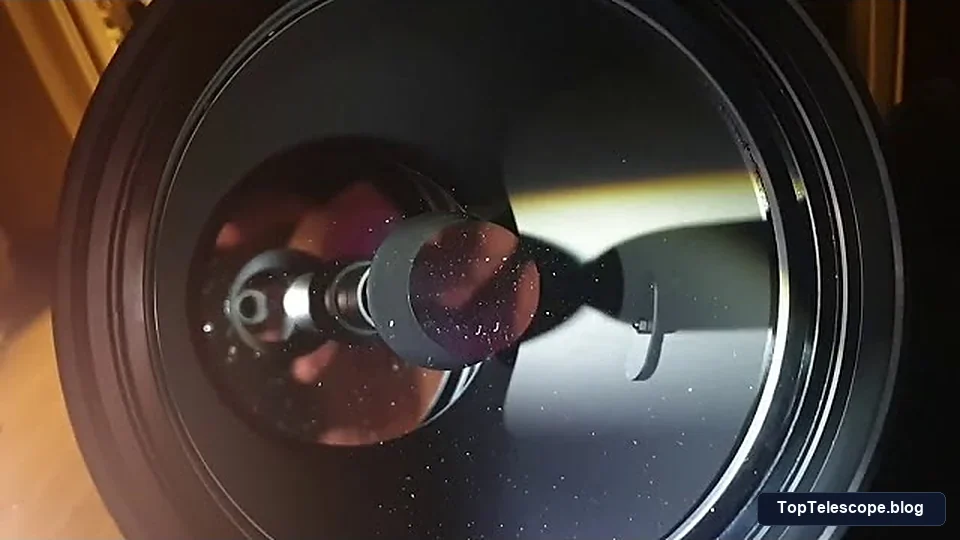
Conversely, our recommended best schmidt cassegrain telescope choices utilize a thinner aspheric corrector plate placed upfront. This front element corrects spherical aberration produced by the primary mirror.
Both designs direct light backward to a primary mirror, forward to a secondary mirror, and finally through a central hole in the primary. This folded optical path keeps the overall physical length remarkably short.
- Maksutov systems feature a spot secondary mirror aluminized directly onto the corrector lens.
- Schmidt designs mount a separate secondary mirror onto the inner surface of the glass plate.
- Tube currents vary significantly due to internal air volume differences between sealed and vented housings.
Meniscus Correctors versus Schmidt Plates
The thick meniscus lens of a Maksutov adds substantial weight to the front end of the telescope. This heavy glass element requires sturdy mechanical cell construction to maintain precise optical alignment.
A Schmidt plate is much lighter, reducing manufacturing costs and overall instrument weight. However, manufacturing an aspheric curve requires specialized tooling and rigorous quality control testing during production.
- Meniscus lenses offer natural color correction across the visual spectrum.
- Schmidt plates eliminate chromatic aberration while introducing minor off-axis optical aberrations.
Real-World Optical Performance
Observing planets and binary stars demands high contrast and sharp resolution. Maksutov telescopes excel in this arena by utilizing a smaller secondary mirror obstruction than typical Schmidt variants.
A smaller central obstruction scatters less light, resulting in darker backgrounds and crisp planetary limb details. Observers frequently notice enhanced Cassini division details and subtle Jovian cloud belt contrasts.
Exploring the best 8 inch schmidt cassegrain telescope options reveals wider unvignetted fields of view. These optical configurations easily accommodate larger eyepieces without experiencing severe edge-of-field darkening.
- Smaller secondary obstructions improve high-magnification contrast transfer functions.
- Wider baffling tubes in Schmidt designs support large-format camera sensors effectively.
- Star diffraction patterns reveal distinct energy distributions based on obstruction sizes.
Planetary Contrast and Resolution Limits
Theoretical resolution limits depend primarily on aperture diameter rather than optical configuration alone. However, internal scatter degrades perceived contrast during high-power lunar viewing sessions significantly.
Maksutov optics consistently deliver superior micro-contrast due to their smooth optical surfaces and minimal light diffraction. Users demanding razor-sharp planetary details often tolerate the slower focal ratios.
- Aperture dictates ultimate light gathering power under dark rural skies.
- Surface smoothness determines visual scatter levels during bright planetary observations.
Thermal Acclimation and Tube Currents
Thermal equilibrium remains a critical challenge when evaluating any best maksutov cassegrain design. Thick corrector lenses trap ambient heat inside the sealed optical tube assembly for hours.
Without adequate cool-down time, internal air currents degrade image sharpness and prevent high-magnification focusing. Owners often install specialized rear-cell cooling fans to accelerate thermal transfer processes.
Schmidt Cassegrain tubes generally adapt to outdoor ambient temperatures slightly faster due to thinner glass elements. Still, insulated thermal wraps prevent local micro-climate currents from forming inside aluminum tubes.
- Thick glass requires longer stabilization periods before reaching thermal equilibrium.
- Forced-air ventilation systems help purge trapped heat from sealed optical tubes.
- Rapid temperature drops cause persistent thermal plumes across the primary mirror surface.
Managing Cool-Down Times in Sealed OTAs
Storing your telescope in an unheated garage minimizes the temperature differential during evening observing sessions. This proactive habit reduces waiting times before achieving optimal optical performance.
Monitoring local weather forecasts helps predict thermal swings and allows appropriate scheduling for equipment setup. Proper thermal management guarantees sharp diffraction images throughout the entire night.
- Pre-chilling equipment reduces frustrating viewing delays during winter months.
- Insulated tube covers protect internal mirrors from rapid radiant cooling.
Mounting, Ergonomics, and Portability
Physical handling characteristics heavily influence how often you take our best maksutov cassegrain telescopes outdoors. These optical tubes are notoriously front-heavy because of their massive meniscus correctors.
This forward weight bias requires precise dovetail rail positioning and robust equatorial or alt-azimuth mounts. Balancing the setup prevents excessive strain on internal gear motors during tracking operations.
Schmidt Cassegrain systems distribute weight more evenly along the length of the optical tube assembly. Their shorter moment arm reduces payload stress on medium-capacity computerized tracking mounts significantly.
- Front-heavy tubes demand longer sliding dovetail mounting plates for balance.
- Compact physical lengths fit easily into standard vehicle backseats.
- Sturdy tripod legs eliminate micro-vibrations during high-power focusing adjustments.
Weight Distribution and Mount Capacity
Exceeding recommended mount payload capacities introduces tracking errors and frustrating image vibrations. Always allocate extra weight allowance for heavy finderscopes, star diagonals, and imaging cameras.
Ergonomic carrying handles bolted to the optical tube simplify field transportation and assembly tasks. Secure grip points prevent accidental drops during nighttime setup procedures.
- Always maintain a safe margin below maximum manufacturer payload ratings.
- Ergonomic handles improve safety during transport in dark environments.
Astrophotography and Field of View
Capturing deep-sky nebulae and galaxies requires fast focal ratios to minimize exposure duration requirements. Maksutov systems typically operate around f/12 or f/15, demanding prolonged tracking periods.
Guiding accuracy becomes extremely critical when shooting through such long focal lengths under windy conditions. Schmidt Cassegrain designs often feature faster native f/10 speeds or specialized edge optics.
Field flatteners and focal reducers expand the utility of Schmidt systems for modern digital astrophotography. These accessories shorten focal lengths and illuminate larger camera sensors without severe vignetting.
- Slow focal ratios extend required camera exposure times for faint nebulae.
- Focal reducers increase imaging speed and widen photographic fields of view.
- Large sensor formats require careful back-focus spacing to eliminate corner aberrations.
Imaging Circles and Focal Reducer Compatibility
Illuminating a large camera sensor requires generous optical back-focus distance behind the rear cell. Standard visual backs can restrict light cones and cause dark corners on full-frame sensors.
Dedicated astrophotography variants incorporate internal correction lenses to maintain flat fields across wide imaging circles. Matching correct adapters ensures pinpoint star shapes right to the sensor corners.
- Back-focus distance must match accessory manufacturer specifications precisely.
- Flat-field designs prevent distorted star images at the edge of frames.
Maintenance, Efficiency, and Longevity
Owning a telescope involves routine upkeep to preserve delicate optical coatings and mechanical linkages. Maksutov systems benefit from sealed optical tubes that prevent dust settling on internal mirrors.
This enclosed design minimizes the frequency of deep internal cleanings over decades of ownership. However, servicing internal components requires professional factory intervention rather than user maintenance.
Schmidt Cassegrain correctors collect environmental dust and dew residues on exterior glass surfaces regularly. Gentle cleaning with specialized optical solutions restores transparency without damaging antireflective coatings.
- Sealed tubes protect internal optical surfaces from airborne dust accumulation.
- Routine exterior cleaning prevents organic residue buildup on corrector plates.
- Factory collimation checks ensure long-term mechanical and optical integrity.
Optical Alignment and Corrector Cleaning
Collimation adjustments on Schmidt systems involve turning easily accessible secondary mirror screws. Maintaining alignment guarantees optimum resolution during high-magnification double star splitting sessions.
Cleaning glass corrector plates requires compressed air blowers and lint-free optical microfiber cloths. Never spray cleaning solutions directly onto delicate glass surfaces to prevent liquid seepage.
- Regular collimation checks maximize high-power resolution performance.
- Use approved optical cleaning fluids to protect multi-layer antireflective coatings.
Which Catadioptric System Fits Your Setup
Selecting the ideal telescope depends heavily on your primary astronomical interests and observing locations. Backyard observers focusing on lunar details will appreciate the pristine optical contrast of Maksutovs.
Conversely, mobile astrophotographers valuing setup versatility often prefer Schmidt Cassegrain instruments. Balancing weight, focal speed, and thermal acclimation ensures long-term observing satisfaction.
Evaluate your local light pollution levels, storage space limitations, and mount capacities before purchasing. Making an informed choice guarantees many rewarding nights exploring deep-space wonders.
- Match instrument focal characteristics to your primary astronomical targets.
- Consider storage space and transport limitations when choosing tube sizes.
- Invest in stable mounting platforms to maximize overall optical performance.
Matching Equipment to Observing Environments
Urban balconies and suburban backyards present unique thermal challenges for sealed optical tube assemblies. Planning adequate cool-down intervals transforms mediocre views into breathtaking astronomical experiences.
Selecting appropriate eyepiece focal lengths maximizes magnification potential without exceeding local atmospheric seeing limits. Enjoying stable night skies requires patience and well-maintained optical equipment.
- Atmospheric seeing conditions limit maximum useful magnification limits.
- Proper accessories enhance overall comfort during extended stargazing sessions.
Frequently Asked Questions
Which telescope design offers better contrast for viewing planets?
Maksutov telescopes generally provide superior planetary contrast due to their smaller secondary mirror obstruction. This configuration minimizes light scatter and reveals finer details on planetary surfaces.
Do Schmidt Cassegrain telescopes require frequent collimation?
Schmidt Cassegrain instruments require occasional collimation adjustments using external secondary screws. Transporting the telescope can knock optics slightly out of alignment over time.
Why do Maksutov telescopes take longer to cool down?
Maksutov designs feature a thick meniscus corrector lens that traps ambient heat inside the tube. This heavy glass mass requires extended acclimation periods before reaching thermal equilibrium.
Can I use a focal reducer with a Maksutov telescope?
Focal reducers are compatible with certain Maksutov models, but long focal ratios remain challenging. Schmidt systems offer much wider photographic fields of view with reducers.
Which design is better suited for beginner astrophotographers?
Schmidt Cassegrain telescopes are generally preferred for beginners due to their faster focal ratios and lighter weights. These features simplify tracking requirements and mount payload demands.