Fcd100 vs Fpl53: Optical Glass Comparison
Understanding synthetic fluorite glass types helps astronomers choose superior triplet refractors. Both materials deliver exceptional chromatic correction for demanding imaging platforms.

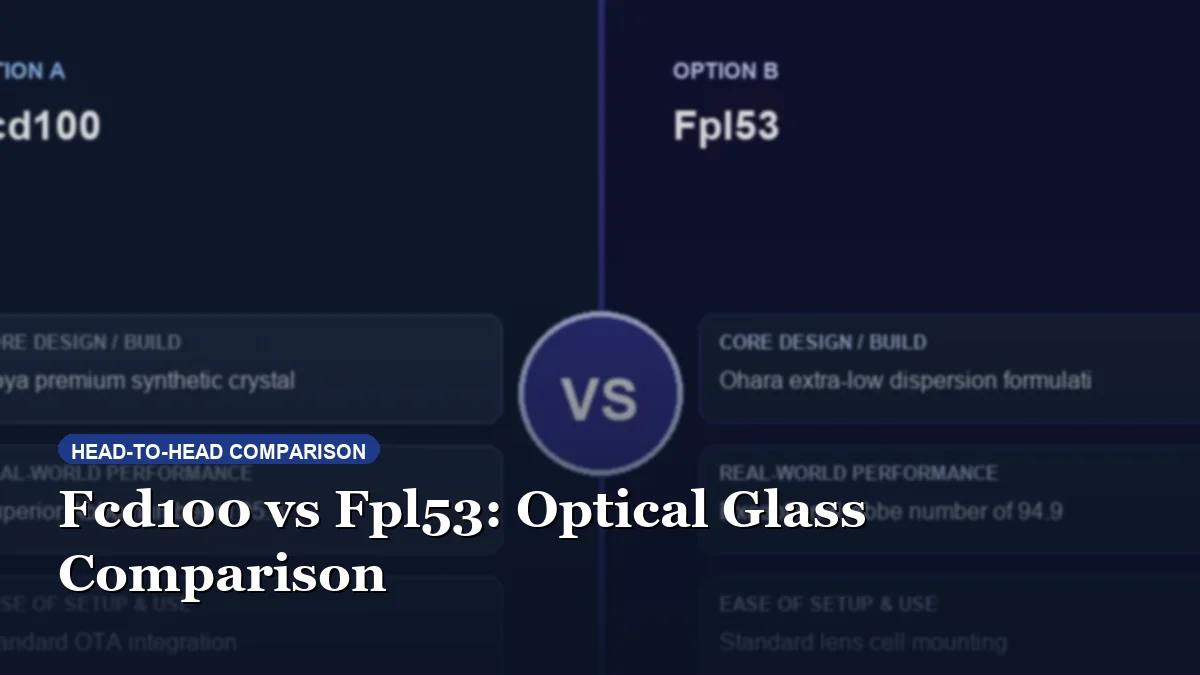
Choose FCD100 for Hoya's ultra-low dispersion profile and robust thermal stability. Select FPL53 for traditional Ohara-grade performance and proven color fidelity in astrophotography.
Compare all top models in our Best Telescope: Top Backyard Picks for Astronomy.
Side-by-Side Breakdown
| Criteria | Fcd100 | Fpl53 | Edge |
|---|---|---|---|
| Core Design / Build | Hoya premium synthetic crystal | Ohara extra-low dispersion formulation | Tie |
| Real-World Performance | Superior Abbe number of 95.3 | Exceptional Abbe number of 94.9 | Fcd100 |
| Ease of Setup & Use | Standard OTA integration | Standard lens cell mounting | Tie |
| Durability & Reliability | High resistance to thermal shock | Proven chemical and scratch resistance | Tie |
| Efficiency / Operating Footprint | Optimized focal ratios down to f/5 | Familiar thermal shift characteristics | Fpl53 |
| Maintenance Requirements | Standard multi-coating care protocols | Standard optical cleaning procedures | Tie |
| Best Ideal Use Case | Wide-field deep-sky astrophotography | Planetary imaging and visual observing | Fpl53 |
Glass Composition and Refractive Index
Apochromatic telescope design relies heavily on specialty glass formulations to eliminate false color. Both materials feature extreme extra-low dispersion properties designed to bring multiple light wavelengths into a single focal plane.
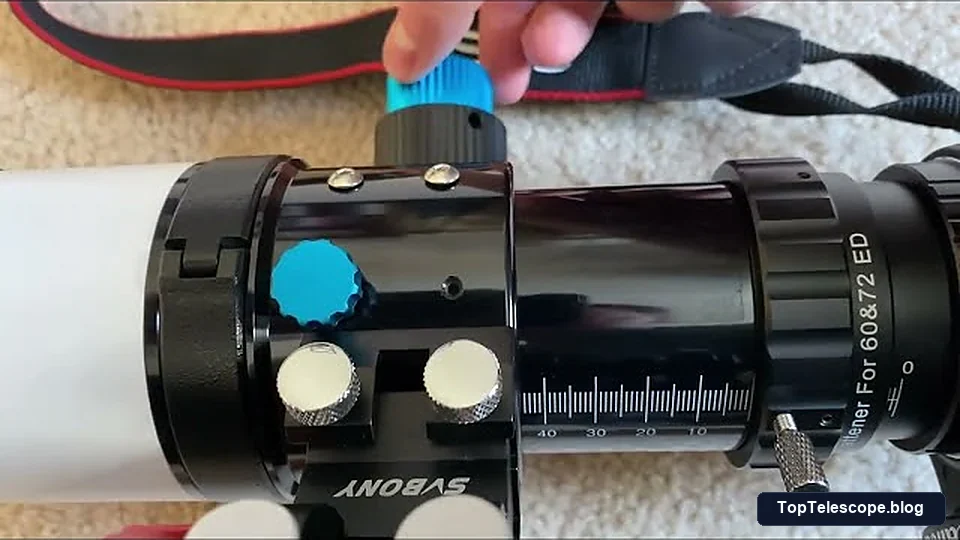
Hoya manufactures the proprietary FCD100 element using advanced chemical techniques. This material achieves an Abbe number that rivals natural fluorite crystals while avoiding cleavage plane risks.
Ohara produces FPL53 as a recognized industry benchmark for high-end triplet objectives. When selecting from our curated best telescope selections, users find that these chemical structures provide remarkably consistent refractive indices.
- Hoya FCD100 targets ultra-low dispersion characteristics.
- Ohara FPL53 remains the benchmark for apochromatic lenses.
- Both glasses minimize secondary spectrum aberrations effectively.
Abbe Number Analysis
The Abbe number quantifies how severely a transparent medium disperses light into constituent colors. Higher numerical values indicate superior resistance to chromatic fringing around bright celestial targets.
FCD100 typically registers a slightly higher Abbe value on paper. However, optical designers balance this metric against secondary glass types within custom triplet lens cells.
- Higher Abbe numbers reduce false color significantly.
- Both materials exceed traditional ED glass thresholds.
Thermal Expansion and Mechanical Stability
Nighttime temperature swings present major challenges for precision glass elements inside sealed metal lens cells. Anyone browsing our best starter telescope guide will note that optics must maintain exact spacing to preserve peak performance.
Thermal expansion coefficients dictate how much a glass element changes size during cooling cycles. Engineers machine aluminum or carbon fiber cells to counteract these predictable material shifts.
Both glass types demonstrate predictable thermal behavior when paired with proper mechanical cell retainers. Teflon spacers and nylon shims prevent pinching during rapid environmental temperature drops.
- Thermal shock resistance prevents catastrophic internal fractures.
- Proper cell design accommodates minute glass expansion rates.
Cell Design Considerations
Precision lens cells require careful calculation of expansion differentials between metal housings and glass. Air-spaced triplets demand exact tolerances to maintain optical alignment across seasons.
Makers of FCD100 and FPL53 objectives utilize similar aluminum alloy barrels with adjustable retaining rings. Regular maintenance checks ensure these threaded components remain secure over years of transport.
- Metal-to-glass clearance prevents optical distortion.
- Threaded rings require occasional torque inspection.
Chromatic Aberration Suppression
Eliminating purple halos around bright stars requires exact mathematical pairing of primary and mating elements. Advanced simulation software optimizes curve radii for every individual glass melt batch.
FCD100 excels at crushing residual chromatic aberration across extended visual and photographic spectra. Astrophotographers capture sharp stellar point sources without resorting to heavy post-processing filters.
FPL53 has spent decades proving its chromatic correction capabilities in legendary commercial refractor lines. Planetary observers rely on its pure color transmission to resolve subtle atmospheric Jovian belts.
- Triplet configurations eliminate secondary spectrum color errors.
- Broadband anti-reflective coatings maximize light transmission.
Visual and Photographic Performance
Visual observers demand high contrast and pinpoint sharpness when examining lunar craters or double stars. Both glass options deliver high Strehl ratios that satisfy discerning veteran astronomers.
Astrophotographers utilizing modern CMOS sensors benefit from extremely tight focal spots. Smaller star profiles translate directly into higher resolution deep-sky nebula and galaxy images.
- High Strehl ratios indicate pristine wavefront accuracy.
- Small star spots improve deep-sky image resolution.
Manufacturing Standards and Quality Control
Producing flawless optical blanks requires strict control over internal striae, bubbles, and birefringence. Glass foundries subject raw boules to rigorous laser interferometry before shipping to lens grinders.
Hoya maintains strict tolerance guidelines for every FCD100 production run. Surface irregularities are minimized to ensure consistent figure generation during automated computer-controlled polishing processes.
Ohara implements comprehensive quality assurance protocols for FPL53 distribution worldwide. Optical fabricators trust these standardized blanks to yield predictable performance without unexpected refractive anomalies.
- Laser interferometry detects internal glass stress patterns.
- Homogeneous melts prevent uneven focal plane distortion.
Grinding and Polishing Yields
The physical hardness of synthetic fluorite alternatives influences how technicians shape curves. Experienced opticians apply specialized pitch laps to achieve smooth sub-nanometer surface finishes.
Both glass types polish uniformly when technicians employ proper slurry concentrations and rotational speeds. Exploring our best telescope for beginners portfolio shows how reduced manufacturing defect rates ultimately lower final assembly costs.
- Sub-nanometer surface smoothness reduces light scatter.
- Uniform hardness aids automated CNC polishing heads.
Integration into Triplet OTA Designs
Building a high-performance optical tube assembly involves integrating the lens cell with internal baffling. Stray light control protects the high contrast delivered by premium glass elements.
Engineers couple FCD100 with matching lanthanum crown mating elements to balance chromatic correction curves. This triad configuration delivers flat fields across large sensor imaging circles.
FPL53 pairs famously with heavy flint or special crown elements in classic triplet arrangements. Commercial manufacturers leverage decades of optical prescription data to streamline production workflows.
- Internal baffles eliminate unwanted internal light reflections.
- Matched crown elements complete the three-lens optical formula.
Weight and Balance Factors
Heavy triplet objectives shift the center of gravity forward on portable telescope mounts. Users must select sturdy equatorial or alt-azimuth platforms to prevent mechanical tracking vibrations.
Both glass materials contribute similar weight profiles to finished optical tube assemblies. Counterweight adjustments and dovetail positioning remain identical regardless of the chosen brand.
- Forward gravity shifts require sturdy mounting platforms.
- Balanced dovetail rails minimize equatorial tracking strain.
Maintenance, Cleaning, and Environmental Care
Owning premium optical equipment demands adherence to strict cleaning and storage protocols. Dust accumulation and dew deposition require careful intervention to protect delicate multi-coatings.
Never touch raw optical glass surfaces with bare fingers to avoid transferring natural skin oils. Use dry bulb syringes and optical-grade micro-fiber cloths for routine particulate removal steps.
Store refractors in climate-controlled environments with adequate desiccant packs to prevent fungal growth. Both FCD100 and FPL53 substrates resist normal humidity when protected by intact coatings.
- Bulb syringes safely remove loose dust without scratching.
- Desiccant packs protect internal coatings from ambient moisture.
Safe Coating Preservation
Broadband anti-reflective coatings applied to objective lenses feature microscopic thickness tolerances. Harsh chemical solvents can strip these protective layers if applied during improper cleaning sessions.
Always dilute optical cleaning solutions with distilled water and isopropyl alcohol mixtures. Gently wipe surfaces from the center outward using minimal downward mechanical pressure.
- Gentle circular wipes prevent micro-scratching on glass.
- Approved solvents protect delicate anti-reflective coating stacks.
Cost-to-Performance and Long-Term Value
Investing in an apochromatic refractor represents a major financial commitment for amateur astronomers. Evaluating long-term value involves weighing optical perfection against build quality and resale demand.
Readers can examine our detailed Explore Scientific ED102 review to see how FCD100 glass performs in the field. Buyers consistently appreciate the robust mechanical engineering found in these systems.
FPL53 optics maintain strong resale value due to their established reputation among imagers. Prospective buyers recognize the historical pedigree associated with Ohara glass formulations worldwide.
- Established glass types retain steady used market value.
- Long-term durability ensures decades of reliable stargazing sessions.
Making the Final Selection
Choosing between these optical glasses ultimately depends on your specific imaging priorities. Both options deliver breathtaking planetary details and immaculate star colors across the night sky.
Consult experienced community members and review actual optical test reports before purchasing. Your local observing conditions and mount capacity should guide your final telescope acquisition.
- Review independent interferometry reports before buying.
- Match your local seeing conditions to your telescope aperture.
Frequently Asked Questions
What is the primary difference between FCD100 and FPL53 glass?
The primary difference lies in the manufacturing foundry and slightly unique chemical recipes. Both materials provide exceptional extra-low dispersion for superior apochromatic telescope performance.
Are both glass types equally effective at eliminating chromatic aberration?
Yes, both glass options suppress false color exceptionally well in triplet designs. They deliver razor-sharp star profiles across demanding wide-field astrophotography camera sensors.
Do these telescopes require special maintenance or environmental storage?
They require standard optical care, including clean storage environments and gentle cleaning methods. Using micro-fiber cloths protects delicate anti-reflective coatings from accidental damage.
How do temperature changes affect FCD100 and FPL53 lenses?
Both glasses experience predictable thermal shifts that require well-designed aluminum cells. Proper thermal acclimation ensures optimum focal stability during long nighttime imaging sessions.
Which glass type offers better resale value for amateur astronomers?
Both materials hold strong resale values because buyers trust their proven optical pedigree. Choosing a reputable manufacturer guarantees long-term market demand regardless of the specific glass.