Celestron StarSense Explorer 8 vs Apertura AD8
Choosing between these two eight-inch reflectors demands weighing smartphone-guided software against premium manual accessories. Both light buckets deliver breathtaking deep-sky views for intermediate astronomers.

Choose the StarSense Explorer 8 for revolutionary smartphone object location and lighter transport. Select the Apertura AD8 for superior included accessories and heavy-duty manual mount stability.
Compare all top models in our Best Telescope: Top Backyard Picks for Astronomy.
Side-by-Side Breakdown
| Criteria | Celestron Starsense Explorer 8 | Apertura Ad8 | Edge |
|---|---|---|---|
| Core Design / Build | Parabolic optical tube with StarSense cradle | Traditional Dobsonian solid metal tube | Apertura Ad8 |
| Real-World Performance | Exceptional light gathering via 203mm mirror | Sharp 203mm optics with excellent contrast | Tie |
| Ease of Setup & Use | App-driven alignment via plate solving | Pure manual navigation using standard finders | Celestron Starsense Explorer 8 |
| Durability & Reliability | Aluminum tube with composite base elements | All-metal heavy-duty base with roller bearings | Apertura Ad8 |
| Efficiency / Operating Footprint | Compact alt-azimuth base fits small sedans | Slightly larger rocker box requiring steady ground | Celestron Starsense Explorer 8 |
| Maintenance Requirements | Standard Newtonian collimation and mirror care | Knob collimation springs requiring less tools | Apertura Ad8 |
| Best Ideal Use Case | Urban or suburban stargazers wanting fast finds | Backyard observers prioritizing high-end glass | Split Choice |
Core Optical Design and Tube Engineering
Both telescopes feature an identical 203mm aperture mirror engineered to capture faint photons from distant galaxies. This generous light-gathering surface drastically outperforms smaller refractor systems during deep-sky viewing sessions.
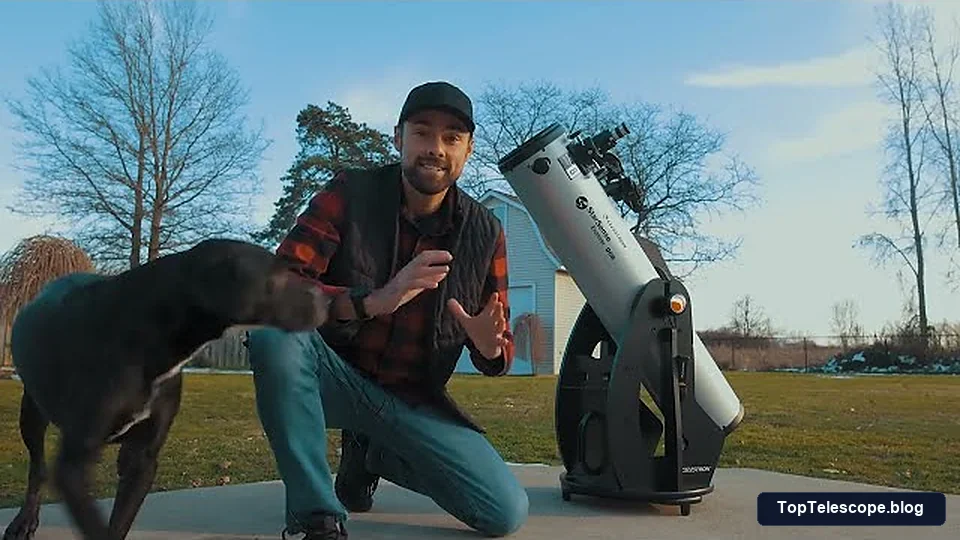
Precision parabolic figures eliminate spherical aberration across the focal plane. Observers enjoy sharp planetary details alongside pin-point stellar profiles right to the field stop edge.
The parabolic primary mirror of the Apertura AD8 features an aperture of 203mm with a focal length of 1200mm, delivering a focal ratio of f/5 for wide, immersive visual star fields.
Conversely, reading our Celestron StarSense Explorer DX 130AZ review reveals alternative Newtonian optical tube configurations employing rolled steel housing engineered for structural rigidity and thermal equilibrium during evening sessions.
- Aperture diameter measures 203mm for both optical tubes.
- Focal lengths differ slightly between the two competing builds.
- Aluminum coatings maximize total reflective light transmission efficiency.
- Primary mirrors require protected reflective coatings to ensure long-term durability.
- Steel tubes offer superior resistance against thermal expansion during temperature drops.
Primary Mirror Specifications
Pyrex or equivalent low-expansion glass substrates minimize thermal distortion during rapid temperature drops. Quick thermal acclimatization ensures stable high-magnification viewing within minutes of outdoor setup.
Ventilated mirror cells allow trapped warm air to escape efficiently. Proper cooling prevents internal tube currents from blurring delicate lunar and planetary surface features.
- Low thermal expansion glass substrates.
- Optimized focal ratios for visual clarity.
Pointing Technology and Mount Mechanics
The StarSense smartphone cradle transforms manual navigation using patented plate-solving technology. As noted in our Celestron StarSense Explorer LT 114az review, your phone camera photographs the night sky, instantly calculating exact coordinates.
Conversely, the Apertura model relies on a traditional rock-solid Dobsonian base. Users manually push the heavy-duty rocker box using smooth Teflon bearings for tactile celestial tracking.
Celestron implements an innovative plate solving technology via smartphone integration, mapping star patterns instantly through an application to guide manual positioning without requiring motorized servo drives or complex alignment procedures.
The Apertura AD8 relies entirely on a traditional dobsonian base featuring roller bearings on the azimuth axis and Teflon pads on altitude trunnions, offering ultra-smooth manual tracking for high-magnification planetary targets.
- Smartphone app integration simplifies finding dim nebulae.
- Manual roller bearings provide silky smooth altitude motion.
- Zero battery dependency ensures lifelong mechanical reliability.
- Smartphone apps utilize camera sensors to resolve exact celestial coordinates.
- Manual dobsonian bases eliminate power dependency completely during field use.
Dobsonian Base Versus Fork Altitude
Apertura utilizes roller bearing systems on the azimuth axis for effortless panning. Heavy-duty side tension clutches let you adjust resistance easily.
Celestron opts for a simpler alt-azimuth fork arm configuration integrated seamlessly with the optical tube assembly.
- Roller bearing azimuth mechanics.
- Adjustable altitude tension clutches.
Real-World Deep-Sky Performance
Under dark rural skies, both instruments reveal stunning spiral arms in neighboring galaxies. Faint planetary nebulae glow with remarkable structural detail across the field of view.
Light pollution filter compatibility enhances contrast when observing from suburban backyards. Faint emission targets cut through ambient glow thanks to sheer aperture size.
Under dark skies, an 8-inch aperture light-gathering capability resolves faint spiral arms in galaxies like M51 and cleanly separates globular clusters into individual pinpoint stars using standard eyepieces and proper dark adaptation.
Planetary nebula observation benefits immensely from the generous light grasp, allowing observers to apply high magnification filters successfully while maintaining adequate surface brightness across extended diffuse emission structures and planetary disks.
- Resolves globular clusters into individual pinpoint stars.
- Exhibits bright, high-contrast lunar terminator shadows.
- Light grasp dictates visual threshold limits for observing distant nebulae.
- Aperture diameter directly influences maximum practical resolving power.
Resolving Faint Globular Clusters
High light grasp resolves dense stellar swarms like Messier thirteen effortlessly. Individual suns sparkle across the eyepiece field at magnifications exceeding two hundred times.
Transparent night skies amplify these views, making eight-inch reflectors the ultimate value standard for deep-sky enthusiasts.
- Splits tight stellar cores effectively.
- Maintains high contrast at high power.
Optical Accessories and Included Gear
Apertura outclasses almost every competitor by including a premium two-inch dual-speed focuser. This mechanical upgrade allows ultra-fine focus adjustments crucial for high-power planetary imaging.
Celestron bundles standard rack-and-pinion focusing hardware alongside the smartphone dock. Following our StarSense Explorer guide helps users navigate delicate focusing procedures without unnecessary frustration.
Apertura excels by bundling premium accessories, including a dual-speed Crayford focuser with linear bearings, an 8x50 right-angle correct-image finder scope, and two distinct eyepieces for immediate out-of-the-box stargazing operations.
Celestron supplies standard foundational hardware focusing heavily on their proprietary smartphone dock mirror assembly, accompanied by a basic red dot finder and standard Kellner eyepieces requiring future upgrades for optimal performance.
- Dual-speed microfocusers improve sharpness control.
- Included wide-angle eyepieces expand initial magnification options.
- Finder scopes vary from red dot to optical finders.
- Crayford focusers eliminate image shift during fine focus adjustments.
- Correct-image finders simplify star-hopping routines significantly for beginners.
Eyepiece and Finder Scope Bundles
The Apertura package includes superior wide-field eyepieces and a massive optical finder. These extras save beginners considerable upgrade expenses right out of the box.
Celestron provides basic eyepieces and their signature red dot finder designed to align the app accurately.
- Wide-field Erfle design eyepieces.
- Large optical finders for manual locating.
Collimation and Maintenance Demands
Newtonian reflectors require periodic mirror alignment to maintain peak optical performance. Transporting tubes across bumpy roads necessitates checking collimation before every major observing session.
Both systems feature user-friendly primary mirror adjustment knobs. These thumbscrews eliminate the need for specialized tools during standard field maintenance routines.
Fast Newtonian reflectors demand precise mirror alignment, making user-friendly collimation thumbscrews on the primary cell essential for maintaining crisp optical performance during frequent vehicle transport over bumpy rural roads.
Routine maintenance requires checking secondary mirror positioning, cleaning dust accumulation carefully with optical-grade solutions, and storing optical tubes vertically to prevent mechanical sagging and minimize internal mirror stress over time.
- Tool-free primary mirror adjustment screws.
- Secondary mirror holder stability checks.
- Routine laser collimator compatibility.
- Laser collimators streamline primary mirror alignment procedures in the dark.
- Regular dust removal protects delicate aluminum mirror coatings from degradation.
Mirror Cell Stability and Alignment
Robust cell designs hold optical alignment securely throughout bumpy car rides. Spring-loaded locking screws prevent accidental drift during vertical positioning.
Maintaining proper collimation guarantees crisp planetary images and sharp star diffraction patterns.
- Spring-loaded locking primary cells.
- Resistant to mechanical misalignment.
Transport Ergonomics and Physical Footprint
Carrying an eight-inch telescope requires managing two distinct components: the optical tube and the wooden base. Breaking loads into manageable pieces simplifies loading into standard passenger vehicles.
The lighter tube assembly detailed in our StarSense 8 Dobsonian review favors users with back sensitivities. The Apertura base requires sturdy lifting for stability.
Transporting solid tube 8-inch dobsonians requires managing a bulky steel cylinder alongside a heavy particle board rocker box, demanding adequate trunk space and physical lifting strength for safe field deployment.
The combined weight distribution challenges smaller operators, though carrying handles integrated directly into the wooden base structure help mitigate awkward lifting angles during transport from storage areas to observing sites.
- Split component design fits standard backseats.
- Ergonomic carrying handles simplify transport.
- Base footprint demands level ground placement.
- Solid tube designs require careful handling to prevent accidental impact damage.
- Base handles improve grip security during transport across uneven terrain.
Weight Distribution and Car Storage
Balanced tube rings allow precise weight positioning on mount trunnions. This equilibrium prevents sudden slipping during eyepiece swaps in dark conditions.
Packing gear securely protects delicate mirror coatings from accidental impacts during transit to dark-sky reserves.
- Balanced tube ring mounting points.
- Compact storage dimensions for transit.
Final Setup Selection Guide
Your personal observing style dictates the ultimate winner between these optical powerhouses. Tech-savvy beginners battling heavy light pollution will adore smartphone plate-solving convenience.
Traditionalists seeking maximum hardware value and premium accessories will find unmatched satisfaction in the robust engineering of the Apertura platform.
Choose the Celestron platform if you prioritize rapid digital object location via smartphone assistance over advanced mechanical focuser upgrades and extensive factory-bundled accessories during your astronomy sessions.
Select the Apertura configuration when you demand superior mechanical hardware, buttery-smooth dual-speed focusing control, and comprehensive included optics that reduce immediate secondary purchase requirements for serious hobbyists.
- Select Celestron for automated app navigation.
- Choose Apertura for superior stock accessories.
- Both deliver identical core mirror optics.
- Evaluate local light pollution levels before selecting large aperture instruments.
- Consider storage space limitations before purchasing full-size dobsonian mounts.
Determining Your Ideal Observing Profile
Assess your local sky conditions and willingness to learn manual star-hopping techniques. Smartphone assistance accelerates finding objects significantly for hurried observers.
Pure optical purists focusing on high-magnification planetary details will appreciate the superior focuser mechanics included standard.
- Evaluate light pollution impact on visibility.
- Consider preference for digital versus manual tracking.
Frequently Asked Questions
Do I need an internet connection to use the smartphone app?
No internet connection is required because the app uses offline plate solving via your phone camera. You only need clear visibility of starry night skies.
Can I attach a DSLR camera for astrophotography?
Both telescopes are optimized primarily for visual astronomy due to focal plane limitations. Basic lunar imaging is possible with proper T-ring adapters.
How often must I realign the mirrors?
Collimation checks should happen before every observing session. Transporting the optical tube across bumpy roads usually necessitates minor screw adjustments.
Which telescope is easier for complete beginners?
The Celestron system simplifies finding celestial objects through its innovative smartphone app. This drastically reduces the traditional learning curve for novices.
Are the primary mirrors made of glass or pyrex?
Both models utilize low-expansion optical glass substrates to minimize thermal distortion. This ensures rapid cooling and sharp high-magnification views.