8SE vs Evolution 8: Optical Face-Off
Choosing between these two legendary Schmidt-Cassegrain telescopes involves balancing raw structural mobility against advanced power systems. Our technical guide breaks down every engineering trade-off for serious astronomers.

Choose the 8SE if you prioritize a lighter transport weight and traditional battery flexibility. Select the Evolution 8 for its integrated lithium battery, precision worm gears, and built-in Wi-Fi capabilities.
Compare all top models in our Best Telescope: Top Backyard Picks for Astronomy.
Side-by-Side Breakdown
| Criteria | 8Se | Evolution 8 | Edge |
|---|---|---|---|
| Core Design / Build | Single-fork arm with aluminum optical tube and steel tripod legs. | Heavy-duty single-fork arm with cast aluminum housing and robust tripod. | Evolution 8 |
| Real-World Performance | Identical 2032mm focal length delivering sharp planetary and deep-sky views. | Same optical prescription with enhanced mechanical tracking stability. | Tie |
| Ease of Setup & Use | Requires external AA battery pack or separate power tank for operation. | Features an internal rechargeable lithium-iron-phosphate battery system. | Evolution 8 |
| Durability & Reliability | Standard plastic covers and reliable classic electronic hand control. | Sturdier gearboxes, manual clutches, and brass worm gears for longevity. | Evolution 8 |
| Efficiency / Operating Footprint | Lighter overall payload makes field assembly faster for single users. | Heavier base unit requires more careful lifting during field transport. | 8Se |
| Maintenance Requirements | Routine collimation checks and standard hand controller firmware updates. | Collimation checks plus internal battery charging and firmware maintenance. | 8Se |
| Best Ideal Use Case | Budget-conscious amateurs needing a portable 8-inch visual astronomy setup. | 8Se |
Core Design and Engineering Differences
Both instruments utilize identical eight-inch Schmidt-Cassegrain optical tube assemblies featuring StarXpert coatings. Light gathering capacity remains completely equal across both systems during viewing sessions.
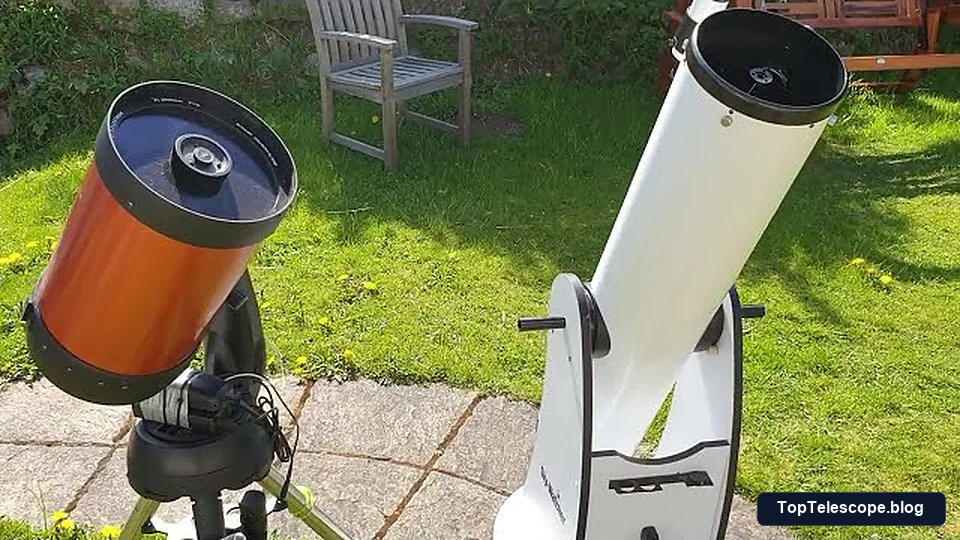
Mechanical housings diverge significantly when examining the internal drive components and power management architectures implemented by the manufacturer for each specific model variant.
- The 8SE relies on a lightweight plastic fork arm housing traditional spur gears.
- The Evolution 8 incorporates heavy-duty worm gears and brass clutches for manual tracking.
- Optical tube dimensions and corrective plate glass formulations remain identical across both systems.
Mount Mechanics and Power Systems
Power delivery stands out as the primary engineering divergence between these two popular telescopes. One system demands external wiring while the other houses its energy source internally.
Internal lithium-ion chemistry inside the heavy-duty base provides hours of continuous field operation without dangling cords catching during motorized slewing maneuvers.
- External battery packs on the classic model require securing loose cables carefully.
- Internal charging circuits simplify teardown procedures at dark-sky observing locations significantly.
Tripod Stability and Footprint
Sturdy steel tripod legs support both optical tubes, but upper casting diameters differ notably. The heavier fork base demands a more rigid connection platform to minimize high-magnification vibrations.
Vibration dampening pads improve settling times for both mounts when focusing manually or operating electronic focusers during high-resolution lunar and planetary imaging sessions.
- Cast aluminum spreader trays lock the steel legs into a rigid stance.
- Higher total weight on the premium mount demands careful leveling routine steps.
Core Design and Engineering Differences
You can evaluate structural differences in our Celestron Nexstar 8se telescope review, which details how the 8SE relies on a single-fork arm bolted to a steel tripod for lightweight stability.
Mechanical casting tolerances differ significantly between these platforms, with the Evolution utilizing worm gears made of brass and steel for smoother manual tracking corrections and reduced backlash compared to the simpler spur gear architecture.
Real-World Optical Performance
Aperture diameter dictates resolving power, leading many enthusiasts to compare optical excellence when browsing options featured inside our comprehensive guide to the best telescope picks for stargazing.
Collimation retention remains crucial for maintaining peak contrast when splitting tight double stars or observing subtle Jovian cloud belt features through high-power eyepieces.
- Focal ratios of f/10 provide versatile magnification scaling with standard eyepieces.
- Secondary mirror obstruction percentages match precisely between the two optical tubes.
- Baffling inside the aluminum tubes suppresses stray light effectively during suburban viewing.
Planetary and Lunar Resolution
Eighty-inch focal lengths excel at planetary observation when paired with high-quality planetary eyepieces. Contrast transfer across bright lunar craters reveals minute structural details reliably.
Thermal acclimatization periods remain identical since both aluminum optical tubes require similar cooling times before achieving optimum thermal equilibrium with outdoor ambient temperatures.
- High-contrast glass coatings maximize photon transmission across the visual spectrum.
- Atmospheric turbulence frequently limits resolution before optical limits are reached.
Deep-Sky Imaging Potential
Long focal lengths demand equatorial wedges for successful long-exposure deep-sky astrophotography. Alt-azimuth tracking introduces field rotation artifacts during multi-minute exposures.
Short-exposure stacking techniques yield surprisingly detailed views of bright nebulae and Messier catalog galaxies without requiring complex equatorial platform alignment procedures.
- Optional focal reducers transform the optical system into a faster f/6.3 imaging tool.
- Tracking accuracy benefits from the precision worm gears on the heavy-duty mount.
Real-World Optical Performance
Both Schmidt-Cassegrain optical tubes feature an 8-inch aperture with StarBright XLT coatings, delivering identical light-gathering power capable of resolving faint deep-sky nebulae under dark sky viewing conditions.
Thermal equilibrium times require careful management for both assemblies due to the sealed glass corrector plate, meaning users must allow up to forty-five minutes for ambient temperature acclimatization before achieving optimal high-magnification planetary resolution.
Setup, Alignment, and Usability
SkyAlign technology simplifies initial star calibration procedures for both computerized systems. Novices can complete alignment sequences within minutes by centering three bright celestial objects.
Hand controller ergonomics remain familiar across the product family, featuring backlit liquid crystal displays and intuitive menu structures for navigating extensive internal object databases.
- Computerized hand controllers store tens of thousands of celestial database targets.
- Alignment routines require clear sky patches to identify reference stars accurately.
- Firmware updates can be downloaded via computer connections to resolve bugs.
Wireless Control Integration
Built-in wireless networking hardware allows direct tablet or smartphone control without physical hand controller tethering. This modern connectivity transforms field operation into an intuitive digital experience.
External wireless modules can be purchased separately for the lighter classic model, but integrated systems eliminate loose dongles and connection failures during cold weather.
- Dedicated astronomy applications provide interactive planetarium sky maps for targeting.
- Secure local network connections prevent interference from residential routers nearby.
Ergonomics and Portability
Total transport weight dictates how frequently an amateur astronomer takes their equipment outdoors. Lighter components reduce physical strain during late-night teardown operations in freezing weather.
Carrying handles integrated directly into the heavy-duty fork base improve grip security when lifting the complete assembly onto the leveling tripod head outdoors.
- Quick-release clamps secure the optical tube safely without tools.
- Balanced weight distribution prevents sudden tipping during assembly steps.
Setup, Alignment, and Usability
Initial telescope orientation relies on Celestron SkyAlign technology, a feature thoroughly detailed throughout our Celestron NexStar Evolution 8 EdgeHD review for streamlining nighttime alignment procedures.
The Evolution series enhances field usability by incorporating an integrated Wi-Fi network, allowing you to control mount movements wirelessly using tablet astronomy applications without wrestling with extra hand controller cables.
Maintenance, Efficiency, and Longevity
Proper equipment care ensures decades of reliable service from precision optical and mechanical components. Routine cleaning schedules protect delicate optical coatings from dust accumulation.
Internal battery health management becomes a vital maintenance factor for self-powered systems over multi-year ownership cycles involving seasonal temperature fluctuations.
- Dust covers must remain securely attached whenever optics are stored indoors.
- Battery charging routines prevent deep discharge damage during long storage periods.
- Mechanical gears benefit from periodic professional inspection and relubrication.
Optical Care and Collimation
Primary and secondary mirror alignment demands occasional tuning using accessible adjustment screws located on the corrector plate housing. Proper alignment restores crisp focus instantly.
Compressed air cans should never be used near exposed corrector glass surfaces to avoid propellant residue contamination on specialized anti-reflective optical coatings.
- Optical cleaning solutions must be applied sparingly to microfiber cloths.
- Corrector plates collect dust gradually and require annual gentle wiping.
Mechanical Wear and Servicing
Clutch mechanisms and drive gears experience friction during extensive tracking sessions under varying payload weights. Premium metal gear systems offer superior long-term durability.
Electronic circuit boards require protection from heavy morning dew condensation through proper protective covers and safe indoor drying protocols after every session.
- Sturdy brass gears resist stripping better than traditional nylon spur gears.
- Moisture management prevents corrosion on sensitive internal electrical contacts.
Maintenance, Efficiency, and Longevity
Long-term maintenance for the 8SE involves periodic tightening of external clutch fasteners and replacing standard AA alkaline batteries, whereas the Evolution demands proper storage charging cycles to preserve its internal chemistry.
Power efficiency heavily favors the Evolution due to its rechargeable lithium cell, while insights inside our Nexstar 8Se technical review outline the rapid drain experienced on the battery-powered 8SE setup.
Choosing the Right Setup for Your Needs
Budget considerations and physical strength dictate the ideal choice between these exceptional telescope packages. Assess your local observing environment before committing to a specific purchase.
Permanent backyard observatories benefit from heavier stability, whereas mobile astronomy enthusiasts packing gear into compact sedans prefer streamlined lightweight component assemblies.
- Evaluate your vehicle trunk space before selecting heavy-base configurations.
- Consider local light pollution levels when planning your primary viewing targets.
- Factor accessory weights like cameras and heavy eyepieces into payload limits.
Ideal Buyer Profiles
Budget-focused beginners seeking maximum optical aperture with manageable weight will appreciate the classic design. It offers proven performance without unnecessary electronic complexity or premium costs.
Experienced observers desiring modern wireless connectivity, superior tracking gears, and self-contained power solutions will find the advanced premium package worth the added initial investment.
- Mobile stargazers favor lighter transport weights for frequent travel.
- Tech-savvy hobbyists enjoy integrated wireless tablet control interfaces.
Long-Term Upgrade Path
Both platforms accept standard accessories including diagonal mirrors, barlow lenses, and motorized focusers seamlessly. Standard dovetail mounting plates ensure wide equipment compatibility.
Future expansion into astrophotography may require adding equatorial wedges and guiding scopes regardless of which base mount you initially select for your optical tube.
- Standard 1.25-inch and 2-inch visual backs accommodate diverse eyepiece inventories.
- Power supply ports support dew heater strips during damp evening sessions.
Choosing the Right Setup for Your Needs
Selecting between these two computerized telescopes depends entirely on your travel habits and power preferences, since backpack portability favors the lighter 8SE while backyard convenience strongly favors the Evolution base.
Budget-conscious astronomers prioritizing pure optical aperture over mechanical refinements will find the 8SE exceptional, while observers seeking seamless wireless integration and robust worm gear tracking should invest in the Evolution platform.
Frequently Asked Questions
Do both telescopes share the exact same optical tube?
Yes, both models feature identical eight-inch Schmidt-Cassegrain optics with specialized coatings. They deliver the exact same optical performance and resolving power.
Can the classic model connect to wireless control apps?
Yes, but it requires purchasing an external wireless module separately. The advanced model includes built-in Wi-Fi right out of the box.
Which telescope is easier to transport for field trips?
The lighter classic configuration is generally easier to lift and pack into vehicles. It features a lighter base unit for improved field mobility.
How long does the internal battery last on the advanced mount?
The internal lithium battery typically powers continuous observing sessions for up to ten hours. Proper recharging ensures reliable power longevity over time.
Are equatorial wedges compatible with both mount bases?
Yes, optional equatorial wedges attach securely to both fork bases. This enables long-exposure astrophotography capabilities for dedicated imaging hobbyists.