70mm vs 80mm Refractor: Technical Showdown
Choosing between these two apertures defines your portability limits and optical reach. Understanding their core engineering differences ensures a proper match for your local viewing conditions.

Pick the 70mm refractor for ultimate grab-and-go travel convenience, or choose the 80mm refractor if you need enhanced light gathering for lunar details.
Compare all top models in our Best Telescope: Top Backyard Picks for Astronomy.
Side-by-Side Breakdown
| Criteria | 70Mm | 80Mm Refractor | Edge |
|---|---|---|---|
| Core Design / Build | Smaller aperture doublet lens | Larger aperture objective lens | 80Mm Refractor |
| Real-World Performance | Wide-field views and bright planets | Deeper magnitude limits and split binaries | 80Mm Refractor |
| Ease of Setup & Use | Ultra-lightweight photographic tripod friendly | Requires sturdier altazimuth or EQ mount | 70Mm |
| Durability & Reliability | Compact aluminum cell construction | Heavy-duty metal baffling and tube rings | 80Mm Refractor |
| Efficiency / Operating Footprint | Fits inside standard travel backpacks | Demands dedicated padded transport cases | 70Mm |
| Maintenance Requirements | Standard dust removal and lens care | Periodic collimation checks and dew management | 70Mm |
| Best Ideal Use Case | Quick stargazing sessions and travel | Versatile visual astronomy and astrophotography | 80Mm Refractor |
Core Optical Design and Engineering Differences
Refractor telescopes rely on a primary glass objective lens to bend and focus incoming starlight. The 70mm objective lens provides a smaller light-gathering surface area than its larger counterpart.
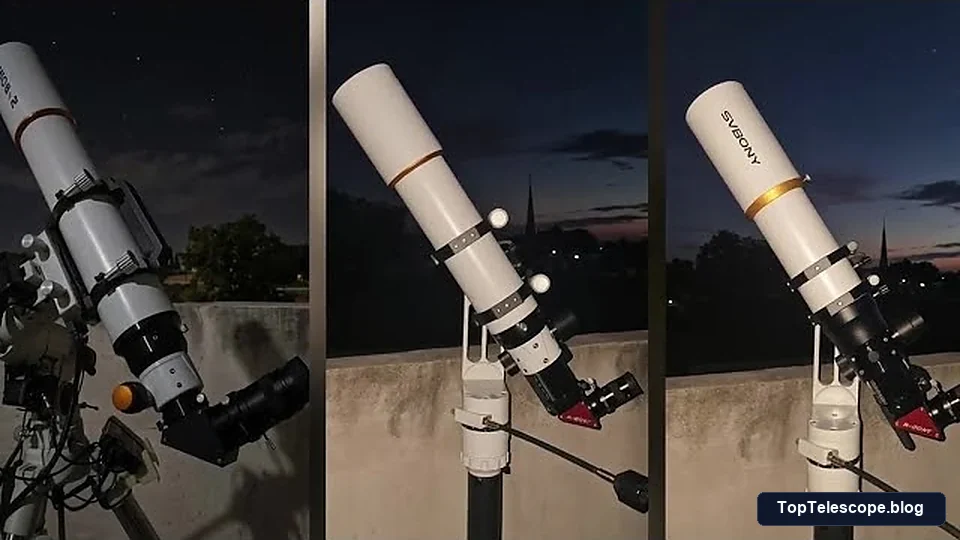
Stepping up to an 80mm objective lens increases the clear aperture diameter by roughly fourteen percent. This expansion dramatically boosts overall light grasp, revealing fainter deep-sky targets more clearly.
Engineers optimize focal lengths differently for these two apertures to balance chromatic aberration control. Choosing quality optical glass remains vital for maintaining crisp image contrast across high magnifications.
- 70mm focal lengths typically range from 500mm to 700mm for wide fields.
- 80mm tubes often employ longer focal ratios to control chromatic aberration.
- Glass types range from standard crown-and-flint doublets to exotic ED glass.
Glass Formulations and Chromatic Aberration
Secondary color fringing becomes more apparent as aperture and focal ratio increase. Choosing the right refractor telescope for beginners involves evaluating doublet glass elements to minimize purple halos.
A smaller 70mm optical tube inherently handles chromatic dispersion slightly better at equivalent focal ratios. This makes budget-friendly glass elements perform with acceptable color fidelity for beginners.
- ED glass elements drastically reduce false color in faster systems.
- Coatings enhance light transmission through multi-element objective cells.
Optical Coatings and Light Transmission
Anti-reflective chemical coatings maximize photon throughput across every air-to-glass optical surface. Premium broadband multi-coatings prevent internal reflections and enhance overall image brightness significantly.
Smaller lenses benefit immensely from superior coatings because every lost photon impacts faint contrast. Manufacturers apply these vapor-deposited layers under strict vacuum conditions for maximum durability.
- Fully multi-coated optics transmit over ninety percent of light.
- Uncoated glass surfaces suffer from noticeable internal scattering losses.
Light Gathering Power and Magnitude Limits
Aperture diameter dictates the faintest stars an optical instrument can successfully resolve. An 80mm clear aperture collects roughly thirty percent more photons than a standard 70mm lens.
This additional light-gathering capacity pushes the theoretical limiting magnitude deeper into the night sky. Observers can detect dimmer Messier catalog objects under dark rural skies with confidence.
Surface brightness rules apply directly when viewing extended nebulosity through both optical tubes. Larger apertures always reveal more intricate structural details within faint diffuse deep-sky gas clouds.
- Magnitude limits increase noticeably with every incremental millimeter of aperture.
- Dark sky adaptation maximizes the benefits of larger objective lenses.
- Surface brightness determines visibility for extended nebulae and galaxies.
Resolving Close Binary Star Systems
Dawes' limit dictates that larger lenses resolve tighter binary star systems cleanly. The extra millimeter scale of an 80mm aperture provides a distinct mathematical edge during splitting.
While both instruments handle wide pairs easily, splitting difficult stellar components requires maximum resolution. The 80mm configuration consistently outperforms smaller tubes on nights with stable atmospheric seeing.
- Air turbulence severely impacts high-resolution double star splitting.
- Diffraction rings define the ultimate sharpness limits of lenses.
Lunar and Planetary Surface Detail
Planetary observers require high contrast and sharp resolution to spot subtle cloud belts. An 80mm refractor resolves fine Jovian storm features and lunar rilles with greater clarity.
Smaller optics deliver pleasing wide-field views but soften considerably at extreme magnifications. Selecting appropriate eyepieces helps optimize planetary performance across both telescope classes.
- High-power eyepieces reveal intricate crater floor textures clearly.
- Planetary filters enhance contrast on bright targets like Mars.
Mechanical Build and Optical Tube Assembly
Mechanical stability directly influences your high-magnification viewing experience during breezy nights. Manufacturers build an 80mm optical tube with heavier aluminum cells and sturdier internal baffle systems.
Conversely, a 70mm telescope assembly prioritizes reduced mass and compact overall dimensions for travel. This lighter physical footprint minimizes strain on lightweight photographic tripods and altazimuth mounts.
Quality mounting rings and dovetail bars ensure secure attachment to various tracking platforms. Robust construction prevents optical misalignment during bumpy transport to remote dark sky locations.
- Aluminum tube assemblies provide excellent thermal stability outdoors.
- Internal baffles eliminate stray light reflections inside the chassis.
- Vixen-style dovetail bars simplify secure mount attachment procedures.
Focuser Mechanics and Mechanical Tolerances
Precise focusers prevent image shift when locking heavy eyepieces into position. Premium models feature rack and pinion focusers with dual-speed knobs for micro-adjustment accuracy in the field.
Crayford designs offer smooth friction-based travel but require tension adjustments for heavy accessories. Maintaining proper mechanical alignment prevents image degradation during astrophotography imaging sessions.
- Dual-speed focusers provide precise control at high focal ratios.
- Tension screws secure heavy cameras without slipping or tilting.
Dew Shields and Environmental Protection
Extended dew shields prevent moisture condensation from forming on exposed objective lenses. An 80mm telescope shield offers deeper physical coverage than smaller 70mm counterparts.
Dew prevention keeps observing sessions productive throughout damp evening hours without interruptions. Heating straps provide active thermal management when humidity levels rise significantly at night.
- Friction-fit dew shields slide backward for compact storage.
- Active dew heaters protect sensitive glass elements effectively.
Field of View and Wide-Field Astrophotography
Wide-field star fields demand optical systems that project large, illuminated image circles. A 70mm refractor setup excels at framing expansive constellations and large emission nebulae effortlessly.
Pairing an 80mm telescope with a dedicated field flattener delivers pristine stellar pinpoints. Astrophotographers utilize these mid-sized tubes as versatile astrographs for deep-sky imaging projects.
Managing sensor vignetting requires careful matching of diagonal sizes and camera sensors. Both instruments provide flat fields when paired with appropriate optical correction lens elements.
- Wide focal lengths capture sweeping vistas of the Milky Way.
- Field flatteners eliminate edge star distortion during long exposures.
- Camera adapter rings secure DSLR and mirrorless bodies tightly.
Astrophotography Payload and Tracking Demands
Imaging demands rigorous equatorial tracking accuracy to prevent trailing star trails. An 80mm imaging setup requires a robust computerized mount to handle heavier camera payloads.
The lighter 70mm configuration reduces payload stress on portable star trackers significantly. This makes lightweight travel astrophotography much simpler for mobile outdoor photography enthusiasts.
- Equatorial tracking motors compensate for Earth rotation smoothly.
- Autoguiding systems correct minor tracking errors during exposures.
Sensor Image Circles and Vignetting Control
Illuminated image circles must cover modern digital camera sensor dimensions fully. Larger focusers on 80mm optical tubes prevent mechanical vignetting across APS-C sensors.
Smaller focusers on entry-level tubes work best with dedicated planetary cameras. Understanding imaging circle limits ensures evenly illuminated photographs across every corner.
- APS-C sensors require wide adapter threads and large barrels.
- Flat-field frames correct minor optical illumination falloff digitally.
Portability, Mount Requirements and Field Ergonomics
Transport logistics dictate how frequently you actually take your equipment outdoors. Reviewing what can you see with a 70mm telescope helps confirm if this compact configuration fits your travel needs.
Transporting an 80mm refractor system often requires a padded hard case and sturdier mount. This extra bulk trades ultimate grab-and-go convenience for superior optical performance under stars.
Ergonomic handle placement and balanced tube rings simplify mounting procedures in the dark. Quick-release mechanisms save valuable time when assembling gear on chilly nights.
- Backpack-friendly tubes encourage spontaneous backyard stargazing sessions.
- Padded hard cases protect delicate glass elements during travel.
- Quick-release mounting plates streamline setup in total darkness.
Tripod Stability and Mount Weight Capacities
Sturdy tripods eliminate annoying image vibrations caused by wind gusts. An 80mm refractor package demands a rigid steel tripod to maintain steady high-magnification views.
A lightweight 70mm telescope system operates smoothly on sturdy photographic tripods. This flexibility reduces total travel weight for hikers and mobile astronomy enthusiasts.
- Steel tripod legs dampen high-frequency vibrations effectively.
- Altazimuth mounts offer intuitive up-and-down movement controls.
Grab-and-Go Usability Factors
Spontaneous stargazing relies entirely on minimizing setup friction and heavy lifting. A grab-and-go 70mm telescope encourages frequent astronomical observations on busy weeknights.
Quick deployment ensures you never miss fleeting astronomical events like comets. Simplicity remains a primary design driver for entry-level refractor optical instruments.
- Rapid deployment setups maximize actual eyepiece observation time.
- Minimalist gear configurations reduce pre-session setup fatigue.
Maintenance, Cleaning and Long-Term Durability
Optical cleanliness preserves maximum contrast during planetary and lunar observations over years. Regular maintenance involves blowing loose dust off the front objective lens using a bulb blower.
Never touch coated glass surfaces with bare fingers to avoid transferring natural oils. Proper storage inside a dry environment prevents mold growth on internal lens element surfaces.
Routine inspection of mechanical screws and dovetail clamps ensures operational safety. Quality metal construction guarantees decades of reliable performance under normal field conditions.
- Bulb blowers remove loose abrasive dust without scratching coatings.
- Dry storage cabinets prevent moisture damage and lens fungus.
- Routine screw checks maintain mechanical integrity over time.
Lens Cleaning Protocols and Safe Solutions
Cleaning coated optics requires specialized optical cleaning solutions and microfiber cloths. Apply fluid to cleaning tissues rather than directly onto the objective lens surface.
Gently wipe from the center outward in radial strokes to lift stubborn grease. Avoid aggressive rubbing to protect delicate anti-reflective multi-coatings from permanent abrasion damage.
- Microfiber cloths trap microscopic particles safely away.
- Optical cleaning fluids dissolve organic residues without streaks.
Storage and Environmental Moisture Management
Stowing optical tubes while damp invites internal fogging and fungal growth. Selecting a proper refractor telescope for viewing planets and galaxies ensures your optics remain fully protected during storage.
Desiccant packs placed inside transport cases absorb residual ambient moisture effectively. Proper covers shield exterior metal finishes from corrosive coastal salt air environments.
- Silica gel packs absorb trapped humidity inside storage cases.
- Temperature acclimation prevents condensation on internal elements.
Choosing the Right Instrument for Your Needs
Selecting your ideal telescope depends entirely on your specific astronomical goals and storage limitations. Budget constraints and transport requirements should guide your final telescope purchasing decision.
Beginners prioritizing ultimate portability will thoroughly enjoy a compact 70mm optical system. Dedicated stargazers seeking deeper visual reach should invest in an 80mm refractor.
Evaluating local light pollution levels helps determine realistic aperture performance expectations. Matching your equipment to your lifestyle guarantees lasting satisfaction in amateur astronomy.
- Define primary viewing goals before selecting an aperture size.
- Assess storage space and vehicle transport limitations carefully.
- Balance optical performance against physical weight constraints.
Budget Allocation and Accessory Planning
Allocating funds toward quality eyepieces enhances viewing performance significantly. Investing in a reliable altazimuth mount ensures frustration-free observing sessions outdoors.
Accessories like star diagonals and finderscopes complete your optical toolchain. Plan your overall budget to include essential upgrades for long-term astronomical enjoyment.
- Quality eyepieces improve overall image sharpness and contrast.
- Star diagonals provide comfortable viewing angles at zenith.
Future-Proofing Your Astronomy Equipment
Anticipating future astronomical interests prevents premature equipment upgrades later. Selecting a versatile 80mm refractor for astrophotography accommodates growing visual imaging ambitions while protecting your initial budget.
Robust mounts and adaptable focusers scale alongside your developing observational skills. Planning for modular expansion protects your initial telescope investment over time.
- Modular focusers accept advanced camera imaging accessories easily.
- Sturdy mounts support future heavy optical tube upgrades.
Frequently Asked Questions
Can I see Saturn's rings with a 70mm refractor?
Yes, a 70mm telescope easily reveals Saturn's rings and Jupiter's cloud belts at moderate magnifications. Utilizing high-power eyepieces brings these planetary details into clear visual focus.
Is an 80mm refractor too heavy for travel?
An 80mm refractor remains quite portable when packed inside a dedicated padded case. It requires a slightly sturdier mount, but still fits easily into car trunks for weekend camping trips.
Do these refractors require collimation alignment?
Standard doublet refractors feature factory-aligned objective cells that rarely require user collimation. This maintenance-free design makes them ideal beginner telescopes for hassle-free stargazing sessions.
What mount is best for an 80mm refractor?
A sturdy altazimuth mount with slow-motion cables provides smooth manual tracking control. Heavy-duty aluminum or steel tripods eliminate unwanted vibrations during high-magnification planetary viewing.
Can I do astrophotography with these scopes?
Both sizes work well for wide-field astrophotography when paired with a tracking mount. An 80mm optical tube with a field flattener produces exceptional deep-sky images.