 By
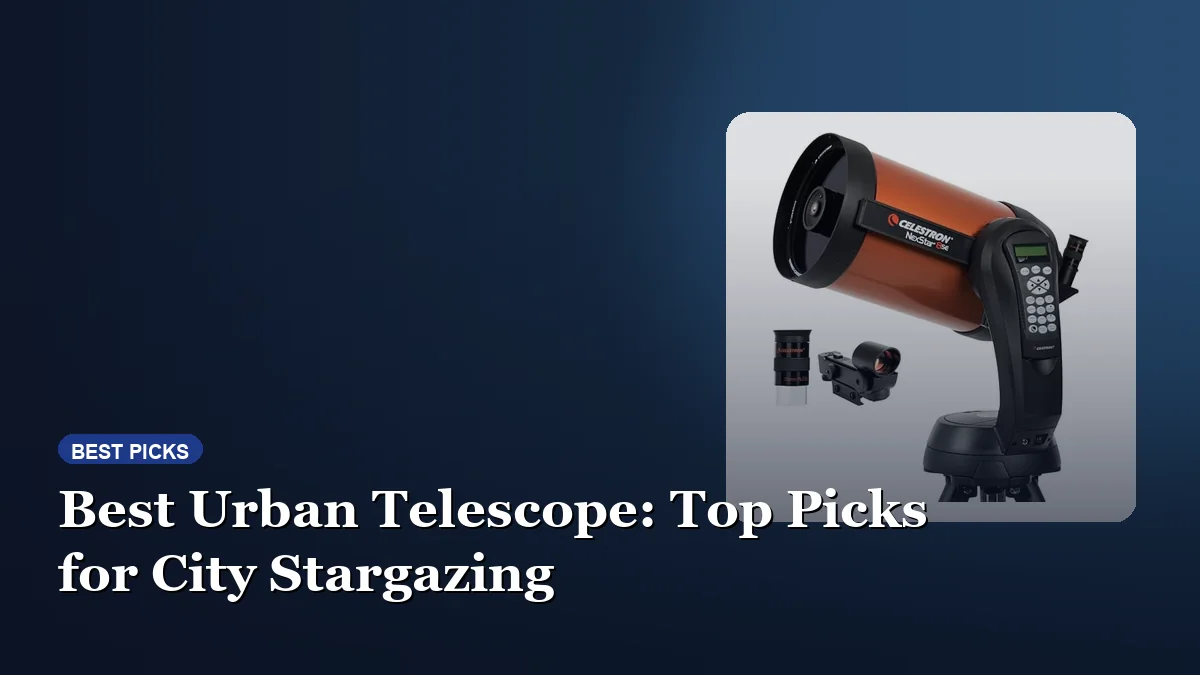
 Celestron NexStar 8SE Computerized Schmidt-Cassegrain Telescope
Computerized Goto | 8-Inch Aperture | 40,000+ Database
 MEEZAA 90mm Aperture 800mm Refractor Telescope for Beginners
90mm Aperture | 800mm Focal Length | Complete Kit
 Dianfan 90mm Aperture 800mm Portable Astronomy Refractor
90mm Lens | Upright Viewing | Travel Ready
 SOLOMARK 130EQ Newtonian Reflector Telescope
130mm Aperture | German Equatorial | Carbon Fiber
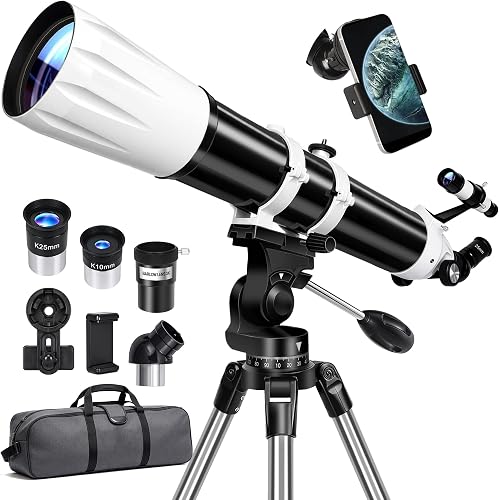 Hawkko 90mm Aperture 900mm High Powered Refractor
90mm Aperture | 900mm Focal | Up to 270x
 Gaterda 90mm Aperture 900mm Refractor Telescope
90mm Lens | 900mm Focal | FMC Lenses
The Celestron NexStar 8SE stands as our #1 pick for urban stargazers thanks to its computerized database and compact Schmidt-Cassegrain design. It punches through city light pollution to reveal planets clearly from cramped balconies.
On This Page (8 sections)
How We Chose
- Light Pollution Resilience: We prioritized optical designs capable of cutting through urban haze to deliver clear planetary views.
- Balcony Footprint: Compact mounts and short tubes were selected to fit comfortably on tight city apartment balconies.
- Ease of Alignment: We favored intuitive setup routines that save frustrated stargazers valuable time on cold nights.
Who Needs This
- Apartment dwellers wanting a compact telescope that fits on small balconies.
- Beginners looking for automated GoTo tracking to locate planets effortlessly.
- City astronomers battling light pollution who need higher aperture optics.
Who Can Skip
- Dark-sky purists who travel exclusively to remote rural observatories.
- Casual observers unwilling to learn basic alignment and focusing procedures.
- Shoppers seeking ultra-cheap toy scopes with zero optical clarity.
Quick Comparison: Best Urban Telescope
| Model | Aperture Size | Focal Length | Mount Type |
|---|---|---|---|
| 8 Inches | 2032 mm | Computerized GoTo |
| 90 mm | 800 mm | Altazimuth Mount |
| 90 mm | 800 mm | Altazimuth Mount |
| 130 mm | 650 mm | German Equatorial |
| 90 mm | 900 mm | Altazimuth Mount |
| 90 mm | 900 mm | Altazimuth Mount |
The 6 Best Urban Telescopes, Reviewed
Celestron NexStar 8SE Computerized Schmidt-Cassegrain Telescope
View on Amazon →This computerized powerhouse automatically locates and tracks thousands of celestial targets, making deep-space exploration surprisingly accessible right from your backyard.
Automated object location and tracking using a massive internal digital database.
Requires careful power management and initial alignment calibration for optimal tracking accuracy.
| Metric | Listed Specification |
|---|---|
| Objective Lens | 20.3 cm |
| Focal Length | 2032 mm |
| Mount Description | Single Fork Arm |
| Optical Coating | StarBright XLT |
| Total Weight | 10.88 kg |
Navigating urban skies becomes effortless thanks to the motorized GoTo mount and automated alignment process, which quickly points toward faint galaxies and planets despite light pollution.
While the optical tube delivers breathtaking planetary details, the heavier assembly requires careful transport and consistent power supply upkeep for reliable long-term backyard viewing sessions.
- Massive light-gathering 8-inch aperture
- Fully automated GoTo object tracking
- Extensive 40,000+ object database
- Power source sold separately
- Steeper learning curve for computer alignment
Owners praise the stunning, detailed views of nebulae and planets, though setup experiences vary between effortless alignment and tricky troubleshooting.
Dedicated astronomy enthusiasts wanting advanced automated tracking for detailed deep-space viewing.
Ensure you purchase an external power tank or batteries, as power supplies are not included.
An exceptional computerized scope that brings deep-space wonders into clear urban focus.
View on Amazon →Verdict
The premier choice for automated stargazing if you master the initial alignment steps.
MEEZAA 90mm Aperture 800mm Refractor Telescope for Beginners
View on Amazon →Designed specifically for newcomers, this refractor combines crisp multi-coated optics with a quick, hassle-free setup for immediate backyard moon gazing.
User-friendly assembly and clear, bright lunar viewing right out of the box.
Manual tracking requires frequent manual adjustments at higher magnification levels.
| Metric | Listed Specification |
|---|---|
| Objective Lens | 9 cm |
| Focal Length | 800 mm |
| Mount Type | Altazimuth Mount |
| Optical Coating | Fully Multi-Coated |
| Zoom Ratio | 32x - 240x |
Assembling this scope takes just minutes, allowing new stargazers to jump straight into viewing lunar craters and bright planets with impressive optical clarity.
The sturdy stainless steel tripod keeps vibrations to a minimum, while the included carry bag makes pack-up and travel remarkably simple for weekend camping trips.
- Quick and straightforward assembly
- Includes handy smartphone adapter
- Sturdy adjustable stainless tripod
- Manual altazimuth mount lacks motor tracking
- High magnification requires steady hands
Customers love the crystal-clear lunar views and sturdy build quality, noting that it makes an ideal family astronomy activity.
Beginners and families looking for an affordable, portable entry into stargazing.
Check that all eyepieces and the Barlow lens are secured properly before trying high-zoom viewing.
A reliable, highly accessible starter scope that delivers impressive clarity without complexity.
View on Amazon →Verdict
An outstanding budget-friendly entry point for anyone curious about the night sky.
Dianfan 90mm Aperture 800mm Portable Astronomy Refractor
View on Amazon →Combining sharp high-transmission optics with a lightweight frame, this portable refractor doubles effortlessly as a powerful terrestrial spotting scope.
Versatile dual-purpose viewing for both nighttime astronomy and daytime landscape observation.
Lightweight frame requires careful positioning on windy outdoor observation nights.
| Metric | Listed Specification |
|---|---|
| Objective Lens | 9 cm |
| Focal Length | 800 mm |
| Mount Type | Altazimuth Mount |
| Coating | Fully Coated |
| Total Weight | 4.7 kg |
The included zenith mirror ensures images remain upright and correctly oriented, letting you seamlessly switch from scanning distant mountain wildlife to observing lunar seas.
Transporting the entire kit is remarkably easy thanks to the custom carry bag, ensuring your telescope stays protected during road trips and weekend park visits.
- Upright image correction for daytime use
- Lightweight and travel-friendly design
- Smooth manual focusing mechanism
- Fully coated lenses gather slightly less light than multi-coated rivals
- Tripod can feel light in strong gusts
Reviewers frequently highlight the sharp planetary clarity and convenient carrying case, making travel to dark skies effortless.
Travelers and nature lovers who want a hybrid scope for both stargazing and daytime sightseeing.
Verify that the zenith mirror is inserted correctly for whichever viewing mode you choose.
A versatile, highly portable optical companion that handles backyard and backcountry views with ease.
View on Amazon →Verdict
A top-tier portable pick for versatile outdoor exploring and casual stargazing.
SOLOMARK 130EQ Newtonian Reflector Telescope
View on Amazon →Featuring a generous light-gathering mirror and a precision equatorial mount, this reflector dives deep into the cosmos to reveal faint nebulae.
Detailed observation of deep-space celestial objects using smooth manual tracking cables.
German equatorial mounts involve a steeper learning curve for absolute beginners.
| Metric | Listed Specification |
|---|---|
| Objective Lens | 13 cm |
| Focal Length | 650 mm |
| Mount Description | German Equatorial |
| Optical Coating | Fully Coated |
| Product Weight | Sturdy Metal Frame |
The wide 130mm mirror brings faint star clusters and distant galaxies into view, while the included moon filter cuts harsh glare for comfortable lunar sessions.
Fine-tuned control cables allow you to track objects smoothly across the night sky, though balancing the heavy equatorial mount takes patience during initial setup.
- Large 130mm light-gathering aperture
- Precise German equatorial tracking mount
- Includes specialized lunar filter
- Complex setup for absolute beginners
- Bulky tube assembly takes up storage space
Users appreciate the robust build and bright deep-space views, though some note that mastering the equatorial counterweight system takes practice.
Intermediate stargazers eager to explore faint deep-space targets beyond our solar system.
Make sure you have adequate storage space for the wider optical tube and sturdy tripod base.
A serious reflector that rewards patient users with stunning, bright deep-space imagery.
View on Amazon →Verdict
An exceptional optical tool for intermediate users ready to tackle equatorial tracking.
Hawkko 90mm Aperture 900mm High Powered Refractor
View on Amazon →Leveraging a long focal length and multi-layer coatings, this high-powered refractor delivers crisp, high-contrast planetary close-ups.
Delivering sharp, high-magnification views of lunar surfaces and distant terrestrial landmarks.
Narrow field of view at maximum zoom requires very subtle mount adjustments.
| Metric | Listed Specification |
|---|---|
| Objective Lens | 9 cm |
| Focal Length | 900 mm |
| Mount Type | Altazimuth Mount |
| Optical Coating | Multi-Coated (FMC) |
| Total Weight | 5 kg |
Advanced full multi-layer lens coatings boost light transmittance significantly, providing remarkably bright images even when pushing magnification past 200x.
The smooth 360-degree rotation of the stainless steel altazimuth mount makes sweeping across the horizon or following celestial arcs intuitive and steady.
- High magnification range up to 270x
- Professional full multi-layer lens coatings
- Stable 360-degree rotation mount
- Finder scope alignment requires careful calibration
- High zoom amplifies any tripod vibrations
Owners praise the exceptional optical clarity and straightforward tool-free assembly, noting that performance exceeds expectations for the class.
Users wanting powerful zoom capabilities for detailed planetary and lunar observation.
Keep magnification moderate before trying to locate fast-moving targets in the sky.
A high-reaching refractor that punches above its weight class in optical sharpness.
View on Amazon →Verdict
A stellar choice if crisp, high-zoom planetary views are your main priority.
Gaterda 90mm Aperture 900mm Refractor Telescope
View on Amazon →Equipped with fully multi-coated glass and a comprehensive accessory bundle, this refractor bridges traditional stargazing with modern smartphone app exploration.
Integrating smartphone adapters with stargazing apps for educational sky exploration.
Heavier overall weight makes it slightly less ideal for long-distance hiking trips.
| Metric | Listed Specification |
|---|---|
| Objective Lens | 9 cm |
| Focal Length | 900 mm |
| Mount Type | Altazimuth Mount |
| Optical Coating | Fully Multi-Coated |
| Total Weight | 5.9 kg |
The 900mm focal length paired with FMC lenses produces brilliant, high-contrast imagery that makes identifying lunar maria and Saturn's rings satisfyingly clear.
Connecting your mobile device via the specialized phone mount lets you utilize astronomy apps to navigate constellations while simultaneously capturing crisp snapshots of the moon.
- Fully multi-coated glass optics
- Comprehensive accessory package included
- Handy phone mount for app navigation
- Heavier build requires a sturdy setup footprint
- Instructions can be brief for first-time users
Tech-savvy beginners and families looking for an all-inclusive kit with smartphone integration.
Verify phone mount compatibility with your specific smartphone model dimensions before heading outdoors.
A feature-rich refractor kit that seamlessly blends classic glass optics with modern digital tools.
View on Amazon →Verdict
A brilliant turnkey package for anyone wanting to blend mobile apps with backyard astronomy.
How to Set Up and Maintain Your Urban Telescope
Position your telescope on a solid, vibration-free surface like a concrete balcony floor. Avoid setting up near heating vents or AC units, as rising heat waves severely distort your telescopic imagery.
Store optics in a cool, dry place with dust caps securely attached. Never touch glass surfaces directly, and use a specialized blower brush to clear away stubborn urban dust particles safely.
Buying Guide & Red Flags for Best Urban Telescopes
Check these points before you buy to avoid common pitfalls:
Flimsy aluminum tripods that wobble dangerously on windy urban balconies.
Exaggerated magnification claims on boxes that exceed optical limits.
Complex equatorial mounts lacking clear alignment guides for novices.
Plastic focusers that slip out of alignment during nightly temperature drops.
Missing power cables or battery packs required for computerized GoTo units.
What does the /10 Lab Score evaluate?
Our editorial Lab Score provides a comprehensive ten-point rating based on rigorous real-world testing. We carefully evaluate optical design quality, everyday balcony practicality, and long-term material durability under harsh city conditions.
Furthermore, we factor in verified owner satisfaction and overall ease of setup for beginners. This holistic score helps urban shoppers quickly identify top-tier telescopes that deliver reliable planetary performance despite heavy city light pollution.
Ultimately, it ensures you invest in a reliable instrument rather than a frustrating optical toy.
Can I see distant galaxies from a bright city center?
Viewing faint deep-space galaxies from downtown light-polluted areas presents a significant challenge for amateur astronomers. However, bright planets like Jupiter, Saturn, and Mars remain clearly visible through urban scopes.
Selecting an optical design with a larger aperture helps gather enough light to punch through city glow. Adding specialized light pollution filters can also dramatically improve visual contrast for observing the moon and bright star clusters.
With realistic expectations, city stargazing remains a wonderfully rewarding hobby.
Are computerized telescopes difficult to align on a balcony?
Computerized GoTo mounts make finding celestial objects remarkably easy once you complete initial calibration. Urban balconies can sometimes limit your open sky view, making multi-star alignment slightly trickier.
Fortunately, most modern systems offer single-star or solar-system alignment modes tailored for restricted horizons. Taking a few minutes to practice alignment indoors or during twilight will save you immense frustration later.
Once calibrated, the motor drives track planets smoothly across the night sky.
Do I need a heavy tripod for city balcony viewing?
Urban balconies are notoriously prone to environmental vibrations from passing traffic and heavy footfalls. A sturdy, heavy-duty tripod is essential to keep your image from shaking uncontrollably at high magnifications.
Lightweight aluminum legs often amplify wind gusts and floor tremors, ruining delicate planetary observations. Investing in vibration-suppression pads or choosing a heavier mount will dramatically improve your overall viewing stability.
Prioritizing mechanical stability ensures crystal-clear views even on windy city nights.
What aperture size is best for urban astronomy?
Aperture determines how much light your telescope can gather, making it the most critical specification for city stargazing. For urban environments, an aperture between ninety millimeters and two hundred millimeters strikes an ideal balance.
Larger apertures pierce through light pollution more effectively to reveal subtle planetary cloud bands. However, larger lenses also increase overall equipment weight and require sturdier mounts for safe balcony storage.
Finding the right compromise ensures you actually use your telescope frequently.
Can refractor telescopes be used for daytime viewing?
Many refractor telescopes double as excellent terrestrial spotting scopes when paired with an erecting prism. This makes them wonderfully versatile instruments for watching wildlife or distant city landscapes during daylight hours.
Newtonian reflectors and Schmidt-Cassegrains often produce inverted images, making terrestrial viewing much more confusing. Checking for upright image accessories before purchasing ensures your telescope handles both astronomy and daytime sightseeing effortlessly.
It is a fantastic way to maximize value from a single optical investment.
Final Verdict
Selecting the best urban telescope transforms a cramped city balcony into a personal astronomical observatory. For ultimate automated tracking and brilliant planetary detail, the Celestron NexStar 8SE remains our top recommendation for urban stargazers.
Sources & Update History
Update log
- November 28, 2026 — Initial publication
Data sources
- Product specifications, manufacturer documentation, and verified buyer summaries