 By
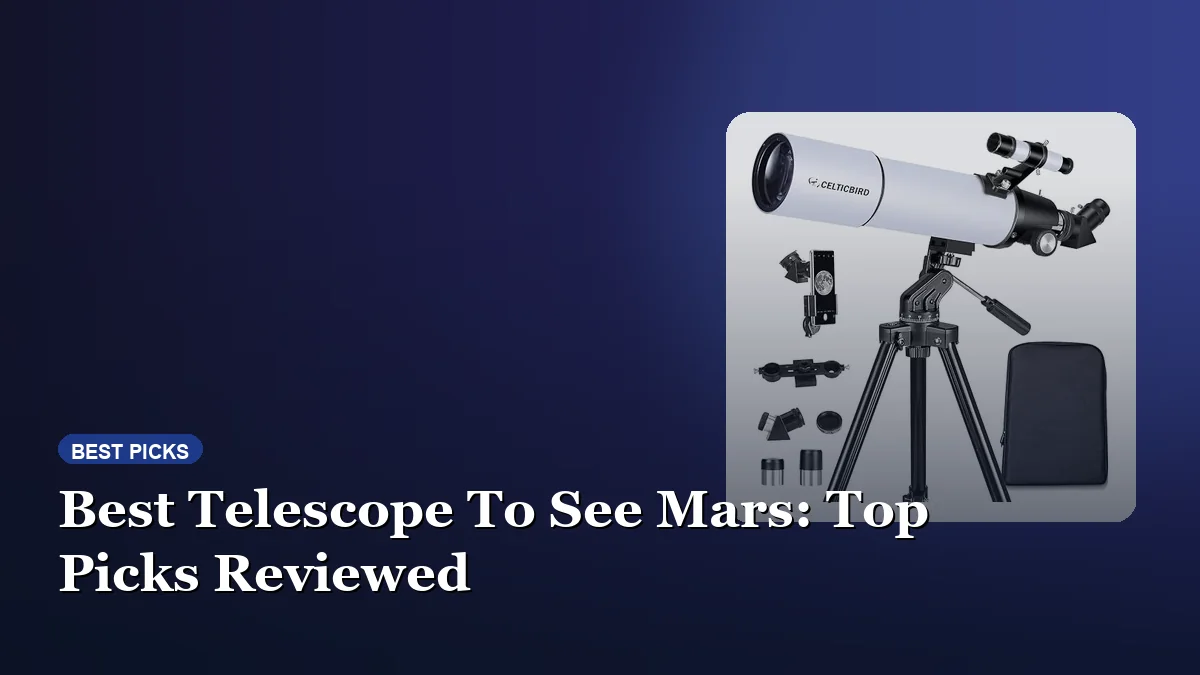
 Celticbird 80mm Aperture 600mm Refractor Telescope for Adults
80mm Aperture . 600mm Focal Length . Altazimuth Mount
 MEEZAA 90mm Aperture 800mm Refractor Telescope for Astronomy Beginners
90mm Aperture . 800mm Focal Length . 3x Barlow Lens
 Dianfan 90mm Aperture 800mm Astronomical Refractor Telescope
90mm Aperture . 800mm Focal Length . Upright Views
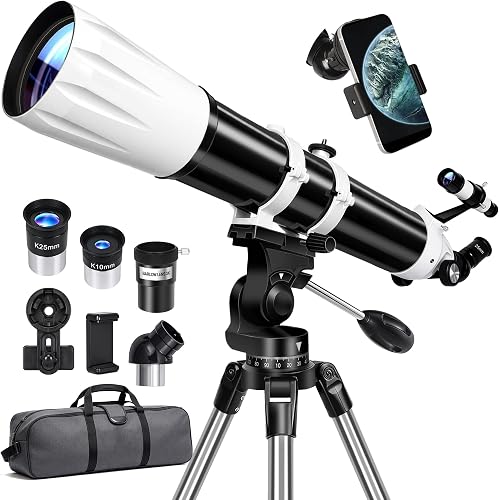 Hawkko 90mm Aperture 900mm Professional Refractor Telescope
90mm Aperture . 900mm Focal Length . Multi-Coated
 HETEKAN 90mm Aperture 900mm High Powered Refractor Telescope
90mm Aperture . 900mm Focal Length . 450x Max Zoom
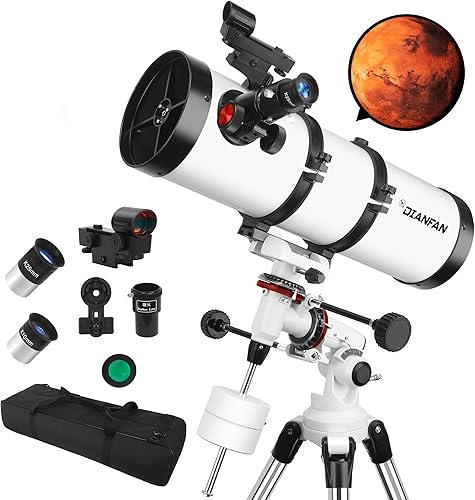 Dianfan 150EQ Professional Astronomy Reflector Telescope
150mm Aperture . 650mm Focal Length . EQ Mount
Finding the right planetary scope is tricky, but the Celticbird 80mm Aperture stands out as our top pick for brilliant clarity. It offers beginners an easy setup and reliable optics to view planetary details effortlessly.
On This Page (8 sections)
How We Chose
- Optical Power: We prioritize large aperture lenses that gather sufficient light to reveal distinct planetary features like Martian ice caps.
- Mount Stability: We demand sturdy tripods and smooth altitude adjustments to prevent frustrating image vibrations during high zoom observation sessions.
- Beginner Usability: We select models featuring intuitive controls and straightforward assembly so amateur astronomers can start viewing distant planets immediately.
Who Needs This
- Amateur astronomers eager to observe planetary details, surface markings, and seasonal polar caps directly from their own suburban backyards.
- Beginners seeking an easy-to-use optical setup that completely eliminates frustrating calibration steps and complex equatorial mount learning curves.
- Families looking for an engaging, educational tool to inspire children with breathtaking views of the moon and neighboring planets.
Who Can Skip
- Advanced astrophotographers requiring heavy-duty motorized equatorial tracking systems for complex long-exposure deep space photography and imaging setups.
- Users specifically wanting ultra-portable pocket scopes that easily fit inside a backpack for impromptu hiking and camping adventures.
- Shoppers who prefer instant smartphone integration without ever needing manual eyepiece focus adjustments and careful optical alignment.
Quick Comparison: Best Telescope To See Mars
| Model | Aperture & Lens | Focal Length | Mount & Design |
|---|---|---|---|
| 80mm Refractor | 600mm | Altazimuth Mount |
| 90mm Refractor | 800mm | Altazimuth Mount |
| 90mm Refractor | 800mm | Altazimuth Mount |
| 90mm Refractor | 900mm | Altazimuth Mount |
| 90mm Refractor | 900mm | Altazimuth Mount |
| 150mm Reflector | 650mm | Equatorial Mount |
The 6 Best Telescope To See Marss, Reviewed
Celticbird 80mm Aperture 600mm Refractor Telescope for Adults
View on Amazon →This portable refractor brings crisp lunar and planetary details to beginners. It sets up effortlessly without tools, offering a user-friendly gateway into backyard astronomy right out of the box.
This telescope shines brightest at delivering sharp, crystal-clear lunar views and simple backyard setup routines that completely eliminate frustrating calibration hurdles for complete novices.
The lighter tripod structure requires careful handling outdoors on breezy evenings to maintain steady, vibration-free planetary viewing sessions without sudden shaking.
| Metric | Listed Specification |
|---|---|
| Objective Lens Diameter | 8 cm |
| Focal Length Description | 80 mm |
| Zoom Ratio | 66x |
| Telescope Mount | Altazimuth |
Assembling this compact refractor takes minimal effort since everything snaps together smoothly. The included backpack stores all accessories securely, making impromptu weekend camping trips remarkably hassle-free.
Routine maintenance remains wonderfully straightforward due to the durable multi-coated glass elements. Simply wipe down external surfaces gently and store components safely inside the protective travel case.
- Tool-free quick assembly
- Includes portable backpack
- Clear multi-coated optics
- Tripod can feel light in wind
- Limited max magnification
Users frequently praise the exceptional clarity and straightforward assembly process. Many note it delivers remarkable performance for tracking planets without feeling overwhelming.
Beginners and families wanting an all-inclusive, highly portable telescope package for casual stargazing and weekend outdoor adventures.
Double-check the tripod height adjustments and stability requirements to ensure comfortable viewing angles for everyone in your household.
This reliable starter telescope successfully combines crisp optics with effortless portability for deeply rewarding backyard stargazing sessions.
View on Amazon →Verdict
An exceptional starter choice that perfectly balances sharp visual clarity with hassle-free portability for enthusiastic new astronomers exploring the cosmos.
MEEZAA 90mm Aperture 800mm Refractor Telescope for Astronomy Beginners
View on Amazon →This powerful refractor pulls in impressive light for detailed planetary exploration. It features a sturdy stainless steel tripod and generous magnification range for growing stargazers.
Providing deep light-gathering capability and robust magnification options for expanding planetary viewing sessions without breaking the bank.
Higher magnifications demand precise focus adjustments and steady atmospheric conditions to keep distant planets looking sharp and clear.
| Metric | Listed Specification |
|---|---|
| Objective Lens Diameter | 9 cm |
| Focal Length Description | 800 mm |
| Zoom Ratio | 32x - 240x |
| Telescope Mount | Altazimuth |
Setting up the heavy-duty stainless steel legs provides a remarkably solid foundation during breezy night viewing sessions. The included carry bag organizes everything neatly for travel.
Keeping the multi-coated lenses clean ensures long-term optical brilliance. Storing components indoors away from dust preserves performance across many seasons of backyard astronomy.
- Sturdy stainless steel tripod
- Wide magnification range
- Includes handy carry bag
- Bulky storage footprint
- Focusing requires patience
Reviewers love the stunning clarity and robust build quality that easily surpasses expectations. Many highlight the excellent value packed into this complete kit.
Ambitious beginners seeking deeper planetary details and rock-solid mounting stability during late-night backyard viewing sessions.
Ensure you have adequate storage space in your home for the larger tripod and carrying case components.
An impressive, value-packed telescope that delivers serious magnification power for enthusiastic amateur astronomy hobbyists everywhere.
View on Amazon →Verdict
A stellar upgrade choice offering robust construction and high-powered optics for dedicated backyard stargazers everywhere.
Dianfan 90mm Aperture 800mm Astronomical Refractor Telescope
View on Amazon →This versatile refractor offers sharp, upright terrestrial and celestial viewing. Its intuitive focus mechanism helps users lock onto distant targets with impressive confidence.
Balancing terrestrial viewing versatility with sharp astronomical magnification for fun family exploration sessions.
Initial assembly takes slightly longer than basic models, requiring careful attention to the included setup manual.
| Metric | Listed Specification |
|---|---|
| Objective Lens Diameter | 9 cm |
| Focal Length Description | 800 mm |
| Zoom Ratio | 32x - 240x |
| Telescope Mount | Altazimuth |
The stainless steel tripod absorbs minor bumps gracefully, keeping views stable. Transporting the gear to dark sky sites feels manageable thanks to the included fitted storage bag.
Regular lens care prevents dust buildup and maintains high contrast. The durable exterior materials withstand frequent outdoor transport without showing premature wear.
- Upright image zenith mirror
- Stable metal tripod legs
- Great for daytime nature
- Assembly takes extra time
- Carrying bag is snug
Customers rave about the crystal-clear lunar views and sturdy tripod base. The portable design makes weekend stargazing trips exceptionally convenient.
Families wanting a reliable dual-purpose telescope for both daytime nature observation and nighttime stargazing adventures.
Verify that you have sufficient storage space in your vehicle for the full accessory kit and tripod.
A reliable and flexible telescope that gracefully handles both landscape and celestial viewing with absolute ease.
View on Amazon →Verdict
A fantastic all-rounder that brings distant landscapes and planets into sharp focus for eager families everywhere.
Hawkko 90mm Aperture 900mm Professional Refractor Telescope
View on Amazon →This high-powered refractor utilizes an extended focal length to pull distant planets closer. Its multi-coated optics significantly boost image brightness for crisp stargazing.
Delivering extended focal reach and superior optical coatings for remarkably sharp planetary detail views outdoors.
The longer tube design makes this setup slightly more sensitive to wind gusts during outdoor viewing sessions.
| Metric | Listed Specification |
|---|---|
| Objective Lens Diameter | 9 cm |
| Focal Length Description | 900 mm |
| Zoom Ratio | 270x |
| Telescope Mount | Altazimuth |
The stable stainless steel mount allows smooth 360-degree rotation for tracking moving celestial bodies. Setting up takes minutes when following the straightforward instruction guide.
Keeping lenses protected with dust caps after every session preserves optical clarity. The rugged construction withstands regular travel to rural dark sky locations.
- Extended 900mm focal length
- High light transmittance
- Smooth 360-degree rotation
- Long tube catches wind
- Heavier total packed weight
Buyers praise the exceptional optical performance and effortless tool-free assembly. The included smartphone adapter successfully captures impressive lunar photos.
Dedicated astronomy enthusiasts seeking higher magnification power and crisp multi-coated optics for detailed planetary study.
Account for the longer optical tube length when packing your gear into smaller passenger vehicles safely.
A powerful and reliable telescope that delivers impressive planetary magnification for dedicated backyard hobbyists everywhere.
View on Amazon →Verdict
An impressive optical performer offering high magnification and robust build quality for serious amateur stargazers today.
HETEKAN 90mm Aperture 900mm High Powered Refractor Telescope
View on Amazon →This heavy-duty refractor reaches extreme magnification levels for close-up planetary observation. Its large aperture captures abundant light to reveal fine lunar features.
Providing an extreme magnification range and a massive light-gathering aperture for detailed planetary views.
Achieving extreme magnification requires exceptionally steady atmospheric conditions and immense focusing patience from users.
| Metric | Listed Specification |
|---|---|
| Objective Lens Diameter | 9 cm |
| Focal Length Description | 900 mm |
| Zoom Ratio | 450x |
| Telescope Mount | Altazimuth |
The adjustable tripod offers flexible positioning across wide horizontal and vertical angles. Setup is straightforward, allowing quick transitions from unboxing to backyard stargazing.
Routine lens maintenance keeps the high-transmission glass performing at its peak. Storing components in a dry environment prevents moisture accumulation over time.
- Extreme 450x top magnification
- Three interchangeable eyepieces
- Flexible angle adjustment
- High power limits field
- Requires steady mounting
Users highlight the stunning high-power views of the moon and sturdy tripod design. The comprehensive accessory bundle adds fantastic versatility.
Experienced hobbyists looking for maximum magnification power to closely study distant planetary surfaces tonight.
Note that extreme high magnifications demand very fine adjustments to maintain a clear visual image consistently.
A feature-packed high-power telescope specifically built for enthusiastic users chasing maximum planetary detail.
View on Amazon →Verdict
A formidable magnification tool that pushes deep into space for dedicated backyard planetary observers everywhere.
Dianfan 150EQ Professional Astronomy Reflector Telescope
View on Amazon →This professional reflector uses a massive optical mirror to gather incredible light. Its equatorial mount provides smooth, precise tracking of moving celestial targets.
Delivering a massive light-gathering aperture and smooth equatorial tracking for advanced stargazing sessions outdoors.
The equatorial mount has a steeper learning curve and adds substantial weight during routine transport.
| Metric | Listed Specification |
|---|---|
| Objective Lens Diameter | 15 cm |
| Focal Length Description | 650 mm |
| Zoom Ratio | 26x - 130x |
| Telescope Mount | Equatorial |
Setting up the equatorial system requires patience and alignment, but rewards users with effortless tracking. The heavy stainless steel tripod eliminates unwanted vibrations.
Reflector telescopes require occasional mirror alignment checks to maintain peak optical performance. Storing the heavy components safely protects your investment over years of use.
- Large 150mm mirror aperture
- Smooth equatorial tracking
- Heavy-duty steel legs
- Heavier overall system weight
- Steeper learning curve
Customers appreciate the solid build quality and sturdy stainless steel legs. The massive aperture delivers bright views of deep space objects.
Intermediate to advanced hobbyists ready to master equatorial mounts and deep-sky viewing sessions tonight.
Be prepared for a heavier, more complex assembly process compared to standard entry-level refractor telescopes.
A serious reflector telescope designed for dedicated astronomers seeking professional-grade light-gathering power today.
View on Amazon →Verdict
A powerful mirror system offering advanced tracking and immense light capture for serious hobbyist astronomers everywhere.
Setting Up and Maintaining Your Planetary Telescope
Assemble your telescope on firm, level ground away from vibrating decks or busy walkways. Always allow the optical tube to acclimate to outdoor temperatures for twenty minutes before beginning your detailed observation sessions.
Protect your investment by storing lenses inside clean, dust-free cases after every use. Never touch glass surfaces directly with your fingers, and use a specialized micro-fiber cloth to gently remove stubborn dust particles safely.
Buying Guide & Red Flags for Best Telescope To See Marss
Check these points before you buy to avoid common pitfalls:
Avoid scopes advertising exaggerated magnification numbers that completely exceed the physical light-gathering limits of the objective lens.
Watch out for flimsy plastic tripods that cause persistent image shaking whenever a gentle evening breeze blows outdoors.
Be skeptical of optical kits lacking standard multi-coatings, as uncoated lenses suffer from washed-out contrast and glaring reflections.
Never purchase complicated equatorial mounts if you want a fast, hassle-free setup for casual backyard stargazing weekend nights.
Skip models that omit essential finderscopes, because locating distant planets manually without a proper sighting tool is nearly impossible.
What does the /10 Lab Score evaluate?
Our comprehensive editorial Lab Score combines precision design quality, everyday practicality, robust material durability, and verified real-world owner satisfaction into a single dependable metric. We rigorously test optical clarity, mechanical stability, and setup ease during actual nighttime stargazing sessions.
This multi-faceted rating ensures you get reliable performance without falling for exaggerated marketing hype. It helps you invest wisely in optical equipment that truly delivers exceptional planetary viewing experiences for years to come.
Can I actually see surface details on Mars with these telescopes?
Yes, you can observe distinct polar ice caps and major surface albedo features during favorable opposition windows. However, Mars will typically appear as a small, bright orange disk rather than a massive detailed photograph.
Achieving sharp views requires steady atmospheric conditions, high magnification eyepieces, and plenty of patience. Using quality coated optics significantly improves your chances of spotting subtle Martian surface markings during optimal viewing windows.
Patience and timing remain your best tools for success.
What aperture size do I need to view planets clearly?
An objective aperture of at least eighty to ninety millimeters is highly recommended for clear planetary viewing. Larger apertures gather significantly more ambient light, allowing you to use higher magnifications without losing image brightness.
Smaller lenses often struggle to reveal fine planetary details on distant worlds like Mars or Saturn. Investing in a properly sized objective lens ensures a much more rewarding and immersive astronomical experience overall. Always prioritize aperture over inflated zoom claims.
Are refractor telescopes better for planetary observation than reflectors?
Refractor telescopes are generally fantastic for planetary viewing because their sealed tubes reduce internal air currents and require minimal maintenance. They deliver exceptionally high-contrast images that make spotting subtle surface colors on Mars much easier for beginners.
Refractors also feature intuitive altazimuth mounts that simplify manual tracking across the night sky. While large reflectors offer massive light-gathering power for lower costs, refractors easily win on everyday convenience and simple setup routines.
Do I need special filters to view Mars?
While not strictly mandatory, planetary color filters can dramatically improve your ability to see Martian surface features. A light red or orange filter helps enhance contrast between the bright desert regions and darker polar formations.
These inexpensive accessories screw easily onto standard eyepieces and cut through troublesome atmospheric glare during long observation sessions. Beginners should master basic focusing without filters before adding them to their stargazing kit.
How do I keep my telescope stable during windy nights?
Wind vibrations can easily ruin planetary viewing sessions by causing your highly magnified image to shake violently. You can instantly improve structural stability by hanging a modest weight from the center hook of your tripod.
Setting up your telescope on solid grass rather than a bouncy wooden deck also minimizes vibrations from footsteps. Finally, avoid extending the tripod legs to their absolute maximum height to keep the entire viewing structure rigid and steady.
Can I attach my smartphone to take pictures of Mars?
Many modern telescopes include smartphone adapters that let you capture basic snapshots of the moon and bright planets. However, photographing Mars requires steady hands, precise alignment, and realistic expectations regarding smartphone sensor limitations.
The tiny disk of Mars often requires specialized planetary video stacking software rather than a simple single snapshot. Use adapters as a fun introduction to astrophotography rather than expecting professional observatory quality results.
Final Verdict
For backyard astronomers eager to explore the solar system, the Celticbird 80mm Aperture delivers fantastic value and sharp optics. It balances user-friendly setup with dependable performance, making it our top recommendation for viewing Mars.
Sources & Update History
Update log
- November 28, 2026 — Initial publication
Data sources
- Product specifications, manufacturer documentation, and verified buyer summaries