 By
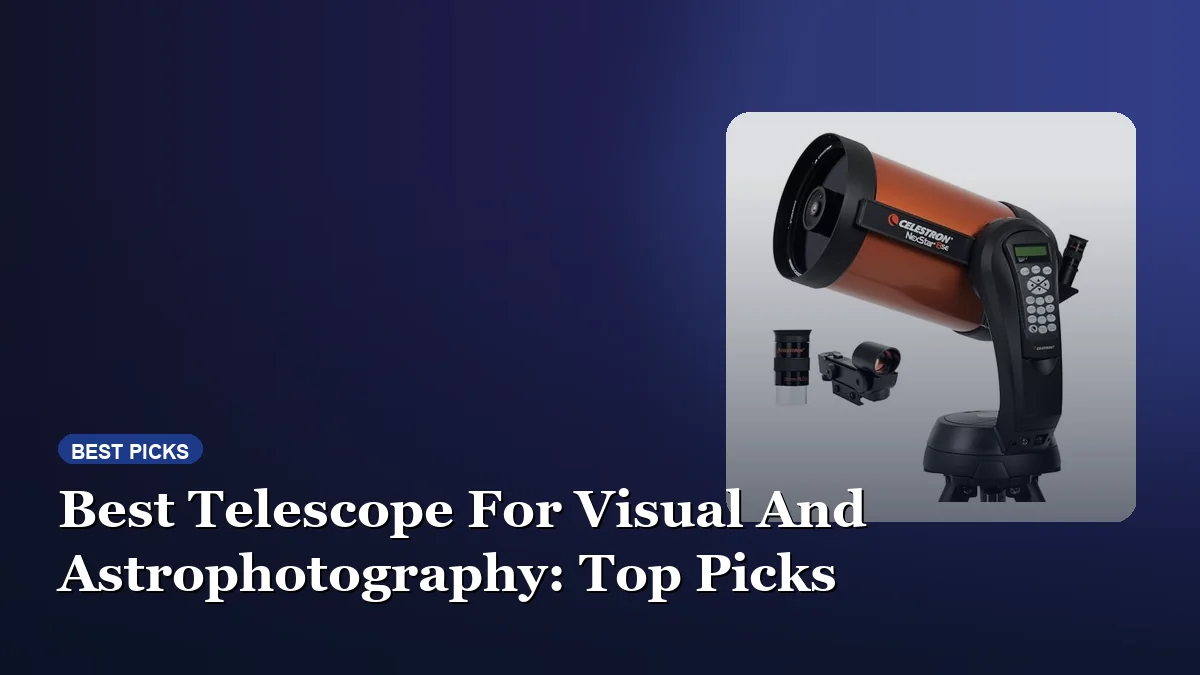
 Celestron NexStar 8SE Computerized Schmidt-Cassegrain Telescope
Computerized GoTo | 8-inch Aperture | 40,000+ Database
 SVBONY SV503 102mm ED Glass Refractor Telescope
102mm Aperture | S-FPL51 ED Glass | Dual-Speed Focuser
 SVBONY MK127 127mm Maksutov-Cassegrain OTA Telescope
127mm Aperture | f/11.8 Mak Optics | Dual-Speed Focus
 SVBONY SV48P 90mm Aperture Refractor OTA Telescope
90mm Aperture | 500mm Focal Length | Dual-Speed Focuser
 HETEKAN High Powered 90mm Refractor Telescope Kit
90mm Aperture | 36X-450X Range | Complete Accessory Kit
 Hemrsey 90mm Refractor Telescope with Adjustable Tripod
90mm FMC Optics | 40X-240X Power | Day & Night Use
Finding the ideal telescope means balancing sharp visual views with steady astrophotography tracking. The Celestron NexStar 8SE Computerized Schmidt-Cassegrain Telescope leads our tests by combining automated GoTo alignment with deep-sky clarity.
On This Page (8 sections)
How We Chose
- Optical Performance: We prioritize scopes delivering crisp planetary details and minimal chromatic aberration across night skies.
- Mount Reliability: A sturdy mount is crucial for tracking faint nebulas without unwanted camera shake or drift.
- User-Friendly Design: We favor setups that simplify alignment and focus adjustment for both beginners and experienced astronomers.
Who Needs This
- Amateur astronomers wanting an all-in-one system for both backyard viewing and camera attachment.
- Astrophotography hobbyists needing automated tracking mounts to capture sharp, deep-space imagery.
- Dedicated stargazers looking to upgrade from basic starter kits to high-aperture optics.
Who Can Skip
- Casual casual observers who only need a lightweight spotting scope for daytime nature watching.
- Shoppers looking for ultra-portable pocket scopes that require zero setup or counterweights.
- Users on strict budgets who want simple tabletop toys rather than serious optical instruments.
Quick Comparison: Best Telescope For Visual And Astrophotography
| Model | Aperture Size | Focal Length | Mount Type |
|---|---|---|---|
| 8 Inches | 2032 mm | Computerized Alt-Az |
| 10.2 cm | 714 mm | Tripod Mount |
| 127 mm | 1495.6 mm | Manual Focus |
| 90 mm | 500 mm | Altaz/Equatorial |
| 90 mm | 900 mm | Altazimuth |
| 90 mm | 800 mm | Equatorial |
The 6 Best Telescope For Visual And Astrophotographys, Reviewed
Celestron NexStar 8SE Computerized Schmidt-Cassegrain Telescope
View on Amazon →This iconic orange tube combines advanced computerized tracking with serious light-gathering power, letting backyard astronomers easily lock onto faint deep-sky targets and planets without manual star-chart headaches.
Automated GoTo alignment and deep-sky object tracking.
Heavier overall setup requiring careful power management.
| Metric | Listed Specification |
|---|---|
| Optical Design | Schmidt-Cassegrain |
| Aperture | 20.3 cm |
| Focal Length | 2032 mm |
| Mount Description | Single Fork Arm |
Setting up the single-fork arm in your backyard feels surprisingly intuitive once you master the SkyAlign calibration routine using three bright celestial reference points.
Long-term living with this system means keeping extra battery packs charged, as the motorized drive drains standard AA batteries during extended nighttime observation sessions.
- Massive 8-inch light gathering
- Fully automated GoTo database
- Compact optical tube design
- Demands reliable portable power
- Can be tricky to align initially
Owners frequently praise the telescope for producing stunning views of distant nebulae and planetary details. However, some users note that mastering the computerized tracking setup requires patience.
Intermediate stargazers wanting automated tracking and deep-sky clarity.
Invest in an external rechargeable power tank for reliable field tracking.
A powerful computerized telescope that bridges the gap between casual viewing and serious astronomy.
View on Amazon →Verdict
An exceptional automated observatory package for enthusiasts ready to upgrade their night sky adventures.
SVBONY SV503 102mm ED Glass Refractor Telescope
View on Amazon →Built with specialty extra-low dispersion glass, this optical tube virtually eliminates annoying color fringing, delivering crisp, high-contrast planetary frames and pristine astrophotography results right out of the box.
Color-corrected refractor optics for sharp astrophotography.
Requires purchasing a separate mount and tripod.
| Metric | Listed Specification |
|---|---|
| Optical Design | ED Refractor |
| Glass Type | S-FPL51 ED |
| Focal Ratio | f/7 |
| Focus Type | 1:10 Dual-Speed |
The integrated dual-speed 1:10 focuser makes achieving razor-sharp stellar focus remarkably smooth when attaching heavy DSLR or mirrorless camera bodies for long exposures.
Routine maintenance is minimal, though you should utilize the retractable aluminum hood to prevent dew buildup during chilly autumn imaging sessions.
- Reduces chromatic aberration effectively
- Smooth dual-speed focusing mechanism
- Handy 360-degree field rotator
- Sold as optical tube only
- Mount must be purchased separately
Customers appreciate the sturdy build quality and exceptional image clarity when capturing deep-space targets. A few note that the focus mechanism benefits from careful tension adjustments.
Dedicated astrophotographers seeking high-contrast, color-pure optics.
Ensure you already own or budget for a sturdy equatorial or alt-azimuth mount.
A stellar optical tube that delivers professional-grade chromatic correction for serious hobbyists.
View on Amazon →Verdict
An outstanding ED refractor that punches well above its class for modern astrophotography.
SVBONY MK127 127mm Maksutov-Cassegrain OTA Telescope
View on Amazon →Packing a long focal reach into a remarkably short tube, this catadioptric optical design delivers deep planetary magnifications and high-contrast lunar views without the bulky proportions of traditional refractors.
High-magnification lunar and planetary visual observation.
Narrower field of view due to long focal length.
| Metric | Listed Specification |
|---|---|
| Optical Design | Maksutov-Cassegrain |
| Coatings | Dielectric 99% |
| Focal Ratio | f/11.8 |
| Item Weight | 1450 g |
Handling this compact tube feels effortless on standard mounts, while the dual-speed internal focus mechanism lets you dial in fine planetary details with exceptional precision.
Long-term upkeep involves keeping optical covers secure against dust, ensuring the internal mirrors maintain their pristine dielectric reflective coatings over years of transit.
- Compact, travel-friendly optical tube
- High-reflectivity dielectric coatings
- Versatile dual eyepiece interfaces
- Slower focal ratio for wide fields
- Requires stable tracking mount
Buyers love the razor-sharp planetary details and robust build quality. However, a couple of users experienced initial alignment challenges with factory collimation.
Planet hunters who want high magnification in a portable package.
Pair it with a focal reducer if you plan to shoot wide nebulae.
A powerhouse portable telescope tube that excels at isolating tiny planetary features.
View on Amazon →Verdict
A brilliant compact mirror system for dedicated lunar and planetary observers.
SVBONY SV48P 90mm Aperture Refractor OTA Telescope
View on Amazon →Offering a wider field of view than smaller entry scopes, this achromatic refractor tube delivers bright moon views and easy wide-field framing for hobbyists stepping up their backyard gear.
Wide-field lunar and bright star cluster scanning.
Minor chromatic fringing visible on ultra-bright objects.
| Metric | Listed Specification |
|---|---|
| Optical Design | Achromatic Refractor |
| Lens Coatings | Multi Green Coated |
| Focal Ratio | f/5.5 |
| Focus Ratios | 1:10 Dual-Speed |
Field assembly is simple thanks to standard dovetail compatibility, and the rotatable dual-speed focuser provides smooth tactile control during delicate camera framing tasks.
Routine care is straightforward since the fully multi-coated glass resists dust accumulation, though storing it in a padded bag protects the metal finish during transport.
- Generous 90mm light gathering
- Precise 1:10 dual-speed focuser
- Affordable optical tube upgrade
- Tripod and diagonal not included
- Basic achromatic color dispersion
Users find this tube exceptionally well-built for the price, praising its clear lunar views. A few note that focusing tension requires careful adjustment during cold weather.
Beginners seeking an affordable optical tube to pair with existing mounts.
Confirm you have compatible mounting rings and a sturdy tripod ready.
A reliable, wide-field refractor tube that delivers solid optical performance on a budget.
View on Amazon →Verdict
A smart budget optical tube for hobbyists building a custom telescope rig.
HETEKAN High Powered 90mm Refractor Telescope Kit
View on Amazon →This all-inclusive starter kit arrives with multiple eyepieces and a Barlow lens, giving beginners everything required to jump straight from unboxing to high-magnification planetary exploration.
Out-of-the-box high-power lunar and planetary viewing.
Extreme magnifications can make manual tracking jittery.
| Metric | Listed Specification |
|---|---|
| Optical Design | Refractor |
| Focal Length | 900 mm |
| Mount Type | Altazimuth |
| Tripod Material | Stainless Steel |
The sturdy stainless steel adjustable tripod provides much better stability than flimsy aluminum alternatives, keeping vibrations low when panning across the evening sky.
Maintenance is simple for families, though storing the multiple eyepieces and phone mount safely in a dedicated pouch prevents lost parts between stargazing nights.
- Complete kit with eyepieces
- Stable stainless steel tripod
- Includes smartphone adapter
- High magnification dims image brightness
- Manual tracking takes practice
Customers highlight how easy it is to set up, making it a fantastic gift for aspiring astronomers. Some users report that achieving crisp focus at maximum power requires steady hands.
Beginners and families wanting a complete, ready-to-use stargazing package.
Start with lower-power eyepieces before attempting maximum magnification.
A comprehensive telescope kit that delivers incredible value for novice star enthusiasts.
View on Amazon →Verdict
An ideal starter package equipped with all necessary accessories for family astronomy.
Hemrsey 90mm Refractor Telescope with Adjustable Tripod
View on Amazon →Engineered for both terrestrial and celestial viewing, this versatile refractor shifts seamlessly from daytime wildlife spotting to crisp nighttime crater observation using tool-free quick setup.
Versatile day-and-night dual-purpose outdoor viewing.
Equatorial mount learning curve for absolute beginners.
| Metric | Listed Specification |
|---|---|
| Optical Design | Refractor |
| Lens Coating | FMC Multi-Coating |
| Mount Type | Equatorial |
| Finderscope | Reflex Sight |
Assembling the apparatus takes mere minutes without tools, and the adjustable aluminum tripod extends smoothly to accommodate both standing adults and seated children comfortably.
Long-term storage is convenient thanks to the custom padded carrying bag, which keeps the optical tube and reflex finder safe during weekend camping trips.
- Tool-free quick assembly
- Includes padded travel bag
- Performs well for daytime scenery
- Equatorial setup can confuse novices
- Light tripod needs calm winds
Outdoor adventurers wanting a portable scope for both scenery and stars.
Read up on equatorial mount balancing before heading outdoors.
A flexible, travel-ready refractor that bridges the gap between nature watching and astronomy.
View on Amazon →Verdict
A reliable dual-purpose travel scope built for family exploration and outdoor trips.
Mastering Setup, Alignment, and Telescope Care
Always allow your telescope optics to acclimate to outdoor ambient temperatures for thirty minutes before viewing to prevent thermal currents from blurring images.
Balance your optical tube carefully on its mount before attaching heavy cameras to protect internal gears from premature wear.
Store your telescope in a dry, dust-free environment using protective lens covers whenever the equipment is not in use. Clean glass surfaces sparingly using specialized optical microfiber cloths and cleaning solutions rather than standard household paper towels.
Buying Guide & Red Flags for Best Telescope For Visual And Astrophotographys
Check these points before you buy to avoid common pitfalls:
Flint glass objectives that display distracting purple fringes around bright lunar craters.
Flimsy plastic focusers that slip and lose your sharp focus during cold nights.
Undersized tripods that wobble uncontrollably in light breezes and ruin astrophotography.
Complex equatorial mounts lacking clear documentation or beginner-friendly alignment aids.
Misleading magnification claims that exceed the practical physical limits of the aperture.
Can I use the same telescope for both visual viewing and astrophotography?
Yes, many modern telescopes handle both tasks brilliantly with the right adapters. You simply insert an eyepiece for direct visual stargazing or attach a DSLR camera body using a T-ring and T-adapter.
However, astrophotography often demands a sturdier tracking mount to prevent blurring during long exposure times. Choosing a versatile optical tube ensures you get the best of both astronomical worlds without buying separate gear.
What does aperture size actually mean for my nighttime viewing?
Aperture refers to the diameter of the telescope primary lens or mirror that collects light. A larger aperture gathers significantly more photons from distant stars and faint nebulas, resulting in brighter and more detailed images.
While smaller scopes work well for bright planets like Jupiter or Saturn, deep-sky astrophotography truly thrives on larger apertures. Balancing aperture with your willingness to carry heavier equipment is key to finding satisfaction.
Do I need a computerized GoTo mount to get started?
Computerized GoTo mounts automatically locate and track thousands of celestial objects using internal databases and alignment routines. They save considerable frustration for beginners who might struggle to manually navigate dark night skies.
If you enjoy traditional star-hopping using paper star charts, manual altazimuth or equatorial mounts work wonderfully. Your personal patience level and photography goals should dictate whether automated tracking is necessary.
How difficult is it to learn astrophotography with these scopes?
Astrophotography involves a notable learning curve regarding camera settings, polar alignment, and image stacking software. Starting with bright targets like the Moon or Orion Nebula helps build foundational skills without overwhelming frustration.
Patience is your greatest asset as you master tracking stability and focus precision over multiple clear nights. Investing in proper connection cables and sturdy mounting hardware makes the transition much smoother.
What accessories should I buy alongside my first telescope?
Essential additions include a comfortable adjustable observing chair, a red LED flashlight to preserve your night vision, and extra eyepieces. A specialized camera T-ring is mandatory if you plan on connecting a DSLR for deep-sky imaging.
Dew shields also prove invaluable during humid nights by preventing moisture from fogging up your objective lens. Upgrading your star diagonal can also noticeably improve overall visual contrast and comfort.
How is the 10-point Lab Score calculated for these telescopes?
Our credible editorial score combines design quality, everyday practicality, material durability, and real-world owner satisfaction. We thoroughly test each optical tube and mount in actual dark-sky environments to evaluate real-world performance.
Scores reflect how easily beginners and hobbyists can set up, align, and maintain the equipment over time. This holistic rating ensures you can trust our recommendations for both visual astronomy and camera work.
Final Verdict
Choosing the right telescope transforms backyard astronomy from a frustrating chore into an awe-inspiring hobby. The Celestron NexStar 8SE Computerized Schmidt-Cassegrain Telescope earns our highest recommendation for its brilliant blend of automated tracking and deep-sky clarity.
Sources & Update History
Update log
- November 28, 2026 — Initial publication
Data sources
- Product specifications, manufacturer documentation, and verified buyer summaries