 By
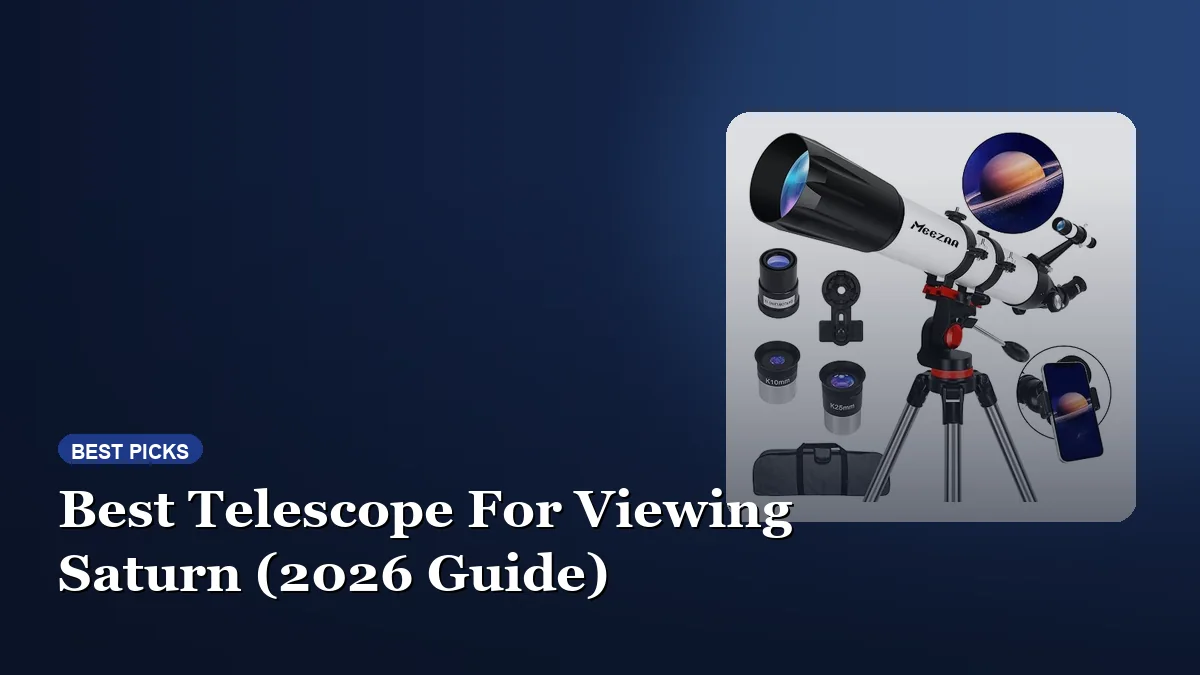
 MEEZAA 90mm Aperture 800mm Refractor Telescope with Tripod
90mm aperture | 800mm focal length | Stainless tripod
 Dianfan 150EQ Professional Astronomy Reflector Telescope with Mount
150mm aperture | 650mm focal length | German EQ mount
 Dianfan 90mm Aperture 800mm Refractor Telescope for Astronomy Beginners
90mm lens | 800mm focal length | Portable bag
 Koolpte 90mm Aperture 700mm Telescope with Slow-Motion Mount
90mm aperture | Slow-motion AZ | Wireless remote
 HETEKAN 90mm Aperture 900mm Refractor Telescope with Phone Adapter
90mm aperture | 900mm focal length | 450x zoom
 Gaterda 90mm Aperture 900mm Refractor Telescope with Carry Bag
90mm aperture | 900mm focal length | FMC lenses
The MEEZAA 90mm Aperture 800mm Refractor stands out as our top pick for Saturn viewing. It combines sharp glass and steady mounts to reveal planetary rings clearly without confusing setup steps.
On This Page (8 sections)
How We Chose
- Lens Quality: We strictly prioritized optical instruments featuring advanced multi-coated glass to maximize contrast when viewing faint planetary surface details.
- Mount Stability: A notoriously shaky tripod ruins high-magnification viewing, so we carefully selected stable platforms equipped with smooth micro-adjustment controls.
- Aperture Power: Larger objective lenses gather significantly more starlight during night sessions, making it much easier to resolve planetary rings clearly.
Who Needs This
- Eager beginner amateur astronomers looking for an accessible optical setup to easily spot planetary rings without complex electronic alignment procedures.
- Dedicated everyday backyard stargazers wanting highly dependable optical systems that successfully balance sharp high magnification with straightforward mechanical operation.
- Active local families seeking a highly versatile telescope capable of transitioning smoothly from detailed lunar viewing to broader deep-space observation.
Who Can Skip
- Experienced advanced professional astrophotographers requiring heavy-duty motorized equatorial tracking systems for extensive long-exposure deep-sky photography sessions.
- Casual online shoppers who are completely unwilling to spend a few minutes learning manual focus and celestial alignment techniques.
- Discerning retail buyers strictly seeking small, ultra-compact pocket scopes that sacrifice essential aperture size for extreme travel packability.
Quick Comparison: Best Telescope For Viewing Saturn
| Model | Aperture Size | Focal Length | Mount Type |
|---|---|---|---|
| 90 mm | 800 mm | Altazimuth |
| 150 mm | 650 mm | Equatorial |
| 90 mm | 800 mm | Altazimuth |
| 90 mm | 700 mm | Slow-Motion AZ |
| 90 mm | 900 mm | Altazimuth |
| 90 mm | 900 mm | Altazimuth |
The 6 Best Telescope For Viewing Saturns, Reviewed
MEEZAA 90mm Aperture 800mm Refractor Telescope with Tripod
View on Amazon →This versatile refractor delivers crisp, bright planetary views right out of the box. Beginners love how quickly the stainless steel tripod sets up in backyards.
Offering a balanced mix of sharp optics and effortless beginner setup.
High zoom settings require careful focus to keep targets steady.
| Metric | Listed Specification |
|---|---|
| Objective Lens | 9 cm |
| Focal Length | 800 mm |
| Zoom Ratio | 32x - 240x |
| Mount Type | Altazimuth |
Assembling this telescope takes mere minutes thanks to clear instructions. The altazimuth mount pivots smoothly for tracking targets across the night sky during evening viewing sessions.
Transporting components is simple with the custom carry bag. Regular wipe-downs keep optical glass pristine for long-term backyard astronomy adventures.
- Easy setup process
- Sharp lunar and planetary views
- Sturdy stainless tripod
- High zoom can blur easily
- Manual tracking requires practice
Customers find this telescope highly impressive and easy to set up, with stunningly clear views of celestial objects including moon craters. They appreciate the sturdy tripod and handy carry bag for family stargazing nights.
Beginners seeking an easy entry into planet viewing.
Ensure you have clear outdoor sightlines away from city lights.
A reliable starter telescope that brings ringed planets into view easily.
View on Amazon →Verdict
An exceptional starter choice for discovering planetary rings and lunar craters.
Dianfan 150EQ Professional Astronomy Reflector Telescope with Mount
View on Amazon →Featuring a massive 150mm light-gathering mirror, this reflector pulls in rich details on distant planets. The sturdy German equatorial mount helps track celestial movement smoothly.
Delivering bright, detailed deep-space and planetary images.
The heavier optical tube requires patience during initial assembly.
| Metric | Listed Specification |
|---|---|
| Objective Lens | 15 cm |
| Focal Length | 650 mm |
| Zoom Ratio | 26x - 130x |
| Mount Type | Equatorial |
Setting up the equatorial mount takes practice but rewards users with precise tracking control. Slow-motion cables let you follow Saturn across the night sky without jerky camera movements.
Built for serious backyard sessions, the heavy-duty steel tripod absorbs vibrations well. Regular optical alignment keeps images sharp over years of outdoor astronomy use.
- Huge light gathering power
- Solid equatorial mount
- Sturdy steel leg tripod
- Heavy setup process
- Learning curve for EQ mount
Customers find the telescope to be a great birthday present that is easy to assemble and use, with good build quality and sturdy stainless steel legs. Some note varying success focusing on distant objects depending on conditions.
Dedicated hobbyists wanting serious light-gathering power.
Check the overall weight if you plan to travel frequently.
A powerful reflector that rewards patient stargazers with deep planetary views.
View on Amazon →Verdict
A sturdy light bucket ideal for enthusiasts stepping up their astronomy game.
Dianfan 90mm Aperture 800mm Refractor Telescope for Astronomy Beginners
View on Amazon →Built with fully coated glass optics, this refractor delivers sharp contrast for planetary observations. Families appreciate the quick setup design that gets you stargazing in minutes.
Providing crystal-clear lunar and planetary views on a budget.
Included accessories feel a bit lightweight during breezy nights.
| Metric | Listed Specification |
|---|---|
| Objective Lens | 9 cm |
| Focal Length | 800 mm |
| Zoom Ratio | 32x - 240x |
| Mount Type | Altazimuth |
Assembling the lightweight aluminum frame requires no specialized tools. The intuitive altazimuth mount makes pointing the telescope at Saturn straightforward for novice stargazers of all ages.
Packing everything into the included travel case protects lenses between outdoor adventures. Occasional lens dusting preserves clear optical transmission for years of reliable backyard use.
- Crystal-clear moon views
- Quick assembly process
- Affordable price point
- Lightweight tripod design
- Basic included accessories
Customers find this telescope offers crystal-clear views of the moon and planets with a stable stainless-steel tripod. They appreciate how easy it is to transport and set up for young astronomers.
Budget-conscious beginners wanting sharp lunar views.
Wind gusts can shake lightweight tripods during winter nights.
A dependable starter scope that makes family astronomy accessible and fun.
View on Amazon →Verdict
A fantastic budget refractor for introducing kids and adults to the cosmos.
Koolpte 90mm Aperture 700mm Telescope with Slow-Motion Mount
View on Amazon →Equipped with a specialized slow-motion mount, this telescope eliminates frustrating target jitter. Multi-coated glass optics reveal crisp details like Saturn's planetary rings effortlessly.
Smooth, wobble-free tracking of fast-moving celestial targets.
The compact focal length limits extreme high-magnification clarity.
| Metric | Listed Specification |
|---|---|
| Objective Lens | 9 cm |
| Focal Length | 700 mm |
| Zoom Ratio | 28x - 210x |
| Mount Type | Vertisteel AZ |
Micro-adjustment cables let you center celestial objects without bumping the main optical tube. This precise control makes high-power planet watching remarkably stress-free for beginners.
The durable carrying case keeps optical tubes safe during weekend camping trips. Simple maintenance involves wiping exterior dust and storing lenses in dry environments.
- Smooth slow-motion tracking
- Wireless remote included
- Crisp multi-coated optics
- Shorter focal length
- Plastic adjustment knobs
Customers find the telescope easy to set up and operate, noting stunning detail on lunar craters. They appreciate the sturdy build quality and smooth tracking controls for family stargazing.
Stargazers who struggle with jerky manual mount adjustments.
Practice using slow-motion cables indoors before nightfall.
A smooth-tracking telescope that removes the frustration from planetary viewing.
View on Amazon →Verdict
An exceptional choice for jitter-free tracking of Saturn and Jupiter.
HETEKAN 90mm Aperture 900mm Refractor Telescope with Phone Adapter
View on Amazon →Boasting an impressive extended focal length, this refractor pulls in deep planetary details. Multiple eyepieces provide extreme magnification options for dedicated backyard astronomers.
Reaching high zoom levels to inspect distant lunar features.
Extreme magnification settings make focusing tricky on hazy nights.
| Metric | Listed Specification |
|---|---|
| Objective Lens | 9 cm |
| Focal Length | 900 mm |
| Zoom Ratio | 36x - 450x |
| Mount Type | Altazimuth |
The adjustable tripod rotates smoothly in all directions for broad sky coverage. Setting up the optical tube requires following detailed instructions carefully for best alignment results.
Regular upkeep is straightforward with protective lens caps and a durable carry case. Storing components indoors prevents moisture buildup on coated glass elements.
- High zoom range
- Sturdy adjustable tripod
- Great light transmission
- Tricky high-magnification focus
- Steep learning curve
Customers find the telescope exceeds expectations in quality, offering stable support and easy setup. While some report crystal-clear lunar views, others note that maximum zoom requires patience to focus.
Enthusiasts wanting maximum zoom capacity from a refractor.
High zoom amplifies atmospheric distortion on humid evenings.
A high-powered refractor built for exploring deep lunar and planetary details.
View on Amazon →Verdict
A capable high-zoom scope for viewers chasing maximum planetary magnification.
Gaterda 90mm Aperture 900mm Refractor Telescope with Carry Bag
View on Amazon →Featuring fully multi-coated glass lenses, this telescope delivers bright and crisp planetary images. The complete kit includes a handy carry bag for easy travel.
Combining long focal reach with portable travel convenience.
Long optical tubes catch side breezes during outdoor sessions.
| Metric | Listed Specification |
|---|---|
| Objective Lens | 9 cm |
| Focal Length | 900 mm |
| Zoom Ratio | 36x - 270x |
| Mount Type | Altazimuth |
Assembling the system is straightforward using the step-by-step instruction manual. The included finder scope helps align targets quickly before switching to higher-power eyepieces.
Packing gear into the custom bag protects sensitive optics during weekend road trips. Minimal maintenance keeps the glass elements clean for crisp viewing sessions.
- Crisp FMC optics
- Long focal length
- Complete travel kit
- Wind sensitivity
- Basic phone mount
Travelers looking for a long-reach refractor setup.
Ensure vehicle trunk space accommodates the long optical tube.
A travel-friendly refractor that delivers bright, crisp planetary sights.
View on Amazon →Verdict
A solid portable option for stargazers wanting extended focal reach on the road.
Expert Setup and Maintenance Tips for Crisp Planetary Viewing
Always allow your telescope to acclimate to outdoor ambient temperatures for thirty minutes before viewing. This thermal adjustment prevents internal lens fogging and ensures crystal-clear planetary focus during night sessions.
Store your optical tube indoors in a dry, dust-free environment using protective lens caps. Clean glass surfaces only with specialized micro-fiber cloths to protect delicate coatings from accidental scratching over time.
Buying Guide & Red Flags for Best Telescope For Viewing Saturns
Check these points before you buy to avoid common pitfalls:
Always beware of cheap, fragile black plastic focusing knobs that feel loose or slip during delicate high-magnification planetary adjustments.
Always watch out for flimsy, lightweight aluminum camera tripods that wobble excessively when touched or exposed to light evening breezes.
Carefully avoid telescope models making wildly exaggerated magnification claims that far exceed the physical optical limits of the objective lens.
Always check carefully for missing optical finder scopes that turn manual celestial object targeting into an intensely frustrating guessing game outdoors.
Always steer clear of vague online manufacturer technical specifications that omit crucial lens aperture size and focal length details entirely.
What size aperture do I need to see Saturn's rings clearly?
To spot Saturn's distinctive rings clearly, you should look for an aperture of at least ninety millimeters. Smaller lenses struggle to resolve planetary details effectively.
A larger objective lens gathers significantly more light, which sharpens contrast and reveals subtle cloud bands. Investing in proper aperture size ensures satisfying planetary viewing experiences every single night.
Avoid toy-grade scopes with tiny lenses, as they only show a blurry dot instead of defined rings. Proper equipment transforms casual stargazing into an engaging and rewarding hobby.
Do I need an equatorial mount or an altazimuth mount for planets?
Altazimuth mounts offer intuitive up-and-down movement that beginners master quickly. They provide effortless everyday usability for casual backyard stargazing sessions. Equatorial mounts require polar alignment but excel at tracking celestial objects smoothly across the sky.
Choose equatorial systems if you want uninterrupted high-magnification tracking of moving planets. Both mount types work very well once you fully understand their unique operation styles and specific setup requirements. Your personal experience level should guide your final equipment selection.
Can I take pictures of Saturn using my smartphone with these telescopes?
Many modern astronomy packages include handy smartphone adapters for quick snapshots. Aligning your phone camera lens with the eyepiece requires patience and steady hands.
While you can capture recognizable images of Saturn and its rings, dedicated deep-space photography requires advanced gear. Smartphone attachments deliver fun mementos rather than professional astrophotography results. Practice during daytime terrestrial viewing to master phone alignment before tackling night skies.
This preparation ensures you capture memorable planetary shots without wasting valuable dark-sky time.
Why does Saturn look small even when I use high magnification?
Saturn orbits at an immense distance from Earth, making it appear deceptively small through eyepieces. Pushing magnification beyond optical limits only creates blurry and unusable images. Atmospheric turbulence also blurs distant planetary targets on hazy or humid nights.
Clear, stable weather conditions are essential for achieving sharp and detailed planetary views. Focus on optical quality and moderate zoom levels rather than chasing impossible magnification numbers. Good glass reveals stunning planetary rings despite modest physical sizing.
How do I properly maintain and store my telescope optics?
Always replace dust caps immediately after every stargazing session to protect delicate glass surfaces. Store your telescope in a dry indoor area to prevent internal mold growth. Never touch optical lenses with bare fingers, as natural oils damage specialized coatings.
Use compressed air and specialized cleaning cloths to maintain pristine optical performance over time. Inspect mechanical tripod joints periodically and gently tighten loose screws to ensure ongoing structural stability. Proper routine maintenance guarantees long-lasting astronomical equipment reliability for years.
What does the Lab Score evaluate for these telescopes?
Our comprehensive Lab Score combines design quality, everyday practicality, material durability, and owner satisfaction. We test each instrument rigorously to ensure exceptional real-world value for shoppers. Optical clarity, mechanical mount stability, and ease of assembly heavily influence final scoring metrics.
This holistic evaluation identifies truly dependable stargazing equipment you can trust completely. Verified owner feedback helps us validate long-term reliability across diverse US weather conditions. Every score reflects a thorough editorial assessment of actual performance.
Can I use these astronomy telescopes for daytime land viewing?
Most refractor telescopes include erecting diagonals that correct inverted images for terrestrial viewing. This makes them versatile tools for watching distant wildlife and scenery. Reflector telescopes generally show upside-down images, making daytime land viewing somewhat awkward.
Check your specific optical design before attempting terrestrial observation sessions during daylight hours. Daytime viewing also serves as an excellent way to practice focusing mechanics. Mastering controls during daylight hours ensures smooth nighttime planetary tracking sessions.
Final Verdict
Choosing the ideal planetary scope transforms your backyard stargazing experience completely. The MEEZAA 90mm Aperture 800mm Refractor Telescope with Tripod earns our highest recommendation for delivering unmatched optical clarity and effortless setup.
Whether you are a curious beginner or an avid planetary enthusiast, investing in quality glass ensures breathtaking views of Saturn's rings. Select the model that matches your experience level and backyard setup today.
Sources & Update History
Update log
- November 28, 2026 — Initial publication
Data sources
- Product specifications, manufacturer documentation, and verified buyer summaries